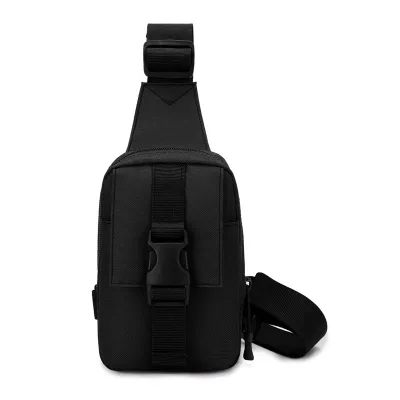
Source Outdoor Sports Chest Bag for hiking, cycling, and travel
Compare 30 verified listings for Outdoor Sports Chest Bag options featuring waterproof materials, varied shapes, and customization. Buyers can evaluate specifications like weight, dimensions, and hardness to find the right gear for active use.
Key considerations
Products List

New Popular Sports Outdoor Crossbody Bag Chest Bag Outdoor Sports Waist Bag
$4.31 - $5.11
MOQ: 300 Pieces


Custom Logo Leisure Sports Chest Bag Outdoor Large Capacity Phone Should Bag
$4.96 - $5.00
MOQ: 500 Pieces

Wholesale Waterproof Outdoor Sports Shoulder Bag Large Capacity Business Chest Bag
$6.15 - $6.40
MOQ: 500 Pieces


Outdoor Sport Sport Chest Bags for Men Double Side Crossbody Phone Holder
$4.90 - $5.70
MOQ: 300 Pieces




Comprehensive Sourcing Guide
Strategic Sourcing Guide for Outdoor Sports Chest Bags
Understanding Product Specifications and Variability
When sourcing outdoor sports chest bags, buyers must navigate a landscape defined by diverse material compositions and structural designs. The market offers products ranging from polyester-based models to those constructed from PU (Polyurethane) materials, each offering distinct tactile and functional properties. A critical observation in the current supply base is the variation in hardness ratings, with options available in both "Medium Soft" and "Soft" categories. This distinction is vital for end-users; a "Medium Soft" construction may provide better structural integrity for heavy gear, while a "Soft" variant offers greater flexibility and comfort during high-mobility activities.
The physical dimensions of these bags vary significantly, reflecting different storage needs and ergonomic profiles. Available specifications include models with dimensions such as 30x9x18cm, 28x8x20cm, and 20x7x13cm, alongside larger configurations reaching 47x25x27cm. The shape of the bag is another primary differentiator, with the market presenting "Dumpling Type" silhouettes, "Horizontal Square" profiles, and standard "Box" shapes. These geometric variations directly influence the internal volume and the ease of wearing the bag during specific sports activities. Furthermore, the closure mechanism is predominantly a zipper, which is essential for securing contents against the elements and physical agitation inherent in outdoor sports.
| Attribute Category | Observed Variations |
|---|---|
| Material | Polyester, PU |
| Shape | Dumpling Type, Horizontal Square, Box |
| Hardness | Medium Soft, Soft |
| Dimensions | 19x10x21cm to 47x25x27cm |
| Weight | 0.19kg to 0.35kg |
| Pattern | Geometric |
Compliance Standards and Material Safety Verification
For B2B procurement in the outdoor sector, compliance with international safety standards is non-negotiable. The supply data indicates that certain manufacturers adhere to REACH regulations and offer AZO FREE certifications upon request. REACH (Registration, Evaluation, Authorisation and Restriction of Chemicals) is a critical European Union regulation that ensures the safety of chemicals used in products, which is particularly relevant for items that come into prolonged contact with human skin. Buyers must explicitly verify if a supplier's AZO FREE status is a standard offering or a conditional request, as this impacts the speed of production and the final unit cost.
Beyond chemical safety, the waterproof capability of the chest bag is a primary performance metric. The observed market features "High Waterproof" levels and general "Waterproof" attributes, often achieved through specific material treatments or seam sealing. However, "Waterproof" is a broad term; buyers should request specific test data or IP ratings to understand the degree of protection against water ingress. The presence of a zipper closure is standard, but the quality of the zipper teeth and the integration of waterproof flaps or coatings over the zipper track are critical factors that determine if the bag truly meets the "High Waterproof" claim. Without verified test results, buyers should treat these claims as observations rather than guaranteed performance metrics for every listed product.
Cost Drivers and Pricing Dynamics
The pricing structure for outdoor sports chest bags is influenced by a complex interplay of material costs, customization requirements, and order volume. The observed price range in the market spans from $1.35 to $15.36 USD. This wide variance suggests that factors such as material quality (e.g., premium PU vs. standard polyester), the complexity of the design (e.g., "Designer Bag" status), and the inclusion of custom branding significantly drive the final cost. A bag priced at the lower end of the spectrum may utilize standard materials and minimal customization, while those at the higher end likely incorporate advanced waterproofing technologies, designer aesthetics, or specialized hardware.
Minimum Order Quantity (MOQ) is another pivotal cost driver. The market shows an MOQ range from 1 unit to 3,000 units. This flexibility allows buyers to test the market with small batches or commit to large-scale production runs. However, the "Small Orders Accepted" attribute often comes with a higher per-unit cost due to the setup overheads for smaller production lines. Conversely, orders approaching the 3,000-unit threshold typically benefit from economies of scale. Buyers must balance the initial capital outlay against the per-unit savings, considering that some suppliers may require a minimum of 500 pieces for custom logo applications, which can alter the financial viability of a small-scale pilot run.
Typical Applications and Usage Scenarios
The versatility of outdoor sports chest bags makes them suitable for a wide array of activities, primarily driven by their "Outdoor" suitability and "Sports" style classification. The "Unisex" gender designation and "Fashion" style attributes indicate that these products are designed to appeal to a broad demographic, transcending specific gender norms often seen in athletic gear. The "Multifunctional" feature suggests that these bags are engineered to carry various items, from hydration bladders and smartphones to keys and wallets, making them ideal for running, hiking, cycling, and general travel.
The weight of the bag is a critical factor for sports applications. With observed weights ranging from 0.19kg to 0.35kg, these products are designed to be lightweight and unobtrusive. A bag weighing 0.19kg is exceptionally light, suitable for long-distance running where every gram counts, while a 0.35kg bag may offer more robust storage for hiking or multi-day trekking. The "Designer Bag" attribute implies that some models are also intended for fashion-forward consumers who prioritize aesthetics alongside functionality, blurring the line between pure sportswear and urban streetwear. The "All" season capability further broadens their application, suggesting that the materials and construction are resilient enough to handle varying weather conditions throughout the year.
Supplier Evaluation and Origin Considerations
When evaluating potential suppliers, the origin of the product plays a significant role in logistics and quality perception. The majority of the observed supply originates from China, with specific mentions of Quanzhou as a manufacturing hub. Quanzhou is a well-known center for footwear and bag manufacturing, implying a mature supply chain with established expertise in leather and synthetic material processing. Buyers should verify the specific factory location to ensure it aligns with their logistics strategy and to assess the supplier's capacity for scaling production.
Supplier reliability is often gauged by their flexibility regarding samples and customization. The availability of "Free Samples" is a strong indicator of a supplier's confidence in their product quality and their willingness to engage in a transparent procurement process. Additionally, the "Customized" logo and "Customization" availability attributes suggest that suppliers are equipped to handle branding requests. However, buyers must distinguish between suppliers who offer standard customization (e.g., simple logo printing) and those capable of complex modifications (e.g., changing material, shape, or hardware). The "Small Orders Accepted" policy is also a positive signal, indicating a supplier that is agile and willing to work with smaller brands or startups, though this should be weighed against the potential for higher lead times or unit costs.
Quality Control and Long-Term Procurement Strategy
Implementing a robust quality control (QC) strategy is essential for mitigating risks associated with sourcing chest bags. Given the variability in material hardness and waterproof levels, buyers should establish clear acceptance criteria before production begins. For waterproof products, requesting a water spray test or a submersion test report is advisable to validate the "High Waterproof" claims. Similarly, for the zipper closure, a cycle test to ensure durability after repeated opening and closing is necessary to prevent premature failure during use.
Long-term procurement considerations should focus on the consistency of the supply chain. The "prod_packing" standard of "Each in a Poly Bag and Then Some Into Carton" indicates a standard packing method, but buyers should verify if this packing is sufficient to protect the bags during international shipping, especially for "Designer" or high-value items. The "Carton" packing standard further suggests bulk shipping capabilities. Buyers should also monitor the supplier's ability to maintain the "REACH" and "AZO FREE" standards over time, as regulatory requirements can change. Establishing a relationship with a supplier that offers consistent quality, reliable lead times, and transparent communication regarding certifications will be key to maintaining a competitive edge in the outdoor sports market.
In conclusion, sourcing outdoor sports chest bags requires a meticulous approach that balances technical specifications, compliance requirements, and cost dynamics. By leveraging the observed data on materials, dimensions, and standards, buyers can make informed decisions that align with their brand's quality and performance expectations. The diversity in the market offers opportunities for differentiation, but success depends on rigorous supplier evaluation and a commitment to verifying all product claims through direct testing and documentation.
FAQs
What materials are used for outdoor sports chest bags?
Outdoor sports chest bags are constructed from Polyester or PU materials. These options provide distinct tactile properties, with Polyester offering durability and PU providing flexibility for high-mobility activities.
How waterproof are the available chest bag models?
The bags feature High Waterproof levels and general Waterproof attributes. While a zipper closure is standard, buyers should verify specific test data to confirm the degree of protection against water ingress.
Which customization options are available for these bags?
Customization is available for logos and specific product attributes. Buyers can request AZO FREE certification, though this may be a conditional request that impacts production speed and final unit cost.
Can I order small quantities of outdoor sports chest bags?
Small orders are accepted with MOQs ranging from 1 to 3000 units. However, smaller batches often incur higher per-unit costs due to setup overheads compared to large-scale production runs.
What are the typical dimensions for these chest bags?
Dimensions vary significantly, ranging from 19x10x21cm to 47x25x27cm. The market offers shapes like Dumpling Type, Horizontal Square, and Box to suit different storage needs and ergonomic profiles.
Where are these outdoor sports chest bags manufactured?
Products originate from China, with specific manufacturing hubs in Quanzhou. This region is known for a mature supply chain in footwear and bag manufacturing using synthetic materials.
What is the price range for outdoor sports chest bags?
The observed price range spans from 1.35 to 15.36 USD. Costs vary based on material quality, design complexity, and whether the bag includes custom branding or advanced waterproofing technologies.