Source Pneumatic Angle Screwdriver for Woodworking Manufacturing Construction
Explore 30 listings for the Pneumatic Angle Screwdriver suitable for woodworking, manufacturing, and construction. Buyers can compare models like LZ-10HQ and SAT7624, review torque specs, and evaluate semi-automatic options from suppliers in China.
Key considerations
Products List


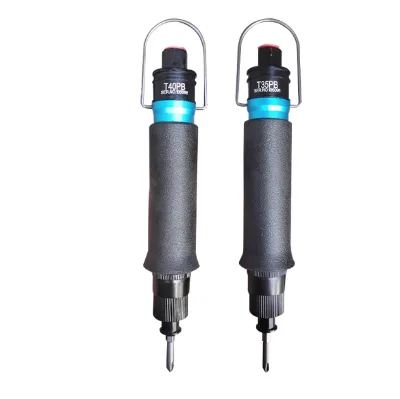


Comprehensive Sourcing Guide
Strategic Sourcing Guide for Pneumatic Angle Screwdrivers
Understanding Technical Specifications and Operational Parameters
When sourcing pneumatic angle screwdrivers, buyers must first establish a clear understanding of the technical specifications that define the tool's capability and suitability for specific industrial tasks. The core functionality of these tools relies on compressed air to generate torque, making the operating pressure and airflow requirements critical parameters for procurement. Based on observed market data, pneumatic angle screwdrivers typically operate within a pressure range of 90 to 119 psi. This range is essential for ensuring consistent performance; operating below this threshold may result in insufficient torque, while exceeding it could damage internal components or compromise safety.
The mechanical design of the tool significantly influences its application. The working style for many units in the current market is defined as a rotary type, which allows for continuous rotation suitable for high-volume assembly lines. However, the degree of automation varies, with some models classified as semi-automatic, requiring manual intervention for specific stages of the screwdriving process. The startup mode is another critical specification; many units utilize a hand press mechanism to initiate operation, providing the operator with direct control over the engagement of the tool.
Torque and speed are the primary performance metrics. Observed data indicates a maximum torque capacity ranging from 50 nm to 80 nm, with free speeds varying between 8000 rpm and 10000 rpm depending on the specific model. The air consumption is also a vital factor for facility planning, with average air consumption observed at approximately 5 cfm (cubic feet per minute). The air inlet size is typically standardized at 1/4 inch, which is compatible with most industrial air supply systems. Buyers should also verify the bolt capacity, which has been observed in ranges of 6mm and 8mm, ensuring the tool matches the fastener sizes used in their production lines. The physical dimensions, such as a length of approximately 150mm (5.91 inches), contribute to the tool's ergonomics and accessibility in tight spaces.
Compliance, Certification, and Quality Standards
In the B2B procurement of industrial tools, verifying compliance with international standards and certifications is non-negotiable. The presence of ISOCE certification is a significant indicator of quality assurance and adherence to recognized management systems. Buyers should explicitly request proof of this certification from potential suppliers to ensure that the manufacturing processes meet rigorous quality benchmarks. While the specific standard designation for the product itself is often listed as "Standard," this generic term requires clarification. Procurement teams must verify if the "Standard" designation refers to a specific national or international norm, such as ISO or ANSI standards, rather than a generic internal classification.
The origin of the product plays a role in compliance verification. Many units are sourced from regions such as Wenling and China, which are known manufacturing hubs. However, the country of origin alone does not guarantee compliance. Buyers must ensure that the supplier can provide documentation confirming that the tools meet the safety and performance regulations of the destination market. This includes checking for electrical safety certifications if the tools have electronic components, or pressure vessel certifications if the air system integration requires specific regulatory approval.
Furthermore, the condition of the product is a fundamental requirement. All observed units in the current market data are listed as "New," which implies that buyers should expect brand-new inventory rather than refurbished or used equipment. This distinction is crucial for warranty validity and long-term reliability. When evaluating suppliers, buyers should ask for a checklist of compliance documents, including material safety data sheets (MSDS) for any lubricants used and warranty certificates that align with the ISOCE certification status.
Cost Drivers and Pricing Structures
The pricing landscape for pneumatic angle screwdrivers is characterized by significant variability, with observed price ranges spanning from $0.50 to $3,395 USD. This wide disparity is not indicative of a single product tier but rather reflects differences in brand positioning, customization levels, and order volumes. The minimum order quantity (MOQ) also varies drastically, ranging from 1 unit to 5,000 units. This flexibility allows buyers to source small quantities for prototyping or testing while accommodating large-scale industrial deployments.
Several factors drive the cost of these tools. Customization is a primary cost driver; while some models are available as "Non-Customized" standard units, others offer "Customized" options. Customization can include branding, specific torque settings, or unique packaging requirements, all of which add to the unit cost. The brand name also influences pricing, with established brands like LIZHOU or OEM variants commanding different price points compared to generic or lesser-known manufacturers.
Pricing transparency is often limited in this sector. Many suppliers list prices as "Discuss with Us" or require direct contact via platforms like WeChat to obtain a quote. This suggests that the final price is highly dependent on the specific configuration, volume, and negotiation outcome. Buyers should be prepared to engage in detailed discussions to understand the total cost of ownership, which includes not only the unit price but also shipping, import duties, and potential customization fees. The packing specifications, such as 15 or 25 pieces per carton, can also impact logistics costs, which should be factored into the overall budget.
Typical Applications and Industry Use Cases
Pneumatic angle screwdrivers are versatile tools designed for a wide array of industrial applications. The observed usage data highlights their prevalence in woodworking, manufacturing, construction, and automotive sectors. In the woodworking industry, these tools are valued for their ability to drive screws efficiently in tight corners where standard straight screwdrivers cannot reach, thanks to their angled design. The compact length of 150mm enhances their utility in confined spaces common in furniture assembly.
In the manufacturing sector, the semi-automatic nature of these tools makes them ideal for assembly lines where speed and consistency are paramount. The ability to handle bolts ranging from 6mm to 8mm allows them to be used in various stages of product assembly, from light electronics to heavier machinery components. The automotive industry similarly relies on these tools for engine assembly and chassis construction, where high torque and precise control are required. The observed free speeds of up to 10,000 rpm ensure that the tools can handle high-speed fastening tasks without compromising on accuracy.
The "Air Screwdriver" usage classification indicates their primary function is fastening, but the specific applications extend to maintenance and repair tasks as well. The exhaust direction, noted as "other" in some listings, suggests that the design may vary to accommodate different workspace layouts, preventing debris or oil mist from interfering with the operator or the workpiece. Buyers should match the tool's specific torque and speed capabilities to the material hardness and fastener type used in their specific application to ensure optimal performance and tool longevity.
Supplier Evaluation and Selection Criteria
Selecting the right supplier for pneumatic angle screwdrivers requires a rigorous evaluation process that goes beyond price comparison. Buyers should prioritize suppliers who demonstrate transparency in their product attributes and offer clear communication channels. The observation that some suppliers suggest contacting them via email or WeChat indicates a need for direct engagement to clarify technical details and negotiate terms. A reliable supplier should be able to provide detailed specifications for every model, including the exact model number (e.g., LZ-10HQ, 8H, 10H, 6H, AIW1462858-C, ASD143317-2-C, TG-T20PB, SAT7624) and confirm the availability of customization options.
The origin of the product is another critical factor. While many tools originate from China, specifically Wenling, buyers should verify the supplier's ability to maintain consistent quality across different production batches. The presence of multiple model numbers and varying packing specifications (e.g., Strong Box, Carton Packing, Box / Plastic Box) suggests a diverse product line. A capable supplier should be able to guide the buyer in selecting the most appropriate model for their specific needs, rather than simply pushing a single product.
Additionally, the supplier's responsiveness to inquiries about certifications and standards is a key indicator of reliability. Buyers should assess whether the supplier can provide evidence of the ISOCE certification and clarify the "Standard" designation. The ability to discuss pricing and MOQs openly is also essential, as the wide range of observed prices and order quantities suggests that terms are often negotiable. Suppliers who offer clear information on lead times and shipping logistics, despite the "Discuss with Us" pricing model, are more likely to be reliable partners for long-term procurement.
Quality Control and Long-Term Procurement Considerations
Ensuring the quality of pneumatic angle screwdrivers is paramount for maintaining production efficiency and safety. Buyers should implement a robust quality control (QC) process that includes pre-shipment inspections. This process should verify that the tools meet the observed specifications, such as the operating pressure of 90-119 psi, the correct bolt capacity, and the specified torque and speed ratings. The condition of the product must be confirmed as "New," and the packaging should be inspected to ensure it meets the required standards, such as the Strong Box or Carton Packing specifications.
Long-term procurement considerations involve building a sustainable relationship with suppliers who can provide consistent quality and support. The availability of spare parts and after-sales service is crucial for minimizing downtime. Buyers should inquire about the warranty terms and the availability of technical support for troubleshooting issues related to the hand press startup mode or air pressure fluctuations. The degree of automation, whether semi-automatic or air-powered, should be evaluated for its impact on operator training and long-term labor costs.
Furthermore, the environmental and safety aspects of the tool should be considered. The air consumption of 5 cfm and the exhaust direction should be evaluated in the context of the facility's air filtration and ventilation systems. Ensuring that the tools are compatible with the existing air supply infrastructure can prevent costly retrofits. Finally, buyers should consider the scalability of their procurement strategy. With MOQs ranging from 1 to 5,000 units, buyers should plan for future growth and ensure that the supplier can accommodate increased order volumes without compromising quality or lead times. By focusing on these technical, compliance, and operational factors, buyers can make informed decisions that optimize their investment in pneumatic angle screwdrivers.
FAQs
What certifications do these pneumatic angle screwdrivers hold?
These tools hold ISOCE certification, indicating adherence to recognized quality management systems. Buyers should verify specific documentation from suppliers to ensure compliance with destination market safety regulations before purchasing.
Which operating pressure range is required for these tools?
The tools operate within a pressure range of 90 to 119 psi. Operating below this threshold may result in insufficient torque, while exceeding it could damage internal components or compromise safety during use.
Can these screwdrivers be customized for specific branding needs?
Customization is available for some models, while others are listed as non-customized standard units. Buyers should discuss specific branding or configuration requirements directly with suppliers via email or WeChat to confirm feasibility.
What is the maximum torque capacity of these pneumatic tools?
The maximum torque capacity ranges from 50 nm to 80 nm depending on the specific model. This range allows the tools to handle various fastener sizes, including bolts up to 8mm in diameter.
Where are these pneumatic angle screwdrivers manufactured?
The products originate from Wenling and other regions in China. Buyers should verify the supplier's ability to maintain consistent quality across different production batches when sourcing from these manufacturing hubs.
How is the air consumption measured for these tools?
The average air consumption is observed at approximately 5 cubic feet per minute. This metric is vital for facility planning to ensure the existing air supply infrastructure can support the tool's operational requirements.