Source Self-Vacuuming Pneumatic Polishing Machine for Woodworking, Construction, Automotive
Find 30 Self-Vacuuming Pneumatic Polishing Machine options from suppliers in Wenling and China. Compare models like LZ-4048 and SAT7480 based on speed, weight, and pad size for industrial manufacturing and DIY projects.
Key considerations
Products List


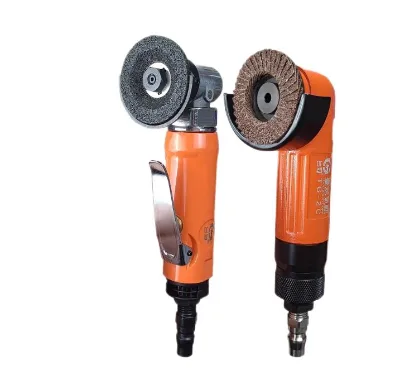

Automatic Sanding Vacuum Cleaner Sander Machine Polishing Air Sanding Machine
$550.00 - $600.00
MOQ: 1 Pieces


$700.00 - $300000.00
MOQ: 1 SET


Comprehensive Sourcing Guide
Strategic Sourcing Guide for Pneumatic Polishing Equipment
Procuring pneumatic polishing machinery requires a rigorous understanding of the distinction between standard air-powered tools and specialized vacuum-integrated systems. While the core keyword "Self-Vacuuming Pneumatic Polishing Machine" suggests an integrated dust extraction capability, the available market data for pneumatic air grinders and polishers indicates a primary reliance on external dust management or standard air consumption profiles. Buyers must carefully navigate the gap between marketing terminology and actual mechanical specifications. This guide provides a disciplined framework for evaluating air-powered polishing tools, focusing on the technical realities of air consumption, pressure requirements, and model-specific attributes found in current industrial listings.
Technical Specifications and Performance Metrics
The foundation of any pneumatic tool procurement lies in the precise interpretation of technical specifications. Air-powered polishers operate on compressed air, and their performance is dictated by free speed, air consumption, and operating pressure. In the observed product data, specific models such as the LZ-4048(040D) and the SAT7480 demonstrate significant variance in operational parameters. The LZ-4048(040D) lists a free speed of 2500 rpm, whereas the SAT7480 model reaches 12000 rpm. This disparity highlights that "polishing machine" is a broad category encompassing heavy-duty grinders and high-speed orbital sanders.
Air consumption is a critical cost driver often overlooked in initial sourcing. The SAT7480 model specifies an average air consumption of 4 cfm (cubic feet per minute), while the LZ-4048(040D) requires 9 cfm. These figures directly impact the required capacity of the shop's air compressor system. A buyer must verify that their existing infrastructure can sustain the peak airflow without pressure drops that degrade tool performance. Furthermore, operating pressure varies by model; the SAT7480 and SAT7847-5 operate at approximately 6.3 kg/cm², while the SAT7832 is rated for 6.0 kg/cm². Deviating from these pressure ranges can lead to inefficient operation or mechanical failure.
The physical dimensions and weight of the tool also influence operator fatigue and application suitability. The LZ-4048(040D) has a net weight of 2kg and a length of 320mm, classifying it as a heavier, more robust unit suitable for intensive industrial manufacturing. In contrast, the SAT7847-5 weighs only 0.6kg with a length of 165mm, indicating a design optimized for precision work or extended use where ergonomics are paramount. The pad size is another decisive factor; options range from a 2-inch (50mm) pad on the SAT7847-5 to a 7-inch (180mm) pad on the LZ-4048(040D). The choice of pad size dictates the surface area coverage and the type of finish achievable, with larger pads generally used for broad surface preparation and smaller pads for detailed work.
Compliance and Certification Verification
When sourcing industrial equipment, verifying compliance with international standards is essential for safety and regulatory adherence. The product data explicitly lists ISOCE as a certification attribute for the LZ-4048(040D) model. While this suggests a level of quality assurance, buyers must confirm the specific scope of this certification. The background information notes CE and ISO9001 as potential standards, but these are not explicitly confirmed in the primary product attributes for every listed item.
Buyers should not assume that all pneumatic polishers in a catalog possess the same certification status. The presence of a certification mark on a listing does not guarantee that the specific unit being purchased is certified, nor does it confirm the validity of the certificate in the buyer's jurisdiction. It is imperative to request the actual certification documents from the supplier. For operations in the European Union, CE marking is a mandatory requirement for placing machinery on the market. Similarly, ISO9001 certification indicates that the manufacturer has a quality management system in place, which is a strong indicator of consistent production standards. However, without explicit confirmation in the product listing, these should be treated as attributes to be verified rather than guaranteed facts.
Additionally, environmental compliance such as ROHS (Restriction of Hazardous Substances) is often relevant for electronic or mechanical components, though the provided data lists this only as a low-confidence background fact. Buyers should explicitly ask suppliers to confirm ROHS compliance if the equipment contains electrical components or specific materials that are regulated in the destination market. Relying on unverified background information can lead to customs delays or regulatory penalties.
Cost Drivers and Pricing Dynamics
The pricing for pneumatic polishing tools exhibits a wide range, observed between $16 and $500,000 USD. This extreme variance suggests that the market includes both simple hand tools and complex, integrated industrial systems. The lower end of the spectrum likely corresponds to basic air grinders or sanders with minimal features, while the higher end may include specialized units with advanced automation, integrated dust collection systems, or custom engineering.
Several factors drive the cost of these machines. First, the degree of automation is a significant differentiator. The product data mentions "Air Power" as a degree of automation, implying that the tool relies entirely on compressed air rather than electricity. However, tools with "Hand press" startup modes or specific "Rotary Type" working styles may command different price points based on their mechanical complexity. Second, customization availability affects pricing. The LZ-4048(040D) is listed as "Customized," which often incurs a premium due to the engineering and tooling required for bespoke specifications. Conversely, the SAT7832 is listed as "Non-Customized," suggesting a standard off-the-shelf price point.
Minimum Order Quantity (MOQ) also plays a role in the total cost of ownership. The observed MOQ range spans from 1 to 200 units. Buyers purchasing a single unit for a small workshop will face a higher per-unit cost compared to those placing an order for 200 units, which may trigger volume discounts. The packaging method, such as "Strong Box" or "Box / Plastic Box," can also influence shipping costs, particularly for international procurement. Buyers must calculate the landed cost, including freight, duties, and insurance, rather than focusing solely on the unit price.
Typical Applications and Operational Context
Pneumatic polishing machines are versatile tools used across a diverse array of industries. The product data explicitly lists applications including woodworking, industrial manufacturing, DIY projects, construction, and automotive repair. This breadth of application underscores the importance of matching the tool's specific specifications to the intended task.
In woodworking and construction, the heavy-duty nature of tools like the LZ-4048(040D) with its 7-inch pad and 2kg weight makes it suitable for large-scale surface preparation and finishing. The high torque and stability of such tools are essential for handling dense materials. In contrast, the SAT7847-5, with its 2-inch pad and 0.6kg weight, is better suited for detailed automotive repair work or fine woodworking where precision and maneuverability are critical. The orbital diameter, ranging from 3mm to 5mm in the observed data, further refines the application. Smaller orbital diameters provide a finer finish, while larger diameters are used for aggressive material removal.
The "Working Style" of the tool is another key consideration. The data identifies "Rotary Type" as a working style, which is distinct from orbital or reciprocating motions. Rotary polishers are typically used for buffing and polishing, while orbital sanders are preferred for sanding. Buyers must ensure that the selected tool matches the desired motion for their specific application. The "Pneumatic Drill Range" of "Construction Machinery" suggests that some of these tools are robust enough to withstand the harsh conditions of heavy industrial environments.
Supplier Evaluation and Sourcing Strategy
Evaluating suppliers for pneumatic tools requires a focus on origin, reliability, and support infrastructure. The product data indicates origins in Wenling and China, which are known manufacturing hubs for power tools. However, the specific supplier names are not provided, and buyers should not rely on unverified supplier reputations. Instead, the focus should be on the supplier's ability to provide technical support, warranty coverage, and spare parts availability.
When evaluating a potential supplier, buyers should verify the "prod_packing" details to ensure the tools are shipped in protective packaging, such as "Strong Box" or "Plastic Box," to prevent damage during transit. The "Condition" of the products is listed as "New," which is a standard expectation, but buyers should confirm that the tools are factory-sealed and not refurbished units unless explicitly stated.
The "Degree of Automation" and "Customization" options are also indicators of a supplier's flexibility. A supplier that offers customization, as seen with the LZ-4048(040D), demonstrates a capacity for engineering support and can tailor tools to specific production needs. However, this comes with longer lead times and higher costs. Buyers must balance the need for customization against the urgency of their procurement timeline.
Quality Control and Long-Term Procurement Considerations
Ensuring the quality of pneumatic tools is critical for maintaining operational efficiency and safety. The "Sound Level" of 80dba for the SAT7832 model provides a benchmark for noise emissions, which is a significant factor in workplace safety and compliance with occupational health regulations. Buyers should verify the sound levels of all prospective tools to ensure they meet local noise exposure limits.
Long-term procurement considerations include the availability of consumables and spare parts. The "Pad" size and type are consumable items that will need regular replacement. Buyers should confirm that the pads for the specific models they purchase are readily available from the supplier or third-party vendors. The "Air Inlet" size, typically 1/4" in the observed data, is a standard that facilitates compatibility with various air hoses and fittings, but buyers should verify this for each model to avoid compatibility issues.
The "Net Weight" and "Length" of the tools also impact long-term usability. Heavier tools may cause operator fatigue over extended shifts, leading to reduced productivity and increased risk of injury. Buyers should consider ergonomic factors when selecting tools for high-volume production environments. Additionally, the "Free Speed" and "Air Pressure" ratings must be maintained within the specified ranges to ensure the longevity of the tool. Operating a tool at pressures significantly higher than the rated 6.0-6.3 kg/cm² can lead to premature wear and potential catastrophic failure.
Comparative Analysis of Key Models
To assist in the decision-making process, the following table summarizes the key technical attributes of the observed pneumatic polishing models. This comparison highlights the trade-offs between speed, weight, and application suitability.
| Model Name | Free Speed (rpm) | Pad Size | Net Weight | Avg. Air Cons. (cfm) | Operating Pressure (kg/cm²) | Primary Application Context |
|---|---|---|---|---|---|---|
| LZ-4048(040D) | 2500 | 180mm (7") | 2kg | 9 | 6.3 | Heavy-duty Industrial, Construction |
| SAT7480 | 12000 | 5" | 0.9-1.27kg | 4 | 6.3 | General Polishing, Woodworking |
| SAT7847-5 | 20000 | 50mm (2") | 0.6kg | N/A | N/A | Precision Detail Work, Automotive |
| SAT7832 | N/A | 150mm (6") | 930g | N/A | 6.0 | General Sanding, DIY Projects |
Note: Data is derived from observed product attributes. Some values such as air consumption for SAT7847-5 were not explicitly listed in the source data and are marked as N/A.
This comparative view underscores that there is no single "best" tool; the optimal choice depends entirely on the specific requirements of the application. Buyers must align their selection with the technical constraints of their workspace, the nature of the materials being processed, and the ergonomic needs of their operators. By rigorously verifying specifications and avoiding assumptions about unlisted features, procurement teams can secure pneumatic polishing equipment that delivers reliable performance and long-term value.
FAQs
What certifications are available for these pneumatic polishers?
The LZ-4048(040D) model explicitly lists ISOCE as a certification attribute. Buyers must verify specific certification documents from the supplier as not all listed items guarantee the same status. Background standards like CE or ISO9001 are not confirmed for every product in the catalog.
Which models offer customization options for industrial needs?
The LZ-4048(040D) is listed as a customized product, while the SAT7832 is marked as non-customized. Customization availability often incurs a premium and requires longer lead times. Buyers should confirm if bespoke engineering is needed before selecting a specific model.
How does air consumption vary between different polishing models?
Air consumption varies significantly, with the LZ-4048(040D) requiring 9 cfm and the SAT7480 needing only 4 cfm. This difference directly impacts the required capacity of the shop's air compressor system. Buyers must verify their infrastructure can sustain the peak airflow without pressure drops.
What is the operating pressure range for these pneumatic tools?
Most models operate at approximately 6.3 kg/cm², while the SAT7832 is rated for 6.0 kg/cm². Deviating from these pressure ranges can lead to inefficient operation or mechanical failure. Always ensure the air supply matches the specific model's working pressure rating.
Can these tools be used for automotive repair and woodworking?
Yes, the listed applications include woodworking, industrial manufacturing, DIY projects, construction, and automotive repair. The choice of tool depends on the specific task, with larger pads suited for broad surfaces and smaller pads for detailed work. Ensure the working style matches the required motion.
What is the price range for these pneumatic polishing machines?
The observed price range spans from 16 to 500,000 USD, reflecting a mix of simple hand tools and complex industrial systems. Lower prices likely correspond to basic units, while higher costs may include advanced automation or custom engineering. Buyers should calculate the total landed cost including freight and duties.
Which suppliers offer products originating from China or Wenling?
Product origins listed include Wenling and China, which are known manufacturing hubs for power tools. Specific supplier names are not provided in the data, so buyers should focus on verifying origin and support infrastructure. Confirm that the tools are shipped in protective packaging like strong boxes.