Source Polished Emperador Marble Slabs for Countertop, Floor, Wall
Compare 30 listings of Polished Emperador Marble Slabs from suppliers in China and Turkey. Buyers can review specifications like thickness, density, and surface finishing to select materials for countertops, flooring, or wall applications.
Key considerations
Products List


Light Emperador Marble /Brown Marble Slabs/Light Brown Marble for Flooring Tile
$15.00 - $50.00
MOQ: 200 Square Meters

Natural Stone Scream Beige Light Emperador Brown Marble for Slabs/Tiles//Floor
$15.00 - $30.00
MOQ: 30 Pieces

Emperador Dark Marble Slabs/Brown Marble for Flooring Tile Wall Cladding Countertop Basin Sink
$10.00 - $80.00
MOQ: 200 Square Meters


Oriental Brown Marble Chinese Emperador Dark Marble Slab for Tiles or Countertops
$15.50 - $19.00
MOQ: 400 Square Meters


Natural Stone Golden Light Emperador Marble Brown Polished Slabs/Tiles
$16.00 - $28.00
MOQ: 500 Square Meters


Natural Brown Spanish Dark Emperador Slab Marble for Interior Countertop/Stair/Tile Decoration
$29.00 - $39.00
MOQ: 200 Square Meters

Natural Stone Spanish Dark Emperador Slab Marble for Countertop/Stair/Tile Project
$29.00 - $39.00
MOQ: 200 Square Meters

Dark Emperador Marble, Brown Marble Tiles and Marble Flooring Slabs
$38.00 - $39.00
MOQ: 500 Square Meters


China Dark Emperador Borwn Marble and Marble Slabs for Flooring
$20.00 - $30.00
MOQ: 200 Square Meters

China Top Grey Marble/Grey Emperador Marble/Grey Emperador Marble for Floor/Background
$16.00 - $18.00
MOQ: 200 Square Meters
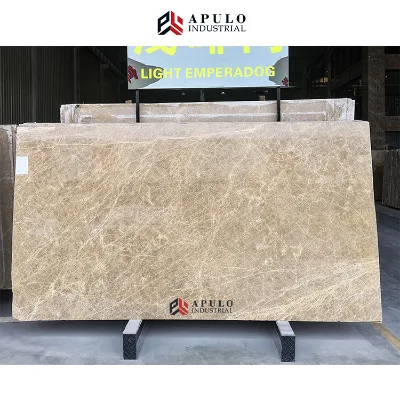

Popular Polished Crystal Light Emperador Marble for Tiles, Countertops
$30.00 - $50.00
MOQ: 50 Square Meters


China Brown Marble Crystal Light Emperador Marble Slabs for Tiles, Vanity Tops
$30.00 - $50.00
MOQ: 50 Square Meters

Light Emperador Stone Marble for Countertops Slabs and Floor Tiles
$25.00 - $30.00
MOQ: 20 Square Meters


Comprehensive Sourcing Guide
Strategic Sourcing Guide for Polished Emperador Marble Slabs
Understanding Product Attributes and Technical Specifications
When sourcing Polished Emperador Marble Slabs, buyers must first establish a precise understanding of the material's inherent characteristics and the specific technical parameters that define the product. The core keyword, "Polished Emperador Marble Slabs," refers to a specific variety of natural stone known for its distinctive brown coloration and calcite composition. In the current market, this material is frequently categorized under the type "Calcite" and is sourced primarily from regions in China and Turkey. The visual identity of these slabs is defined by a brown hue, which can range from light to dark tones, often referred to in catalogs as "Light Emperador" or "Emperador grey."
The physical form of the product is a critical variable. While the market offers various formats, the high-confidence data indicates a prevalence of "Big Slab" and "Slab" forms, with some suppliers offering "Cut-To-Size" options. The standard thickness for these polished slabs varies, with observed specifications including 20mm, 2cm (20mm), and 18mm. Buyers should note that thickness tolerance is a vital metric; observed data suggests a tolerance of +/- 1mm, which is a standard expectation for precision stone fabrication. The surface finishing is explicitly "Polished," with a polished degree often cited as above 90 degrees, ensuring a high-gloss, reflective finish suitable for interior applications.
Density is another fundamental technical attribute. For the specific marble varieties observed, the density is recorded at 2.7 g/cm³. However, broader natural stone categories, including granite, show a density range of 2 to 3 g/cm³. When evaluating a specific supplier, the buyer must verify the exact density of the batch, as variations can affect the structural integrity and weight calculations for installation. The edge processing is typically "Flat," though custom edge profiles may be available through customization services. The material is classified as "Natural Stone," emphasizing its geological origin rather than a synthetic composition.
Compliance, Certification, and Quality Standards
Navigating the regulatory landscape is essential for international procurement of natural stone. The supply chain for Polished Emperador Marble Slabs is heavily influenced by certification requirements that vary by destination market. The most frequently observed certifications in the product data are CE and ISO. Specifically, some listings indicate "CE, ISOColor:Brown," suggesting that color consistency and European conformity are linked in the supplier's documentation. Other entries reference "CE RoHS," indicating compliance with restrictions on hazardous substances, which is particularly relevant for products entering the European Union.
Quality standards are equally critical. The data highlights "European Quality" and "European Quality Standard" as recurring benchmarks. This implies that the manufacturing and finishing processes adhere to rigorous European norms regarding surface finish, dimensional accuracy, and structural soundness. Additionally, the standard "Customized Dimensions" is noted, meaning that while the base product follows a standard, the final delivery often adheres to specific project requirements. Buyers must verify that the supplier's "European Quality Standard" is not merely a marketing term but is backed by actual quality control protocols.
The origin of the stone plays a significant role in compliance. Products are sourced from China, specifically regions like Fujian, and Turkey. Each origin may have different export regulations and environmental standards. For instance, the "Fumigated Wooden Crate" mentioned in packing specifications is a standard phytosanitary requirement for international shipping to prevent the spread of pests. Buyers should ensure that the supplier provides valid certificates of origin and that the packaging meets the specific import requirements of the destination country. The presence of "ISOColor:Brown" in certification listings suggests a need for color matching standards, which is vital for large projects where batch consistency is required.
Cost Drivers and Pricing Dynamics
The pricing of Polished Emperador Marble Slabs is influenced by a complex interplay of factors, including material rarity, processing complexity, and logistics. The observed price range in the market spans from 10 to 450 USD. This wide variance is not indicative of a single product tier but rather reflects differences in slab size, thickness, finish quality, and the specific supplier's positioning. A price at the lower end of the spectrum may correspond to smaller cut-to-size pieces or standard thicknesses, while the higher end likely reflects large-format big slabs with premium polishing and custom dimensions.
Volume is a primary cost driver. The Minimum Order Quantity (MOQ) observed ranges from 1 to 530 units. This flexibility allows for both trial orders and large-scale commercial projects. However, the MOQ significantly impacts the unit price; higher volumes typically secure better pricing per square meter. Buyers should be aware that the "Trial Order: Welcome" policy allows for smaller initial purchases to verify quality before committing to larger volumes, which can mitigate financial risk.
Logistics and packaging also contribute to the final cost. The data indicates various packing methods, including "Styrofoam Wrapped With Carton and Wood Crate," "Foamed Plastic and in Fumigated Wooden Crate," and "Strong Wooden Crates, Strong Wooden Pallets." The choice of packaging affects the shipping weight and volume, which directly influences freight costs. Furthermore, the "Delivery Time" of 15 to 40 days adds a temporal cost factor. Longer lead times may require earlier capital deployment or affect project scheduling, potentially incurring indirect costs. Buyers must calculate the total landed cost, including the base price, packaging, freight, and insurance, rather than focusing solely on the unit price.
Typical Applications and Design Integration
Polished Emperador Marble Slabs are versatile materials suitable for a wide array of interior applications. The observed usage data lists "Countertop," "Floor," "Wall," "Paving," "Vanity Top," and "Tiles." The "Classic" style and "Brown" color make these slabs particularly effective in traditional and luxury interior designs. The high polish degree (above 90 degrees) enhances the stone's natural veining and depth, making it an ideal choice for feature walls and reception areas where visual impact is paramount.
The application determines the required technical specifications. For flooring and paving, the 20mm or 2cm thickness provides the necessary durability and load-bearing capacity. In contrast, countertop and vanity top applications may utilize thinner slabs, provided they are supported correctly. The "Custom Mantel" attribute suggests that these slabs are also used in fireplace surrounds, where the "Classic" style complements traditional architectural elements. The "Indoor" usage classification is a key constraint; while polished marble is beautiful, it is generally not recommended for high-traffic exterior paving in freeze-thaw climates without specific treatment, as the polished surface can become slippery and the stone may be susceptible to weathering.
The ability to customize dimensions is a significant advantage for these applications. Whether the project requires a specific "Cut-To-Size" slab for a unique vanity or a "Big Slab" for a seamless wall installation, the supplier's ability to adhere to "According Your Drawing" specifications is crucial. This flexibility allows architects and designers to maximize the aesthetic potential of the stone, minimizing seams and joints in large installations.
Supplier Evaluation and Quality Control Protocols
Selecting the right supplier requires a rigorous evaluation of their quality control (QC) processes and operational capabilities. The data highlights a specific QC protocol: "All Products Are Checked by Experienced QC Then PA." This indicates a two-stage verification process where experienced personnel inspect the goods, followed by a final approval (PA) step. Buyers should request detailed records of this process, including the number of inspections and the criteria used for rejection.
Supplier reliability is further assessed through their production methods and standards. The "Natural" making method and "European Quality Standard" suggest a commitment to traditional stone processing techniques. However, buyers must verify that these claims are consistent across all batches. The "Unified Catalogue: G3743" reference implies a standardized product line, which can aid in consistency. When evaluating suppliers, buyers should look for evidence of their ability to maintain color consistency, as indicated by the "ISOColor:Brown" certification. Variations in color between batches can be a significant issue in large projects.
The "Remote Control: Without Remote Control" and "Overheating Protected" attributes, while seemingly unrelated to stone, suggest that the supplier may offer integrated systems or that the data includes related product lines. Buyers should clarify whether these attributes apply to the marble slabs themselves or to associated fixtures. In the context of stone, the focus should remain on the physical integrity of the slab, the precision of the polishing, and the accuracy of the dimensions.
Long-Term Procurement and Operational Considerations
Sourcing Polished Emperador Marble Slabs is not a one-time transaction but a long-term partnership that requires careful planning. The "Delivery Time" of 15 to 40 days necessitates advanced planning to avoid project delays. Buyers should factor in potential variability in lead times due to seasonal demand or logistical disruptions. Establishing a clear communication channel with the supplier is essential for tracking production status and managing expectations.
Maintenance and longevity are also critical considerations. While the "Polished" finish offers a stunning aesthetic, it requires regular sealing and care to prevent staining and etching, especially in high-traffic areas like kitchens and bathrooms. Buyers should ensure that the supplier provides maintenance guidelines or recommends compatible sealing products. The "Quality: European Quality" claim implies a higher durability, but the actual performance depends on the installation and maintenance practices.
Future-proofing the procurement strategy involves understanding the supply chain's resilience. The "Customization: Available" feature allows for adaptability to changing project requirements. However, buyers should be cautious about relying too heavily on custom dimensions, as these can increase lead times and costs. A balanced approach, combining standard sizes with strategic custom cuts, often yields the best results. Finally, the "Trial Order: Welcome" policy provides a low-risk opportunity to test the supplier's performance, quality, and communication before committing to a full-scale order.
Comparative Analysis of Product Variants
To assist buyers in making informed decisions, the following table summarizes the key technical and logistical attributes observed in the market for Polished Emperador Marble Slabs. This comparison highlights the variations in specifications, origins, and certifications that buyers must navigate.
| Attribute | Variant A (China Origin) | Variant B (Turkey Origin) | Variant C (Fujian, China) |
|---|---|---|---|
| Material Type | Marble (Calcite) | Marble (Calcite) | Natural Stone |
| Color | Brown | Brown | Brown |
| Form | Big Slab / Slab | Cut-To-Size | Slab |
| Thickness | 20mm / 2cm | 18mm | 20mm |
| Surface Finish | Polished (Above 90°) | Polished | Polished |
| Origin | China | Turkey | Fujian, China |
| Certification | CE | CE, ISOColor:Brown | CE RoHS |
| Packing | Wooden Crate | Foamed Plastic + Fumigated Crate | Strong Wooden Crates |
| Standard | European Quality | European Quality Standard | Europe Standard |
| Density | 2.7 g/cm³ | 2.7 g/cm³ | 2.7 g/cm³ |
This table illustrates that while the core material and aesthetic remain consistent, the specific technical details and compliance documents vary by origin. Buyers must align these attributes with their project requirements and regulatory constraints. For instance, a project in the EU might prioritize the "CE RoHS" certification found in the Fujian variant, while a project requiring specific dimensional tolerances might prefer the "Cut-To-Size" option from the Turkey origin. Understanding these nuances is essential for successful procurement.
FAQs
What certifications do Polished Emperador Marble Slabs have?
The slabs carry CE and ISO certifications, with some listings noting CE RoHS compliance. These standards ensure the product meets European quality norms and restrictions on hazardous substances for international markets.
Which thickness options are available for these marble slabs?
Available thicknesses include 20mm, 2cm, and 18mm with a tolerance of plus or minus 1mm. Buyers can also request custom dimensions according to specific drawings for tailored project needs.
How long is the delivery time for these orders?
The standard delivery time ranges from 15 to 40 days depending on order volume and customization. This lead time accounts for production, quality checks, and secure packaging in wooden crates.
Can I order a trial order for these marble slabs?
Yes, trial orders are welcome to verify quality before committing to larger volumes. This policy allows buyers to test the product specifications and finish before scaling up procurement for major projects.
What is the density of the polished emperador marble?
The specific density for these calcite marble slabs is recorded at 2.7 grams per cubic centimeter. This value is critical for structural calculations and weight estimation during installation planning.
Which surface finish is applied to these marble slabs?
The slabs feature a polished surface finish with a degree above 90 degrees for high gloss. This treatment enhances the natural brown color and veining suitable for indoor countertops and walls.
Where are these marble slabs primarily sourced from?
Products originate from China, specifically Fujian, and Turkey. Each origin may have different export regulations, so verifying the certificate of origin is essential for compliance with import requirements.