Source Portable 230V Inverter Generator for Camping, Construction, and Home Backup
Explore 30 listings for the Portable 230V Inverter Generator to compare specifications like starting methods, output types, and power ratings. Buyers can evaluate options ranging from single-phase AC to DC outputs with various certifications.
Key considerations
Products List


Portable 3kw Gasoline Generator for Home 110V 220V 230V AC Standby Power
$85.00 - $150.00
MOQ: 50 Pieces


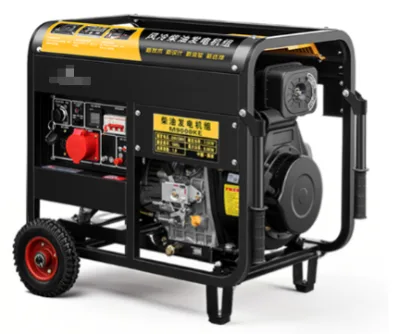

High Quality 650W 220V Super Silent Portable Gasoline Inverter Generator
$48.00 - $58.00
MOQ: 50 Pieces
Comprehensive Sourcing Guide
Strategic Sourcing Guide for Portable 230V Inverter Generators
Understanding Technical Specifications and Power Output
When sourcing a Portable 230V Inverter Generator, the primary objective is to match the unit's electrical output to the specific load requirements of the intended application. The market offers a diverse range of power ratings, generally categorized by kilowatt (kW) output. Based on available product data, buyers will encounter units with power outputs ranging from less than 5kW to the 5-10kW bracket. For applications requiring precise power for sensitive electronics, the inverter technology is critical. The supplied data confirms the availability of "Pure Sine Wave" inverters, which are essential for protecting devices such as laptops, medical equipment, and modern appliances that cannot tolerate the modified sine waves found in traditional generators.
Voltage compatibility is another fundamental specification. While the core keyword focuses on 230V, the observed product attributes indicate a wide range of rated voltages, including 100V, 110V, 120V, 220V, 230V, and 240V. This variability suggests that a single model may be configured for different regional standards, or that buyers must explicitly verify the voltage configuration before purchase. Frequency is equally important; the data shows units operating at both 50Hz and 60Hz. Selecting the wrong frequency can lead to motor burnout or improper operation of time-sensitive devices. Buyers should ensure the generator's frequency matches the grid standard of the destination country or the specific requirements of the connected load.
Starting mechanisms also vary significantly across the product pool. Some units are equipped with "Hand Start" or "Recoil Start" systems, which rely on manual pulling of a cord. Others feature "Electric Start" capabilities, often powered by a battery, offering greater convenience for users who may not have the physical strength to operate a recoil starter. A subset of the observed models combines these methods, offering a "Recoil & Electric Starter" system to provide redundancy. This dual-start capability is a valuable feature for professional procurement, ensuring the generator can be deployed even if the battery is depleted.
Compliance and Certification Verification
In the global B2B market, regulatory compliance is not merely a formality but a prerequisite for market access and safety assurance. The product data highlights a robust array of certifications that buyers should look for to ensure the generators meet international safety and environmental standards. The observed certificates include EPA, Carb (California Air Resources Board), EU V, GS, CE, ETL, RoHS, and PSE. These acronyms represent specific regulatory bodies and standards: EPA and Carb are critical for emissions compliance in the United States, particularly in California; CE and GS indicate conformity with European safety and health requirements; ETL is a North American safety certification; RoHS restricts hazardous substances; and PSE is mandatory for electrical products in Japan.
When evaluating suppliers, buyers must verify that the specific model they intend to purchase carries the relevant certifications for their target market. For instance, a generator intended for sale in the European Union must possess the CE mark, while one for the US market should ideally have EPA and ETL certifications. The presence of "EU V" suggests compliance with specific European emission standards. It is important to note that while the data lists these certifications as available attributes, they are not guaranteed for every single unit in a supplier's catalog. Procurement teams should request valid certification documents for the specific model number, such as the SE2000iE, SE2000D, or HL series models observed in the data, before finalizing an order.
Cost Drivers and Pricing Dynamics
The pricing landscape for portable inverter generators is influenced by several factors, including power capacity, starting mechanism, and certification levels. The observed price range in the market spans from $25 to $1,018.89 USD. This wide disparity indicates that the market includes entry-level, low-power units alongside high-capacity, feature-rich models. The lower end of the price spectrum likely corresponds to basic units with manual starting and lower power outputs, while the higher end reflects models with electric start, pure sine wave inverters, and comprehensive certification packages.
Minimum Order Quantity (MOQ) is another significant cost driver. The data indicates an MOQ range of 1 to 100 units. This flexibility allows buyers to test the market with small orders or commit to larger volumes for better per-unit economics. For buyers looking to establish a long-term supply chain, negotiating MOQs based on volume tiers can significantly impact the total cost of ownership. Additionally, packaging requirements can influence costs. The observed packaging options include "Carton," "Carton+Pallet," and "Carton Box." Palletized shipping is often more efficient for large orders but may incur higher initial packaging costs compared to individual carton shipping.
Typical Applications and Operational Context
The versatility of portable 230V inverter generators makes them suitable for a wide array of applications. The "Pure Sine Wave" output and stable frequency make these units ideal for powering sensitive electronics in residential, commercial, and industrial settings. For example, the SE2000iE and SE2000D models, with their specific power ratings and inverter technology, are well-suited for camping, recreational vehicles (RVs), and home backup power for small appliances. The HL series, including models like the HL2500i and HL3000i, with their specific dimensions and power outputs, may be better suited for construction sites or small-scale commercial operations where portability and reliability are paramount.
Operational parameters such as noise levels and fuel capacity are critical for specific use cases. The data notes a noise pressure level (Lpa) of 60~69dba measured from 7 meters, a figure that is crucial for residential or camping applications where noise pollution is a concern. Fuel tank capacity, observed at 10L for certain models, directly impacts the continuous work duration. One observed attribute mentions a "Continuous Work" time of 5 hours, which serves as a benchmark for runtime expectations. Buyers should calculate their required runtime based on the fuel tank size and the specific load consumption to ensure the generator can sustain operations without frequent refueling.
Supplier Evaluation and Product Attributes
Evaluating a supplier requires a deep dive into the product attributes and manufacturing capabilities. The product data reveals that the origin of these generators is primarily China, with specific mentions of Fuzhou as a production hub. This geographic concentration suggests a mature supply chain with specialized manufacturers. When assessing potential suppliers, buyers should verify the consistency of product attributes such as the "prod_model" (e.g., SE2000iE, HL6000), "prod_packing" (Carton, Carton+Pallet), and "prod_standard" dimensions.
The physical dimensions of the generators vary, with observed standards ranging from 613649.5cm to 715530590mm. These dimensions are vital for logistics planning, storage, and transport. Buyers must ensure that the selected model fits within their intended storage space or transport vehicle. Furthermore, the color options, which include Red, Green, Blue, Chartreuse, and Orange, or "Optional" colors, can be a differentiating factor for branding or safety visibility in industrial settings. A supplier that offers color customization can add significant value to a procurement contract, allowing for brand alignment or safety coding.
Quality Control and Performance Verification
Quality control in the generator industry focuses on the reliability of the engine, the stability of the inverter, and the durability of the frame. The "Inlet Inch" specification of 25mm and "Max. Head" of 25m observed in the data suggest that some units may also function as water pumps or have integrated pumping capabilities, adding complexity to the quality assurance process. For pure generator units, buyers should verify the "Max. Flow" and "Suction Lift" if the unit is a pump-generator combo, ensuring these metrics meet the specific hydraulic requirements of the application.
Performance verification should include checking the "Rated Power" and "Max Power" ratings. For instance, a model might have a rated power of 2.8kw and a max power of 3.0kw. Understanding the difference between these two figures is essential for load management; running a generator continuously at its max power can lead to overheating and premature failure. Buyers should insist on test results that confirm the generator can sustain its rated power for extended periods without voltage fluctuations. The presence of certifications like EPA and CE implies that the manufacturer has undergone third-party testing, but buyers should still request recent test reports for the specific batch being purchased.
Long-Term Procurement Considerations
Sourcing portable generators is a long-term investment that requires consideration of maintenance, spare parts availability, and after-sales support. The "Operation Hours" attribute, while listed as a general term in the data, points to the importance of tracking the lifespan of the unit. Buyers should inquire about the recommended service intervals and the availability of maintenance kits. A supplier that provides a comprehensive warranty and a network for spare parts is preferable to one that only offers the initial product.
Additionally, the "Starting" method and "Starting System" (Recoil, Electric, or Combined) affect long-term usability. Electric start systems require battery maintenance, which adds a layer of long-term care. Buyers should evaluate the battery life and the availability of replacement batteries. The "Fuel Tank" capacity of 10L is a standard feature, but the type of fuel (gasoline, diesel, or dual-fuel) and the efficiency of the engine will determine the ongoing operational costs. Finally, the "Standard" packaging (Carton+Pallet) ensures that the units arrive in good condition, reducing the risk of damage during transit and minimizing the need for immediate repairs or replacements upon arrival. By focusing on these long-term factors, buyers can secure a reliable supply of portable 230V inverter generators that will serve their needs effectively over time.
Comparative Analysis of Key Models
To assist in the decision-making process, the following table summarizes the key attributes of the observed models, highlighting their differences in power, dimensions, and features. This comparison helps buyers quickly identify which model aligns best with their specific procurement needs.
| Product Model | Power Range | Starting Method | Inverter Type | Certifications | Dimensions (Approx.) | Origin |
|---|---|---|---|---|---|---|
| SE2000iE | <5kW | Hand Start | Pure Sine Wave | EPA, Carb, CE, ETL | 613649.5cm | China |
| SE2000D | <5kW | Electric Start | Pure Sine Wave | EPA, Carb, GS, CE, RoHS | 530320430mm | China |
| SE4500iE | <5kW | Recoil & Electric | Pure Sine Wave | EPA, Carb, GS, CE, RoHS | 650475550mm | China |
| HL2500i | <5kW | Recoil & Electric | Pure Sine Wave | EPA, Carb, GS, CE, RoHS | 715530590mm | Fuzhou, China |
| HL3000i | <5kW | Recoil & Electric | Pure Sine Wave | EPA, Carb, GS, CE, RoHS | 715530590mm | Fuzhou, China |
| HL2000i | <5kW | Recoil & Electric | Pure Sine Wave | EPA, Carb, GS, CE, RoHS | 715530590mm | Fuzhou, China |
| HL6000 | 5-10kW | Recoil & Electric | Pure Sine Wave | EPA, Carb, GS, CE, RoHS | 715530590mm | Fuzhou, China |
| IG2000S | <5kW | Recoil & Electric | Pure Sine Wave | EPA, Carb, GS, CE, RoHS | 507x451x285mm | China |
This table illustrates the diversity in the market, from compact, hand-start units to larger, electric-start models with higher power capacities. The consistent presence of "Pure Sine Wave" technology across the observed models indicates a market trend toward high-quality power output suitable for sensitive electronics. The variation in dimensions and starting methods allows buyers to select a unit that fits their specific logistical and operational constraints. By carefully reviewing these attributes, procurement professionals can make informed decisions that balance cost, performance, and compliance.
FAQs
What certifications are available for these generators?
Available certifications include EPA, Carb, EU V, GS, CE, ETL, RoHS, and PSE. Buyers must verify that specific models like SE2000iE carry the required marks for their target market before purchasing.
Which starting methods are offered for portable units?
Units feature Hand Start, Electric Start, or a combined Recoil & Electric Starter system. The dual-start option provides redundancy, ensuring operation even if the battery is depleted.
Can I find generators with Pure Sine Wave output?
Yes, the product pool includes units with Pure Sine Wave inverters. This technology is essential for protecting sensitive electronics like laptops and medical equipment from power fluctuations.
What is the observed price range for these products?
The observed price range spans from 25 to 1018.89 USD. Costs vary based on power capacity, starting mechanism, and the level of certification included with the specific model.
Where are these generators primarily manufactured?
The products originate from China, with Fuzhou specifically mentioned as a production hub. Buyers should verify the origin details for specific models to ensure supply chain transparency.
What power output ranges are available in the market?
Available power outputs range from less than 5kW to the 5-10kW bracket. Selecting the correct capacity depends on matching the unit's rated power to the intended load requirements.
Are there customization options for color or packaging?
Customization is available for colors such as Red, Green, Blue, and Orange. Packaging options include Carton, Carton Box, or Carton+Pallet configurations to suit different shipping needs.