Source Portable 2100nm Laser Lithotripsy for Urology, Prostate, and Kidney Stones
Compare 21 verified Portable 2100nm Laser Lithotripsy systems from Chinese manufacturers. Buyers can evaluate adjustable pulse energy, cooling systems, and ISO certifications for urology and prostate surgeries.
Key considerations
Products List
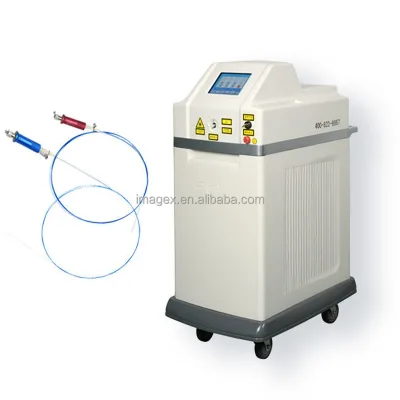


Portable 40-Watt Holmium Laser Therapeutic for Urologcal Lithotripsy
$200.00 - $60000.00
MOQ: 1 Pieces


Dual-Platform Veterinary Surgical Laser System with Lithotripsy Capability
$19500.00 - $25000.00
MOQ: 5


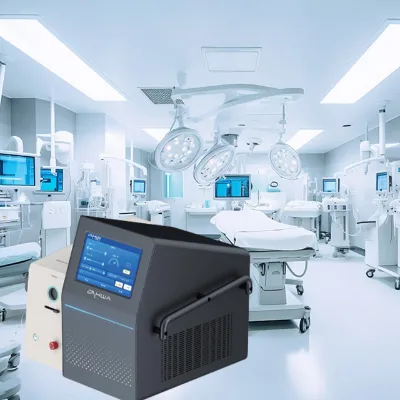


Cost Effective Potent Surgery Laser Urology Lithotripsy Portable Holmium Laser Urology Instrument
$14800.00 - $27000.00
MOQ: 1 Pieces

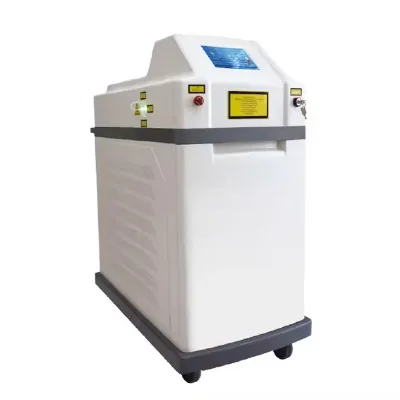

Comprehensive Sourcing Guide
Sourcing Guide for Portable 2100nm Laser Lithotripsy Systems
Technical Specifications and Core Performance Parameters
When evaluating a Portable 2100nm Laser Lithotripsy system, buyers must first establish a clear understanding of the core optical and mechanical specifications that define the device's capability. The central technology relies on a Holmium:YAG laser, which emits at a wavelength of 2100 nm (2.1 μm). This specific wavelength is critical for urology surgery, particularly for laser lithotripsy and HoLEP (Holmium Laser Enucleation of the Prostate) procedures, as it allows for effective tissue ablation and stone fragmentation with minimal thermal damage to surrounding areas. The system typically utilizes a medical optical fiber transmission system to deliver the laser energy directly to the surgical site.
A primary differentiator in the market is the adjustability of the laser's output parameters. Buyers should verify that the system offers a pulse energy range that is sufficiently broad to handle various clinical scenarios. Observed specifications indicate an adjustable pulse energy range of 0.1J to 5.0J, with some models extending up to 6.0J. This range allows surgeons to tailor the power for delicate tissue work or more aggressive stone fragmentation. Furthermore, the pulse frequency is a key operational metric; systems should support an adjustable frequency between 1 Hz and 50 Hz. Some specific configurations may operate at a fixed frequency of 30 Hz, but the ability to adjust is preferred for versatility.
The duration of the laser pulse is another critical technical factor. High-performance units offer pulse duration settings ranging from 50 microseconds to 1500 microseconds, providing Long, Medium, and Short Pulse Modes. This variability is essential for optimizing the "peak power" versus "average power" balance, which influences the efficiency of stone dusting versus fragmentation. Regarding power consumption, the electrical input varies by model, with observed ratings including 40 Watts, 60 Watts, and higher capacities up to 120 Watts. The system's working mode is designed for continuous operation, supporting 24-hour usage cycles in high-volume surgical environments. The physical construction typically involves metal materials and high-tech composites, finished in white, to ensure durability and ease of cleaning in sterile environments.
Compliance, Certification, and Safety Standards
Navigating the regulatory landscape is a non-negotiable aspect of sourcing medical devices. For a laser lithotripsy system to be legally marketed and used in clinical settings, it must adhere to strict international and regional standards. A primary benchmark for quality management systems in the medical device industry is ISO13485. Buyers should verify that the supplier's manufacturing facility holds this certification, as it indicates a robust framework for design control, risk management, and production consistency.
In addition to quality management, specific product certifications are required. The observed data points to the presence of ISOCE and ISOFDA certifications. While the exact status of these certifications for every listed unit must be confirmed with the supplier, the presence of these marks suggests compliance with European Conformity (CE) and potential FDA (Food and Drug Administration) recognition. Safety is paramount in laser equipment; therefore, the system must meet specific safety standards. One observed standard is EN 149-2001+A1-2009, which relates to respiratory protective equipment, though in the context of laser safety, buyers must ensure the device meets the relevant IEC 60825 standards for laser product safety, which governs classification and exposure limits.
The product classification is also a vital compliance metric. These systems are generally classified as Class II medical devices. This classification implies that the device presents a moderate risk and requires special controls to ensure safety and effectiveness. Buyers must ensure that the documentation provided by the supplier explicitly states the Class II status and that the device is registered with the appropriate health authority in the destination country. The warranty period is another indicator of supplier confidence; a standard offering of 2 years suggests a commitment to product longevity and after-sales support.
Cost Drivers and Pricing Structures
The pricing for Portable 2100nm Laser Lithotripsy systems is influenced by a complex matrix of factors, including power output, technological sophistication, and the level of after-sales support included. The observed market price range is broad, spanning from approximately 200 USD to 80,000 USD. This significant variance indicates that the market includes entry-level units, potentially with lower power outputs or fewer features, alongside high-end systems with advanced control systems and higher wattage capabilities.
Several specific cost drivers should be analyzed during the procurement process. First, the power rating is a primary determinant; units rated at 120 Watts generally command a higher price than those at 40 Watts due to the increased cost of the laser generator and cooling infrastructure. Second, the control system technology adds value. Systems featuring an LCD touchscreen intelligent control system are typically priced higher than those with basic manual interfaces, as they offer greater precision and user experience. Third, the cooling system is a critical component; built-in water cooling systems add to the manufacturing cost but are essential for maintaining stable performance during continuous operation.
The minimum order quantity (MOQ) is another factor affecting the total cost of acquisition. The observed MOQ range is between 1 and 5 units. For hospitals or clinics purchasing a single unit, the unit price may be higher due to the lack of bulk discounts. Conversely, purchasing multiple units within the 1-5 range might unlock volume pricing. Additionally, the "Selling Units" are typically listed as single items, meaning the base price usually covers one complete system. Buyers should also consider the cost of consumables, such as the medical optical fibers, which are required for every procedure. While the system itself is a capital expenditure, the recurring cost of fibers and spare parts must be factored into the total cost of ownership.
Typical Clinical Applications and Operational Versatility
The versatility of the 2100nm laser lithotripsy system extends across several urological and surgical applications. The primary indication is laser lithotripsy, a procedure used to break down kidney stones, ureteral stones, and bladder stones into smaller fragments that can be passed naturally or removed via instrumentation. The 2100nm wavelength is particularly effective for this purpose due to its high absorption by water, which is the primary component of both stone and soft tissue.
Beyond stone fragmentation, these systems are widely used for HoLEP (Holmium Laser Enucleation of the Prostate). In this procedure, the laser is used to enucleate the enlarged prostate tissue, relieving urinary obstruction caused by benign prostatic hyperplasia (BPH). The ability to adjust pulse energy and frequency allows surgeons to switch between cutting and coagulation modes seamlessly, making the system suitable for complex prostate surgeries. The system is also applicable to anorectal surgeries, as indicated by the product properties, suggesting its utility in procedures involving the rectum and anal canal.
The operational versatility is further enhanced by the adjustable pulse modes. The availability of Long, Medium, and Short Pulse Modes allows the surgeon to adapt the laser's effect to the specific tissue type being treated. For example, short pulses are often preferred for precise cutting with minimal thermal spread, while longer pulses may be used for coagulation or vaporization. The system's ability to function as a microsurgery equipment unit highlights its precision, making it suitable for delicate procedures where tissue preservation is critical. The inclusion of a 532nm green direction light is a notable feature, aiding in the visualization of the surgical field and the alignment of the laser fiber, which is crucial for accurate targeting.
Supplier Evaluation and Quality Assurance
Selecting the right supplier is as critical as selecting the right equipment. Buyers should prioritize suppliers who demonstrate transparency regarding their manufacturing origins and quality control processes. The observed data indicates that these systems originate from Jiangsu, China, and Wuhan, China. While these regions are known for their manufacturing capabilities, buyers must verify the specific factory's reputation and history. A reputable supplier will provide clear documentation of their production standards and quality assurance protocols.
Quality control should be a central part of the supplier evaluation. Buyers should request evidence of the supplier's adherence to ISO13485 and other relevant safety standards. The presence of certifications like ISOCE and ISOFDA should be verified through official registries, not just claimed on a product page. Additionally, the warranty terms are a strong indicator of quality; a 2-year warranty suggests the manufacturer stands behind the durability of their product. Buyers should also inquire about the after-sale service policy. The availability of free spare parts is a significant advantage, reducing the long-term maintenance costs and downtime.
The customization capabilities of the supplier are another evaluation criterion. The observed data confirms that customization is available, which can be crucial for tailoring the system to specific hospital workflows or regional regulatory requirements. Buyers should assess the supplier's flexibility in modifying the product model, such as the XP-40W or HP-120W, to meet specific power or feature needs. The packaging standards, such as the design for multiple long-distance shipments or carton packaging, also reflect the supplier's attention to logistics and product protection during transit.
Long-Term Procurement and Maintenance Considerations
Procuring a medical laser system is a long-term investment that requires careful planning for maintenance, support, and lifecycle management. The working mode of continuous operation 24 hours implies that the system is built for high utilization, but this also necessitates a robust maintenance schedule. Buyers should establish a preventive maintenance plan that includes regular checks of the cooling system, fiber integrity, and control system calibration. The built-in water cooling system requires specific attention to fluid quality and circulation to prevent overheating and ensure consistent laser output.
The supply chain for consumables is a critical long-term consideration. Since the system relies on medical optical fiber transmission, the availability and cost of replacement fibers are essential. Buyers should negotiate terms for fiber supply that ensure consistent quality and competitive pricing. The "Free Spare Parts" offer mentioned in the product attributes is a valuable asset, but it is important to clarify the scope of this offer. Does it cover all components, or only specific high-wear items? Understanding the boundaries of the warranty and spare parts policy is vital for budgeting.
Furthermore, the physical specifications of the system, such as the dimensions (e.g., 80x67x66cm or 102.4x635x124.6cm depending on the model), must be considered for facility planning. The system must fit within the designated surgical suite or mobile unit. The weight and mobility features, implied by the "portable" designation, should be verified to ensure the system can be easily moved between operating rooms if necessary. Finally, the lead time for delivery and the reliability of the shipping process, indicated by the packaging standards, should be factored into the procurement timeline to avoid delays in clinical deployment.
Comparative Analysis of System Models
To assist in decision-making, it is useful to compare the different models available in the market based on the observed specifications. The following table highlights the key differences between the primary models identified in the sourcing data.
| Feature | Model XP-40W | Model HP-120W | Model Thulium/Thilium |
|---|---|---|---|
| Power Output | 40 Watts | 120 Watts | 60 Watts |
| Laser Type | Holmium:YAG | Holmium:YAG | Thulium (Implied) |
| Wavelength | 2100 nm | 2100 nm | 2100 nm (Typical) |
| Pulse Energy | 0.1 - 5.0 J | 0.1 - 6.0 J | 0.1 - 6.0 J |
| Pulse Frequency | 1 - 50 Hz | 30 Hz (Fixed) | Adjustable |
| Pulse Duration | 50~1500us | 50~1500us | 50~1500us |
| Cooling System | Built-in Water | Built-in Water | Built-in Water |
| Control System | LCD Touchscreen | LCD Touchscreen | LCD Touchscreen |
| Dimensions | 80x67x66 cm | 102.4x635x124.6 cm | 66x44x49 cm |
| Certification | ISO13485, ISOCE | ISO13485, ISOCE | ISO13485, ISOFDA, CE |
| Origin | Jiangsu, China | Jiangsu, China | Wuhan, China |
This comparison illustrates that while the core technology remains consistent, the power output and physical dimensions vary significantly. The HP-120W model offers higher power, suitable for high-volume or complex procedures, but requires more space. The XP-40W is more compact, potentially better for smaller facilities or mobile units. The Thulium model, while sharing the wavelength, may offer different pulse characteristics or control features. Buyers should select the model that best aligns with their specific clinical volume, available space, and budget constraints.
FAQs
What is the primary wavelength of this portable laser system?
The system emits at a wavelength of 2100 nm, which is critical for effective stone fragmentation. This specific wavelength allows for precise tissue ablation with minimal thermal damage to surrounding areas during urology procedures.
Which certifications does the device hold for safety compliance?
The device holds ISO13485 certification for quality management and ISOCE for product conformity. Some models also feature ISOFDA certification, ensuring adherence to strict international safety standards for Class II medical devices.
How adjustable are the pulse energy and frequency settings?
Pulse energy ranges from 0.1J to 5.0J or up to 6.0J, while frequency is adjustable between 1 Hz and 50 Hz. These ranges allow surgeons to tailor settings for delicate tissue work or aggressive stone fragmentation.
Can the system operate continuously for long surgical sessions?
Yes, the system supports continuous operation for 24 hours. It features a built-in water cooling system to maintain stable performance and prevent overheating during high-volume surgical environments.
What is the warranty period for this surgical laser equipment?
The standard warranty period is 2 years, indicating a commitment to product longevity. Suppliers also offer free spare parts as part of their after-sale service to reduce long-term maintenance costs.
Which pulse duration modes are available for different tissue types?
The system offers pulse durations from 50 to 1500 microseconds, including Long, Medium, and Short Pulse Modes. This variability helps optimize peak power for stone dusting versus fragmentation or coagulation.
What is the minimum order quantity for purchasing this system?
The minimum order quantity ranges from 1 to 5 units depending on the supplier. Single item selling units are available, though bulk purchases within this range may unlock volume pricing discounts.