Source Portable Electric Warming Tray for Catering, Events, and Home
Explore 30 listings for the Portable Electric Warming Tray, featuring silicone materials, digital control, and overheat protection. Buyers can compare specifications like power, temperature settings, and plug types to find suitable suppliers for catering, events, and home kitchen use; compare the available evidence and request quotations based on your requirements.
Key considerations
Products List

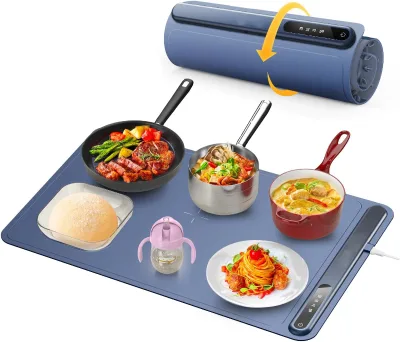
Rollable and Portable Electric Warming Tray With 3 Temperature Settings
$14.80 - $15.30
MOQ: 1000 pieces
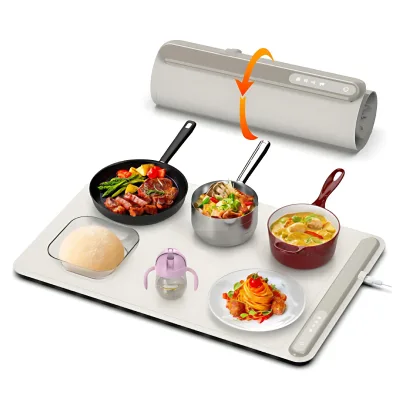
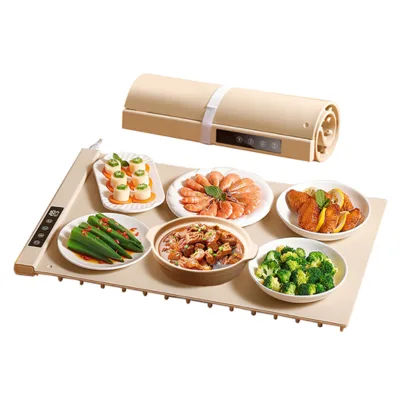





Food Warming Tray Home Jewish Warming Tray Electric Soup Heating Plate
$9.50 - $13.00
MOQ: 1000 Pieces


Home Silicone Heated Pad Food Warmer Warming Mat Electric Warming Trays for Food
$15.00 - $16.80
MOQ: 10 Pieces


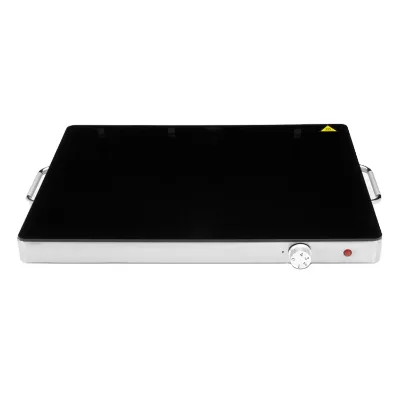


Food Warming Mat, Fast Heating Silicone Electric Warming Tray with 3 Level Temperature
$16.94 - $17.54
MOQ: 1000 Pieces

Comprehensive Sourcing Guide
Portable Electric Warming Tray Sourcing Guide
A Portable Electric Warming Tray is a countertop appliance designed to keep prepared food at serving temperature, and it has become a steady-volume category for household and kitchen supply buyers. Listings in this category commonly describe soft silicone surfaces, digital or touch control, and foldable constructions that make the unit easier to store and transport. Because the product combines a heating element with a food-contact surface, procurement teams should treat it as a regulated electrical good rather than a simple textile or plastic accessory, and structure sourcing accordingly.
This guide walks through the decisions that matter most when buying at scale: understanding what listings actually signal, verifying technical specifications against your target market, collecting the right compliance documentation, and building a supplier relationship that survives repeat orders. All observations here are drawn from typical listing data for this product family, including FDA and CE certification claims, 220–240 V / 350 W electrical profiles, and customization offers. Treat each listing attribute as a starting point for verification, not as a guarantee that every product in the category meets it.
Product Scope and Observed Listing Signals
Listings for this category cluster around a consistent product form: a silicone warming mat or tray, sized roughly in the 61 × 41 cm range (one listing cites 61.5 × 40.5 × 1.5 cm and another 61 × 41 × 1.9 cm), with a single burner, induction heating element, and electric power source. Observed features include reusable and non-disposable construction, food-grade material claims, oil-proof surfaces, easy use, and overheat protection. Several listings identify the product as a foldable silicone warming tray with three temperature settings, positioning it for home kitchen and household use.
Commercial signals in the listings are equally informative. Certification is listed as FDA and CE, customization is marked available, packaging is box format, and branding is offered as OEM with customized logo and color options. Observed pricing spans roughly USD 5.85 to 39.91, and MOQs range from as low as 2 units to 2,000 units, suggesting the category serves both sampling buyers and volume importers. Model numbers such as BW06 and 392068 appear, and origins are listed in China, specifically Zhejiang. These signals help you shortlist, but you should confirm each claim directly with the supplier before committing.
Technical Specifications to Verify
Electrical parameters deserve the closest scrutiny because they determine market fit. Observed listings specify 220–240 V at 350 W, which suits markets using that voltage range but excludes regions on 110–120 V mains unless the supplier can offer a compatible variant. One listing notes plug types US, EU, UK, and AU, so confirm that the plug style matches your destination market and that voltage and plug combinations are consistent. Also verify the temperature range—one listing states 70 °C to 80 °C—and whether three temperature settings with touch or digital control are actually implemented on the sample you receive.
Physical and functional specifications matter just as much for repeat purchases. Verify the overall product size against the heating area dimension (one listing cites 510 × 343 mm of heating area within a 610 × 410 × 19 mm body), since a discrepancy here affects perceived value. Confirm the silicone is genuinely food grade and oil proof, that foldability does not compromise the heating element, and that overheat protection functions as described. Ask for the single package size and gross weight—one listing shows 80 × 70 × 70 cm at 10 kg, which is unusually large for a single unit—so you can model freight accurately before quoting landed cost.
Compliance and Safety Documentation
Because this is a mains-powered heating appliance with a food-contact surface, documentation requests should cover two distinct regimes. For food safety, the listings claim FDA and CE certification; ask suppliers for the actual certificates, scope statements, and any food-contact material test reports covering the silicone rather than accepting the certification label at face value. Confirm which laboratory issued the reports and whether they apply to the exact material batch or model you are ordering, since certification can be model-specific.
For electrical safety, request documentation appropriate to your destination market—CE marking evidence for European destinations, and equivalent approvals wherever you sell—along with any overheat protection test records, since at least one listing cites that as a key advantage. Verify that the declared voltage, power rating, and plug type on documents match the sample units. Build a document checklist into your purchase order so certificates, test reports, and markings are refreshed at each production run, not just at the first order. Suppliers offering free spare parts and a one-year warranty, as some listings do, should be asked to state warranty terms in writing.
Cost Drivers and Commercial Terms
Observed pricing from roughly USD 5.85 to 39.91 reflects wide variation in specification, and understanding what drives that spread helps you compare quotes fairly. Likely cost drivers include power rating and control sophistication (touch or digital control typically costs more than basic switching), silicone quality and thickness, foldable versus rigid construction, plug and voltage variants, and customization depth such as custom logos, colors, or molds. Note that at least one listing states "private mold: No," meaning tooling may limit how far customization can go—clarify this before promising branded designs internally.
On commercial terms, the observed MOQ spread of 2 to 2,000 units lets you match order size to your channel: low MOQs suit market testing and sampling, while higher MOQs usually unlock better unit pricing. Confirm packaging (box format per the listings), selling unit (single item), and gross weight per carton to model logistics. Negotiate Incoterms, payment structure, and lead time explicitly—these are not stated in the listings and must be agreed with each supplier. Finally, price any customization separately, since OEM logo and color work is often quoted as a surcharge or tooling fee above the base unit price.
Supplier Qualification and Quality Control
Qualify suppliers by triangulating listing claims against verifiable evidence. Start with a sample order—possible here given the low end of the observed MOQ range—and evaluate heating uniformity across the stated heating area, temperature stability across the three settings, fold durability, surface food-safety feel, and control responsiveness. Check that the sample's voltage, plug, and labeling match your market requirements exactly. A supplier whose sample deviates from its listing specifications on any of these points is unlikely to improve at production volume.
For production quality, define an inspection protocol before the first bulk order: incoming material checks on silicone, in-process checks on the heating element assembly, and pre-shipment inspection covering function, safety features such as overheat protection, packaging integrity, and label accuracy. Confirm the stated origin—Zhejiang, China in the listings—and whether the supplier manufactures directly or trades, since this affects your ability to influence production. Ask how the one-year warranty and free spare parts offerings are operationally supported: who pays freight on replacements, what failure rate triggers spare-part shipments, and how defects are documented. Suppliers offering customization should also demonstrate process control over logo printing and color consistency across batches.
Long-Term Procurement Checks
Sustained sourcing success in this category depends on managing change over successive orders. Establish a golden sample for each SKU and require written approval for any change in silicone material, heating element, control board, plug type, or packaging, since silent specification drift is a common failure mode in small appliances. Re-verify certifications periodically, especially if the supplier refreshes component suppliers or adjusts the design, and keep dated copies of all food-contact and electrical safety documents tied to specific production lots. Track defect and return rates by batch so quality trends surface before customers notice them.
Relationship and portfolio factors also merit attention. Because several listings indicate customization is available with OEM branding and custom colors, consider consolidating volume with a capable supplier to justify better pricing and priority production, while retaining a qualified second source for supply resilience. Review whether the supplier's product roadmap—such as new sizes, additional temperature settings, or updated control modes—aligns with your assortment plans. Finally, revisit commercial terms annually: as your order history grows, renegotiate MOQs, unit pricing, warranty support, and spare-parts provisioning to reflect the reduced risk you represent as an established, repeat buyer.
FAQs
What certifications do these warming trays have?
These portable electric warming trays are certified with FDA and CE standards to ensure safety and compliance. The silicone material used is food grade and oil proof, making them suitable for household kitchen applications. This certification confirms the product meets essential regulatory requirements for materials and electrical safety in various markets.
How is the temperature controlled on the tray?
The device features digital control with touch mode for precise temperature management. It offers three temperature settings ranging from 70°C to 80°C to keep food warm effectively. The system includes overheat protection for safety, allowing users to maintain consistent heat levels for serving meals in a home kitchen environment.
Can the product be customized for branding?
Yes, customization is available for this Portable Electric Warming Tray. Buyers can request customized logos and colors to suit their brand identity. The product supports private mold options, although current listings indicate no private mold is used. This flexibility allows businesses to tailor the appearance and branding of the supply.
What is the power consumption of the unit?
The warming tray operates with a power rating of 350W and requires a voltage of 220–240 V. It uses an induction heating element to efficiently warm the surface. The unit is designed for countertop installation and includes plug types for US, EU, UK, and AU regions to ensure global compatibility.
What are the dimensions of the warming surface?
The heating area dimension is 510x343MM, providing ample space for serving dishes. The overall product size is approximately 61.5x40.5x1.5cm or 61x41x1.9cm depending on the specific model. The single package size is listed as 80x70x70 cm or 60x30x30 cm, indicating compact packaging for shipping and storage.
Is the warming tray disposable or reusable?
This product is non-disposable and designed for reusable use. Made from durable silicone material, it is easy to use and clean. The construction ensures longevity for household applications, and the supplier provides free spare parts and a one-year warranty to support long-term reliability and customer satisfaction.