Source Portable Rechargeable Personal Nebulizer for Hospital, Household, Infants
Find a Portable Rechargeable Personal Nebulizer among 30 available options for hospital, household, and infant care. Buyers can compare models like NBM-3B and PM020010026, reviewing features such as particle size, medication cup volume, and noise levels to select the right device.
Key considerations
Products List


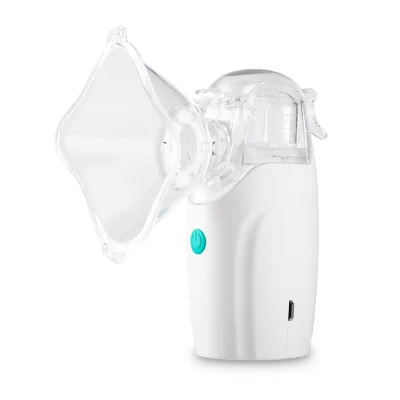
Rechargeable DC Nebulizer Portable Nebulizer for Asthma Nebulizer for Home Use
$9.80 - $10.60
MOQ: 100 Pieces




Comprehensive Sourcing Guide
Strategic Sourcing Guide for Portable Rechargeable Personal Nebulizers
Understanding Technical Specifications and Performance Metrics
When sourcing portable rechargeable personal nebulizers, buyers must prioritize technical parameters that directly influence treatment efficacy and user experience. The core functionality of these devices relies on the ability to convert liquid medication into a fine mist that can be inhaled deeply into the respiratory tract. A critical metric in this domain is the particle size, often expressed as the mass median aerodynamic diameter (Mmad). Effective nebulizers for personal use typically achieve a particle size of less than 5 micrometers, ensuring the medication reaches the lower respiratory tract rather than depositing in the upper airways. Some advanced models in the market demonstrate that particles with a size of 5 micrometers or less account for more than 60% of the total output, a specification that significantly enhances therapeutic outcomes for conditions like asthma and chronic obstructive pulmonary disease (COPD).
The mesh oscillation frequency is another vital technical specification to evaluate. Ultrasonic and mesh nebulizers operate at specific frequencies to generate the aerosol. A standard high-performance range for these devices is observed around 110±10kHz. This frequency ensures consistent mist generation without causing excessive heat that could degrade sensitive medications. Furthermore, the nebulization rate determines how quickly a dose is delivered. For portable units, a rate of greater than 0.2ml per minute is a baseline expectation, though higher rates may reduce treatment time. Buyers should also consider the medication cup volume, which varies by model. Capacities typically range from about 10ml to 12ml, allowing for sufficient medication storage for a single treatment session without requiring frequent refills.
Physical attributes such as weight and noise levels are equally important for personal portability. A lightweight design, often approximating 110g, facilitates easy handling and transport, making the device suitable for travel or use in various environments. Noise levels should be kept low to ensure patient comfort, particularly for pediatric applications. Specifications indicating a noise level of 50dB(a) or lower are desirable to prevent disturbance and anxiety during operation. Additionally, the amount of residue left in the cup after treatment is a measure of efficiency; a residue of less than 0.5ml indicates that the device maximizes medication delivery, reducing waste and cost per treatment.
Compliance and Certification Verification
Navigating the regulatory landscape is a fundamental step in the procurement of medical devices. Buyers must verify that suppliers possess valid certifications that align with the intended market of the nebulizer. In the global marketplace, the presence of FDA and CE certifications is a primary indicator of compliance with safety and performance standards. The FDA certification is particularly critical for products entering the United States market, while CE marking is mandatory for sale within the European Economic Area. Some suppliers may also list ISOCE certifications, which further validate their adherence to international quality management systems.
It is essential to treat certification claims as observations that require verification rather than absolute guarantees for every listed product. Procurement teams should request current copies of these certificates and cross-reference them with the official databases of the issuing bodies. The classification of the device as a "Biochemical Apparatus" or a medical device for "External Use" dictates the specific regulatory pathway required. For devices intended for infants and young children, the regulatory scrutiny is often more stringent, requiring proof of biocompatibility and safety for vulnerable populations.
The material composition of the nebulizer also plays a role in compliance. Most portable units are constructed from plastic, which must meet specific standards for medical-grade materials to ensure they do not leach harmful substances into the medication. Buyers should confirm that the plastic standards used in manufacturing are appropriate for medical applications. Additionally, the sterilization capabilities of the device or its components should be verified. While some units are designed for single-use or require specific sterilization protocols, others may be reusable, necessitating a clear understanding of the cleaning and maintenance requirements to prevent cross-contamination.
Cost Drivers and Pricing Structures
The pricing of portable rechargeable personal nebulizers is influenced by a complex interplay of factors, including technical complexity, certification status, and order volume. The observed price range for these devices in the market spans from approximately 1.5 USD to 30 USD. This wide variance reflects differences in features, build quality, and the level of customization offered. Lower-priced units often represent basic models with standard features, while higher-priced items may include advanced functionalities, superior materials, or comprehensive certification packages.
Order volume is a significant driver of cost. The Minimum Order Quantity (MOQ) for these products can vary drastically, ranging from as low as 1 unit to as high as 5000 units. Suppliers often offer tiered pricing structures where the unit cost decreases as the order quantity increases. For buyers with smaller requirements, the flexibility of a low MOQ is crucial, allowing for market testing without excessive capital commitment. Conversely, large-scale procurement for hospital chains or retail distribution networks can leverage high-volume discounts, though this requires a commitment to larger production runs.
Customization is another factor that impacts pricing. Products labeled as "Customized" or those offering "Customization Available" typically command a premium due to the additional engineering and tooling costs involved. This can include branding, specific color schemes, or tailored packaging solutions. In contrast, "Non-Customized" or standard models are generally more cost-effective. The packaging type also influences the final cost; options range from simple paper cartons to more elaborate gift boxes or specialized packing configurations. Buyers should balance the need for premium packaging against the overall budget constraints, considering that the packaging often serves as the first point of contact with the end-user.
Typical Applications and Target Demographics
Portable nebulizers serve a diverse range of applications, extending from clinical settings to home care. The primary application areas include hospitals, where reliability and performance are paramount, and households, where ease of use and portability are key. The versatility of these devices allows them to be used by different demographic groups, including adults and infants. For pediatric use, the device must be gentle, quiet, and capable of delivering medication effectively to small lungs. Specifications such as the "Group: Infants and Young Children" indicate that the device is designed with these specific needs in mind, often featuring smaller medication cups and quieter operation.
The "Nature" of the product, whether it is classified as a reusable or disposable unit, also dictates its application. Reusable nebulizers are preferred for long-term management of chronic conditions, offering a cost-effective solution over time. These units are often designed for external use and require regular maintenance to ensure hygiene and performance. In contrast, single-use or non-customized models might be preferred for acute care or situations where hygiene is a primary concern and maintenance is difficult to manage.
The power type is another consideration for application. Most portable nebulizers are electric, relying on rechargeable batteries to provide mobility. This feature is essential for users who need to travel or move around while receiving treatment. The ability to operate without being tethered to a wall outlet makes these devices ideal for travel, school, or outdoor activities. Buyers should assess the battery life and charging capabilities to ensure the device meets the usage patterns of the target demographic.
Supplier Evaluation and Quality Control
Selecting the right supplier requires a rigorous evaluation process that goes beyond price and basic specifications. Buyers should assess the supplier's location, as this can impact logistics, lead times, and communication. Common origins for these devices include China, with specific manufacturing hubs in cities like Dongguan and Shenzhen. These regions have established supply chains for medical devices, but buyers must verify the specific capabilities and reputation of individual factories.
Quality control is paramount in the medical device sector. Buyers should inquire about the supplier's quality assurance processes, including in-line inspections and final testing protocols. The consistency of critical parameters, such as particle size and nebulization rate, must be maintained across all production batches. Suppliers should be able to provide data on the "Amount of Residue" and "Noise" levels for their products to demonstrate adherence to quality standards. Additionally, the "Standard" of the product, whether it refers to physical dimensions or material specifications, should be clearly defined and consistently met.
The "Classification" of the product as a "Biochemical Apparatus" or similar medical device implies a need for strict adherence to manufacturing standards. Buyers should request evidence of the supplier's adherence to these standards, including any relevant ISO certifications. The "Product Packing" should also be evaluated for durability and suitability for shipping, ensuring that the device arrives in perfect condition. Whether the packaging is a paper carton, box, or gift box, it must protect the nebulizer from damage during transit.
Long-Term Procurement Considerations
Sourcing portable nebulizers is not just a one-time transaction but a long-term partnership that requires careful planning. Buyers should consider the lifecycle of the product, including the availability of spare parts, maintenance requirements, and the potential for future upgrades. Reusable devices, in particular, require a supply of replacement parts such as mesh screens or medication cups to ensure continued functionality. The "Feature: Reusable" designation suggests that the device is designed for longevity, but this depends on the availability of consumables.
The "Customization" aspect should also be viewed through a long-term lens. If a buyer opts for a customized product, they must ensure that the supplier can maintain the customization over time, especially if the order volume fluctuates. The "Product Model" codes, such as NBM-3B, NBM-7, or PM020010026, serve as identifiers for specific configurations. Buyers should maintain a clear record of these models to facilitate future reordering and ensure consistency in the product line.
Finally, buyers should monitor market trends and regulatory changes that could impact the procurement strategy. The demand for portable medical devices is likely to grow, driven by an aging population and increased awareness of respiratory health. Staying informed about new technologies and standards will allow buyers to make informed decisions and maintain a competitive edge. By focusing on technical excellence, regulatory compliance, and supplier reliability, buyers can secure a steady supply of high-quality portable rechargeable personal nebulizers that meet the needs of their customers.
Comparative Analysis of Key Product Models
To assist buyers in making informed decisions, the following table summarizes the key specifications of various product models observed in the market. This comparison highlights the diversity in features, certifications, and applications available to procurement teams.
| Product Model | Particle Size | Medication Cup Volume | Noise Level | Certification | Application Group |
|---|---|---|---|---|---|
| NBM-3B | <5μm | About 12ml | ≤50db(a) | FDA, CE | General |
| NBM-7 | ≤5um (>60%) | About 12ml | ≤50db(a) | FDA, CE | General |
| NBM-6 | ≤5um (>60%) | About 10ml | ≤50db(a) | ISOCE | General |
| NBM-5 | <5μm | About 10ml | ≤50db(a) | CE | General |
| NBM-4B | <5μm | About 10ml | ≤50db(a) | CE | General |
| PM020010026 | N/A | N/A | N/A | N/A | General |
| PM020010027 | N/A | N/A | N/A | N/A | General |
| SY-J004 | N/A | N/A | N/A | CE | General |
| CNB69016 | N/A | N/A | N/A | CE | General |
| CNB69009 | N/A | N/A | N/A | CE | General |
Note: Specific data points such as particle size and volume are derived from observed product attributes and may vary by specific batch or configuration. Buyers should verify these details with the supplier before finalizing orders.
This table serves as a reference point for understanding the range of options available. While some models explicitly list particle size and volume, others may have these specifications embedded in their technical documentation. The presence of certifications like FDA, CE, and ISOCE across multiple models indicates a general trend toward compliance, but buyers must still verify the validity of these certifications for the specific units they intend to purchase. The diversity in application groups, from infants to adults, underscores the importance of selecting a model that aligns with the specific needs of the end-user. By carefully analyzing these specifications, buyers can make strategic decisions that balance performance, cost, and regulatory requirements.
FAQs
What certifications do portable nebulizers typically hold?
Most portable nebulizers hold FDA and CE certifications to ensure safety. Some models also display ISOCE certification for quality management. Buyers must verify these certificates directly as they vary by product model and region.
How small are the particle sizes for effective treatment?
Effective models produce particle sizes under 5 micrometers to reach deep lungs. Specific models ensure particles under 5um account for over 60% of output. This metric is critical for treating respiratory conditions effectively.
Can I customize the nebulizer for my brand?
Customization is available for many models to suit specific branding needs. Some units are offered as customized options while others remain non-customized standard products. Buyers should confirm availability before placing orders.
What is the noise level during operation?
Operational noise levels are typically 50dB(a) or lower for user comfort. This low noise is essential for treating infants and young children without causing anxiety. Quiet operation ensures a better experience for all user groups.
Which models are suitable for infants and young children?
Specific models are classified for use with infants and young children. These units often feature smaller medication cups around 10ml to 12ml. They are designed for external use with low noise and high efficiency.
How much medication residue remains after treatment?
High-efficiency models leave less than 0.5ml of residue in the cup. This low residue rate maximizes medication delivery and reduces waste per treatment. It ensures cost-effective usage for long-term therapy management.
What is the minimum order quantity for these devices?
Minimum order quantities range from 1 unit up to 5000 units depending on the supplier. Flexible MOQs allow for market testing while larger orders secure volume discounts. Buyers should check specific model requirements for exact limits.
Where are these nebulizers typically manufactured?
Manufacturing origins include China with hubs in Dongguan and Shenzhen. These locations support established supply chains for medical device production. Buyers should verify specific factory locations for logistics and lead time planning.