Source Power Transmission Assemblies for Machinery and Motors
Find and compare 30 Power Transmission Assemblies designed for machinery, motors, and hardware tools. These units feature cylindrical gears, hardened tooth surfaces, and high efficiency rates over 90%, offering flexible shaft options and custom configurations for diverse industrial applications.
Key considerations
Products List
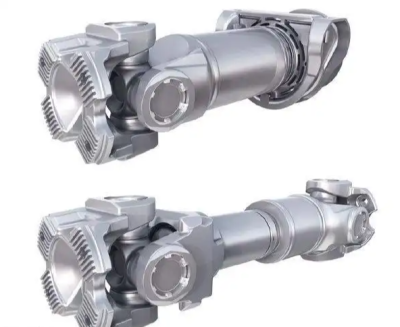


Earthworking Equipment Torque Converter Power Shift Transmission Assembly
$1000.00 - $12000.00
MOQ: 1 Pieces


Construction Equipment Gearbox Assembly Power Shift Transmission Analogue
$1000.00 - $12000.00
MOQ: 1 Pieces


Power Transmission Unit for Construction Machinery Transfer Case Assembly
$350.00 - $380.00
MOQ: 20 Pieces


Comprehensive Sourcing Guide
Power Transmission Assemblies Sourcing Guide
Power Transmission Assemblies are critical components in industrial machinery, serving as the mechanical link that transfers energy from a power source to a driven load. In the context of modern manufacturing, these assemblies often encompass gear reducers, flexible shafts, and specialized coupling systems designed to manage torque, speed, and direction. Sourcing these components requires a nuanced understanding of mechanical compatibility, material durability, and operational efficiency. Buyers must navigate a market where products range from standard cylindrical gear reducers to highly customized flexible shaft assemblies, each serving distinct roles in hardware tools, automotive accessories, and heavy machinery.
The procurement landscape for power transmission components is characterized by a high degree of customization and regional manufacturing concentration. Many suppliers, particularly those based in Zhejiang and Shenzhen in China, offer a wide array of models, including specific series like H2SH4/H2SH6/H2SH8 for gear units and ETN or AZ9557310625 for specialized shaft assemblies. These products are not off-the-shelf commodities but are often engineered to meet specific industry applications, requiring buyers to verify technical parameters such as torque capacity, gear shape, and installation type before committing to an order.
Product Scope and Observed Listing Signals
The observed market signals indicate a diverse product range, primarily centered around gear reducers and flexible shaft assemblies. Gear reducers are frequently described with attributes such as vertical installation, cylindrical gear shapes, and hardened tooth surfaces, indicating their suitability for high-torque applications in machinery and motors. These units often boast high power density and efficiency rates exceeding 90%, which are critical metrics for buyers seeking to optimize energy consumption and space utilization in their equipment designs. The presence of three-step configurations suggests complex transmission needs that require precise speed reduction ratios.
Conversely, flexible shaft assemblies represent a different category of power transmission, focusing on torque transmission in environments where rigid connections are impractical. These assemblies, often featuring protective outer sheaths made of rubber, are designed for applications such as drain cleaning machines and brush cutters. They offer flexible structures with high torque transmission capabilities, available in standard and custom diameters. The distinction between these two product types is vital for buyers, as the selection depends heavily on whether the application requires rigid speed reduction or flexible torque delivery across varying angles and distances.
Technical Specifications to Verify
When evaluating gear reducers, buyers must verify the material composition and machining methods to ensure longevity and performance. The supplied data highlights steel as a primary material, with surface treatments like polishing to enhance durability and reduce friction. It is essential to confirm that the gears possess a hardened tooth surface and that the machining method involves CNC precision, which ensures consistent quality and tight tolerances. Buyers should also check for specific standards such as JIS Code or China GB Code, which provide a baseline for dimensional accuracy and mechanical integrity, ensuring that the components will fit seamlessly into existing machinery frameworks.
For flexible shaft assemblies, the focus shifts to structural flexibility and torque limits. Buyers need to verify the torque capacity, which in observed listings ranges from 30-50N.M, to ensure the shaft can handle the operational loads without failure. The straightness accuracy, noted as 0.05-0.1mm/100mm, is a critical specification for maintaining smooth operation and minimizing vibration. Additionally, the surface roughness should be below 0.8s to prevent premature wear. Buyers must also consider the outer casing material, typically rubber, to ensure it provides adequate protection against environmental factors while maintaining flexibility.
Compliance and Safety Documentation
Compliance with international and regional standards is a non-negotiable aspect of sourcing Power Transmission Assemblies. While specific certification statuses like REACH are mentioned in background data, buyers must independently verify that suppliers hold valid certifications for the materials used, particularly if the assemblies are intended for export to markets with strict environmental regulations. The presence of standards such as JIS and GB indicates a commitment to recognized quality benchmarks, but buyers should request current certification documents to ensure ongoing compliance. This is especially important for components used in automotive or motorcycle accessories, where safety and reliability are paramount.
Safety documentation should also include detailed technical datasheets that outline the operational limits of the assemblies. For gear reducers, this includes information on maximum input speeds, thermal limits, and lubrication requirements. For flexible shafts, datasheets should specify the minimum bending radius and maximum torsional stress. Buyers should ensure that suppliers provide clear instructions for installation and maintenance, as improper handling can lead to premature failure. The warranty period, often listed as 12 months, provides a baseline for accountability, but buyers should clarify the terms and conditions to understand what constitutes valid coverage.
Cost Drivers and Commercial Terms
The cost of Power Transmission Assemblies is influenced by several factors, including material quality, manufacturing complexity, and customization requirements. Steel components with CNC machining and hardened surfaces command higher prices due to the precision and durability they offer. Customization is a significant cost driver, as many suppliers offer tailored solutions for specific industry applications. Buyers should be prepared for variations in pricing based on the level of customization, with standard models being more cost-effective than those with unique dimensions or torque specifications. The observed price range of 0.5-18000 USD reflects this variability, from simple accessories to complex, high-performance gear units.
Commercial terms such as MOQ and packaging also impact the total cost of ownership. MOQs ranging from 1 to 500 units allow for flexibility in order sizes, catering to both small-scale prototyping and large-scale production runs. Packaging is typically done in wooden cases for gear reducers, ensuring protection during transit, while flexible shafts may be packed according to customer needs. Buyers should consider the logistics costs associated with ocean freight and ensure that the packaging meets the requirements for safe international shipping. Clear communication regarding payment terms and delivery schedules is essential to avoid delays and additional costs.
Supplier Qualification and Quality Control
Supplier qualification is a critical step in ensuring the reliability of Power Transmission Assemblies. Buyers should prioritize suppliers who demonstrate a commitment to quality control through rigorous testing and inspection processes. The use of CNC machining and adherence to standards like JIS and GB are indicators of a supplier’s capability to produce high-quality components. Buyers should request samples to verify the physical attributes, such as surface finish, dimensional accuracy, and material hardness, before placing bulk orders. This due diligence helps mitigate the risk of receiving substandard products that could lead to machinery failures.
Quality control should also extend to the supplier’s production processes and supply chain management. Buyers should inquire about the supplier’s ability to maintain consistent quality across production batches, especially for customized orders. The mention of single production types and specific models suggests that suppliers may have specialized capabilities, which can be an advantage for buyers with unique requirements. However, buyers should also assess the supplier’s capacity to handle large orders without compromising quality. Establishing a clear quality assurance protocol, including regular inspections and feedback loops, is essential for maintaining long-term supplier relationships.
Long-Term Procurement Checks
Long-term procurement success depends on the ability to monitor supplier performance and adapt to changing market conditions. Buyers should establish key performance indicators (KPIs) to track supplier reliability, including on-time delivery rates, product defect rates, and responsiveness to issues. Regular audits of the supplier’s quality control processes can help identify potential problems before they escalate. Additionally, buyers should stay informed about advancements in power transmission technology, such as new materials or manufacturing techniques, to ensure that their sourcing strategy remains competitive.
Sustainability and supply chain resilience are also important considerations for long-term procurement. Buyers should evaluate the supplier’s environmental practices, particularly regarding material sourcing and waste management. The use of recyclable materials and energy-efficient manufacturing processes can contribute to a more sustainable supply chain. Furthermore, buyers should diversify their supplier base to mitigate risks associated with geopolitical instability or natural disasters. By maintaining a proactive approach to supplier management, buyers can ensure a steady supply of high-quality Power Transmission Assemblies that support their operational goals.
FAQs
What is the warranty period for Power Transmission Assemblies?
The standard warranty period is 12 months. This coverage applies to the gear reducer and flexible shaft assemblies provided. Buyers should verify specific terms with the supplier to ensure the warranty covers manufacturing defects and operational failures during the initial year of use.
Can Power Transmission Assemblies be customized for specific industries?
Yes, customization is available for every industry application. Manufacturers offer tailored solutions for machinery and motor applications. Options include specific gear shapes, hardness levels, and installation types. Buyers can request modifications to meet unique operational requirements and ensure optimal performance in their specific sector.
What materials are used in Power Transmission Assemblies?
Primary materials include steel with hardened tooth surfaces. Other materials available are titanium, SUS304, SUS316, carbon fiber, and glass fiber. The choice depends on the application, such as hardware tools or automotive accessories. CNC machining ensures precision for these diverse material selections.
How efficient are the gear units in these assemblies?
The gear units offer high efficiency of over 90%. This performance is achieved through cylindrical gear designs and hardened tooth surfaces. The expansion layout and vertical type installation contribute to this efficiency. Buyers benefit from reduced energy loss and improved power transmission reliability in machinery applications.
What is the typical packaging for Power Transmission Assemblies?
Products are typically packed in wooden cases for protection. Some items may use ocean freight packaging standards based on customer needs. The standard packing dimensions are 30.00cm by 30.00cm by 20.00cm. This ensures safe transit and prevents damage to the precision components during shipping.
Where are these Power Transmission Assemblies manufactured?
These assemblies are manufactured in China, specifically in Zhejiang and Shenzhen. The production type is single production, ensuring quality control. Buyers can expect adherence to JIS Code and China GB Code standards. The origin indicates a robust manufacturing base with established supply chains for industrial components.