Source Precision Die Casting Industrial Housing for Electronics, Auto, and Furniture
Find 30 Precision Die Casting Industrial Housing options from Chinese manufacturers. Compare aluminum and stainless steel models with CNC machining, ISO 9001 certification, and custom tolerances for hardware and electronic applications.
Key considerations
Products List


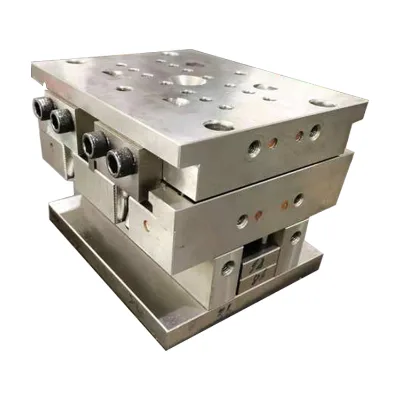


Custom Alloy Steel Precision Cast Components for Industrial Applications
$0.80 - $1.30
MOQ: 1000 Pieces
Comprehensive Sourcing Guide
Precision Die Casting Industrial Housing Sourcing Guide
The procurement of Precision Die Casting Industrial Housing requires a strategic approach that balances material integrity with complex geometric tolerances. Buyers must recognize that these components serve as critical structural elements in diverse sectors, including industrial machinery, automotive assemblies, and electronic accessories. The housing acts not merely as a protective shell but as a heat sink and a mounting platform for internal electronics, necessitating high dimensional stability and surface finish quality. Sourcing decisions should prioritize suppliers who demonstrate capability in handling both aluminum alloy and stainless steel variants, as the material choice directly influences thermal conductivity, weight, and corrosion resistance for the specific application environment.
Successful acquisition depends on verifying that the supplier's production capabilities align with the specific customization needs of the project. The market offers a wide spectrum of options ranging from standard specifications to fully customized designs, where the buyer must define the exact requirements for dimensions, color, and surface treatment before engaging with a vendor. It is essential to understand that while some listings indicate a "Special Casting" method, the core technology for high-volume industrial housings often relies on precision die casting combined with CNC machining to achieve the tight tolerances required for assembly. Buyers should focus on partners who explicitly offer OEM/ODM services and can accommodate design files in formats such as DWG, PDF, STEP, or DRW to ensure seamless translation from concept to physical part.
Product Scope and Observed Listing Signals
When evaluating product listings, buyers should observe a significant variance in pricing and minimum order quantities (MOQ), which reflects the complexity of the casting process and the scale of production. The observed price range spans from $0.10 to over $2,300, indicating that costs are heavily dependent on part size, material density, and the intricacy of the mold design. Similarly, MOQs can vary from a single unit for prototyping to 1,000 units for mass production, requiring buyers to align their order volume with the supplier's production capacity. This variability suggests that small-batch orders may incur higher per-unit costs due to setup fees, while larger volumes benefit from economies of scale in the die casting and subsequent machining processes.
The product scope extends beyond simple casting to include comprehensive finishing services such as polishing, anodizing, and custom surface treatments. Listings frequently highlight "Customized" attributes for dimensions, colors, and standards, signaling that the final product is often tailored to specific industrial or furniture applications. Buyers must distinguish between general metal casting offerings and those specifically engineered for high-precision environments, noting that some suppliers list "Stainless Steel Casting" alongside "Aluminum Casting" to indicate material versatility. The presence of "Wooden Case" or "Carton" packaging options further suggests that the supplier is equipped to handle the logistics of protecting delicate, precision-machined components during international shipping.
Technical Specifications to Verify
Dimensional accuracy is the primary technical differentiator for precision die casting housings, with many suppliers claiming tolerances as tight as +/-0.01mm. Buyers must verify that the stated tolerance grade, often cited as Grade 6 or Grade 7, is consistently maintained across the entire production run, as even minor deviations can compromise the fit and function of the final assembly. The verification process should include a review of the supplier's capability to perform CNC milling and CNC machining on the cast parts, ensuring that secondary operations are executed with the same precision as the initial casting. It is critical to confirm that the "Machining Tolerance" applies to the final finished part, not just the raw casting, to avoid assembly issues downstream.
Surface quality and material composition are equally critical factors that define the longevity and performance of the industrial housing. The surface roughness is a key metric, with some listings specifying a Ra12 finish achieved through polishing, while others offer customizable surface treatments like anodizing or water-based coatings. Buyers should explicitly confirm the alloy composition, as materials range from aluminum alloys to stainless steel, alloy steel, and carbon steel, each offering distinct mechanical properties. Additionally, the casting form usage count, described as "Permanent," indicates the durability of the mold and the consistency of the production output, which is vital for maintaining uniform quality over long production runs.
Compliance and Safety Documentation
Regulatory compliance is a non-negotiable aspect of sourcing industrial components, particularly when the housing is intended for use in automotive, electronic, or consumer-facing applications. Buyers must request documentation confirming adherence to international standards such as ISO 9001, which is frequently cited in supplier profiles as a baseline for quality management systems. Furthermore, specific product certifications like RoHS and CE are essential for ensuring that the materials and manufacturing processes do not introduce hazardous substances or safety risks, especially for electronic accessories and automotive parts. The absence of these certifications in a supplier's profile should be treated as a red flag, requiring immediate clarification before proceeding with any order.
Quality control documentation must go beyond general statements to include specific inspection protocols and test results. Suppliers often claim "100% Inspected" status under an ISO9001 system, but buyers should demand evidence of this process, such as inspection reports or certificates of conformity for each batch. The "Casting Surface Quality Level" and other process-specific certifications, such as CE for the surface quality, provide additional assurance that the product meets safety and performance benchmarks. It is imperative to verify that the supplier's quality control measures cover the entire production chain, from raw material intake to the final packaging, ensuring that no defective units reach the customer.
Cost Drivers and Commercial Terms
The total cost of ownership for precision die casting housings is influenced by several variables, including material costs, mold design complexity, and the extent of post-processing required. Aluminum and stainless steel prices fluctuate based on global market conditions, directly impacting the unit cost of the housing. Additionally, the requirement for custom dimensions, colors, and surface treatments adds layers of complexity that can increase both the initial tooling investment and the per-unit production cost. Buyers should analyze the trade-off between standard specifications and customizations to optimize costs without compromising the functional requirements of the industrial application.
Commercial terms and logistics play a significant role in the final procurement cost and delivery timeline. Suppliers typically offer trade terms such as FOB, CFR, CIF, and EXW, each carrying different implications for shipping responsibility and risk transfer. The origin of the products, often listed as China or specifically Ningbo, affects lead times and shipping costs, which must be factored into the overall budget. Buyers should also consider the MOQ requirements, which can range from 1 to 1,000 units, and negotiate terms that align with their inventory strategy. Understanding these commercial dynamics is essential for accurate cost forecasting and effective supply chain management.
Supplier Qualification and Quality Control
Supplier qualification should be based on a rigorous assessment of their manufacturing capabilities, technical expertise, and track record in delivering precision components. Buyers must verify that the supplier possesses the necessary equipment for both die casting and CNC machining, as the combination of these processes is essential for achieving the high accuracy required for industrial housings. The presence of "OEM & ODM Custom" acceptance indicates a flexible production environment, but buyers should also assess the supplier's capacity to handle large-scale orders without compromising quality or delivery schedules. A qualified supplier will demonstrate a clear understanding of the specific application requirements and offer technical support throughout the design and production phases.
Quality control systems must be robust and transparent, with a focus on continuous improvement and defect prevention. Suppliers should provide detailed information on their inspection processes, including the use of advanced measurement tools to verify tolerances and surface finishes. The claim of "100% Inspected" status should be backed by a documented quality management system that adheres to ISO 9001 standards. Buyers should also inquire about the supplier's approach to handling non-conforming products and their procedures for implementing corrective actions. A supplier with a strong quality control culture will be more reliable in delivering consistent, high-quality products that meet the stringent requirements of industrial applications.
Long-Term Procurement Checks
Establishing a long-term procurement relationship requires ongoing monitoring of supplier performance and product consistency. Buyers should implement a system for regular quality audits and performance reviews to ensure that the supplier continues to meet the agreed-upon standards and specifications. This includes tracking key performance indicators such as on-time delivery rates, defect rates, and responsiveness to technical inquiries. Regular communication and collaboration with the supplier can help identify potential issues early and facilitate continuous improvement in the manufacturing process. A proactive approach to supplier management is essential for maintaining a stable and reliable supply chain.
Adaptability to changing market conditions and technological advancements is another critical factor for long-term success. Buyers should assess the supplier's ability to innovate and adapt to new materials, processes, and design requirements. The rapid evolution of industrial applications, particularly in the automotive and electronics sectors, demands that suppliers remain at the forefront of technology. A supplier that invests in research and development and stays updated with industry trends will be better positioned to support the buyer's long-term growth and competitiveness. Regularly reviewing the supplier's portfolio and capabilities ensures that the partnership remains relevant and valuable over time.
FAQs
What materials are used for Precision Die Casting Industrial Housing?
These housings are typically manufactured from aluminum alloy, stainless steel, cast iron, or carbon steel. The specific material selection depends on the required mechanical strength, weight constraints, and corrosion resistance for your industrial application. Custom material grades are available to meet precise engineering specifications.
Can you customize the dimensions and color of the housing?
Yes, both dimensions and colors are fully customizable to match your design requirements. You can provide technical drawings in DWG, PDF, or STEP formats. The manufacturer supports OEM and ODM services, allowing for tailored sizes, finishes, and aesthetic colors to integrate seamlessly into your product assembly.
What is the typical machining tolerance for these castings?
The standard machining tolerance is typically +/-0.01mm, ensuring high accuracy for precision components. Some processes achieve a tolerance grade of 6 or 7. This tight tolerance is maintained through CNC machining and milling steps following the initial die casting process to meet strict industrial housing specifications.
Which certifications do the manufacturers hold for quality control?
Manufacturers generally hold ISO 9001 certification for their quality management systems. Many also comply with RoHS and CE standards for electronic and industrial applications. Quality control involves 100% inspection of finished parts to ensure they meet the specified dimensional and surface roughness requirements before shipment.
What surface treatments are available for the metal castings?
Common surface treatments include polishing, anodizing, and customized coatings. The initial surface preparation often involves polishing to achieve specific roughness levels like Ra12. Additional treatments can be applied to enhance corrosion resistance, aesthetic appeal, or functional properties based on the specific industrial environment where the housing will be used.
How is the product packed for international shipping?
Products are typically packed in wooden cases, cartons, or customized packaging solutions. The packing method is selected to protect the precision castings from damage during transit. Standard packaging is available, but customized options can be arranged to meet specific logistics requirements or customer preferences for bulk industrial orders.