Source PVC Fittings for Water Supply, Irrigation, and Drainage
Find 30 PVC Fittings available from suppliers in Zhejiang, China. Buyers can compare models like Bn03 and An16, sizes ranging from 20mm to 32mm, and connection types including male and female options for various industrial needs.
Key considerations
Products List


Ifan Factory 1/2inch UPVC Pipe Fitting PVC Pipe Fittings Grey Pipe Fittings PVC
$0.07 - $0.08
MOQ: 1000 Pieces
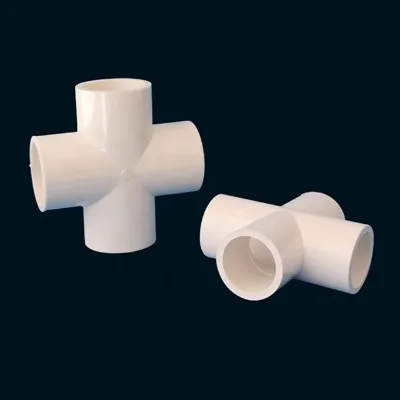


Comprehensive Sourcing Guide
Strategic Sourcing Guide for PVC Fittings Procurement
Understanding Product Specifications and Technical Variability
When sourcing PVC Fittings, buyers must first navigate a landscape of diverse technical specifications that define the physical and functional capabilities of the components. The market presents a wide array of options, ranging from reducing fittings to equal connectors, each designed for specific pipeline configurations. A critical observation in the current supply base is the variation in head codes, with products appearing in both round and square configurations. This distinction is not merely aesthetic; it often dictates the compatibility with specific valve types or coupling mechanisms required in a given installation.
The material composition is another fundamental variable. While the core keyword suggests PVC, the actual supply data indicates that "Plastic" is a broader descriptor used interchangeably, necessitating a verification of the specific polymer grade. The material properties are further defined by the manufacturing technics employed. The observed market includes items produced via casting and forging processes. Casting typically allows for complex geometries, whereas forging may imply higher structural integrity for specific pressure applications. Buyers must align the chosen technic with the operational demands of the project, as these processes yield different mechanical characteristics.
Size and dimensionality are perhaps the most critical specification parameters. The observed product range spans from small dimensions like 20mm to larger industrial sizes up to 32mm, with specific model numbers such as Bn03 and Bn04 indicating distinct sizing profiles. Standardized sizing is often referenced as "25x20 32x25" or "20mm to 32mm," but buyers should also expect to encounter imperial measurements like "1/2", 3/4", and "1"x3/4"." The wall thickness is another specification that varies, with some products explicitly noted as Sch40, a standard that defines the pressure rating and durability of the fitting. Understanding these dimensional tolerances is essential to ensure that the fittings will physically mate with existing piping systems without requiring costly adapters or modifications.
Compliance Verification and Certification Standards
In the realm of industrial procurement, compliance is not optional; it is a prerequisite for market access and operational safety. The supply data highlights several certification standards that buyers should prioritize during the vetting process. The most frequently observed certifications include CE and ISO, with specific references to ISO9001 and BS (British Standards). These certifications serve as evidence that the manufacturer adheres to international quality management systems and safety regulations. However, buyers must exercise caution, as the presence of a certification label does not guarantee that every SKU in a supplier's catalog meets that standard. It is imperative to request specific test reports or certificates of conformity for the exact model numbers being ordered.
The "Centification" field in the data appears to be a variation of "Certification," listing combinations like "CE, ISO 9001" and "BS." This suggests that some suppliers may hold multiple accreditations, while others might only possess one. For projects targeting the European market, CE marking is often mandatory. For projects in the UK or those requiring British compliance, the BS standard is critical. Additionally, the data mentions ASTM D2466 as a background standard. While this is a recognized standard for PVC materials, buyers should verify if the specific product lot complies with this specification, as it governs the material properties and performance requirements for PVC pressure piping.
It is also important to note that the "Certification" attribute is listed alongside other product attributes, implying that it is a variable feature. A supplier might offer a certified version of a fitting alongside a non-certified version. Therefore, the procurement strategy must include a specific clause in the purchase order that mandates the inclusion of valid certification documentation for the delivered goods. Relying on general supplier claims without verifying the specific certification status of the batch can lead to regulatory non-compliance and potential project delays.
Cost Drivers and Pricing Structure Analysis
The pricing structure for PVC Fittings is influenced by a complex interplay of factors, including material costs, manufacturing complexity, and order volume. The observed price range in the market is vast, spanning from $0.01 to $500 USD. This extreme variance indicates that the market includes both low-cost, high-volume commodity items and specialized, high-value components. The lower end of the spectrum likely corresponds to simple, standard-sized fittings with minimal customization, while the higher end may reflect custom-molded parts, larger dimensions, or fittings with specialized certifications.
Minimum Order Quantity (MOQ) is a significant driver of unit cost. The data shows an MOQ range from 1 to 10,000 units. Buyers purchasing small quantities may face higher per-unit costs due to the setup costs associated with production runs. Conversely, large-volume orders can leverage economies of scale to reduce the unit price significantly. However, the "Competitive Price" attribute listed in the data suggests that price is a primary differentiator in this market. Buyers should be wary of prices that seem unusually low, as they may indicate compromised quality or the use of inferior recycled materials.
Customization is another factor that impacts cost. The data confirms that customization is available, with options for specific models and packaging. Customized orders typically incur higher costs due to the need for dedicated tooling, longer lead times, and smaller production batches. The "Pack in Bags" or "Carton" options also influence the final price, as specialized packaging adds to the overall cost. When evaluating cost drivers, buyers should look beyond the unit price and consider the total cost of ownership, which includes shipping, handling, and the potential cost of quality failures.
Typical Applications and Operational Environments
PVC Fittings are versatile components used across a wide range of industries, but their application is heavily dependent on the specific operational environment. The data indicates that these fittings are designed for "Supply Water" applications, suggesting their primary use in potable water distribution systems. The temperature range of -10°C to 55°C defines the operational limits of the material. This range is suitable for most indoor and mild outdoor environments but may require special consideration for extreme climates or applications involving hot water.
The pressure rating is another critical factor for application suitability. The observed "Pn16" pressure rating indicates that these fittings are designed to withstand a working pressure of 16 bar. This makes them suitable for standard municipal water distribution and industrial plumbing systems. However, for high-pressure applications, buyers must verify if the specific fitting meets the required pressure class, as some products may be rated for lower pressures. The connection types, including "Male" and "Female," dictate how the fittings integrate into the system. The "Eccentric" and "Equal" shapes further define their use in specific piping layouts, such as reducing pipe sizes or maintaining flow continuity.
The "Main Market" data points to Africa and South America, suggesting that these products are well-suited for infrastructure projects in developing regions. These markets often prioritize durability and cost-effectiveness. The "50 years" warranty claim, while noted as an attribute, should be treated with caution. It implies a long service life, but buyers must verify the conditions under which this warranty is valid, including installation requirements and maintenance schedules. Understanding the intended application is crucial for selecting the right fitting, as using a standard water fitting in a chemical processing environment could lead to catastrophic failure.
Supplier Evaluation and Quality Assurance Protocols
Evaluating suppliers requires a rigorous approach that goes beyond surface-level marketing claims. The data reveals that many suppliers are located in Huangyan, Taizhou, Zhejiang, China, a region known for its manufacturing capabilities. While this concentration of suppliers can offer competitive pricing, it also necessitates a thorough due diligence process to ensure quality consistency. Buyers should verify the supplier's production capacity, specifically their ability to handle the required technics, such as casting or forging, and their quality control measures.
Quality assurance should be a central component of the procurement strategy. Buyers must request samples for testing before placing large orders. These samples should be tested for dimensional accuracy, wall thickness, and material integrity. The "Sch40" specification mentioned in the data serves as a benchmark for wall thickness, and buyers should verify that the delivered products meet this standard. Additionally, the "Customization" attribute suggests that suppliers may offer tailored solutions. In such cases, the quality of the customization process must be validated to ensure that the modified parts perform as intended.
The "Delivery Time" of 20-45 days after deposit is a standard lead time observed in the market. Buyers should factor this into their project planning and ensure that the supplier has a reliable track record of meeting these timelines. Delays in delivery can disrupt project schedules and incur significant costs. Furthermore, the "Package" options, ranging from "Polybag" to "Carton," should be evaluated for their ability to protect the fittings during transit. Damaged goods upon arrival can lead to additional costs and delays.
Long-Term Procurement and Supply Chain Resilience
Long-term procurement success depends on building a resilient supply chain that can adapt to market fluctuations and operational changes. The "50 years" warranty and the "20mm to 32mm" standard size range suggest that these fittings are designed for longevity. However, buyers should consider the long-term availability of these products. As standards evolve, older models may become obsolete, and suppliers may discontinue certain sizes or configurations. Maintaining a relationship with a supplier that offers a broad range of models, such as Bn03, Bn04, and An16, can help mitigate the risk of obsolescence.
The "Main Market" data indicates a focus on Africa and South America, which may influence the availability of products in other regions. Buyers should assess the supplier's ability to export to their specific location and navigate any import regulations or tariffs. The "Competitive Price" attribute suggests that price competition is fierce, but buyers should prioritize value over the lowest price. A supplier that offers consistent quality, reliable delivery, and responsive customer service is often a better long-term partner than one that offers the lowest price but lacks reliability.
Finally, buyers should consider the environmental impact of their procurement decisions. The use of PVC and the manufacturing processes involved have environmental implications. While the data does not explicitly mention sustainability certifications, buyers should inquire about the supplier's environmental policies and waste management practices. As global regulations tighten, suppliers who proactively address environmental concerns may offer a competitive advantage in the long run. By focusing on these long-term considerations, buyers can build a procurement strategy that ensures supply continuity, quality, and compliance over the lifespan of their projects.
FAQs
What certifications do the PVC Fittings hold?
The fittings hold CE and ISO certifications, including ISO9001 and BS standards. Buyers should verify specific test reports for the exact model numbers ordered to ensure compliance with project requirements.
Can I customize the PVC Fittings for my project?
Customization is available for these fittings, allowing for specific models and packaging options. Customized orders may incur higher costs and require longer lead times due to dedicated tooling needs.
What is the lead time for delivery after deposit?
The standard delivery time is 20 to 45 days after receiving the deposit. Buyers should factor this timeline into project planning to avoid potential disruptions in their supply chain schedule.
Which materials are used to manufacture these fittings?
The fittings are manufactured from PVC and general plastic materials. Buyers must verify the specific polymer grade to ensure compatibility with their intended application and environmental conditions.
Where are the PVC Fittings manufactured?
The products originate from Huangyan, Taizhou, Zhejiang, China. This region is known for manufacturing capabilities, but buyers should conduct due diligence to ensure consistent quality across different suppliers.
What is the warranty period for these fittings?
A 50-year warranty is listed as an attribute for these fittings. Buyers must verify the specific conditions under which this warranty is valid, including installation and maintenance requirements.