Source PVC-Free PU Leatherette for Raincoats, Bags, and Furniture
Explore 24 listings of PVC-free PU leatherette suitable for raincoats, bags, and furniture. Buyers can compare specifications like thickness, backing types, and features such as waterproof and abrasion resistance to find the right material for their projects.
Key considerations
Products List


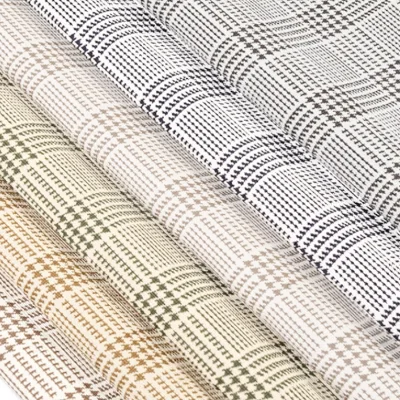


Water Based PU Leatherette for Jewelry Cases Breathable with Knitted Fabric
$2.20 - $2.80
MOQ: 300 Meters


Eco Friendly Non Toxic Leatherette for Handbags Matte Grain Custom Size Available
$2.00 - $2.60
MOQ: 300 Meters

Low MOQ High Quality Leatherette for Tote Bags with Cotton Velvet Underlayer
$2.60 - $3.20
MOQ: 300 Meters

Comprehensive Sourcing Guide
Sourcing Guide for PVC-Free PU Leatherette Materials
Understanding Material Composition and Technical Specifications
When sourcing PVC-free PU leatherette, buyers must first distinguish between the chemical composition of the material and its physical performance characteristics. The core keyword indicates a preference for Polyurethane (PU) over Polyvinyl Chloride (PVC), driven by environmental regulations and specific performance needs. Based on the available product data, the market offers PU-based materials with distinct backing options, including 100% Viscose and 100% Dacron. These backing choices significantly influence the drape, breathability, and structural integrity of the final product.
The technical specifications for these materials vary widely depending on the intended application. Thickness is a critical parameter, with observed ranges spanning from 0.6 mm to 1.0 mm, and specific listings noting 0.8 mm as a standard for certain models. Widths are equally variable, with standard roll widths observed at 54/55 inches (approximately 137 cm) and other listings specifying 140 cm or 1370 cm, though the latter likely represents a specific industrial roll configuration rather than a standard sheet width. Buyers should verify the exact width requirements for their manufacturing equipment before placing orders.
Pattern and surface finish are also key differentiators. The market provides options ranging from embossed textures to finished surfaces and printed designs. Some products feature a "split leather" level, which may refer to the base layer structure, while others are described with a glossy or smooth hand feel. The availability of customization in color and pattern allows for tailored solutions, though buyers must confirm if these customizations incur additional tooling costs or minimum order quantity (MOQ) adjustments.
| Specification Category | Observed Range/Options | Verification Requirement |
|---|---|---|
| Material Type | PU (Polyurethane) | Confirm absence of PVC in technical data sheet. |
| Thickness | 0.6 mm – 1.0 mm | Verify specific thickness for application load. |
| Width | 54/55" (137 cm) or 140 cm | Match to cutting machine capabilities. |
| Backing | 100% Viscose or 100% Dacron | Select based on breathability vs. durability needs. |
| Surface Pattern | Embossed, Finished, Printed | Request physical swatches for texture validation. |
| Hand Feel | Elastic, Soft, Smooth, Glossy | Assess tactile requirements for end-user comfort. |
Compliance, Certification, and Environmental Standards
The term "PVC-free" carries significant weight in modern B2B procurement, often linked to compliance with international environmental standards. While the supplied data does not explicitly list specific certification bodies like ISO 9001 as a guaranteed attribute for every listing, buyers must treat such certifications as verification points rather than automatic inclusions. The presence of features such as "Anti-Mildew" and "Waterproof" suggests that the materials undergo specific treatments, but these should not be assumed to meet all regulatory requirements without documentation.
Buyers should prioritize suppliers who can provide third-party test reports confirming the absence of phthalates, heavy metals, and other hazardous substances often associated with PVC production. The "PVC-free" claim must be backed by a Certificate of Analysis (CoA) or a material safety data sheet (MSDS) that explicitly states the chemical composition. In the context of the provided data, while some products mention "ISO 9001" in background notes, this should be treated as a general industry reference rather than a confirmed status for a specific supplier unless explicitly stated in their current product listing.
Furthermore, the "PVC-free" designation often aligns with specific regional regulations, such as the REACH regulation in the European Union or Prop 65 in California. Buyers sourcing from regions like Zhejiang or Guangdong, China, as indicated in the origin data, must ensure that the supplier's export documentation aligns with the destination market's legal requirements. The absence of a specific standard number in the general description does not preclude compliance, but it necessitates a proactive request for the relevant test certificates.
Cost Drivers and Pricing Dynamics
The pricing of PVC-free PU leatherette is influenced by several interconnected factors, including raw material costs, production complexity, and order volume. The observed price range in the market spans from $1 to $6 USD, though this wide variance likely reflects differences in thickness, backing material, and order quantity. Thicker materials (e.g., 1.0 mm vs. 0.6 mm) and specialized backings like 100% Dacron may command higher prices due to increased raw material usage and processing time.
Minimum Order Quantity (MOQ) is another significant cost driver. The data indicates an MOQ range of 1 to 1000 units, suggesting that suppliers offer flexibility for small-batch testing but may require larger volumes for standard pricing tiers. Buyers should note that customizations, such as specific colors or printed patterns, often increase the effective cost per unit, particularly if the order quantity falls below the threshold for standard production runs.
Packaging and logistics also contribute to the final landed cost. Standard packaging is listed as "Poly Bag" or "Packing with PE Film," with roll lengths typically ranging from 50 meters to 30-40 meters per roll. Buyers must calculate the total cost per square meter or per roll, factoring in the width and thickness, to ensure accurate budgeting. Additionally, lead times, which can vary from standard production schedules to "within 15 days" for customized orders, impact cash flow and inventory planning. Rush orders or expedited shipping will invariably increase the overall procurement cost.
Typical Applications and Usage Scenarios
The versatility of PVC-free PU leatherette is evident in its extensive list of applications. The material is suitable for a broad spectrum of industries, including apparel, automotive, furniture, and consumer goods. Specific usage cases identified in the market data include raincoats, belts, footballs, notebooks, gloves, home textiles, car seats, decorative items, garments, furniture, shoes, and bags.
For the apparel and footwear sectors, the "Soft," "Elastic," and "Smooth" hand feel of the material makes it ideal for garments and shoes where comfort and flexibility are paramount. The "Anti-Mildew" feature is particularly valuable for items like gloves and raincoats, which are frequently exposed to moisture. In the automotive and furniture industries, the "Abrasion Resistant" and "Waterproof" properties ensure durability and longevity, making the material suitable for car seats and high-traffic furniture surfaces.
The construction of the backing also dictates suitability. Materials with 100% Viscose backing may offer better breathability, making them preferable for clothing and home textiles where air circulation is important. Conversely, 100% Dacron backing provides enhanced strength and dimensional stability, which is beneficial for heavy-duty applications like bags, belts, and automotive interiors. Buyers should match the specific backing and thickness to the mechanical stresses expected in the final product.
Supplier Evaluation and Selection Criteria
Selecting the right supplier for PVC-free PU leatherette requires a rigorous evaluation process that goes beyond price comparisons. Buyers should assess the supplier's location, with major production hubs identified in Zhejiang and Guangdong, China. Proximity to these manufacturing centers can facilitate better communication and faster response times, but it is not a guarantee of quality.
Key evaluation criteria include the supplier's ability to provide free samples, as indicated by some listings. Requesting samples allows buyers to physically verify the material's thickness, hand feel, and color accuracy before committing to a larger order. The availability of customization options, such as color matching and pattern printing, is another critical factor. Suppliers who offer "Customizable" colors and patterns demonstrate flexibility and a willingness to collaborate on product development.
Lead time reliability is essential for maintaining supply chain continuity. While some suppliers list lead times as "Within 15 days," others may have different schedules depending on order complexity. Buyers should establish clear expectations regarding production timelines and potential delays. Additionally, the supplier's packaging standards, such as the use of PE film or poly bags, should be evaluated to ensure the material arrives in good condition, free from damage or contamination.
Quality Control and Performance Verification
Quality control (QC) is paramount when sourcing synthetic leather materials. Buyers must implement a multi-stage QC process that includes pre-production, in-process, and final inspection. The first step involves verifying the material specifications against the supplier's technical data sheet. This includes confirming the thickness, width, and backing composition. Any deviation from the agreed-upon specifications should be addressed immediately.
Performance testing is another critical component of QC. Buyers should conduct or request tests for key attributes such as waterproofing, abrasion resistance, and anti-mildew properties. The "Waterproof" and "Abrasion Resistant" features listed in the product data should be validated through standardized testing methods to ensure they meet the specific requirements of the end application. For instance, the "Split Leather" level mentioned in some listings may require specific tensile strength tests to ensure it can withstand the intended use.
Visual inspection is also necessary to check for defects such as uneven coloring, surface imperfections, or inconsistencies in the pattern. The "Pattern" attributes, whether embossed, finished, or printed, must be consistent across the entire roll. Buyers should establish a clear acceptance criteria for visual defects and communicate these standards to the supplier. Regular third-party inspections can provide an additional layer of assurance, ensuring that the material meets both functional and aesthetic requirements.
Long-Term Procurement and Supply Chain Strategy
Building a sustainable long-term procurement strategy for PVC-free PU leatherette involves more than just securing a single order. Buyers should focus on developing a partnership with suppliers who demonstrate reliability, transparency, and a commitment to quality. This includes establishing clear communication channels and agreeing on standard operating procedures for order placement, quality assurance, and dispute resolution.
Supply chain resilience is another critical consideration. Buyers should diversify their supplier base to mitigate risks associated with production delays, raw material shortages, or geopolitical factors. Maintaining relationships with multiple suppliers in different regions, such as Zhejiang and Guangdong, can provide flexibility and reduce dependency on a single source.
Continuous improvement should be a core component of the procurement strategy. Buyers should regularly review supplier performance metrics, including on-time delivery rates, defect rates, and responsiveness to issues. Feedback loops should be established to drive improvements in product quality and service levels. Additionally, staying informed about industry trends and technological advancements in PU leatherette production can help buyers identify new opportunities for innovation and cost savings.
Finally, sustainability should be a guiding principle in long-term procurement. As environmental regulations tighten, buyers should prioritize suppliers who are proactive in reducing their environmental footprint and adhering to global sustainability standards. This includes verifying the "PVC-free" claim through robust documentation and exploring opportunities for recycling or circular economy initiatives within the supply chain. By focusing on these strategic elements, buyers can ensure a stable, high-quality, and sustainable supply of PVC-free PU leatherette for their operations.
FAQs
What are the available backing options for pvc-free pu leatherette?
The material is available with 100% Viscose or 100% Dacron backing. Buyers should select Viscose for better breathability in garments or Dacron for enhanced strength in bags and automotive seats.
How thick is the pvc-free pu leatherette material typically?
Thickness ranges from 0.6 mm to 1.0 mm depending on the specific model. Standard listings often specify 0.8 mm for applications requiring durability like car seats and furniture.
Can I customize the color and pattern of the pvc-free pu leatherette?
Yes, customization for color and pattern is available for these materials. Buyers must confirm if specific customizations incur additional tooling costs or adjust the minimum order quantity requirements.
What is the lead time for ordering pvc-free pu leatherette?
Lead times can be within 15 days for customized orders. Standard production schedules may vary, so buyers should establish clear expectations regarding production timelines before placing orders.
Which features make pvc-free pu leatherette suitable for raincoats?
The material features waterproof, anti-mildew, and abrasion-resistant properties ideal for raincoats. These characteristics ensure durability and protection against moisture in outdoor apparel applications.
What is the standard width for pvc-free pu leatherette rolls?
Standard roll widths are observed at 54/55 inches or 140 cm. Buyers must verify exact width requirements to ensure compatibility with their specific manufacturing equipment before ordering.