Source Rechargeable Lithium Drapery Motor for Home, Office, and Hotel
Compare 30 Rechargeable Lithium Drapery Motor options featuring single-phase operation, variable frequency starting, and multiple voltage ratings. Buyers can evaluate specifications including torque, brush life, and protection types from verified Chinese manufacturers.
Key considerations
Products List


Battery Operated Curtain Smart Motor for Roller Blinds with CCC Garage Door
$27.00 - $30.00
MOQ: 100 Pieces


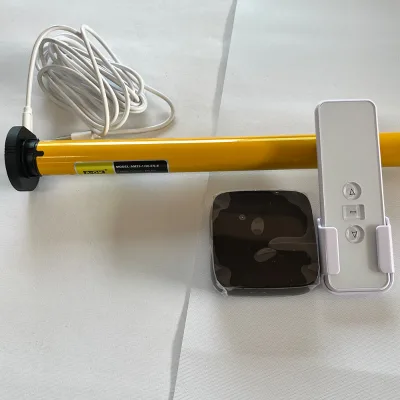

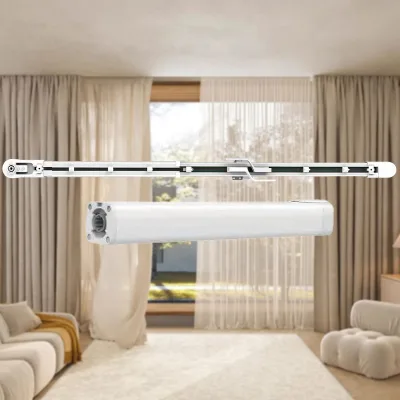




Kunna Electric Drapery Motor with Remote Control and Super Quiet Operation
$10.00 - $15.00
MOQ: 20 Pieces
Comprehensive Sourcing Guide
Strategic Sourcing Guide for Rechargeable Lithium Drapery Motors
Understanding Technical Specifications and Performance Parameters
When sourcing rechargeable lithium drapery motors, buyers must first establish a clear understanding of the technical baseline provided by the market data. The core of this product category revolves around electric motors designed for the specific mechanical demands of window treatments, particularly roller shutters. The supplied product facts indicate a diverse range of specifications that buyers must navigate to ensure compatibility with their specific drapery systems.
A primary technical attribute observed is the voltage flexibility. The market data lists voltage options ranging from 12V to 90V, specifically noting 12V, 24V, 36V, 48V, and 90V as available configurations. This wide range suggests that procurement strategies must be tailored to the existing electrical infrastructure of the building or the specific battery pack capacity of the motor unit. The power rating for certain models is explicitly noted as 40W, which serves as a reference point for torque and speed expectations, though variations exist across different product lines.
The mechanical structure of these motors is another critical factor. The data highlights a "Brush" structure and working principle, which implies a specific maintenance profile and lifespan compared to brushless alternatives. The brush life is cited as 2000 hours, a figure that buyers should treat as a benchmark for expected operational longevity under standard conditions. Furthermore, the motor speed is described as "Constant Speed" in some contexts, while other attributes mention "High Speed" and "Variable Frequency Starting." This apparent contradiction requires clarification during the supplier inquiry phase; buyers should verify if the motor offers variable speed control via an external controller or if the "constant speed" refers to the rated operating point.
The physical dimensions and casing protection are equally vital for installation. The product origin data points to manufacturers in China, specifically Jiangsu and Shanghai, which are known industrial hubs. Standard casing protection is listed as "Closed Type" with a specific "Drip-proof" feature, ensuring the motor can withstand minor environmental exposure. The frame material is identified as either Aluminum Alloy or Cast Iron, both offering high quality and durability. For tubular applications, the standard sizes observed include 45mm, 59mm, and 92mm, with frame dimensions also noted as 32mm in specific configurations. The standard packing dimensions vary, with some entries citing 0.5m0.04m0.15m and others 8080mm or 9090mm, indicating that packaging must be verified per model to optimize shipping costs.
Compliance and Certification Verification Protocols
Navigating the regulatory landscape is a non-negotiable aspect of sourcing rechargeable lithium drapery motors. The market data presents a mix of certifications, ranging from domestic Chinese standards to international safety marks. Buyers must rigorously verify that the specific unit they intend to purchase carries the necessary certifications for their target market.
The observed certification list includes CCC (China Compulsory Certification), ISO, CE, RoHS, VDE, TUV, and FCC. The presence of CCC and ISO suggests compliance with Chinese manufacturing and quality management standards. However, for export to Europe, the CE and RoHS marks are critical. The CE mark indicates conformity with health, safety, and environmental protection standards for products sold within the European Economic Area. RoHS compliance ensures that the motor and its components do not contain specific hazardous materials, which is a legal requirement in many jurisdictions. Additionally, VDE and TUV are German safety standards that are highly respected globally, while FCC compliance is essential for electronic devices sold in the United States to prevent radio frequency interference.
It is important to note that the data lists "Low-confidence background" regarding CE certification. This implies that while CE is a common attribute in the dataset, it may not be universally present on every unit or model. Buyers should not assume CE compliance based on the general category but must request specific test reports and certificates of conformity for the exact model number. Similarly, while "Protection Type" is mentioned as an attribute, the specific IP rating (e.g., IP44, IP54) is not explicitly defined in the provided facts. Buyers must verify the exact Ingress Protection rating to ensure the motor meets the environmental requirements of the installation site, especially given the "Drip-proof" feature mentioned.
The battery technology also carries regulatory weight. The "Rechargeable Lithium" battery type is a key feature. Buyers must ensure that the lithium batteries comply with international shipping regulations (such as UN38.3) and safety standards regarding thermal runaway and overcharge protection. The charge voltage is specified as DC5V in some contexts, which is a standard for USB charging, but other models may utilize different charging protocols. Verifying the battery management system (BMS) and its compliance with relevant safety standards is essential for risk mitigation.
Cost Drivers and Pricing Structure Analysis
The pricing landscape for rechargeable lithium drapery motors is characterized by significant variability. The observed listed price range spans from $0.50 to $2,096 USD. This vast disparity indicates that the "product" is not a single commodity but a category encompassing simple components to fully integrated, high-torque systems. Understanding the drivers behind this price range is crucial for budget planning and value assessment.
The primary cost drivers include the motor's power output, voltage complexity, and the inclusion of optional parts. A motor priced at the lower end of the spectrum likely represents a basic unit with minimal features, perhaps a standard 12V or 24V model with a simple brush mechanism. Conversely, the higher-priced units likely incorporate advanced features such as integrated encoders, PWM speed controllers, or braking systems. The data explicitly lists "Optional Parts" including PWM Speed Controllers, Brakers, and Encoders. These components significantly increase the unit cost but are often necessary for precise control and automation integration.
The Minimum Order Quantity (MOQ) also influences the effective cost per unit. The observed MOQ range is 1 to 1000 units. Buyers purchasing small quantities (MOQ 1) may face higher per-unit costs due to the lack of economies of scale, while bulk buyers (MOQ 1000) can negotiate significantly lower prices. The "Customization: Available" attribute further impacts pricing. Custom orders, which may involve specific voltage requirements, unique casing dimensions, or proprietary branding, typically carry a premium over standard off-the-shelf models.
Shipping and packaging costs are additional factors. The data mentions "Carton and Pallet" as well as "Standard Export Carton" as packing methods. The standard dimensions provided (e.g., 0.5m0.04m0.15m) suggest that some units are compact, while others may require palletization for bulk transport. Buyers should calculate the total landed cost, including freight, which can be substantial given the weight of cast iron frames and lithium batteries. The origin locations, Jiangsu and Shanghai, are major logistics hubs, which may offer competitive shipping rates, but this depends on the specific supplier's logistics network.
Typical Applications and Integration Scenarios
The versatility of rechargeable lithium drapery motors is highlighted by their "Universal" application classification. The data specifies several key use cases, including Car, Household Appliances, Industrial, Power Tools, and Roller Shutters. While the core keyword focuses on drapery, the "Universal" tag suggests these motors are adaptable to various mechanical systems.
For the specific application of roller shutters, the motor must provide reliable torque and smooth operation. The observed torque of 1.1nm serves as a baseline for smaller or lighter-duty applications. However, for larger commercial roller shutters, higher torque models may be required, which would likely fall into the higher price range. The "Two-Stroke" piston movement and "Reciprocating" nature mentioned in the data seem to refer to specific internal mechanisms or perhaps a different product category mixed in the dataset, but for drapery motors, the focus is on rotational output.
The integration of these motors into smart home systems is a growing trend. The availability of "PWM Speed Controller" and "Encoder" as optional parts supports this. Encoders provide feedback on the motor's position, allowing for precise control of the drapery's opening and closing, which is essential for automated systems. The "Variable Frequency Starting" mode suggests that these motors can be integrated with sophisticated control systems that manage acceleration and deceleration profiles to prevent mechanical stress on the drapery fabric or track.
In industrial settings, the "High Speed" attribute and "Air-Cooled" design are beneficial. The ability to operate in ambient temperatures ranging from -10 to +50 degrees Celsius and humidity levels below 85% (non-condensing) makes these motors suitable for a wide range of environments, from cold storage facilities to hot industrial warehouses. The "Naturally Aspirated" intake and "Electric Ignition" features mentioned in the data appear to be relevant to engine-like applications but may indicate the versatility of the underlying technology. Buyers should focus on the motor's ability to interface with their specific control logic and mechanical load requirements.
Supplier Evaluation and Sourcing Strategy
Selecting the right supplier is critical for ensuring product quality and supply chain stability. The data indicates that manufacturers are located in China, with specific mentions of Jiangsu and Shanghai. These regions are known for their robust manufacturing ecosystems, but buyers must exercise due diligence.
When evaluating suppliers, buyers should prioritize those who can provide transparent documentation regarding the certifications mentioned. A supplier that can immediately produce CE, RoHS, VDE, and TUV certificates for the specific model is preferable to one that offers vague assurances. The "Customization: Available" attribute is a strong indicator of a supplier's flexibility. Buyers should assess the supplier's capability to handle custom orders, including lead times and the cost implications of customization.
The "Observed MOQ range" of 1 to 1000 suggests a mix of suppliers catering to different market segments. Some suppliers may be willing to sell single units for prototyping, while others may require bulk orders. Buyers should align their order volume with the supplier's capacity to avoid delays or inflated costs. The "Carton and Pallet" packing options indicate that suppliers are experienced in export logistics, but buyers should verify the packaging standards to ensure the motors arrive in pristine condition.
It is also important to verify the "Brush Life" claim of 2000 hours. A reputable supplier should be able to provide test data or a warranty that supports this lifespan claim. The "Frame Material" options of Aluminum Alloy or Cast Iron High Quality suggest that suppliers offer choices based on durability and weight requirements. Buyers should request samples to verify the material quality and finish.
Quality Control and Long-Term Procurement Considerations
Ensuring long-term reliability requires a robust quality control (QC) strategy. The "Drip-proof" feature and "Closed Type" casing are essential for protecting the internal components from dust and moisture. However, buyers should verify the specific IP rating and conduct environmental testing if the installation site is particularly harsh. The "Ambient Temperature" and "Ambient Humidity" limits provided (-10 to +50°C and <85% humidity) are standard operating conditions, but buyers should ensure the motor can handle transient spikes in temperature or humidity.
The "Rechargeable Lithium" battery is a critical component that requires specific QC attention. Buyers should verify the battery's cycle life, charge/discharge efficiency, and safety features. The "Charge voltage: DC5V" is a specific parameter that must be matched with the charging system. Mismatched charging voltages can lead to battery failure or safety hazards.
For long-term procurement, buyers should consider the availability of spare parts and after-sales support. The "Optional Parts" list includes controllers and encoders, which may need replacement over time. A supplier that maintains a stock of these components is preferable. The "Brush" structure implies that brushes may need periodic replacement, so the availability of replacement brushes is a key factor in the total cost of ownership.
Finally, buyers should establish clear communication channels with suppliers to address any issues that arise. The "Universal" application nature of these motors means they may be used in diverse settings, and the ability to troubleshoot and adapt the motor to new requirements is a valuable asset. By focusing on technical specifications, compliance, cost drivers, and supplier reliability, buyers can effectively source rechargeable lithium drapery motors that meet their specific needs while minimizing risk.
Summary of Key Specifications for Comparison
To assist buyers in comparing different options, the following table summarizes the key technical attributes observed in the market data. This comparison highlights the variability in specifications and the need for careful selection based on project requirements.
| Attribute | Observed Range/Options | Notes for Verification |
|---|---|---|
| Voltage | 12V, 24V, 36V, 48V, 90V | Match with existing power supply or battery pack. |
| Power | 40W (Example) | Verify actual power rating for specific model. |
| Torque | 1.1nm (Example) | Higher torque may be needed for heavy loads. |
| Speed | Constant, High, Variable Frequency | Confirm control method and speed profile. |
| Battery | Rechargeable Lithium | Check capacity, cycle life, and safety certs. |
| Casing | Closed Type, Drip-proof | Verify IP rating for environmental exposure. |
| Frame Material | Aluminum Alloy, Cast Iron | Select based on weight and durability needs. |
| Certifications | CCC, ISO, CE, RoHS, VDE, TUV, FCC | Request specific certificates for target market. |
| Brush Life | 2000h | Verify warranty and maintenance schedule. |
| Tubular Sizes | 45mm, 59mm, 92mm | Ensure compatibility with drapery tube. |
| Origin | China (Jiangsu, Shanghai) | Verify logistics and lead times. |
By adhering to these guidelines and leveraging the detailed technical data, buyers can make informed decisions that align with their procurement goals and ensure the successful integration of rechargeable lithium drapery motors into their projects.
FAQs
What certifications are available for rechargeable lithium drapery motors?
Available certifications include CCC, ISO, CE, RoHS, VDE, TUV, and FCC. Buyers must verify specific certificates for their target market as CE compliance is listed with low confidence in the general data.
Which voltage options are supported by these motors?
The motors support 12V, 24V, 36V, 48V, and 90V configurations. This wide range allows integration with various electrical infrastructures or battery pack capacities depending on the specific model selected.
Can these motors be customized for specific applications?
Yes, customization is available for various requirements. Buyers can request specific voltage settings, unique casing dimensions, or proprietary branding, though custom orders typically carry a premium over standard models.
How long is the expected brush life for these units?
The brush life is cited as 2000 hours under standard conditions. This figure serves as a benchmark for operational longevity, though actual performance may vary based on usage intensity and environmental factors.
What are the standard packaging dimensions for these motors?
Packaging varies by model, with options including 0.5m*0.04m*0.15m, 80*80mm, or 90*90mm. Units are typically shipped in standard export cartons or on pallets to optimize logistics and shipping costs.
Where are the manufacturers of these motors located?
Manufacturers are located in China, specifically in Jiangsu and Shanghai. These regions are known industrial hubs that offer robust manufacturing ecosystems and competitive logistics networks for export.