Source Rechargeable Ni-MH Button Cell Battery for Medical Devices
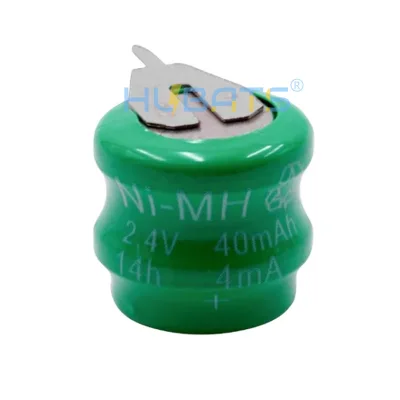
Find and compare 30 options for Rechargeable Ni-MH Button Cell Battery with capacities from 40mAh to 160mAh. Evaluate voltage, cycle life, and terminal types to select the right power source for your electronic components; compare the available evidence and request quotations based on your requirements.
Key considerations
Products List




Ni-MH Rechargeable Battery /AA Rechargeble Battery 2400 mAh NiMH Battery
$0.21 - $0.31
MOQ: 1000 Pieces


Ni-MH 2.4V 3.6V 1.2V 80mAh Rechargeable Button Cell Battery for Gamepad
$0.20 - $0.25
MOQ: 10000 Pieces


Hot Sale Rechargeable Ni-MH Button Cells Battery 2.4V 20mAh with Connector
$0.20 - $0.25
MOQ: 10000 Pieces


Rechargeable1.2V 2.4V 3.6V Ni-MH Button Cells with Wire for Electronic Gifts
$0.20 - $0.25
MOQ: 10000 Pieces


Comprehensive Sourcing Guide
Rechargeable Ni-MH Button Cell Battery Sourcing Guide
Buyers must first distinguish between single-cell coin formats and multi-cell packs, as the observed listings reveal a mix of 1.2V nominal cells and 3.6V configurations. The data indicates specific models like the 120H and 60H, which vary significantly in capacity from 40mAh to 160mAh. Understanding this distinction is critical because a 3.6V pack often implies a 3s1p combination, whereas a 1.2V unit is a single cell. Procurement teams should verify the exact voltage and cell count before placing orders to ensure compatibility with the target device's power management system.
The physical form factor and terminal options also require careful scrutiny, as the listings show variations in dimensions and connection methods. Some products are described with specific dimensions like 251419.5mm, while others are compact coin cells with pin, wire, or connector terminals depending on the buyer's request. This variability means that a standard button shape does not guarantee a universal fit for all PCB layouts. Buyers should explicitly confirm the terminal type and physical envelope dimensions to prevent integration issues during the assembly phase of their product development.
Product Scope and Observed Listing Signals
The market for these batteries presents a wide range of customization options, including color choices like green or fully customized finishes. Suppliers frequently offer OEM and ODM services, allowing buyers to tailor the product standard and branding to their specific needs. The observed listings confirm that customization is available for the product standard, which can range from generic descriptions to specific model numbers like the 160H. This flexibility is a key signal for buyers seeking unique product differentiation or specific branding requirements for their end-user market.
Capacity and cycle life are the primary performance signals observed in the current listings, with values ranging from 40mAh up to 160mAh and cycle lives between 500 and 1000 cycles. The discharge rates vary, with some cells supporting up to 1C while others are limited to 0.2C, directly impacting their suitability for high-drain versus low-drain applications. Buyers must align these observed performance metrics with their device's power consumption profile, as a mismatch could lead to premature failure or insufficient runtime in the final product.
Technical Specifications to Verify
Voltage and capacity are the most critical technical parameters that must be validated against the actual product datasheet. The listings show nominal voltages of 1.2V for single cells and 3.6V for packs, alongside capacities that differ by model. It is essential to verify the specific capacity rating, such as 80mAh or 120mAh, as this directly dictates the operational lifespan of the device. Buyers should request test reports that confirm these values under standard conditions to ensure the supplier is not overstating the performance capabilities of the battery.
Charging and discharging characteristics require detailed verification to ensure safe and efficient operation within the intended application. The observed data suggests charging ratios between 0.2C and 0.5C, with specific charge times ranging from 14 to 16 hours for certain models. Discharge rates are listed as 0.1C to 1C, which determines how quickly the battery can deliver power. Procurement teams must confirm that the supplier's recommended charging current and discharge limits match the device's circuit design to avoid overheating or capacity degradation over time.
Compliance and Safety Documentation
While specific certifications like CE, RoHS, and REACH are mentioned in background contexts, buyers must treat these as potential attributes rather than guaranteed facts for every listed item. The sourcing guide emphasizes the need to request current, valid certification documents directly from the supplier for each batch or model. Relying on general market knowledge without verifying the specific certificate for the ordered product can lead to regulatory non-compliance in the destination market. Buyers should explicitly ask for the certificate numbers and validity dates to ensure the products meet local safety and environmental regulations.
Material safety and environmental standards are equally important, particularly regarding the anode material and jacket composition. The listings indicate the use of Lithium Cobalt Oxide in some contexts and Ni-MH materials in others, alongside PVC jackets. It is vital to confirm the exact material composition to ensure it aligns with the buyer's sustainability goals and safety requirements. Procurement teams should verify that the supplier adheres to relevant material safety data sheets (MSDS) and that the packaging and materials do not contain restricted substances that could violate international trade agreements.
Cost Drivers and Commercial Terms
The price range observed in the market spans from $0.05 to $4.10, reflecting significant differences in capacity, voltage, and customization levels. Buyers should understand that lower prices often correlate with standard configurations, while higher costs are driven by custom colors, specific terminal types, or higher capacity ratings. The minimum order quantity (MOQ) varies widely from 10 to 10,000 units, which directly impacts the unit cost and cash flow requirements. Procurement teams must balance the desire for lower unit prices with the need to maintain sufficient inventory levels to meet production schedules.
Packaging and logistics terms are additional cost drivers that can affect the total landed cost of the battery supply. The listings mention packaging options such as cartons and pallets, which influence shipping efficiency and handling costs. Buyers should clarify whether the supplier includes protective packaging suitable for international shipping and if the palletization meets the destination port's requirements. Negotiating clear terms for packaging, including labeling and unit counts per carton, can prevent unexpected delays and additional handling fees during the supply chain process.
Supplier Qualification and Quality Control
Supplier qualification should focus on their ability to provide consistent quality control for the specific battery models being sourced. The observed data indicates that some products originate from Guangdong, China, while others list "Other" origins, suggesting a need to verify the actual manufacturing location. Buyers must assess the supplier's production capacity and quality assurance processes to ensure they can meet the required cycle life and capacity standards consistently. Requesting a factory audit or a detailed quality control plan is essential to mitigate the risk of receiving substandard products.
Quality control checks should include verification of the cycle life and capacity retention over time, as these are critical performance indicators. The listings show cycle lives ranging from 500 to 1000 times, but actual performance can vary based on usage conditions. Buyers should implement incoming quality control tests that measure the actual capacity and voltage of a sample batch against the supplier's specifications. Establishing a clear protocol for handling non-conforming products and defining the acceptable defect rate is crucial for maintaining the reliability of the final product.
Long-Term Procurement Checks
Long-term procurement success depends on establishing a robust relationship with the supplier to ensure consistent supply and support. Buyers should verify the supplier's ability to maintain the same specifications and quality standards over multiple production runs. The observed data suggests that customization is available, but maintaining consistency in custom features like color and terminal type requires clear communication and documented agreements. Regular reviews of the supplier's performance and capacity planning are necessary to prevent supply chain disruptions.
Continuous monitoring of product performance and market trends is essential to adapt to changing technology and regulatory requirements. Buyers should track the cycle life and capacity of the batteries in the field to identify any potential issues early. Staying informed about updates to safety standards and environmental regulations ensures that the procurement strategy remains compliant and competitive. Establishing a feedback loop with the supplier allows for continuous improvement and adaptation to new market demands, securing a reliable supply chain for the future.
FAQs
What capacities are available for these Ni-MH button cells?
Available capacities include 40mAh, 60mAh, 80mAh, 120mAh, and 160mAh options. These values correspond to specific models like the 40H, 60H, and 160H series. Buyers can select the capacity that best fits their device power requirements while maintaining the standard 1.2V or 3.6V nominal voltage configurations.
Can I customize the terminals for my specific device?
Yes, customization is available for terminals, including pins, wires, or connectors. This flexibility allows integration into various electronic designs. The OEM and ODM services are welcome, enabling tailored solutions. Buyers should specify their terminal preference during the sourcing process to ensure compatibility with their final product assembly.
What is the expected cycle life of these batteries?
The cycle life ranges from 500 to 1000 cycles depending on the specific model and usage conditions. Higher capacity variants like the 160mAh may offer different longevity compared to smaller cells. This durability supports repeated charging and discharging, making them suitable for devices requiring frequent power replenishment over extended operational periods.
How should these Ni-MH batteries be charged?
Charging requires an electric charger with a ratio of 0.2C to 0.5C. Specific models may require 8mA to 16mA currents over 14 to 16 hours. Discharge rates typically range from 0.1C to 1C. Adhering to these charging parameters ensures optimal battery performance and helps maintain the specified cycle life and safety standards.
What are the physical dimensions and weight of these cells?
Dimensions vary by model, with some measuring 25x14x19.5mm. Weights range from 3.3g to 18g depending on capacity and construction. The button shape facilitates compact device integration. Buyers should verify specific model dimensions against their enclosure constraints to ensure proper fit and mechanical stability within their electronic assemblies during operation.
Are these batteries recyclable and environmentally safe?
Yes, these Ni-MH batteries are recyclable. They are constructed from materials like nickel-metal hydride and may include PVC jackets. While specific certifications like CE or RoHS are noted in background data, buyers should confirm compliance with local environmental regulations. Proper disposal and recycling practices help minimize environmental impact and support sustainable electronics manufacturing.