Source Recyclable Reusable Jute Tote Bag for shopping, gifts, and promotion
Compare 30 listings of recyclable reusable jute tote bags from suppliers in China. Buyers can evaluate customization options, printing methods, and MOQs for shopping, gifts, and promotional use.
Key considerations
Products List


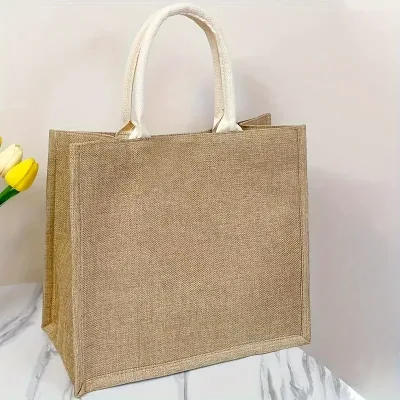
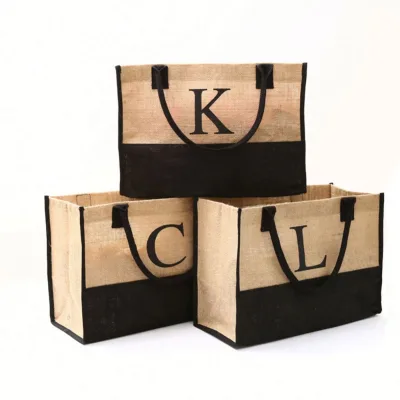


Eco Friendly Multi Size Canvas Jute Recyclable Customizable Shopping Tote Bag
$0.50 - $0.60
MOQ: 100 pieces


Comprehensive Sourcing Guide
Strategic Sourcing Guide for Recyclable Reusable Jute Tote Bags
The global shift toward sustainable packaging has elevated the demand for recyclable and reusable jute tote bags, positioning them as a cornerstone for eco-conscious branding and retail operations. For procurement professionals, sourcing these items requires a nuanced understanding of material properties, manufacturing capabilities, and supply chain logistics. The following guide synthesizes verified product attributes and industry standards to provide a robust framework for evaluating potential suppliers and securing high-quality inventory.
Understanding Material Composition and Technical Specifications
The foundation of a successful procurement strategy lies in the precise definition of material specifications. Jute, a natural vegetable fiber, is the primary component for these bags, offering a unique blend of durability and biodegradability. When evaluating product listings, buyers must verify the specific technical attributes that define the bag's performance. The observed product data indicates that jute bags are characterized by a weight range of 9-220 GSM (grams per square meter). This variance is critical; lower GSM values may indicate a lighter, more flexible fabric suitable for promotional giveaways, while higher GSM values suggest a robust structure capable of carrying heavier retail goods.
Furthermore, the physical construction of the bag is defined by its weaving technique. The standard for these products is "Woven," which ensures structural integrity. The width of the raw material is often standardized at 55/56 inches, a metric that influences how efficiently the fabric can be cut and sewn into final bag shapes. Buyers should also note the shape and size variations available. While "Square" and "Large" are common configurations, the specific dimensions must align with the intended industrial use, whether for cosmetics, jewelry, or general shopping. The color profile is typically natural "jute," though customization options allow for dyeing or printing. Understanding these baseline specifications prevents the selection of products that may fail under the stress of intended usage.
Customization Capabilities and Brand Integration
One of the primary drivers for sourcing jute tote bags is the ability to integrate brand identity through customization. The market data confirms that "Customization" is a widely available attribute, with suppliers explicitly welcoming ODM (Original Design Manufacturing) and OEM (Original Equipment Manufacturing) requests. This flexibility allows buyers to tailor the product to specific marketing campaigns or corporate branding guidelines.
The customization process extends beyond simple logo placement. Buyers should verify the available printing skills, which include digital printing, silk screen printing, heat transfer printing, and digital direct injection. Each method offers distinct advantages regarding color fidelity, durability, and cost-effectiveness. For instance, silk screen printing is often preferred for bold, solid colors on larger runs, while digital printing may be more suitable for complex, multi-colored graphics on smaller batches. The product attributes also highlight "With Logo" as a standard feature, indicating that most suppliers can accommodate branding requests. However, the specific "prod_model" numbers, such as HT-Be-jt-44 or MBD series codes, suggest that customization often starts from a base model. Procurement teams must ensure that the chosen base model supports the desired customization depth without compromising the structural integrity of the bag.
Compliance, Certification, and Environmental Claims
In the realm of sustainable sourcing, verifying environmental claims is paramount. The product attributes consistently list features such as "Eco-Friendly," "Recycled," "Reusable," and "Durable." These terms are not merely marketing buzzwords but reflect the inherent properties of jute fiber. Jute is a renewable resource that is biodegradable and compostable, making it a superior alternative to synthetic plastics. However, buyers must exercise caution when interpreting these claims. While the material itself is naturally eco-friendly, the processing methods, dyes, and adhesives used in the manufacturing process can alter the environmental profile.
Buyers should request specific documentation regarding the standards the product meets. The data mentions a "prod_standard" of "customize," which implies that compliance is often negotiated on a per-order basis rather than adhering to a single universal standard. This necessitates a proactive approach where the buyer defines the required certifications, such as organic certification for the jute or specific chemical restrictions for the printing inks. It is essential to verify that the "Eco-Friendly" claim is backed by verifiable data rather than general assertions. Additionally, the "recycled" and "reuse" attributes should be cross-referenced with the supplier's supply chain transparency to ensure that the entire lifecycle of the product aligns with the buyer's sustainability goals.
Cost Drivers and Economic Considerations
The economics of sourcing jute tote bags are influenced by several key variables, including material weight, customization complexity, and order volume. The observed price range in the market spans from $0.50 to $3.75 USD. This significant variance is not arbitrary; it is directly correlated with the GSM weight, the intricacy of the printing, and the quantity ordered. Heavier bags with higher GSM values naturally cost more due to the increased material usage. Similarly, complex printing techniques like digital direct injection may carry a higher unit cost compared to standard silk screen printing.
Order volume is another critical cost driver. The minimum order quantity (MOQ) typically ranges from 100 to 1000 units. Suppliers often offer tiered pricing structures where the unit cost decreases as the order volume increases. The data confirms that "Small Orders" are accepted, with some suppliers listing an MOQ as low as 100 pieces. This flexibility is beneficial for startups or companies testing new product lines. However, buyers must balance the benefit of low MOQs against the higher per-unit cost. When negotiating, it is advisable to request a detailed breakdown of costs, including material, labor, printing, and packaging, to understand the true cost drivers. Additionally, the "prod_packing" method, typically "Carton," and the single package size of 15x15x15 cm with a gross weight of 0.5 kg, should be factored into the total landed cost, as these affect shipping expenses.
Supplier Evaluation and Operational Logistics
Selecting the right supplier requires a comprehensive evaluation of their operational capabilities and logistical reliability. The supply chain for jute products is often concentrated in specific regions, with "Suzhou, China" and "Shanghai" identified as key places of origin. These locations are hubs for textile manufacturing, offering access to a robust ecosystem of raw material suppliers and processing facilities. When evaluating potential partners, buyers should verify the supplier's "Lead time," which is observed to be between 10 and 25 working days. This timeframe can vary based on the complexity of the order and the current production load.
Payment terms and shipping methods are also critical components of the supplier evaluation. The data indicates that suppliers accept various payment methods, including TT (Telegraphic Transfer), Trade Assurance, PayPal, and Western Union. Trade Assurance is particularly valuable as it offers a layer of protection for the buyer. Regarding logistics, the "Shipping way" options include sea, air, and courier services. The choice of shipping method will depend on the urgency of the order and the budget constraints. For large, non-urgent orders, sea freight is typically the most cost-effective option, while air freight or courier services may be necessary for urgent replenishments. Buyers should also assess the supplier's ability to handle "Custom Order" requests and their track record in delivering on time.
Quality Control and Long-Term Procurement Strategy
Ensuring consistent quality is essential for maintaining brand reputation. The "Feature" attributes such as "durable" and "reusable" imply a certain level of quality that must be maintained across all units. Quality control measures should focus on the stitching strength, the integrity of the handles, and the adhesion of the printed logos. Since the product is intended for "Decoration, Daily Use, Shopping, Promotion, Gifts, and Supermarket" applications, the bag must withstand repeated use without tearing or fading.
For long-term procurement, buyers should establish a relationship with suppliers who offer consistent quality and reliable lead times. The ability to produce "Customized" orders consistently is a key indicator of a supplier's maturity. Buyers should also consider the scalability of the supplier. As demand grows, the supplier must be able to increase production without compromising quality. The "Industrial Use" categories, ranging from gifts and candy to cosmetics and jewelry, suggest that jute tote bags are versatile. A strategic procurement plan should account for these diverse applications, ensuring that the selected bag specifications meet the specific requirements of each use case. By focusing on technical specifications, customization capabilities, and supplier reliability, buyers can build a resilient supply chain for recyclable and reusable jute tote bags.
Comparative Analysis of Product Attributes
To facilitate a clearer understanding of the variations available in the market, the following table summarizes the key attributes observed in the product data. This comparison aids in aligning product selection with specific procurement needs.
| Attribute Category | Observed Values | Procurement Implication |
|---|---|---|
| Material | Jute | Natural, biodegradable, renewable. |
| Weight Range | 9-220 GSM | Determines durability and cost; higher GSM = heavier bag. |
| Printing Methods | Digital, Silk Screen, Heat Transfer, Direct Injection | Affects design complexity and unit cost. |
| MOQ Range | 100-1000 pcs | Lower MOQs allow for testing; higher volumes reduce unit cost. |
| Lead Time | 10-25 working days | Crucial for inventory planning and launch schedules. |
| Origin | Suzhou, Shanghai, China | Indicates established textile manufacturing hubs. |
| Customization | ODM/OEM Welcome, Logo Printing | Essential for branding and marketing campaigns. |
| Features | Eco-Friendly, Reusable, Durable, With Logo | Core selling points for sustainability-focused buyers. |
| Packing | Carton | Standard packaging; affects shipping volume and cost. |
This structured approach to evaluating product attributes ensures that buyers can make informed decisions based on concrete data rather than assumptions. By adhering to these guidelines, procurement professionals can secure high-quality, sustainable jute tote bags that meet both functional and environmental objectives.
FAQs
What customization options are available for jute tote bags?
Customization is widely available with ODM and OEM services welcome. Buyers can select from digital, silk screen, heat transfer, or direct injection printing methods to add logos and designs to the natural jute fabric.
How much does a Recyclable Reusable Jute Tote Bag cost?
The observed price range spans from 0.50 to 3.75 USD per unit. Costs vary based on the GSM weight, which ranges from 9 to 220, and the complexity of the chosen printing technique.
Can I place small orders for jute shopping tote bags?
Yes, small orders are accepted with a minimum order quantity as low as 100 pieces. This allows startups to test the market without committing to the higher 1000-unit thresholds seen in other listings.
What is the typical lead time for manufacturing these bags?
The standard lead time is between 10 and 25 working days. This duration depends on the order volume and the specific customization requirements such as logo printing or custom packaging.
Which printing skills are used for these eco-friendly bags?
Manufacturers utilize digital printing, silk screen printing, heat transfer printing, and digital direct injection. These methods ensure durable branding on the woven jute material suitable for various industrial uses.
Where are these jute bags typically manufactured?
Production originates primarily from Suzhou and Shanghai in China. These locations are established textile hubs that support the woven construction and customization capabilities required for these reusable bags.