Source Recyclable Rectangle Sliding Tin Box for Gifts, Cosmetics, and Toys
Explore 30 options for the recyclable rectangle sliding tin box, featuring eco-friendly tinplate construction and customizable logo printing. Compare specifications across models like WM83-707 and AY0095, noting sizes from 100x45x25mm to 190x115x20mm, and verify certifications such as BSCI and FDA for food-grade safety.
Key considerations
Products List




Comprehensive Sourcing Guide
Recyclable Rectangle Sliding Tin Box Sourcing Guide
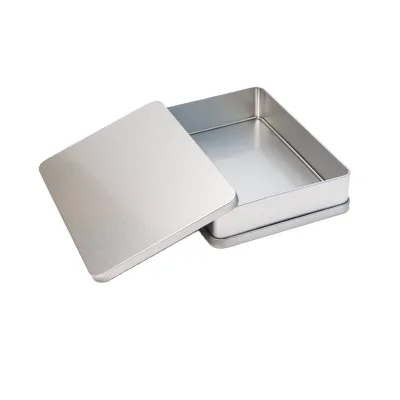
The recyclable rectangle sliding tin box serves as a versatile packaging solution for diverse industries, including food, cosmetics, toys, and health care products. Market observations indicate that these containers are frequently manufactured from tinplate, offering a balance of durability and eco-friendly material properties. Buyers should note that while many listings highlight eco-friendly features, the specific recycling claims must be verified against the actual material composition and supplier documentation to ensure alignment with sustainability goals.
Procurement decisions for this category often hinge on the specific customization needs of the brand, such as logo printing and surface handling techniques. Available options include offset printing and varnishing, with styles ranging from simplicity and retro designs to cartoon aesthetics. Sourcing agents must carefully distinguish between products with and without logo printing capabilities, as this significantly impacts the final aesthetic and branding strategy for the end consumer.
Product Scope and Observed Listing Signals
Buyers analyzing the market will observe a wide range of product models, such as WM83-707-28-2 and AY0095, which cater to different dimensional requirements. The observed size specifications vary significantly, with some models measuring approximately 108mm in length while others are compact at 100mm by 45mm. This variation suggests that the product scope is not limited to a single standard size but rather encompasses a broad spectrum of medium-sized packaging needs tailored to specific product volumes.
The physical attributes of these boxes often include a metal hinge mechanism, which is a critical feature for the sliding or opening functionality. While some listings specify a weight under 0.5 kg, others indicate weights between 0.5 kg and 1.5 kg, reflecting differences in material thickness and structural reinforcement. Procurement teams must verify the exact weight and dimensions for their specific application to ensure compatibility with existing logistics and shelving systems.
Technical Specifications to Verify
Thickness is a primary technical specification that directly influences the structural integrity and perceived quality of the tin box. Observed data suggests a thickness range of 0.21mm to 0.35mm, which is a critical parameter for buyers to confirm before placing orders. Thicker materials generally offer better protection for heavy or fragile items, whereas thinner gauges may be more suitable for lightweight cosmetics or confectionery, requiring a precise match to the product's weight and fragility.
Surface handling and printing methods are equally vital for brand presentation and product protection. The market offers options for offset printing and varnishing, with color capabilities typically supporting CMYK processes. Buyers should verify whether the supplier can accommodate specific printing requirements, such as full-color graphics or simple logo placement, and ensure that the chosen surface treatment provides adequate resistance to moisture and abrasion during transit.
Compliance and Safety Documentation
Safety compliance is non-negotiable for packaging intended to hold food, cosmetics, or health care products. The supply chain frequently references standards such as FDA, LFGB, and EN71-3, which are essential for verifying that the tinplate and inks are safe for direct or indirect food contact. Procurement teams must request current test reports to confirm that the specific batch of products meets these rigorous safety thresholds before they are cleared for distribution.
In addition to material safety, corporate social responsibility certifications play a significant role in supplier selection. Many manufacturers in this sector hold BSCI, Sedex, and BRC certifications, which indicate adherence to ethical labor practices and quality management systems. Buyers should prioritize suppliers who can provide valid, up-to-date certificates for these standards to mitigate reputational risks and ensure that their supply chain aligns with corporate social responsibility mandates.
Cost Drivers and Commercial Terms
The cost of recyclable rectangle sliding tin boxes is heavily influenced by the customization level and the complexity of the surface handling processes. Options such as offset printing with specific logo designs or unique hinge mechanisms can increase the unit price compared to standard, unprinted variants. Buyers must evaluate the trade-off between aesthetic customization and budget constraints, as high-fidelity printing and specialized finishes often command a premium over basic production runs.
Minimum Order Quantities (MOQ) and packaging configurations are also key commercial factors that affect the total cost of ownership. Observed MOQs range from 100 to 10,000 units, requiring buyers to align their order volume with their inventory strategy and cash flow. Furthermore, packaging details such as polybagging and export cartons vary by supplier, and understanding these logistics terms is essential for accurate freight cost estimation and warehouse planning.
Supplier Qualification and Quality Control
Supplier qualification should extend beyond basic certifications to include an assessment of their manufacturing capabilities and quality control protocols. Factories located in regions like Dong Guan and Zhejiang are common sources, but buyers must verify the specific production capacity and consistency of their output. It is advisable to conduct on-site audits or request detailed quality assurance plans to ensure that the supplier can maintain consistent standards across large production batches.
Quality control checks should focus on the mechanical integrity of the hinge and the precision of the sliding mechanism. Since the product relies on a metal hinge for functionality, any defects in this area can render the packaging unusable. Buyers should establish clear acceptance criteria for hinge durability and surface finish, ensuring that the supplier performs rigorous pre-shipment inspections to catch any deviations from the agreed-upon specifications.
Long-Term Procurement Checks
Sustainable sourcing requires ongoing verification of the environmental claims associated with the tinplate material. While many products are marketed as eco-friendly and recyclable, buyers must periodically re-verify these claims against updated industry standards and local recycling regulations. Long-term partnerships should include regular reviews of the supplier's environmental impact reports to ensure that the "recyclable" designation remains accurate and compliant with evolving global sustainability mandates.
Continuous performance monitoring is essential to maintain supply chain resilience and product quality over time. Buyers should track key performance indicators such as defect rates, lead time consistency, and responsiveness to customization requests. Establishing a feedback loop with the supplier allows for early detection of potential issues, ensuring that the recyclable rectangle sliding tin box continues to meet the brand's quality and operational requirements throughout the product lifecycle.
FAQs
Can recyclable rectangle sliding tin boxes be customized with a logo?
Yes, customization with logo printing is available for these tin boxes. The surface handling typically involves offset printing or varnishing to ensure high-quality branding. Buyers can choose between options with or without logo printing depending on their specific marketing needs and design preferences for the final product presentation.
What certifications do these recyclable tin boxes typically hold?
These tin boxes often hold certifications such as CE, BSCI, Sedex, BRC, and ISO. They also meet testing standards like FDA, LFGB, EN71-3, and BPA. These certifications ensure the products are safe for food contact and comply with international quality and ethical manufacturing standards for global trade.
What are the common usage scenarios for these rectangle tin boxes?
These boxes are versatile and suitable for food, gifts, cosmetics, toys, health care products, jewelry, electronics, and drinks. Their durable and eco-friendly construction makes them ideal for packaging a wide range of consumer goods while maintaining product integrity and offering an attractive presentation for retail and promotional purposes.
What is the typical weight range for these tin packaging solutions?
The weight of these tin boxes varies, with some models weighing less than 0.5 kg and others ranging from 0.5 to 1.5 kg. This variation depends on the specific model and size specifications. Buyers can select the appropriate weight class based on their shipping requirements and product density needs.
Are these tin boxes made from eco-friendly materials?
Yes, these tin boxes are made from eco-friendly and recyclable materials, specifically tinplate. They are designed to be durable and sustainable, supporting environmental goals. The use of recyclable metal ensures that the packaging can be reused or recycled, reducing waste and aligning with modern sustainable packaging trends.
What are the standard packaging methods for these tin boxes?
Standard packaging usually involves placing one piece in a polybag, which is then packed into an export carton. Custom packaging requirements are also accepted, allowing buyers to specify their preferred packing methods. This flexibility ensures safe transit and meets specific logistical or branding requirements for different market segments.