Source Reverse Osmosis Industrial Water Filter for Chemical, Food, and Home Use
Find 30 Reverse Osmosis Industrial Water Filter options with varying capacities and certifications. Buyers can compare specifications like voltage, filtration stages, and recovery rates to select the right system for environmental protection or chemical industry needs.
Key considerations
Products List


Reverse Osmosis Pure Water Machine Water Filter
$899.00 - $1299.00
MOQ: 1 Pieces
Yancheng Olap Water Purification Equipment Technology Co., Ltd.


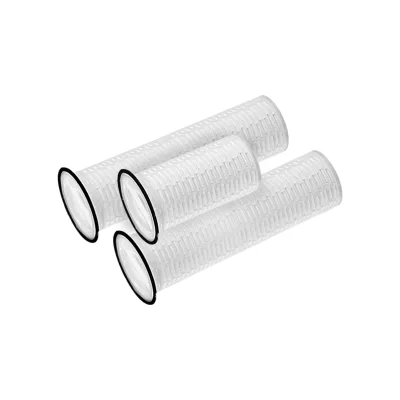


Industrial Water Filter Reverse Osmosis RO System Water Purification System
$70000.00 - $600000.00
MOQ: 1 Pieces

Industrial Water Filter RO Reverse Osmosis System Water Purification System
$70000.00 - $600000.00
MOQ: 1 Pieces


Comprehensive Sourcing Guide
Strategic Sourcing Guide for Reverse Osmosis Industrial Water Filters
Understanding Technical Specifications and System Architecture
When sourcing reverse osmosis (RO) industrial water filters, buyers must first distinguish between the specific architectural styles and performance metrics available in the current market. The product landscape for this core keyword reveals a diverse range of configurations, primarily categorized by their physical style and filtration mechanisms. Observations indicate that units are available in distinct styles such as "Tube" and "Plate and Frame," alongside "Cabinet" designs often associated with purification systems intended for broader application scopes. The choice of style directly influences the footprint and integration capabilities within an industrial facility.
The core operating principle for these systems is consistently identified as Reverse Osmosis, utilizing a membrane as the main material to achieve high-purity output. However, the filtration depth and stage configuration vary significantly. Some units are engineered with a "5" level filtration depth, while others offer a more complex "6 Stages" architecture. This variation is critical for buyers targeting specific water quality outcomes. For instance, systems designed for "Straight Drink" applications often incorporate advanced features like "Sophisticated Filters" or "Efficient Filtration" to ensure the final product meets potable standards. Furthermore, specific models may include an "Add UV System Kill Virus" feature, which is a crucial addition for applications requiring biological safety beyond simple particulate removal.
Productivity and capacity are the next vital technical parameters. The market data shows a wide operational range, with productivity figures listed as "250L/Hour" and "500L/Hour" for certain compact or semi-industrial units. In contrast, larger industrial processing capacities span from "0.25-20t/H," indicating that the system selection must align precisely with the facility's throughput requirements. The raw water source is another defining technical constraint; systems are generally compatible with "Tap Water," "Borehole Water," and "River Water," but the conductivity of the raw water, observed at levels such as "1000," dictates the necessary pre-treatment and membrane selection. The recovery rate, typically observed in the "60-70%" range, and the purification rate, often cited at "98%," are key indicators of system efficiency that buyers must verify against their specific water source quality.
Compliance, Certification, and Regulatory Standards
Navigating the compliance landscape for industrial water filtration requires a rigorous verification of certifications and adherence to international standards. The supply chain for reverse osmosis systems frequently highlights "CE" certification as a primary indicator of compliance with European safety and health requirements. This certification is a critical baseline for buyers operating in or exporting to markets that mandate strict electrical and mechanical safety standards. However, relying solely on the presence of a CE mark is insufficient; buyers must ensure that the specific model's documentation explicitly confirms this status for the exact configuration being purchased.
Beyond electrical safety, material integrity and environmental management are paramount. The construction materials for these industrial units vary, with options including "Full SS316," "U-PVC," "FRP," and "2507" duplex stainless steel. The selection of SS316 or 2507 is particularly relevant for the chemical industry, where corrosion resistance is non-negotiable. Buyers must verify that the material specifications match the chemical compatibility requirements of their specific process. While background knowledge suggests the existence of ISO 9001 and ISO 14001 standards, these should be treated as verification targets rather than assumed facts. Procurement teams must request current, valid certificates from the supplier to confirm that the manufacturing facility adheres to quality management and environmental protection standards.
The physical standards of the equipment, often defined by dimensions such as "6760150cm" or "17090195," must also be cross-referenced with the buyer's facility layout. These dimensions are not merely aesthetic but represent the spatial requirements for installation, maintenance access, and piping connections. Additionally, the "prod_standard" or model-specific standards, such as "OLAP-ro" or "OLP-HH," serve as unique identifiers that buyers should use to trace the specific engineering specifications and compliance history of a unit. Ensuring that the equipment meets the "Environmental Protection" usage criteria is also essential, particularly for industries subject to strict effluent regulations.
Cost Drivers and Pricing Structure Analysis
The pricing structure for reverse osmosis industrial water filters is highly variable, reflecting the complexity of the engineering, the scale of the system, and the materials used. The observed price range in the market spans from approximately $10 to $600,000 USD. This vast disparity is not indicative of a single product line but rather a spectrum ranging from small-scale, portable units to large, fully automated industrial processing plants. Buyers must understand that the lower end of this range typically corresponds to systems with lower productivity (e.g., 250L/Hour) and simpler configurations, while the upper end reflects high-capacity units (e.g., 20t/H) with advanced features like UV sterilization and extensive pre-treatment stages.
Several specific factors drive the cost of these systems. The primary driver is the "Motive Force," which is predominantly "Electric power" in these industrial contexts. The power consumption, with specific models citing "1.85 Kw," directly impacts the operational cost and the sizing of the electrical infrastructure required at the installation site. Higher power ratings generally correlate with larger pumps and more robust membranes, increasing the initial capital expenditure. The "Voltage" requirements, which can range from "110 V" to "380V," also influence cost, as systems requiring higher voltage or three-phase power may need specialized transformers or electrical upgrades at the buyer's facility.
Material composition is another significant cost determinant. Systems constructed with "Full SS316" or "2507" materials will inherently cost more than those utilizing "U-PVC" or standard "FRP" components due to the raw material costs and the manufacturing complexity involved in working with high-grade stainless steel. Additionally, the "Customization" availability allows buyers to tailor systems to specific needs, which invariably adds to the base price. The "Purification Rate" of 98% and the "Salt Rejection Rate" of 99.5% are performance metrics that often require higher-quality membranes and more precise engineering, further contributing to the cost. Buyers should be wary of price points that seem too low, as they may indicate compromises in membrane quality or the exclusion of necessary safety features like the "Descaling Function" or "Auto Flushing" capabilities.
Typical Applications and Industry Suitability
Reverse osmosis industrial water filters are deployed across a diverse array of sectors, each with unique water quality and volume requirements. The "Usage" category for these systems explicitly includes "Environmental Protection" and the "Chemical Industry," highlighting their role in both wastewater treatment and process water purification. In the chemical sector, the ability to handle "Conductivity of Raw Water" at levels of 1000 and the use of corrosion-resistant materials like SS316 are critical for maintaining process integrity and preventing equipment failure.
Beyond heavy industry, these systems are increasingly vital in the "Food & Beverage Shops" and general "Home Use" sectors. For food and beverage applications, the "Water Purification Efficacy" of "Straight Drink" is a key requirement, ensuring that the output water is safe for direct human consumption without further treatment. The "Filtration Stages" and "Performance" attributes, such as "Sophisticated Filters," are designed to remove contaminants that could affect taste, odor, or safety in consumable products. The "Operating Temperature" range of "2-40℃" ensures that these systems can function effectively in various climates, from cold storage facilities to hot processing environments.
The versatility of the technology is further demonstrated by the "Water Temperature" capabilities, which can include "Cold, Warm & Hot" outputs. This feature is particularly valuable in applications requiring immediate access to water at specific temperatures, such as in commercial kitchens or industrial cleaning processes. The "Pipe Design Rate" featuring "Self-Cleaning" capabilities reduces maintenance downtime, making these systems suitable for continuous operation in industries where water availability is critical. Whether for "Industry" applications requiring high throughput or smaller "Home Use" setups, the "Applicable Industries" list confirms that RO technology is a universal solution for water purification challenges.
Supplier Evaluation and Quality Control Protocols
Evaluating suppliers for reverse osmosis systems requires a multi-faceted approach that goes beyond simple price comparison. Buyers must verify the "Brand Name," which in many cases is listed as "OEM," indicating that the equipment may be manufactured by a third party and branded by the seller. This necessitates a deeper inquiry into the actual manufacturing origin, confirmed here as "China," and the specific capabilities of the factory. The "Processing Capacity" of "0.25-20t/H" suggests that suppliers must have the engineering capacity to scale production to meet large industrial demands.
Quality control should be a central part of the supplier evaluation process. Buyers should request detailed test results for the "Purification Rate" and "Salt Rejection Rate" to ensure the system meets the advertised 98% and 99.5% benchmarks. The "Recovery Rate" of 60-70% is another metric that should be validated under actual operating conditions, as this impacts the long-term efficiency and water waste of the system. The "Flush Type," specifically "Auto Flushing," is a feature that reduces manual intervention and should be tested for reliability to prevent membrane fouling.
Packaging and logistics are also indicators of supplier professionalism. The "prod_packing" options, ranging from "Common" and "Standard Packing" to "Wooden Box" and "Wooden Package," reflect the level of care taken to protect the equipment during transit. For heavy industrial units, "Wooden Box" or "Wooden Package" is often necessary to prevent damage to the "Weight (Kg)" of 100kg or more during shipping. Buyers should verify that the packaging standards align with international shipping requirements to avoid delays or damage upon arrival.
Long-Term Procurement and Operational Considerations
Sourcing an industrial water filter is not a one-time transaction but the beginning of a long-term operational relationship. The "Customization" availability suggests that the system may need to be adapted as the buyer's water quality or production needs change. Buyers should ensure that the supplier offers ongoing support for modifications, such as adding UV systems or adjusting the "Filtration Stages." The "Descaling Function" is a critical feature for long-term maintenance, as it helps extend the lifespan of the RO membranes and reduces the frequency of chemical cleaning.
The "Voltage" and "Power" requirements must be considered in the context of the facility's energy infrastructure. With power ratings like "1.85 Kw" and voltage options ranging from 110V to 380V, buyers must plan for potential electrical upgrades or the installation of stabilizers to ensure consistent operation. The "Operating Temperature" range of 2-40℃ also implies that the system may require environmental controls in extreme climates to maintain optimal performance.
Finally, the "Productivity" and "Capacity" of the system should be evaluated with a buffer for future growth. Selecting a unit with a capacity at the lower end of the "0.25-20t/H" range may require a costly upgrade sooner than anticipated. Buyers should also consider the "Raw Water" variability; systems designed for "Tap Water" may struggle with "Borehole Water" or "River Water" without significant pre-treatment, which could impact the long-term viability of the investment. By focusing on these operational and maintenance factors, buyers can ensure that their reverse osmosis investment delivers consistent value over its entire lifecycle.
FAQs
What certifications do reverse osmosis industrial water filters have?
These systems typically carry CE certification for safety compliance. Buyers must verify that the specific model documentation explicitly confirms this status for the exact configuration being purchased.
Which filtration stages are available for these industrial units?
Units are available with either 5 or 6 filtration stages depending on the model. Systems designed for straight drink applications often incorporate advanced features like sophisticated filters to ensure potable standards.
Can these filters handle raw water with high conductivity?
Yes, systems are compatible with raw water conductivity levels around 1000. The specific conductivity dictates the necessary pre-treatment and membrane selection required for efficient operation.
How is the recovery rate defined for these reverse osmosis systems?
The recovery rate is typically observed in the 60 to 70 percent range. This metric is a key indicator of system efficiency that buyers must verify against their specific water source quality.
What materials are used for the main construction of these filters?
Construction materials vary including Full SS316, U-PVC, FRP, and 2507 duplex stainless steel. The selection of SS316 or 2507 is particularly relevant for the chemical industry where corrosion resistance is non-negotiable.
Which industries can utilize these reverse osmosis industrial water filters?
These filters are suitable for Environmental Protection, Chemical Industry, and Food & Beverage Shops. They are also applicable for Home Use and general Industry applications requiring high throughput.
What is the typical productivity range for these industrial units?
Productivity ranges from 250 to 500 liters per hour for compact units up to 20 tons per hour for large industrial plants. The system selection must align precisely with the facility's throughput requirements.