Source RoHS Certified Eco-Friendly NBR Foam for Sealing
Explore 30 listings for RoHS Certified Eco-Friendly NBR Foam suitable for electronic isolation, machinery sealing, and industrial packaging. Compare density, hardness, and thickness options from verified manufacturers to find the right material for your specific application needs; compare the available evidence and request quotations based on your requirements.
Key considerations
Products List


Acoustic Insulation Foam Rubber 25mm Thickness NBR Foam Plastic Insulation Foam
$1.00 - $3.00
MOQ: 20 Pieces


Soundproof NBR Rubber Foam with Flame Resistance for Construction Insulation
$1.00 - $3.00
MOQ: 20 Pieces

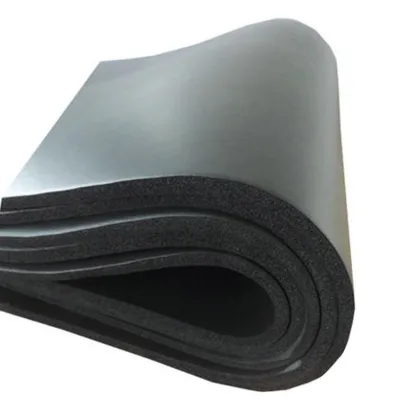


38 Density High Resilience Polyurethane Foam Environmentally Friendly and Non-Toxic
$175.00 - $185.00
MOQ: 1 cubic meter
Comprehensive Sourcing Guide
RoHS Certified Eco-Friendly NBR Foam Sourcing Guide
Procuring RoHS certified eco-friendly NBR foam requires distinguishing between general listings and verified compliant inventory. While many suppliers list RoHS and SGS standards, buyers must confirm that specific production batches carry valid documentation rather than relying on generic product descriptions. The observed market data indicates a wide range of densities and hardness levels, necessitating a rigorous verification process to ensure the material meets both environmental mandates and mechanical performance requirements for your specific application.
Buyers should prioritize suppliers who explicitly state their origin and material composition, as the supply chain for NBR and PVC foams varies significantly by region. The available data points to manufacturers in Jiangsu and Guangdong, China, offering customization options for color and dimensions. However, the presence of "Eco-friendly" claims alongside specific certifications like REACH requires careful cross-referencing with actual test reports. A strategic approach involves requesting batch-specific certificates to validate that the foam's closed-cell structure and chemical composition align with the stated environmental standards before committing to volume orders.
Product Scope and Observed Listing Signals
The observed product listings reveal a diverse range of NBR foam specifications, including densities from 50 to 125 kg/m³ and hardness levels spanning Shore C 10 to 30. These variations directly impact the material's suitability for different industrial uses, such as electronic isolation, packaging, or machinery sealing. Buyers must carefully match these physical attributes to their application needs, noting that some listings specify a density of 80-125 kg/m³ while others offer a broader 50-90 kg/m³ range, which affects the foam's compression strength and resilience under load.
Listing signals also highlight significant differences in packaging and minimum order quantities, with some suppliers requiring 250 square meters while others accept orders as low as one unit. The availability of custom colors based on Pantone standards and the option for logo printing suggest a high degree of flexibility in the market. However, the variation in packaging details, ranging from plastic bags in cartons to woven bags, indicates that logistics planning must be tailored to the specific supplier's capabilities. Understanding these listing signals helps buyers avoid mismatches between their operational scale and the supplier's production capacity.
Technical Specifications to Verify
Technical verification must focus on the mechanical integrity of the foam, specifically tensile strength and compression deformation. The data indicates tensile rates exceeding 120% and tensile strengths greater than 3 MPa, which are critical for applications requiring durability and resistance to tearing. Buyers should request specific test reports confirming that the tearing strength meets the observed threshold of 2.5 N/cm or 260 N/m, as these values determine the material's ability to withstand physical stress during installation and long-term use in construction or industrial environments.
Thermal and dimensional stability are equally critical parameters that require strict verification against the provided specifications. The foam should exhibit a thermal conductivity of less than 0.038 W/m·K and a dimensional change of under 3.2% to ensure consistent performance in varying environmental conditions. Additionally, the oxygen index must exceed 26% to confirm adequate fire resistance, while the burning speed should be controlled at 50 mm/min. Verifying these specific numerical ranges ensures the selected foam will maintain its structural integrity and safety profile throughout its service life.
Compliance and Safety Documentation
Compliance verification extends beyond the generic mention of RoHS to include detailed safety documentation for chemical content and environmental impact. While RoHS and SGS are frequently cited in product attributes, buyers must ensure that the specific product model, such as the DF-A051, is covered by current certificates. The presence of REACH in background data suggests a potential for stricter European compliance, but this should not be assumed without explicit confirmation from the supplier. Requesting a Declaration of Conformity for the specific batch is essential to validate that the material is free from restricted substances.
Safety documentation must also address the material's flammability and environmental footprint to meet industry standards. The observed oxygen index of over 26% and the eco-friendly designation imply a lower environmental impact, but these claims require supporting test data. Buyers should verify that the foam's closed-cell structure contributes to its absorbent properties, which are listed as less than 0.04 kg/cm², ensuring it does not retain moisture that could compromise safety or performance. Comprehensive documentation serves as the primary defense against regulatory non-compliance and ensures the product meets all necessary safety protocols for its intended application.
Cost Drivers and Commercial Terms
Cost drivers for NBR foam are heavily influenced by density, thickness, and the extent of customization required. The observed price range of 0.17 to 185 USD reflects the variability in material quality and order volume, with higher densities and specialized thicknesses commanding premium prices. Buyers should analyze how the density range of 50-90 kg/m³ versus 80-125 kg/m³ impacts the unit cost, as denser foams generally require more raw material and processing time. Understanding these cost variables allows for more accurate budgeting and prevents unexpected expenses when scaling production.
Commercial terms, particularly Minimum Order Quantities (MOQ) and lead times, vary significantly across the supplier base. While some listings indicate an MOQ of 250 square meters, others offer flexibility with lower thresholds, which can be crucial for small-scale projects or prototyping phases. The packaging details, such as single package sizes of 102x102x1.5 cm, also influence shipping costs and logistics planning. Buyers must negotiate terms that align with their inventory strategy, ensuring that the supplier can accommodate both immediate needs and future volume requirements without incurring excessive storage or shipping fees.
Supplier Qualification and Quality Control
Supplier qualification should prioritize manufacturers with a proven track record in producing NBR foam with consistent quality control measures. The data indicates origins in Changzhou and Guangdong, regions known for their manufacturing capabilities, but buyers must verify the specific factory's quality management systems. Requesting samples for independent testing is a vital step to confirm that the physical properties, such as hardness and tensile strength, match the advertised specifications. This due diligence helps mitigate the risk of receiving substandard materials that could fail in critical applications.
Quality control processes must be transparent and documented to ensure consistency across production batches. Suppliers should provide clear information on their testing protocols for compression strength, which is observed to be greater than 30 +/- 10 kPa, and their methods for maintaining dimensional stability. The availability of samples at any time suggests a willingness to engage in quality verification, but buyers should establish a formal quality agreement that outlines acceptance criteria. Regular audits and clear communication channels are essential to maintain the high standards required for industrial and electronic applications.
Long-Term Procurement Checks
Long-term procurement success depends on establishing a reliable supply chain that can adapt to changing market demands and regulatory updates. Buyers should monitor the supplier's ability to maintain consistent quality over time, particularly regarding the eco-friendly and RoHS compliance status of their products. As regulations evolve, suppliers must demonstrate their capacity to update their formulations and documentation to remain compliant. Building a relationship with a supplier who proactively manages these changes ensures a stable supply of materials that meet current and future standards.
Performance monitoring should include regular reviews of the foam's durability and resistance to wear and tear in actual use conditions. The observed features of impact resistance and wear resistance are critical for long-term applications, but their effectiveness must be validated through field testing. Buyers should track the material's performance over time to identify any degradation or inconsistencies that could affect the final product. Establishing a feedback loop with the supplier allows for continuous improvement and ensures that the procurement strategy remains aligned with the evolving needs of the business.
FAQs
What certifications does the NBR foam have?
The NBR foam is certified under ISO and RoHS standards. It also meets SGS requirements for material safety. These certifications ensure the product complies with international environmental and quality regulations. Buyers can rely on these documented standards for compliance in global supply chains without additional verification.
Can the foam be customized for specific needs?
Yes, customization is available for this NBR foam product. Buyers can request specific dimensions, colors, or packaging options to suit their projects. The supplier accepts custom sizes and offers logo printing services. This flexibility allows for tailored solutions in construction, industrial, and electronic isolation applications.
What is the minimum order quantity for samples?
Samples are available at any time for evaluation purposes. While standard bulk orders may have a minimum quantity of 250 square meters, sample requests are handled separately. This allows buyers to test the foam's density, hardness, and thermal conductivity before committing to larger production runs.
How is the NBR foam packaged for shipping?
The foam is packaged in plastic bags inside cartons for standard orders. Alternative packaging options include woven bags for bulk shipments. This secure packaging protects the closed-cell solid foam from damage during transit. The single package size is approximately 102 by 102 by 1.5 centimeters for easy handling.
What are the key physical properties of this foam?
This NBR foam features a density of 50 to 90 kilograms per cubic meter. It has a tensile rate greater than 120 percent and compression deformation under 30 percent. The material is impact-resistant, wear-resistant, and has a thermal conductivity of less than 0.038 watts per meter Kelvin.
Where is this eco-friendly NBR foam manufactured?
The product originates from Changzhou, Jiangsu, China, with some listings indicating Guangdong, China. These locations are established manufacturing hubs for rubber foam products. Buyers can source directly from these regions to ensure consistent quality and access to established supply chains for industrial and construction applications.