Find Rolling Shutter Gear Door Operator for Warehouses, Garages, and Factories
Source 30 Rolling Shutter Gear Door Operator units with customizable features for diverse industrial and commercial needs. Buyers can compare specifications like motor type, door weight capacity, and opening speeds across models from Chinese manufacturers.
Key considerations
Products List


AC 600kg Shutter Rolling Door Motor Automatic Door Operator Shutter Door Motor
$58.00 - $79.00
MOQ: 1 Pieces
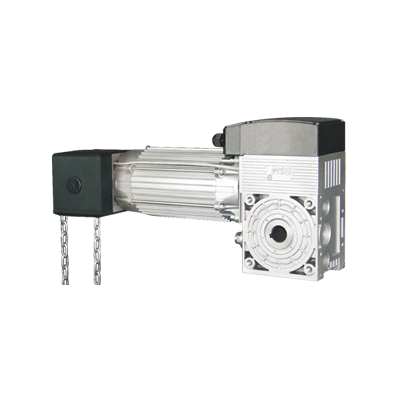
Comprehensive Sourcing Guide
Strategic Sourcing Guide for Rolling Shutter Gear Door Operators
Understanding Core Technical Specifications and Variability
When sourcing rolling shutter gear door operators, buyers must first navigate a landscape defined by significant technical variability rather than a single monolithic product type. The available market data indicates that these operators are not uniform in their electrical requirements, driving mechanisms, or physical dimensions. A critical observation from current product listings reveals a divergence in electric current types, with specific models utilizing Direct Current (DC) systems while others operate on Alternating Current (AC) systems. This distinction is paramount for procurement planning, as it dictates the compatibility with existing building infrastructure and the required power supply units.
The driving type for these operators is predominantly electromechanical, relying on a motor to generate the necessary torque for lifting and lowering heavy shutter assemblies. The motor specifications vary significantly across the catalog. Some units are rated at 24VDC with a power consumption of 55W, suitable for lighter duty cycles, while others feature higher power ratings, such as 80W motors, or utilize specific branded components like Dunkermotoren from Germany for enhanced performance. The voltage requirements also fluctuate, with some models supporting a broad range of 100V to 240V at 50/60Hz, while others are strictly configured for AC 220V or 110V inputs.
Physical specifications are equally diverse and must be matched precisely to the door geometry. The maximum size for certain operator systems is listed at 3.5 meters by 2.7 meters, yet other models are designed for telescopic applications with lengths ranging from 2000mm to 6000mm. The door width capabilities differ between single-leaf and dual-leaf configurations. For instance, one model supports a single leaf width of 700-1300mm, whereas another accommodates a much broader range of 600-2000mm. Dual-leaf systems show similar variance, with widths per leaf ranging from 600-1250mm in one configuration to 600-1500mm in another.
Speed and operational timing are critical performance metrics. The opening speed for these operators can range from 100mm/s to 600mm/s, allowing for customization based on security needs versus traffic flow requirements. Similarly, closing speeds are adjustable, typically falling between 100mm/s and 550mm/s. The hold-open time, which determines how long the door remains stationary before closing, is adjustable from 1 to 30 seconds. These parameters are not merely marketing claims but operational settings that must be verified against the specific site requirements during the procurement phase.
Compliance, Certification, and Safety Standards
In the realm of industrial and commercial door automation, compliance with safety standards is non-negotiable. The product data confirms that several models carry the CE certification, a mandatory conformity mark for products sold within the European Economic Area. This certification indicates that the manufacturer has assessed the product and meets EU safety, health, and environmental protection requirements. Some listings further specify compliance with the LVD (Low Voltage Directive), ensuring that the electrical components operate safely within the specified voltage ranges.
However, buyers must exercise caution when interpreting certification claims. While CE is explicitly mentioned for specific models like the 1071.102, other entries may only list general standards or lack explicit certification data in the provided summary. The presence of the CE mark does not automatically guarantee compliance with all local regulations in every country of import. For instance, while the product origin is frequently listed as China, with specific hubs in Hangzhou and Shanghai, the final destination of the goods dictates the specific regulatory framework that must be met.
Buyers should verify the specific standard codes associated with the product. The data references EN 1634-1, a standard for fire resistance testing for doors and shutters, though this is noted as background information rather than a confirmed attribute for every listed item. Consequently, if fire resistance is a critical requirement for the application, the buyer must explicitly request test reports or certification documents from the supplier rather than assuming compliance based on general market knowledge. The protection rating of IP 20 is observed in some specifications, indicating protection against solid objects larger than 12.5mm but offering no protection against water. This is a crucial detail for applications in damp environments or outdoor settings where a higher IP rating would be necessary.
Cost Drivers and Pricing Structure Analysis
The pricing for rolling shutter gear door operators is influenced by a complex matrix of factors, including motor quality, customization options, and packaging requirements. The observed price range in the market spans from 0 to 650 USD, a wide variance that suggests significant differences in product tiers, from basic manual or semi-automatic units to fully automated, high-torque systems. This range also reflects the impact of order volume, as the Minimum Order Quantity (MOQ) varies between 1 and 100 units.
One of the primary cost drivers is the motor specification. Models utilizing premium components, such as the Dunkermotoren Germany motor, will inherently command a higher price point compared to those with generic or unbranded motors. Similarly, the power rating of the motor plays a role; a 55W unit may be priced differently than an 80W unit or a system capable of lifting 600kg versus one limited to 2x150kgs. The maximum door weight capacity is a direct indicator of the mechanical robustness required, which correlates with manufacturing costs.
Customization is another significant factor affecting the final cost. The product data explicitly states that customization is available for various attributes, including design, lifting weight, and motor type (AC or DC). While customization offers the flexibility to meet exact site needs, it often incurs additional engineering and production costs. The packaging also varies, with options ranging from simple brown cartons to export cartons with film protection. While packaging costs are often marginal, they can accumulate significantly over large orders and must be factored into the total landed cost.
Buyers should also consider the origin of the product. While the majority of the listed products originate from China, with specific manufacturing hubs in Hangzhou and Shanghai, the logistics costs associated with shipping from these locations to different global regions will impact the final price. The standard system weight, such as the 45kg weight for a 4200mm system, is another variable that influences shipping costs, as heavier units require more robust freight solutions.
Typical Applications and Operational Environments
Rolling shutter gear door operators are designed for a diverse array of applications, ranging from residential to heavy industrial use. The product data indicates that these operators are suitable for household appliances, industrial settings, power tools, and universal applications. This versatility suggests that the technology is adaptable to various environments, provided the specific technical specifications match the operational demands.
In industrial settings, the operators are frequently employed to secure large warehouse bays, loading docks, and storage facilities. The ability to handle dual-leaf doors with widths up to 1500mm per leaf and maximum weights of 2x200kgs makes them ideal for heavy-duty commercial entrances. The adjustable opening and closing speeds allow for efficient traffic flow in high-traffic areas, while the hold-open feature ensures the door remains open for extended periods during loading and unloading operations.
For residential or light commercial applications, the smaller single-leaf configurations with widths between 600mm and 1300mm are more appropriate. These units often feature lower power ratings and simpler control systems, making them cost-effective solutions for garages, small retail entrances, or service doors. The ambient temperature range of -20°C to +50°C ensures that these operators can function reliably in various climatic conditions, from cold storage facilities to hot industrial environments.
The design flexibility, with different designs being optional, allows for integration into aesthetically sensitive environments. Whether the application requires a discreet installation or a robust, industrial-grade appearance, the availability of different designs ensures that the operator can be tailored to the architectural context. The function of working with original parts, such as those from Dorma, further expands the application scope to include retrofitting existing door systems with modern automation capabilities.
Supplier Evaluation and Quality Assurance Protocols
Selecting a reliable supplier for rolling shutter gear door operators requires a rigorous evaluation process that goes beyond the initial product listing. Buyers must verify the supplier's ability to deliver consistent quality, especially given the variability in product attributes observed in the market. The presence of specific model numbers, such as 1053.101, 1071.102, and 1051.103, indicates a structured product line, but buyers should confirm that the specific model they intend to purchase is currently in production and not a discontinued item.
Quality control should focus on the mechanical and electrical integrity of the units. Key areas to inspect include the motor performance, the durability of the gear mechanism, and the reliability of the control electronics. The protection rating of IP 20 is a baseline, but for harsh environments, buyers should inquire about the availability of higher IP-rated versions or additional protective measures. The fuse rating of 3.15A is a specific electrical parameter that must be verified to ensure compatibility with the building's electrical distribution system.
Suppliers should also demonstrate a commitment to documentation and traceability. This includes providing detailed technical datasheets, wiring diagrams, and installation manuals for each model. The ability to provide evidence of CE certification and LVD compliance is essential for international procurement. Buyers should request test reports or third-party certification documents to validate the claims made in the product listings.
Furthermore, the supplier's capacity for customization must be assessed. If the project requires specific modifications to the motor, voltage, or door width, the supplier must have the engineering resources to implement these changes without compromising the product's integrity. The lead time for customized orders should be clearly defined, as deviations from standard production schedules can impact project timelines.
Long-Term Procurement and Maintenance Considerations
Sourcing rolling shutter gear door operators is not a one-time transaction but the beginning of a long-term relationship that includes maintenance, spare parts availability, and potential upgrades. The modular nature of these systems, with options for different motor types and designs, suggests that future upgrades or replacements should be straightforward if the supplier maintains a consistent product line. However, buyers must verify the availability of spare parts, such as fuses, motors, and control boards, to ensure minimal downtime in the event of a failure.
The standard system weight and dimensions, such as the 108mm height and 182mm depth for the driver size with cover, are critical for long-term maintenance planning. These dimensions determine the space required for installation and the accessibility of the components for routine inspections. Buyers should ensure that the installation design allows for easy access to the motor and control unit to facilitate future servicing.
The power supply requirements, whether 220V, 110V, or a universal 100V-240V range, should be considered in the context of the building's long-term energy infrastructure. If the building undergoes electrical upgrades, the operator's power compatibility must be re-evaluated to ensure continued operation. The hold-open time and speed settings are also adjustable parameters that may need to be recalibrated over time as the door system wears or as operational requirements change.
Finally, buyers should consider the environmental impact and energy efficiency of the operators. While the power ratings range from 55W to 80W, the actual energy consumption depends on the duty cycle and the frequency of operation. Selecting models with energy-efficient motors and optimized control systems can reduce long-term operating costs. The ability to customize the lifting weight and motor type allows buyers to select the most efficient configuration for their specific application, avoiding over-engineering and unnecessary energy consumption.
Comparative Analysis of Key Product Attributes
To facilitate informed decision-making, the following table summarizes the key technical attributes observed across the different product models. This comparison highlights the variability in specifications and helps buyers identify the most suitable options for their specific needs.
| Attribute | Model 1053.101 | Model 1071.102 | Model 1051.103 | Model 1071.108 | Model Telescopic |
|---|---|---|---|---|---|
| Driving Type | Electromechanical | Electromechanical | Electromechanical | Electromechanical | Electromechanical |
| Electric Current | DC | AC | AC | AC | AC or DC (Optional) |
| Max Door Weight | 2x150kgs | N/A | 2x200kgs | N/A | N/A |
| Single Leaf Width | 700-1300mm | N/A | 600-2000mm | N/A | N/A |
| Dual Leaf Width | 600-1250mm/Leaf | N/A | 600-1500mm/Leaf | N/A | N/A |
| Motor Power | 55W (24VDC) | 80W | N/A | N/A | N/A |
| Voltage | N/A | 220V/110V | N/A | 100V-240V | 220V/110V |
| Protection | IP 20 | N/A | N/A | N/A | N/A |
| Origin | China | Hangzhou, China | China | China | China |
| Certification | CE | CE/LVD | N/A | N/A | N/A |
This table underscores the necessity of precise specification matching. No single model dominates all categories; instead, each model excels in specific areas, such as weight capacity, voltage flexibility, or motor type. Buyers must carefully cross-reference their project requirements with these attributes to avoid procurement errors. The availability of customization further expands the potential configurations, allowing for a tailored solution that aligns with the unique demands of each installation. By understanding these variations, buyers can make informed decisions that ensure optimal performance, safety, and cost-effectiveness for their rolling shutter door systems.
FAQs
What electric current types are available for these operators?
Both DC and AC electric current types are available for rolling shutter gear door operators. Specific models utilize 24VDC motors with 55W power, while others operate on AC 220V or 110V inputs at 50-60Hz to match different building infrastructure requirements.
Which certifications do these door operators typically hold?
Many models carry CE certification and some include LVD compliance for European safety standards. While CE is common, buyers must verify specific standard codes like EN 1634-1 for fire resistance if that is a critical requirement for their specific application.
How much weight can these operators lift for heavy doors?
Maximum door weight capacities vary by model, ranging from 2x150kgs to 2x200kgs for dual-leaf configurations. Some high-capacity units are rated for a single lift of up to 600kgs, ensuring suitability for heavy industrial or commercial shutter assemblies.
Can I customize the motor type and door width specifications?
Yes, customization is available for motor types, including AC or DC options, and various door width configurations. Buyers can select from single leaf widths of 600-2000mm or dual leaf widths up to 1500mm per leaf depending on the specific model selected.
What is the typical price range for these automated operators?
The observed price range spans from 0 to 650 USD depending on the model and specifications. Pricing is influenced by factors such as motor quality, maximum weight capacity, and whether premium components like German motors are included in the unit.
Which locations manufacture these rolling shutter operators?
Manufacturing origins are primarily in China, with specific hubs located in Hangzhou and Shanghai. These locations produce various models ranging from basic units to advanced telescopic systems, all subject to export carton packaging standards.