Source Sand Pattern Pickleball Flooring for Courts, Gyms, and Schools
Find 27 options for Sand Pattern Pickleball Flooring suitable for outdoor and indoor use. Compare PVC materials with shock absorption rates over 50%, customizable sizes, and waterproof features for competition and training applications.
Key considerations
Products List


Pickleball Court Flooring Mat Easy Installation Pickleball Court
$16.00 - $18.00
MOQ: 350 Square Meters


Custom Size Pickleball Court Flooring with Durable Sports Grade Material
$9.90 - $99.90
MOQ: 5 Square Meters

Custom Outdoor Sun-Proof and Fade-Resistant Pickleball Court Flooring
$9.90 - $99.90
MOQ: 100 Square Meters


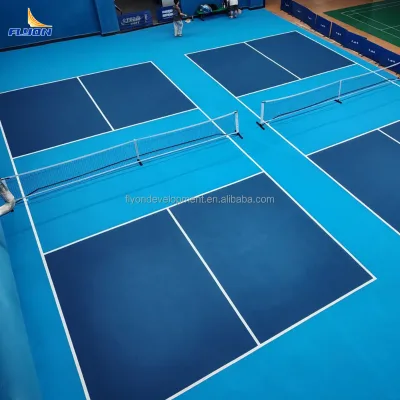
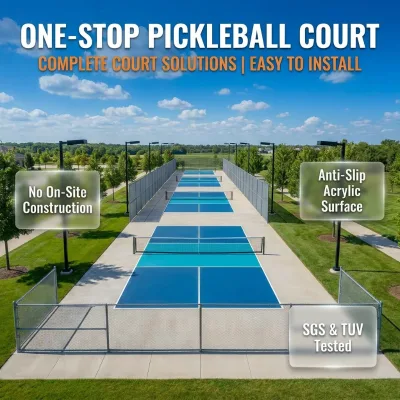

Semi-Compact Pickleball and Tennis Flooring for Sports Enthusiasts
$7.90 - $11.70
MOQ: 200 Square Meters

Semi-Compact PVC Flooring for Pickleball and Tennis Sports Areas
$7.90 - $11.70
MOQ: 200 Square Meters

High-Quality PVC Flooring for Tennis, Pickleball, and Table Tennis
$7.90 - $11.70
MOQ: 200 Square Meters


Resilient Acrylic Sports Flooring for Competitive Pickleball Court Use
$3.00 - $15.00
MOQ: 500 Square Meters

Anti-UV Acrylic Sports Flooring Designed for Pickleball Court Excellence
$3.00 - $15.00
MOQ: 500 Square Meters

High-Tensile Acrylic Sports Flooring Ideal for Competitive Pickleball Courts
$3.00 - $15.00
MOQ: 500 Square Meters

High-Performance Acrylic Sports Flooring for Durable Pickleball Courts
$3.00 - $15.00
MOQ: 500 Square Meters

Professional Grade Acrylic Sports Flooring for Pickleball Court Use
$3.00 - $15.00
MOQ: 500 Square Meters

Anti-Skid Acrylic Sports Flooring Perfect for Professional Pickleball Courts
$3.00 - $15.00
MOQ: 500 Square Meters
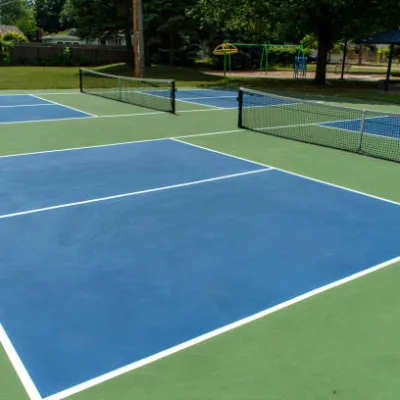
Comprehensive Sourcing Guide
Sand Pattern Pickleball Flooring Sourcing Guide
Procuring Sand Pattern Pickleball Flooring requires a strategic approach to balancing surface traction with the specific shock absorption needs of competitive play. The observed market data indicates that these surfaces are engineered with a distinct sand texture to provide consistent ball bounce and player footing, a critical factor for both training and competition environments. Buyers must recognize that while the sand pattern is a primary visual and functional attribute, it is often paired with high-performance materials like PVC to ensure durability and weather resistance in outdoor settings.
The sourcing landscape reveals a diverse range of customization options, from fixed installations to movable systems, catering to facilities that may need to reconfigure their courts for multi-sport use. With observed lead times ranging from 7 to 15 days and minimum order quantities starting as low as two sets, buyers can tailor their procurement strategy to fit immediate project needs or larger inventory builds. Understanding the specific application context, whether for youth programs or professional tournaments, is essential when selecting a product that meets the rigorous demands of the sport.
Product Scope and Observed Listing Signals
The product scope for Sand Pattern Pickleball Flooring encompasses a variety of configurations designed to meet different installation requirements and court dimensions. Listings frequently highlight the availability of custom sizes, with standard court dimensions often cited around 20 by 44 feet, though many suppliers offer fully customizable lengths and widths to fit unique facility layouts. The material composition is predominantly PVC, chosen for its resilience and ability to maintain the sand texture over time, while the packaging details often specify a safety four-layer package to prevent damage during transit.
Buyers should observe that the product listings signal a strong focus on versatility, with options available for both indoor and outdoor usage. The sand pattern is not merely aesthetic; it is a functional element designed to enhance friction and player safety, with some products boasting a shock absorption rate of over 50% to reduce impact on joints. Additionally, the presence of features like waterproofing and environmental friendliness suggests that these products are built to withstand varying weather conditions while adhering to modern sustainability expectations in sports facility construction.
Technical Specifications to Verify
When evaluating technical specifications, the vertical deformation and friction factor are critical metrics that directly influence player performance and injury prevention. The observed data points to a vertical deformation of approximately 2.3mm, which is a key indicator of the surface's ability to cushion impact while maintaining structural integrity during high-intensity play. Buyers must verify that the friction factor aligns with the specific needs of their players, as the sand pattern is intended to provide optimal grip without causing excessive resistance that could hinder movement.
Installation methods and material durability are equally important technical considerations that require careful verification before finalizing a purchase. The market offers both fixed and movable installation ways, allowing facilities to choose between a permanent solution or a flexible system that can be rolled out and stored as needed. Furthermore, the expected lifespan of the flooring, often cited as over ten years for high-quality units, should be cross-referenced with the specific technology used, such as hot pressing integrated molding, to ensure the product will withstand the wear and tear of regular use.
Compliance and Safety Documentation
Ensuring compliance and safety begins with verifying that the flooring materials meet environmental protection standards and are free from harmful substances. The observed listings emphasize an environmental protection level and feature claims of being eco-friendly, which suggests that the PVC materials used are likely formulated to minimize volatile organic compounds (VOCs) and other pollutants. Buyers should request specific documentation confirming that the product adheres to relevant international safety standards for sports flooring, particularly regarding chemical composition and fire resistance.
Safety documentation must also address the physical performance of the flooring, including its ability to absorb shock and provide a stable playing surface. The high shock absorption rate observed in the market data is a significant safety feature, but it must be backed by independent test results to validate the claim. Additionally, the packaging details, such as the safety four-layer package, indicate a commitment to protecting the product during shipping, which is a proxy for the supplier's overall attention to quality control and product integrity.
Cost Drivers and Commercial Terms
The cost of Sand Pattern Pickleball Flooring is driven by several factors, including the complexity of the sand pattern, the thickness of the PVC material, and the level of customization required. While observed price ranges vary significantly, from as low as $1.9 to nearly $100 per unit, the final cost is heavily influenced by the total square footage and the specific technical specifications selected. Buyers should be aware that custom sizes and specialized installation methods, such as movable systems, may incur additional charges compared to standard fixed installations.
Commercial terms, including minimum order quantities and delivery timelines, play a crucial role in the overall procurement strategy. The observed MOQ range spans from 2 sets to 10,000 units, offering flexibility for small projects while accommodating large-scale facility developments. Delivery times are typically quoted between 7 to 15 days, but this can vary based on the complexity of the order and the supplier's current production capacity. Buyers should also consider the availability of free samples, which can help validate the product quality before committing to a larger order.
Supplier Qualification and Quality Control
Supplier qualification should focus on verifying the manufacturer's ability to deliver consistent quality and adhere to the specified technical requirements. The observed data indicates that many suppliers offer OEM and ODM services, suggesting a high level of manufacturing flexibility and experience in customizing products for specific client needs. Buyers should prioritize suppliers who can provide detailed information about their production processes, such as the use of hot pressing integrated molding, which is a key indicator of advanced manufacturing capabilities.
Quality control measures are essential to ensure that the sand pattern and other critical attributes remain consistent across the entire order. Suppliers should demonstrate a robust quality assurance process that includes regular testing of shock absorption, friction, and durability. The presence of customized logos and the ability to tailor product models, such as the FY-00 or LDK10015F series, further indicate a supplier's capacity to meet specific branding and functional requirements. Buyers should request evidence of these quality control practices to mitigate the risk of receiving substandard products.
Long-Term Procurement Checks
Long-term procurement checks involve establishing a framework for ongoing quality assurance and performance monitoring of the installed flooring. Given the observed durability of over ten years for high-quality units, buyers should implement a schedule for regular inspections to ensure the sand pattern and surface integrity remain intact. This includes checking for signs of wear, such as fading or loss of shock absorption, and verifying that the installation remains secure, particularly for fixed systems that are subject to heavy use.
Maintaining a strong relationship with the supplier is also a critical component of long-term procurement success. Buyers should ensure that the supplier provides adequate after-sales support, including guidance on maintenance and the availability of replacement parts or customizations. The ability to order samples and the flexibility of the MOQ suggest that suppliers are willing to engage in a long-term partnership, which can be beneficial for future expansions or renovations of the pickleball facility. Regular communication and performance reviews will help ensure that the flooring continues to meet the evolving needs of the players and the facility.
FAQs
What material is used for sand pattern pickleball court flooring?
The flooring is made from durable PVC material designed for both indoor and outdoor applications. It features a sand pattern surface and offers shock absorption rates exceeding 50 percent. The vertical deformation is measured at 2.3mm, ensuring consistent play. This material is also waterproof and environmentally friendly, providing a safe playing surface for various weather conditions.
Can I customize the size and logo for this pickleball flooring?
Yes, customization is available for both dimensions and branding. The roll width and length can be customized to fit specific court requirements. You can also add a customized logo to the product. The standard size is 20 by 44 feet, but other specifications like 30.1 by 20.8 meters are possible. This flexibility allows for tailored installation in different venues.
How long does the Sand Pattern Pickleball Flooring last?
The flooring is designed to last over ten years under normal usage conditions. It is constructed using hot pressing integrated molding technology for durability. Some product variants indicate a lifespan of more than five years. The material is resistant to wear and tear, making it suitable for high-traffic areas like professional training centers and public courts.
What is the minimum order quantity for this flooring?
The minimum order quantity ranges from 2 sets to 10,000 units depending on the specific product model. Some items have an MOQ of just 2 sets, while others may require larger bulk orders. This flexibility accommodates both small local installations and large commercial projects. Buyers should check the specific model details to confirm the exact MOQ for their order.
What is the lead time for delivery of this flooring?
The typical delivery time is between 7 and 15 days after order confirmation. This timeframe applies to standard production runs. The product originates from Shenzhen, China, and is packaged in a safety four-layer package to prevent damage during transit. Buyers should account for shipping time separately when planning their installation schedule.
Is the Sand Pattern Pickleball Flooring suitable for competition use?
Yes, the flooring is suitable for both competition and training purposes. It is designed for professional players, youth, and adults. The surface provides a friction factor of 0 and allows for movable or fixed installation. The durable PVC construction ensures consistent ball bounce and player safety, meeting the requirements for serious pickleball matches and daily practice sessions.