Source Sports Floor for Gyms, Kindergartens, and Offices
Compare 30 verified Sports Floor options featuring PVC material, wood grain patterns, and shock absorption rates over 53%. Buyers can evaluate specifications like thickness, installation methods, and durability for use in gyms, kindergartens, and offices; compare the available evidence and request quotations based on your requirements.
Key considerations
Products List

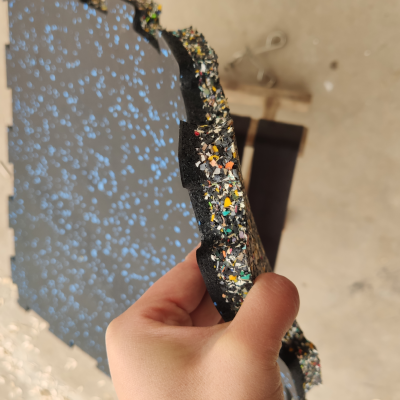

Specialized Sports Flooring for Fitness Club Group Exercise Rooms
$5.80 - $6.20
MOQ: 300 Square Meters


4.5mm Glue-Free Suspended Sports Floor for Indoor Basketball Courts
$6.09 - $8.10
MOQ: 300 Square Meters


8mm Glue-Free Modular Sports Floor Offering Excellent Shock Absorption
$6.09 - $8.10
MOQ: 300 Square Meters

Composite Foam Base Multi Purpose Training Sports Flooring for Gym
$6.09 - $8.10
MOQ: 300 Square Meters


Outdoor Floating Floor Plastic Interlocking Floor Tiles High Quality Elastic Sports Flooring
$13.00 - $15.00
MOQ: 200 Square Meters


Modern TPE Material Sports Floor Elastic Interlocking Tile for Various Sport Court
$14.30 - $14.70
MOQ: 100 Square Meters


Indoor Sports Court Flooring Antislip Plastic Sports Floor Interlocking Flooring
$15.80 - $17.80
MOQ: 1000 Square Meters


Durable Sports Wood Floor with Anti-Slip Surface for Basketball Courts
$19.99 - $199.99
MOQ: 100 Square Meters


Indoor Soccer Flooring PVC Sports Floor; PVC Flooring for Indoor Basketball, Sports Flooring
$4.00 - $8.00
MOQ: 1000 Square Meters

Comprehensive Sourcing Guide
Sports Floor Sourcing Guide
Procuring sports flooring requires a disciplined approach to balancing performance metrics with commercial viability. Buyers must navigate a complex landscape where material composition, structural integrity, and surface treatment directly impact athlete safety and facility longevity. The following guide outlines the critical verification steps necessary to secure high-quality products that meet specific operational demands.
This document serves as a comprehensive reference for sourcing professionals evaluating options for athletic and commercial environments. By focusing on observable listing signals, technical specifications, and supplier qualifications, buyers can mitigate risk and ensure that selected flooring solutions align with both functional requirements and budgetary constraints.
Product Scope and Observed Listing Signals
The current market offers a diverse array of sports flooring options, primarily constructed from PVC materials with multi-layer structures. Listings indicate a wide variety of styles, including modern designs with wood grain visual effects and anti-slip textures. These products are available in various forms, such as rolls or planks, and often feature modular installation types that facilitate both fixed and movable setups for different venue needs.
Observed listing signals reveal significant variation in product attributes, including color options ranging from white and blue to orange and rose red. Buyers should note that while some products advertise specific shock absorption rates exceeding 53% and friction factors around 0.7, these figures are observations rather than universal guarantees. It is essential to verify that the specific item selected matches the intended application, whether for kindergarten, gym, corridor, or outdoor commercial use.
Technical Specifications to Verify
Technical verification begins with confirming the layer structure and material composition. Buyers should ensure the product features a PVC layer with an internal foam structure, which contributes to its shock absorption capabilities. The hardness of the material, often measured in Shore degrees, typically ranges from 38 to 65, indicating a soft lead hardness suitable for comfort and impact reduction. Verifying the specific gravity, which may fall between 0.85 and 0.9 g/cm3, helps assess the density and durability of the flooring.
Thickness and dimensional consistency are critical for installation quality and performance. Common thicknesses observed include 4.5mm, 6mm, 8mm, 10mm, and 12mm, with standard widths often cited around 1.42m, 1.5m, or 1.8m. Buyers must confirm the vertical deformation metrics, such as the observed 2.3mm, to ensure adequate energy return. Additionally, checking the surface treatment for simple color or anti-slip texture ensures the floor meets safety standards for high-traffic areas.
Compliance and Safety Documentation
Safety documentation is paramount when sourcing flooring for public or athletic use. Buyers should request evidence of environmental protection levels, with some products claiming E2 standards, though verification of local regulatory compliance is necessary. The presence of specific chemical compositions, such as EPDM content ranging from 10% to 70% or glue content specifications, requires careful review to ensure adherence to health and safety regulations in the destination market.
Certification status, such as FSC, may be mentioned in background data but should not be assumed without direct confirmation from the supplier. Buyers must obtain valid test reports for slip resistance, fireproof properties, and anti-static performance. It is crucial to validate that the product’s claimed features, such as being rot-proof and moisture-proof, are supported by independent laboratory results rather than just marketing descriptions.
Cost Drivers and Commercial Terms
Cost drivers in sports flooring procurement are influenced by material thickness, layer complexity, and customization options. Products with multi-layer structures and specific surface patterns, such as wood imitation, may command higher prices due to increased manufacturing complexity. Buyers should also consider the impact of customization availability, which can affect unit costs and minimum order quantities (MOQs), which have been observed to range from 1 to 3200 units depending on the supplier.
Commercial terms must be clearly defined to avoid hidden expenses. Lead times and packaging details, such as the use of kraft paper, should be confirmed to ensure safe transit and storage. Buyers should negotiate based on the single package size and gross weight, typically around 3.000 kg per item, to optimize logistics costs. Understanding the selling units and whether the price includes installation services or accessories is vital for accurate budgeting.
Supplier Qualification and Quality Control
Supplier qualification involves verifying the origin and manufacturing capabilities of the provider. Many suppliers are located in regions like Jiangsu or Hebei in China, but buyers should conduct due diligence on their production facilities and quality control processes. Processing services such as molding and cutting should be evaluated to ensure they meet the specific dimensional requirements of the project, such as common lengths of 1.8*15 or specific model numbers like MR5001.
Quality control checks should include sampling to verify the visual effect, color consistency, and surface texture. Buyers must confirm that the product’s durable years, often claimed to be over ten, are backed by warranty terms. It is advisable to request samples to test the friction factor and shock absorption rate firsthand, ensuring that the physical product matches the technical specifications provided in the listing.
Long-Term Procurement Checks
Long-term procurement success depends on establishing a reliable supply chain for maintenance and expansion. Buyers should assess the supplier’s ability to provide consistent product quality over time, especially for large-scale projects requiring multiple batches. The availability of spare parts or matching colors, such as white, blue, or orange, is crucial for future repairs and aesthetic consistency across different sections of a facility.
Regular audits of supplier performance and product durability are recommended to ensure ongoing compliance with safety and quality standards. Buyers should monitor any changes in material composition or manufacturing processes that could affect the floor’s performance. Establishing a clear communication channel for technical support and after-sales service ensures that any issues related to installation or wear can be addressed promptly, protecting the investment in the sports flooring system.
FAQs
How thick should Sports Floor rolls be for indoor courts?
Common thicknesses for this type of PVC Sports Floor are 4.5mm, 6mm, and 8mm, with some products offered at 6mm, 8mm, 10mm, and 12mm. Thicker options generally suit higher-impact training areas, while thinner rolls work well for multipurpose halls. Choose based on the sports played, subfloor condition, and expected foot traffic before ordering.
What materials are used in PVC sports flooring construction?
These sports floors are made of PVC with a multi-layer structure, including a PVC layer and an internal foam structure for cushioning. The laminated build supports shock absorption above 53 percent and a friction factor of 0.7. Some rubber-based variants include EPDM content ranging from 10 to 70 percent for colored, durable surfaces.
Can Sports Floor rolls be installed as fixed or movable flooring?
Yes, installation can be fixed or movable depending on your venue needs. Fixed installation suits permanent gyms and courts, while movable layouts work for multipurpose halls that host events. The flooring is supplied in rolls or planks with a modular installation type, and kraft paper is used for packing protection during shipping.
Which sports and venues suit this PVC Sports Floor?
It is designed for all sports courts, including football, and fits applications such as kindergartens, gyms, corridors, offices, and bedrooms. Usage spans household, outdoor, commercial, and sports settings. The surface has an anti-slip texture, and the material provides waterproof, fireproof, soundproof, and wear-resistant performance for demanding indoor environments.
What customization options are available for Sports Floor orders?
Customization is available on these products. Standard roll widths include 1.42m, 1.5m, and 1.8m, with common lengths such as 1.8 by 15 meters. Colors commonly used are white, blue, and orange, and other colors like red, yellow, green, and rose red are offered. Moulding and cutting processing services support project-specific requirements.
How durable is PVC sports flooring over long-term use?
The flooring is rated for durable use over ten years under normal conditions. Material hardness ranges from Shore 38 to 65 degrees, and specific gravity sits between 0.85 and 0.9 grams per cubic centimeter. Its wear-resistant, rot-proof, and moisture-proof properties help maintain performance in gyms, courts, and commercial spaces with heavy daily traffic.
What is the environmental protection level of this Sports Floor?
The flooring carries an E2 environmental protection level and is described as environmentally friendly. It is laminated, multi-layer PVC construction rather than raw adhesive-heavy material, with glue content around 7 percent on the surface and 3 percent at the bottom. Always confirm current compliance documentation with the supplier before finalizing large project orders.
How should Sports Floor rolls be packaged and shipped?
Products are supplied in coil or roll state and packed with kraft paper to protect the surface during transit. Sold as single items, some models list a single package size around 14 by 8 by 2 centimeters for sample pieces and a single gross weight of about 3 kilograms. Confirm full roll packaging details with suppliers before shipment.