Source Sealed Protection Voltage Detection Relay for Industrial Control, Motor Protection, and Household Appliances
Browse 30 Sealed Protection Voltage Detection Relay listings for AC systems, comparing miniature DIN rail models, 1SPDT or 2SPDT contacts, rated voltages up to 460V, phase failure response times, and customization options to match your monitoring and protection requirements.
Key considerations
Products List


Electrical Voltage Protection Monitoring Relay 220V 40A Adjustable Relay
$8.73 - $10.62
MOQ: 10 Pieces

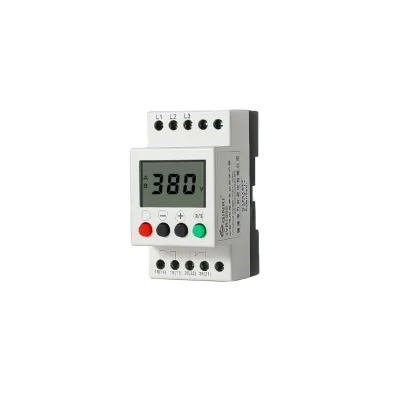


Single Phase Monitoring Voltage Relay Voltage Transformers PT Protection Relays
$1500.00 - $3000.00
MOQ: 1 Pieces


Comprehensive Sourcing Guide
Sealed Protection Voltage Detection Relay Sourcing Guide
Procuring sealed protection voltage detection relays requires a disciplined approach to technical verification and supplier qualification. These components serve as critical safeguards in electrical systems, monitoring voltage levels to prevent damage from over-voltage, under-voltage, or phase failures. The "sealed" designation indicates a protective enclosure that shields internal contacts and mechanisms from environmental contaminants, ensuring reliability in harsh industrial or outdoor settings. Buyers must navigate a market where terminology varies, distinguishing between general voltage monitoring relays and specialized phase failure protectors.
This guide synthesizes observed market data and trusted category knowledge to help procurement professionals make informed decisions. It focuses on verifying technical specifications, understanding cost drivers, and establishing quality control protocols. By adhering to the evidence-based insights provided, buyers can mitigate risks associated with component failure, ensure compliance with safety standards, and optimize total cost of ownership. The following sections detail the essential steps for sourcing these specialized protection devices effectively.
Product Scope and Observed Listing Signals
The current market for sealed protection voltage detection relays exhibits a wide range of pricing and minimum order quantities, reflecting diverse application requirements. Observed listing prices span from $0.10 to $3,500 USD, indicating a spectrum from basic micro-power relays to complex, multi-function monitoring units with integrated communication capabilities. Minimum order quantities (MOQs) typically range from 1 to 1,000 units, allowing for both prototyping and large-scale industrial deployment. This variability underscores the importance of aligning procurement volume with specific project needs rather than assuming uniform pricing structures across all suppliers.
Product attributes reveal a strong emphasis on customization and specific protective characteristics. Many listed items are described as "sealed relays" or "enclosed relays," highlighting their suitability for environments where dust, moisture, or chemical exposure is a concern. The observed models, such as the TYXU series and ZHRV2 series, demonstrate a focus on miniature sizes and DIN rail mounting, which are standard in modern electrical panels. Buyers should note that while "sealed" is a common descriptor, the exact degree of ingress protection (IP rating) is not always explicitly stated in basic listings, necessitating direct verification with the supplier.
Technical Specifications to Verify
Voltage and frequency ratings are the primary technical parameters to validate when selecting a voltage detection relay. The observed data indicates rated voltages of 380V and 460V, with a rated supply voltage range of AC 200V to 500V for certain phase failure protectors. These devices are designed for AC electricity types and typically support rated frequencies of 50Hz or 60Hz, ensuring compatibility with global power grids. Buyers must confirm that the relay’s rated voltage matches the system’s nominal voltage to prevent premature failure or inaccurate tripping. Additionally, the voltage measuring error should be verified, with high-performance units offering an error margin of less than 1%.
Contact configuration and load capacity are critical for ensuring the relay can handle the connected circuitry. Observed output contacts include 1SPDT and 2SPDT configurations, with contact capacities ranging from 5A to 10A for general use, and specific ratings like 240V/1.5A or 415V/0.95A for phase failure protectors. The action principle is predominantly electronic or electromagnetic, influencing response times and durability. For phase failure and sequence monitoring, response times are often specified as less than 0.2 seconds or 1 second, which is vital for protecting sensitive motors and machinery. Buyers should also check the setting accuracy, which is typically 1% of the full scale value, to ensure precise protection thresholds.
Compliance and Safety Documentation
Safety standards and certification requirements are non-negotiable for electrical protection devices. While specific certification marks are not universally listed in the provided data, buyers must insist on documentation proving compliance with relevant international and regional safety standards. For products originating from China, particularly from regions like Zhejiang, verification of CE, UL, or CCC certification is essential. These certifications ensure that the relay meets rigorous testing for electrical safety, fire resistance, and electromagnetic compatibility. Procurement teams should request test reports or certificates of conformity before placing orders to mitigate liability and ensure regulatory compliance in the destination market.
DIN rail mounting standards are a key physical specification that impacts installation efficiency and panel design. The observed products adhere to a DIN rail width of 35mm, a global standard for industrial control components. This compatibility ensures that the relays can be easily integrated into existing electrical enclosures without requiring custom mounting hardware. Buyers should verify the physical dimensions, such as the observed sizes of 901863mm or 804354mm, to ensure they fit within the allocated space in the control panel. Proper documentation of these mechanical specifications helps in planning panel layouts and avoiding costly redesigns during the installation phase.
Cost Drivers and Commercial Terms
Several factors influence the final cost of sealed protection voltage detection relays, including customization options, material quality, and packaging. The availability of customization allows suppliers to tailor relays to specific voltage ranges or contact configurations, which can increase unit costs but reduce integration expenses. Packaging types, such as standard carton packing, also play a role in logistics costs. Buyers should evaluate the total landed cost, considering not just the unit price but also shipping, insurance, and potential tariffs. Understanding these cost drivers helps in negotiating better terms and selecting suppliers who offer value beyond the base price.
Commercial terms, including payment methods and lead times, are crucial for supply chain stability. While specific lead times are not provided in the observed data, buyers should establish clear expectations with suppliers regarding production schedules and delivery commitments. For large orders, negotiating volume discounts or long-term supply agreements can help stabilize costs. Additionally, buyers should clarify the warranty terms and return policies for defective units. A robust commercial agreement should include provisions for quality disputes, ensuring that the buyer is protected in case of non-conforming products. Clear communication of these terms upfront prevents misunderstandings and ensures a smooth procurement process.
Supplier Qualification and Quality Control
Supplier qualification is the first line of defense against quality issues in the procurement of voltage detection relays. Buyers should conduct thorough due diligence on potential suppliers, verifying their manufacturing capabilities, quality management systems, and financial stability. For suppliers based in China, visiting the factory or engaging a third-party inspection agency can provide valuable insights into their production processes. Key areas to assess include the sourcing of raw materials, assembly line controls, and final testing procedures. A supplier with a strong track record in producing sealed relays is more likely to deliver consistent quality and reliable performance.
Quality control protocols should be established to ensure that delivered products meet the specified technical requirements. Buyers should implement incoming inspection procedures, checking for physical defects, correct labeling, and proper packaging. Random sampling and functional testing of received relays can help identify any batch-level issues early. It is also advisable to request sample units for pre-production testing to verify performance under actual operating conditions. By maintaining strict quality control standards, buyers can minimize the risk of field failures and ensure the long-term reliability of their electrical systems.
Long-Term Procurement Checks
Long-term procurement success depends on continuous monitoring of supplier performance and product reliability. Buyers should establish key performance indicators (KPIs) to track metrics such as on-time delivery, defect rates, and responsiveness to technical queries. Regular reviews of these metrics help identify potential issues before they escalate into major supply chain disruptions. Additionally, staying informed about technological advancements in voltage detection relays can help buyers upgrade their systems proactively. Engaging with suppliers for feedback on product performance in the field can also drive continuous improvement and innovation.
Sustainability and ethical sourcing practices are increasingly important in global procurement. Buyers should encourage suppliers to adopt environmentally friendly manufacturing processes and ethical labor practices. This not only enhances the brand reputation but also aligns with corporate social responsibility goals. By building strong, transparent relationships with suppliers, buyers can create a resilient supply chain that adapts to market changes and regulatory shifts. Regular communication and collaboration foster trust and ensure that both parties are aligned on quality, cost, and delivery expectations, leading to a mutually beneficial long-term partnership.
FAQs
What is a Sealed Protection Voltage Detection Relay used for?
A Sealed Protection Voltage Detection Relay monitors supply voltage and switches output contacts when voltage moves outside set limits. It is commonly used in household appliances, communication equipment, and industrial control panels to protect loads from overvoltage, undervoltage, phase failure, or incorrect phase sequence. Sealed construction helps resist dust and moisture in the installation environment.
Which output contact configurations are available for these relays?
These relays typically offer 1SPDT or 2SPDT output contacts, also described as 1 C/O output types. Contact capacities vary by model, with listed ratings around 5A and 10A, and one model specifying 240V/1.5A and 415V/0.95A. Always match the contact configuration and capacity to your load current and switching requirements before ordering.
How accurate is the voltage measuring function on these relays?
The voltage measuring error is specified at less than 1%, and the setting accuracy is 1% of the full scale value. This means detection thresholds remain close to the configured values across the operating range. For critical protection applications, verify the accuracy specification on the specific model datasheet and account for tolerance when setting trip points.
Can these voltage monitoring relays be customized for specific requirements?
Yes, customization is available on the listed products. Buyers can typically discuss requirements such as rated voltage variants, packaging, and model specifications with suppliers before ordering. Since minimum order quantities range from 1 to 1000 units depending on the listing, confirm the customization options and any order quantity implications directly with the supplier.
How do these relays respond to phase failure and phase sequence faults?
Listed phase failure monitoring protectors specify response times of less than 0.2 seconds or less than 1 second for phase failure and phase sequence faults. Faster response limits damage to motors and other three-phase equipment. Check the response time specification for your chosen model, since it varies between product families.
What mounting and size options do these relays come in?
The relays are miniature-sized and suit DIN rail mounting, with a standard 35mm rail width. Listed overall dimensions include approximately 75.5 by 70 by 44.5mm, 80 by 43 by 54mm, 80 by 44 by 65mm, 90 by 18 by 63mm, and 90 by 36 by 65.5mm. Confirm the exact footprint of your selected model to ensure panel space compatibility.
What supply voltage and frequency ratings do these relays support?
Listed models support AC electricity type with rated voltages such as 380V and 460V, and one model specifies a rated supply voltage of M415 covering AC200V to 500V. Rated frequency is 50Hz or 60Hz. Match the relay rating to your installation supply, and note that short circuit protection such as an RT36-00 5A fuse may be specified alongside.
How are these relays packed and shipped for orders?
Listed packing options include carton packing and standard packing, with one model listing a net weight of 200g. Products originate from China, including Zhejiang. Packing method can affect freight cost and unit protection, so confirm the packing format, carton quantities, and shipping arrangements with the supplier before placing your order.