Source 3 4 grade nylon fabric for Bags, Garments, and Tents
Compare 30 listings of 3 4 grade nylon fabric from verified suppliers in Guangdong. Buyers can evaluate options for bags, garments, and tents based on weight, density, and coating types like PU; compare the available evidence and request quotations based on your requirements.
Key considerations
Products List


Comprehensive Sourcing Guide
3 4 Grade Nylon Fabric Sourcing Guide
Buyers evaluating 3 4 grade nylon fabric must first distinguish between specific product grades and general market listings, as observed data shows a wide variance in yarn counts ranging from 400D to 900D. The supply landscape includes both Make-To-Order and In-Stock items, requiring procurement teams to align their timeline expectations with the supplier's production model before initiating orders.
Understanding the specific application is critical because the same fabric category serves diverse sectors from firefighter apparel to fashion accessories like bags and umbrellas. Buyers should verify that the listed product attributes, such as the 100% Nylon composition or PU backing, match the functional requirements of their end product rather than assuming all listed items share identical performance characteristics.
Product Scope and Observed Listing Signals
The observed product scope reveals a heavy emphasis on coated fabrics, with specific listings highlighting PU-coated nylon and polyester options designed for waterproof and breathable performance. Buyers should note that while some products are marketed as heavyweight with densities up to 1000D, others are classified as medium weight with significantly lower GSM values, necessitating a careful review of the weight specifications for each potential supplier.
Listing signals indicate a broad range of available styles, including ripstop, plaid, and twill weaves, which cater to different aesthetic and durability needs across industries. Procurement teams must scrutinize the width specifications, which vary between 57 and 60 inches, to ensure compatibility with their existing cutting and manufacturing equipment without requiring costly material adjustments.
Technical Specifications to Verify
Technical verification begins with confirming the yarn count and density, as observed listings show conflicting data points like 800800D versus 400D200D for similar product descriptions. Buyers must request detailed technical sheets to validate the actual denier and thread count, ensuring the fabric meets the tensile strength requirements for their specific use case, whether it involves heavy-duty tents or lightweight raincoats.
Thickness and weight are equally critical parameters that define the fabric's suitability for different applications, with observed data ranging from 110 GSM to 315 GSM. Procurement specialists should explicitly verify the thickness classification, such as heavy or medium weight, and cross-reference this with the GSM value to prevent mismatches between the ordered material and the intended garment or industrial application.
Compliance and Safety Documentation
While background knowledge suggests standards like ISO 9001 or OEKO-TEX are common in the industry, the supplied product facts do not confirm specific certification status for any listed item. Buyers must explicitly request current compliance documentation from suppliers to verify that the fabric meets relevant safety standards for their target market, particularly for applications involving children or specialized protective gear.
Safety verification should extend to chemical restrictions, as the presence of PU coatings requires confirmation that the materials comply with regional regulations regarding hazardous substances. Procurement teams should not assume compliance based on general market knowledge but must obtain test reports or certificates of analysis to ensure the fabric is free from prohibited chemicals before finalizing any purchase agreement.
Cost Drivers and Commercial Terms
Cost structures for this fabric category are heavily influenced by the supply type, with Make-To-Order items potentially carrying different pricing dynamics compared to In-Stock items. Buyers should analyze the observed MOQ range, which spans from 1 to 3000 units, to determine the most cost-effective order quantity that balances inventory holding costs with unit price reductions.
Commercial terms must account for the significant variance in single package weights and dimensions, which can drastically impact shipping logistics and final landed costs. Procurement professionals should calculate freight expenses based on the specific package size and gross weight of the selected SKU, as a 2.0 kg package differs substantially in shipping efficiency from a 23.5 kg package of similar fabric.
Supplier Qualification and Quality Control
Supplier qualification requires a rigorous assessment of their production capabilities, specifically their ability to maintain consistent yarn counts and coating quality across large batches. Buyers should verify the supplier's location, noting that observed listings originate from Guangdong, China, and assess whether this proximity aligns with their logistical strategy and quality control inspection schedules.
Quality control protocols must include pre-shipment inspections to verify critical attributes like color consistency, coating adhesion, and dimensional stability. Since the product list indicates a wide variety of styles and densities, buyers should implement a sampling plan that tests multiple batches to ensure the supplier can consistently deliver the specified 100% Nylon or Polyester composition without deviation.
Long-Term Procurement Checks
Long-term procurement success depends on establishing a clear communication channel for technical updates and potential changes in material specifications. Buyers should schedule regular reviews with suppliers to discuss any shifts in yarn availability or coating technologies that could impact the performance or cost of the 3 4 grade nylon fabric over time.
Sustainability and supply chain resilience should be monitored continuously, as the reliance on specific chemical coatings like PU requires a stable supply of raw materials. Procurement teams must develop contingency plans for potential disruptions, ensuring that alternative suppliers or material grades are identified to maintain production continuity without compromising the quality standards required for their end products.
FAQs
What is the material composition of the heavyweight 3350D nylon fabric?
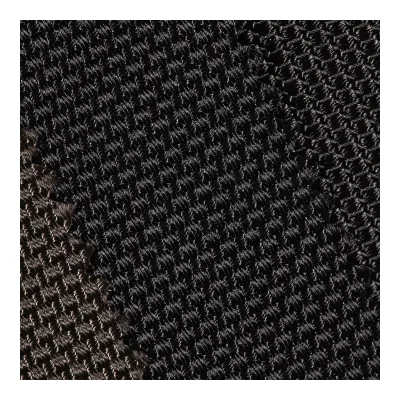
The heavyweight 3350D nylon fabric is composed of 100% nylon material. It features a PU coated backing for enhanced durability and water resistance. This woven construction provides a robust texture suitable for demanding applications. The fabric is available in black color and offers a weight of 315gsm. It is designed to meet high-performance standards for various industrial and fashion uses.
Can this nylon fabric be used for making raincoats and outdoor gear?
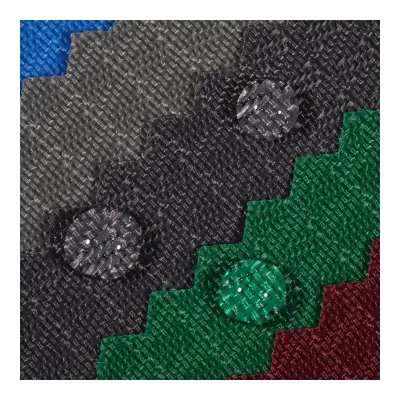
Yes, this nylon fabric is widely used for making raincoats and outdoor gear. Its waterproof and breathable features make it ideal for apparel like coats and jackets. The durable construction supports applications in tents, bags, and umbrellas. It is suitable for both men and women, offering versatility for fashion accessories and specialized uniform requirements in various weather conditions.
What are the available width and thickness specifications for this fabric?
The fabric is available in widths of 58 inches and 60 inches. It is classified as heavyweight with a thickness suitable for durable goods. The model DL-33501 offers a width of 58/60 inches, while other variants like DL-4255 provide 60-inch widths. These specifications ensure compatibility with standard manufacturing equipment for garments, home textiles, and industrial products requiring precise dimensional accuracy.
Is there a minimum order quantity for purchasing this nylon fabric?
The minimum order quantity for this nylon fabric is 1 unit. This low MOQ allows buyers to test samples or order small batches easily. The supply type is make-to-order, ensuring customized production based on specific requirements. Buyers can purchase single items or larger quantities up to 3000 units, providing flexibility for both small businesses and large-scale industrial procurement needs.
Where is this 3350D nylon fabric manufactured and shipped from?
This nylon fabric is manufactured in Guangdong, China. The place of origin is clearly stated as Guangdong, ensuring traceability for sourcing purposes. Products are shipped from this location with single package sizes around 150x26x26 cm. The gross weight per package is approximately 2.0 kg, facilitating efficient logistics and handling for international buyers seeking reliable supply chain partners from this region.
What features make this fabric suitable for fashion accessories and bags?
This fabric features waterproof, breathable, and downproof properties, making it ideal for fashion accessories and bags. The durable nylon construction withstands daily wear while maintaining aesthetic appeal. It supports various styles including ripstop, plaid, and plain weaves. These characteristics ensure longevity and functionality for items like purses, totes, and hats, meeting the demands of modern fashion design and practical utility requirements.