Source Self-Adhesive EPDM Roof Membrane for Outdoor Indoor Waterproofing
Compare 30 listings for Self-Adhesive EPDM Roof Membrane suitable for roofing, waterproofing, and industrial flooring. Options include EPDM and PVC materials with varying thicknesses from 0.7mm to 2.0mm and certifications like ISO and CE.
Key considerations
Products List


Self-Adhesive EPDM Rubber Waterproof Membrane Roofing Waterproof Membrane
$3.50 - $8.50
MOQ: 1000 Square Meters

Self-Adhesive EPDM Waterproofing Membrane for Roof Waterproofing
$6.20 - $6.80
MOQ: 1000 Square Meters

Roofing Underlayment Self Adhesive EPDM Roofing Waterproofing Membrane
$3.50 - $8.50
MOQ: 1000 Square Meters


EPDM Membrane Waterproof Building Materials /Self Adhesive EPDM Roofing Materials
$1.20 - $2.80
MOQ: 500 Square Meters

High Tensile Strength EPDM Rubber Waterproof Membrane for Roof Coating
$0.80 - $3.50
MOQ: 1 Square Meters


0.8mm/1mm/1.2mm EPDM Roofing Material/Self Adhesive EPDM Membrane
$2.00 - $8.00
MOQ: 1500 Square Meters


Synthetic Self Adhesive EPDM Roofing Waterproofing Membrane for Building Roof
$4.89 - $5.99
MOQ: 3000 Square Meters

Ultra-Flexible EPDM Waterproofing Membrane for Roof Waterproofing
$4.89 - $5.99
MOQ: 3000 Square Meters

High Quality Easy Installation EPDM Waterproof Membrane for Roof
$4.89 - $5.99
MOQ: 3000 Square Meters

Self Adhesive EPDM Waterproofing Membrane with Construction Building Material
$4.89 - $5.99
MOQ: 3000 Square Meters


Self-Adhesive Bitumen Waterproof Roofing Felt Membrane 1.5mm 1.2mm
$1.70 - $2.30
MOQ: 100 Square Meters

High Quality Self Adhesive EPDM Roof Membrane for Roof Waterproofing
$3.10 - $3.70
MOQ: 500 Square Meters

Self Adhesive 1.5mm Thick EPDM Roofing Membrane for Flat Roof Waterproofing
$3.10 - $3.70
MOQ: 500 Square Meters

Manufacturer Direct Selling EPDM Self Adhesive Roof Waterproof Membrane with Glue
$3.10 - $3.70
MOQ: 500 Square Meters

Synthetic Self Adhesive EPDM Roofing Waterproofing Membrane for Building Roof
$3.10 - $3.70
MOQ: 500 Square Meters


Self-Adhesive EPDM Sheet Waterproofing Membrane EPDM Rubber Roofing
$3.10 - $3.70
MOQ: 500 Square Meters
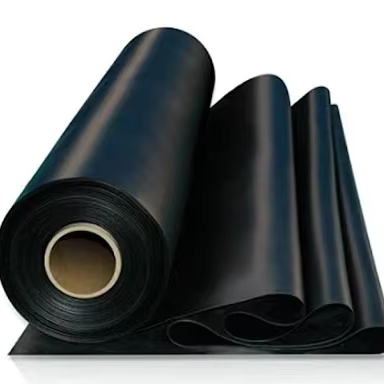
Comprehensive Sourcing Guide
Strategic Sourcing Guide for Self-Adhesive EPDM Roof Membrane
Procuring self-adhesive EPDM roof membrane requires a disciplined approach that balances technical performance with supply chain reliability. The global market for roofing and waterproofing materials is vast, yet specific product attributes often vary significantly between listings. Buyers must navigate a landscape where terms like "EPDM" and "Roofing" appear alongside diverse specifications for thickness, surface treatment, and certification. This guide provides a structured framework for evaluating suppliers and products based on verified observations of available market data, ensuring that procurement decisions are grounded in factual evidence rather than unverified marketing claims.
Technical Specifications and Material Variability
The foundation of a successful procurement strategy lies in understanding the precise technical specifications of the product. In the current market, EPDM (Ethylene Propylene Diene Monomer) membranes are frequently categorized under "Roofing and Waterproofing" with a specific "Ceiling Tile Type" of Roll. However, the physical dimensions and material composition are not uniform across all listings.
Thickness is a critical variable that directly impacts durability and application suitability. Market observations indicate a thickness range spanning from 0.7mm to 2.0mm. Specific product models, such as ML-EPDM and EPDM0011, list distinct thickness options including 1.2mm, 1.5mm, and 2.0mm. When sourcing, buyers must verify the exact thickness required for their project, as thinner membranes (0.7mm-1.0mm) may be suitable for light-duty applications, while thicker variants (1.5mm-2.0mm) are generally preferred for heavy-duty roofing where puncture resistance is paramount.
Width and length specifications also vary. Standard widths observed in the market include 1m, 2m, 3m, 4m, extending up to 8m at most. Lengths are typically standardized at 20m or available as customized orders. The product is supplied on rolls, with some listings specifying "Kraft Packing" or "Ocean Ship" packaging to ensure integrity during transit. The surface treatment is another key differentiator; while some products are described as "Roll Coated," others are "Film Coated" or possess a "Smooth" finish. For self-adhesive variants, the presence of a specific adhesive backing layer is implied by the product type, though the exact nature of the coating (e.g., whether it is a factory-applied adhesive or a separate tape system) must be confirmed with the supplier.
Compliance and Certification Verification
In the construction and roofing industry, compliance with international standards is non-negotiable. Buyers must rigorously verify that the products they source carry valid certifications. The available data confirms that many EPDM roofing products are associated with ISO, CE, and MSDS (Material Safety Data Sheet) certifications.
Specific models, such as EPDM0027, explicitly list ISO and CE certifications, while others may only carry ISO. The presence of an MSDS is a strong indicator that the supplier has documented the chemical composition and safety handling procedures for the rubber sheet. It is crucial for buyers to request current copies of these documents rather than relying on general claims. The "Quality" attribute for some products is noted as "Exposed Type" or "Non-Vulcanized," which has significant implications for installation and long-term performance. Exposed membranes must withstand UV radiation and weathering without degradation, a requirement that should be validated against the specific certification standards provided by the manufacturer.
While background knowledge suggests standards like ASTM D8014 or EN 13948, these specific numerical codes should not be asserted as universal requirements for every listing unless explicitly stated in the product documentation. Instead, buyers should treat these as reference points for what to ask suppliers. The verification process should focus on whether the specific batch of EPDM rubber sheet meets the performance criteria outlined in the relevant regional or international standards, rather than assuming a blanket compliance based on the product category.
Cost Drivers and Economic Factors
The pricing of EPDM roof membrane is influenced by several dynamic factors, including material costs, thickness, and order volume. The observed price range in the market spans from $0.65 to $8.50 USD. This wide variance suggests that price is not solely a function of the base material but is heavily dependent on the specific product configuration, such as thickness (1.2mm vs. 2.0mm), surface treatment, and packaging requirements.
Minimum Order Quantity (MOQ) is another significant economic driver. Market data shows an MOQ range from 1 unit up to 3000 units, with specific listings indicating an MOQ of 1000m² for certain EPDM products. Buyers with smaller project requirements may face challenges finding suppliers willing to accept low-volume orders, potentially leading to higher per-unit costs or the need to consolidate orders with other projects. Conversely, large-scale procurement can leverage economies of scale, but the buyer must ensure that the supplier can meet the required lead times and delivery schedules for such large quantities.
Additional cost factors include the "Customization" availability. While customization is listed as an available attribute, it often incurs additional charges and longer lead times. Buyers should also consider the "After-sales Service" availability, which is noted as "Yes" for many products. While this service may not have a direct upfront cost, the warranty terms—ranging from 12 months to 10 years—represent a long-term value proposition that should be factored into the total cost of ownership. A longer warranty period often correlates with higher initial material costs but provides greater financial protection against future failures.
Typical Applications and Functional Performance
EPDM membranes are versatile materials designed for a wide array of applications, primarily categorized as "Outdoor" and "Indoor" usage. The core functions observed in the market include Waterproof, Fireproof, Heat Insulation, and Sound-Absorbing capabilities. Some advanced listings also highlight "Anti-static" and "Corrosion-resistant" features, making these materials suitable for industrial environments where chemical exposure or static discharge is a concern.
The "Medium" attribute for certain products identifies them as "Pure Gum Rubber Sheet and Fabric," which suggests suitability for specialized industrial uses such as "Industrial Rubber Slab," "Rubber Floor Covering," and "Printing." However, for the primary application of roofing, the "Waterproof" and "Fireproof" attributes are the most critical. The "Feature" list often includes "Wear-resistant," "Heat-resistant," "Cold-resistant," and "Impact-resistant," indicating that these membranes are engineered to withstand extreme temperature fluctuations and physical stress.
The "Surface Treatment" plays a vital role in determining the final application. "Roll Coated" or "Film Coated" surfaces may be better suited for specific adhesive bonding methods or for providing a specific aesthetic finish. Buyers must match the functional attributes of the membrane to the specific environmental conditions of the project site. For instance, a roof in a high-heat environment would prioritize "Heat-resistant" and "Insulating" properties, while a roof in a coastal area might require "Corrosion-resistant" and "Cold-resistant" characteristics.
Supplier Evaluation and Quality Assurance
Evaluating suppliers requires a focus on their ability to provide consistent quality and reliable service. The "Location" of the supplier is a key factor, with the majority of observed products originating from China. This geographic concentration can offer competitive pricing but necessitates careful logistics planning. Buyers should verify the supplier's "After-sales Service" capabilities, as the complexity of installing self-adhesive membranes often requires technical support.
Quality control should be a central part of the supplier evaluation process. The "Samples" attribute is listed as "Free" for many suppliers, which provides an excellent opportunity for buyers to physically inspect the product before committing to a large order. When reviewing samples, buyers should check the consistency of the "Color," which is observed as "Black" or "Grey," and verify the "Thickness" against the stated specifications. The "Warranty" period is another critical metric; a 10-year warranty implies a higher confidence in the product's longevity compared to a 12-month warranty.
Suppliers should also be evaluated on their "Packing" standards. The market shows variations between "on Roll," "in Pallet," and "Ocean Ship" packaging. Proper packaging is essential to prevent damage during transit, especially for roll goods that can be susceptible to crushing or deformation. Buyers should request photos or detailed descriptions of the packing method to ensure the product will arrive in pristine condition. Furthermore, the "Customization" availability indicates a supplier's flexibility, which is valuable for projects with unique dimensional or performance requirements.
Long-Term Procurement Considerations
Sourcing EPDM roof membrane is not just a transactional event but a strategic decision that impacts the long-term performance of the building. The "Warranty" terms, ranging from 12 months to 10 years, are a strong indicator of the supplier's confidence in their product. A longer warranty period often reflects a more robust manufacturing process and higher quality control standards. Buyers should carefully review the terms and conditions of the warranty to understand what is covered, such as material defects, installation errors, or environmental damage.
The "Standard" specifications, such as "2.0m*20m" or thickness ranges like "1.0mm 1.2mm 1.5mm 2.0mm thick," should be aligned with the project's long-term maintenance plan. Products that meet specific industry standards are more likely to perform consistently over time. Buyers should also consider the "Performance" attributes, such as "Asbestos Rubber Board" (noted in some listings, though this term requires careful verification for modern compliance) or general "Insulating" properties. These factors influence the energy efficiency and safety of the building over its lifespan.
Finally, the "Lead Time" and "MOQ" constraints must be integrated into the project timeline. Large orders with high MOQs may require significant lead time, while smaller orders might be fulfilled quickly but at a higher unit cost. Buyers should plan their procurement schedule to accommodate these variables, ensuring that the material arrives well before the installation phase begins. By focusing on these long-term considerations, buyers can secure a supply chain that supports the durability and reliability of their roofing projects.
Comparative Analysis of Product Attributes
To assist in decision-making, the following table summarizes the key attributes observed in the market for EPDM roof membrane products. This comparison highlights the variability in specifications that buyers must navigate.
| Attribute | Observation Range / Options | Key Considerations for Buyers |
|---|---|---|
| Thickness | 0.7mm to 2.0mm (Common: 1.2mm, 1.5mm, 2.0mm) | Verify exact thickness required for load and weather conditions. |
| Width | 1m to 8m (at most) | Ensure width matches roof dimensions to minimize seams. |
| Length | 20m or Customized | Check if custom lengths are feasible for large projects. |
| Color | Black, Grey, Black Rubber Sheet | Confirm color availability for aesthetic or thermal requirements. |
| Certification | ISO, CE, MSDS | Request current certificates; verify specific model compliance. |
| Warranty | 12 Months to 10 Years | Longer warranties often indicate higher quality and durability. |
| MOQ | 1 to 3000 (Common: 1000m²) | Assess if order volume aligns with project needs and budget. |
| Surface Treatment | Roll Coated, Film Coated, Smooth | Determine compatibility with self-adhesive installation methods. |
| Origin | China | Factor in logistics and potential lead times for international shipping. |
| Packing | On Roll, Kraft Packing, In Pallet, Ocean Ship | Ensure packaging protects the roll from damage during transit. |
By adhering to these evidence-based guidelines, buyers can effectively navigate the complexities of sourcing self-adhesive EPDM roof membrane. The focus on verified specifications, rigorous certification checks, and strategic supplier evaluation ensures that procurement decisions are made with confidence and clarity, ultimately leading to successful and durable roofing installations.
FAQs
What certifications are available for Self-Adhesive EPDM Roof Membrane?
Products typically carry ISO, CE, and MSDS certifications. Buyers should verify specific model documentation, as some listings only confirm ISO or CE compliance without mentioning the others.
How thick can Self-Adhesive EPDM Roof Membrane rolls be?
Thickness ranges from 0.7mm to 2.0mm depending on the product model. Specific options often include 1.2mm, 1.5mm, and 2.0mm for heavy-duty applications requiring puncture resistance.
Can I get free samples of Self-Adhesive EPDM Roof Membrane?
Free samples are available for many suppliers to allow physical inspection. Buyers should request these to verify color consistency, thickness accuracy, and surface treatment before placing large orders.
What is the minimum order quantity for Self-Adhesive EPDM Roof Membrane?
Minimum order quantities vary from 1 unit up to 3000 units. Some specific listings require a minimum of 1000 square meters, so buyers must check individual supplier terms.
Where are Self-Adhesive EPDM Roof Membrane products manufactured?
The majority of observed products originate from China. Buyers should account for this geographic concentration when planning logistics and verifying supplier capabilities for international shipping.
How long is the warranty for Self-Adhesive EPDM Roof Membrane?
Warranty periods range from 12 months to 10 years depending on the product quality. Longer warranties often indicate higher confidence in the material's durability and resistance to weathering.