Source Self-Adhesive Note Pads for School Office and Home
Compare 30 listings of Self-Adhesive Note Pads from verified suppliers in China. Buyers can review specifications like size, material, and customization options to find the right memo pads for school, office, and home use.
Key considerations
Products List


Sticky Notes Stickers Promotional Notes Custom Memo Pad Printing Adhesive Notepad
$0.32 - $0.50
MOQ: 100 Pieces


Customized Self-Stick Notes Memo Notepad Notes Pad for School Office Supplies
$0.25 - $0.50
MOQ: 2000 Pieces


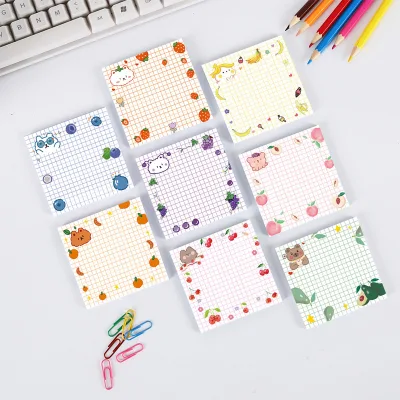


Bright Colors Self-Stick Pads Easy to Post Sticky Notepads for Home Office Notebook
$0.08 - $0.10
MOQ: 1000 Pieces

Notepads Article Notes with Colorful Sticky Note Promotional Gift Customized Sticker Pad
$0.55 - $0.60
MOQ: 3000 Pieces

Adhesive Sticky Note Pad with Rule, Promotionla Gift Writing Pad with Cover
$0.65 - $0.75
MOQ: 3000 Pieces


Comprehensive Sourcing Guide
Strategic Sourcing Guide for Self-Adhesive Note Pads
The global market for self-adhesive note pads has expanded significantly as organizations seek efficient, low-cost solutions for internal communication, task management, and educational purposes. For procurement professionals, sourcing these items requires a nuanced understanding of material specifications, customization capabilities, and supply chain logistics. The following guide synthesizes observed market data and technical attributes to provide a disciplined framework for evaluating suppliers and products. Buyers must navigate a landscape where product definitions vary from "Sticky Note" to "Memo Pad," and where material compositions range from leather covers to soft paper, necessitating rigorous verification of every claim before contract finalization.
Technical Specifications and Material Composition
The foundational aspect of sourcing self-adhesive note pads lies in the precise definition of technical specifications. The market presents a wide array of dimensions and page counts that directly influence usability and cost. Observed data indicates that dimensions can vary drastically, with specific models cited as measuring 12.744mm or 76127mm. The latter dimension, often associated with 100-page variants, is a standard for office memo pads, while smaller dimensions like 12.7mm width suggest specialized applications such as corner markers or high-density labeling.
Material selection is equally critical. The supply base includes products with "Leather" covers, which may be intended for premium branding or specific aesthetic requirements, alongside "Soft Paper" covers which are more common for general office use. The paper weight, often measured in GSM (grams per square meter), is a key indicator of quality and opacity. Verified observations list GSM ranges between 75 and 80, which is standard for note pads to prevent ink bleed-through while maintaining flexibility. The number of inner pages also varies, with observed ranges spanning from 80 to 120 sheets. Buyers must verify if the "Irregular" shape mentioned in certain listings is a defect or a specific design feature, as most standard applications require a "Rectangle" shape for uniform stacking and dispensing.
Furthermore, the adhesive mechanism is a defining characteristic. Products are frequently described as "Self-Adhesive" or "Stick-up," implying a pressure-sensitive adhesive backing that allows for repositioning without residue. The "Crew Cut" edge style, observed in specific model data, suggests a specific finishing technique that may affect how the notes tear or separate from the pad. When evaluating technical specs, procurement teams should request physical samples to verify the GSM, the strength of the adhesive, and the durability of the cover material, as these attributes are not always consistent across different supplier batches.
Compliance, Certification, and Standard Verification
In the B2B sector, compliance is not merely a formality but a risk mitigation strategy. While the general category of note pads is often considered low-risk, specific industries or export markets may demand rigorous documentation. The observed data references several standards, including "CE," "MSDS," "SGS," and "ISO9000." It is crucial for buyers to understand that the presence of these terms in a product listing does not automatically guarantee that a specific batch of goods is certified. Instead, these should be treated as indicators of the supplier's potential compliance framework.
Buyers must verify the actual validity of these certifications. For instance, "CE" indicates conformity with health, safety, and environmental protection standards for products sold within the European Economic Area, while "SGS" refers to inspection, verification, testing, and certification services. "MSDS" (Material Safety Data Sheet) is essential for understanding the chemical composition of the adhesive and paper, particularly for shipping and storage safety. The "ISO9000" standard relates to quality management systems, ensuring the supplier has a consistent process for manufacturing.
Additionally, the "FSC" (Forest Stewardship Council) certification is often relevant for environmentally conscious procurement, though it appears in the background context rather than as a high-confidence fact for every product. When sourcing, buyers should explicitly request current, valid certificates from the supplier rather than relying on generic claims. The "Package" standard and specific size standards like "76mm76mm" or "33in" also serve as compliance benchmarks for inventory management and shelf space planning. Verification of these standards should be a prerequisite for any large-scale order, ensuring that the product meets the regulatory requirements of the destination market.
Cost Drivers and Pricing Dynamics
Understanding the cost structure of self-adhesive note pads is essential for budgeting and negotiation. The observed price range in the market spans from $0.05 to $2.60 USD per unit. This wide disparity is driven by several factors, including the complexity of the product, the quality of materials, and the level of customization. A basic soft paper memo pad with standard dimensions will likely fall at the lower end of this spectrum, while a product with a leather cover, custom logo printing, and irregular shapes will command a higher price.
The Minimum Order Quantity (MOQ) is another significant cost driver. The observed MOQ range is extensive, from 30 units to 30,000 units. Suppliers with lower MOQs, such as 200 or 3000 units, may charge a higher unit price to cover setup and administrative costs. Conversely, bulk orders approaching 30,000 units can leverage economies of scale to reduce the per-unit cost. Buyers must balance the need for inventory flexibility with the desire for lower unit prices.
Customization is a primary factor influencing cost. The data confirms that "Customization" and "Logo Printing" are available features. Adding a custom logo, selecting specific colors (ranging from "Pure Colour" to "Multicolor"), or altering the dimensions (e.g., from 76mm to 12.7mm) introduces additional tooling and setup fees. The "OEM" (Original Equipment Manufacturer) service, which is welcomed by suppliers, allows for deep customization but inherently increases the cost compared to off-the-shelf products. Additionally, packaging requirements, such as "Carton Box," "Oppbag," or "Standard Packing," affect the final price. Bulk packaging in cartons is generally more cost-effective for shipping than individual "Piece" packaging, but it requires more storage space.
Typical Applications and Usage Scenarios
Self-adhesive note pads serve diverse functions across various sectors. The primary application is identified as "School" and "Office" use. In educational settings, these pads are used for reminders, study aids, and classroom organization. The "Multicolor" and "Pure Colour" options allow for color-coding systems that enhance learning and memory retention. In corporate environments, the "Memo Pad" functionality is utilized for quick communication, task tracking, and meeting notes. The "Self-Adhesive" feature is particularly valuable in these settings, allowing notes to be placed on monitors, desks, or files without the need for tape or pins.
Beyond general office and school use, the specific dimensions and shapes suggest specialized applications. The "Irregular" shape and small dimensions (12.7mm width) may be suitable for labeling small items, marking pages in books, or creating decorative elements. The "Leather" cover variant suggests a potential use in executive offices or as a promotional gift item, where aesthetics and perceived value are important. The "Stick-up" feature ensures that the notes remain in place, making them ideal for temporary signage or safety warnings in industrial or warehouse environments.
The "Export Market: Global" status of suppliers indicates that these products are versatile enough to meet international standards and cultural preferences. Whether for a small startup needing a few hundred units or a large corporation requiring thousands, the adaptability of the product design allows for a wide range of applications. Buyers should consider the specific workflow of their organization when selecting the shape, size, and adhesive strength of the note pads to ensure maximum utility.
Supplier Evaluation and Selection Criteria
Selecting the right supplier is a critical step in the procurement process. The data highlights several key attributes that buyers should use to evaluate potential partners. The "Company" and "Company Name" fields reveal that suppliers like "Dehuang" and "Skylark" operate in the region, with origins in "Jiangsu, China" and "Gaoyou City, Jiangsu Province." While specific supplier names should not be recommended, the geographic concentration in Jiangsu Province suggests a robust manufacturing hub with established supply chains.
Buyers should prioritize suppliers who offer "Free" samples and have a clear "Sample Policy." This allows for the physical verification of product quality, including the GSM, adhesive strength, and print quality. The availability of "Customized" options and "OEM" services indicates a supplier's flexibility and capacity to meet specific brand requirements. The "Model No." and "prod_model" fields (e.g., DH9613, DH-9704, CC-009) serve as unique identifiers that buyers can use to track specific product lines and ensure consistency in future orders.
When evaluating suppliers, it is essential to verify their "Standard" compliance. A supplier claiming "CE, SGS, ISO9000" certification should be able to provide documentation. The "Packing" method, whether "Carton," "Carton Box," or "Oppbag," should align with the buyer's logistics and storage capabilities. Additionally, the "Weight" of the product (e.g., 117g) is a crucial factor for calculating shipping costs and determining the most efficient freight method. Buyers should also assess the supplier's ability to handle "Customized" packaging and branding, as this adds value to the final product.
Quality Control and Long-Term Procurement Considerations
Ensuring consistent quality is paramount for long-term procurement success. The "GSM" range of 75-80 and the "Dimension" specifications must be strictly adhered to. Any deviation in these metrics can lead to issues such as ink bleed-through, poor adhesion, or difficulty in stacking. Quality control processes should include random sampling of incoming shipments to verify the "Shape," "Color," and "Inner Pages" count. The "Standard Packing" and "Package" attributes should be checked to ensure that the products arrive in good condition, free from damage or moisture.
Long-term procurement considerations involve building a sustainable relationship with suppliers who can guarantee consistency. The "MOQ" flexibility is a key factor; suppliers who can accommodate both small and large orders provide greater supply chain resilience. The "Sample Free" policy is an excellent indicator of a supplier's confidence in their product quality. Buyers should also consider the "Export Market" reach of the supplier, as a global presence often implies adherence to international quality standards and the ability to handle complex logistics.
Furthermore, the "Customization" aspect should be managed carefully. While it offers branding opportunities, it also introduces complexity. Buyers should establish clear specifications for logo placement, color accuracy, and material quality before placing large orders. The "Standard" and "Certification" requirements should be documented in the purchase agreement to ensure that the supplier remains accountable for compliance. By focusing on these quality control measures and long-term strategic factors, buyers can secure a reliable supply of self-adhesive note pads that meet their operational needs and brand standards.
Comparative Analysis of Product Attributes
To facilitate decision-making, the following table summarizes key observed attributes and their implications for procurement. This comparison highlights the variability in the market and the need for careful selection based on specific requirements.
| Attribute | Observed Variations | Procurement Implication |
|---|---|---|
| Cover Material | Leather, Soft Paper | Leather implies premium branding; Soft Paper is cost-effective for general use. |
| Dimensions | 12.744mm, 76127mm, 3*3in | Must match specific usage needs; smaller sizes for labeling, larger for memos. |
| Page Count | 80-120 Sheets | Higher counts reduce frequency of replacement but increase bulk. |
| Adhesive Type | Self-Adhesive, Stick-up | Verify repositionability and residue-free performance in samples. |
| Customization | Logo Printing, Color, Shape | Increases unit cost; requires clear design specifications and proofing. |
| MOQ | 30 - 30,000 Units | Lower MOQ offers flexibility; higher MOQ reduces unit cost. |
| Certifications | CE, SGS, ISO9000, MSDS | Essential for export and regulated industries; verify validity. |
| Origin | Jiangsu, China (Gaoyou City) | Indicates a manufacturing hub; verify logistics and lead times. |
This structured approach to evaluating product attributes ensures that buyers can make informed decisions that align with their budget, quality standards, and operational requirements. By adhering to these guidelines, procurement professionals can navigate the complexities of the self-adhesive note pad market effectively.
FAQs
What customization options are available for Self-Adhesive Note Pads?
Customization is available for Self-Adhesive Note Pads, including logo printing and color selection. Buyers can choose from multicolor or pure color options, and suppliers offer OEM services for tailored branding and specifications.
Which dimensions are commonly observed for Self-Adhesive Note Pads?
Common dimensions include 12.7 by 44mm and 76 by 127mm variants. Some models feature irregular shapes or specific crew cut edges, while others adhere to standard sizes like 76mm by 76mm or 3 by 3 inches.
Can I get free samples for Self-Adhesive Note Pads?
Free samples are available for Self-Adhesive Note Pads from many suppliers. This policy allows buyers to verify quality attributes like GSM, adhesive strength, and cover material before committing to a bulk order.
What is the typical MOQ range for Self-Adhesive Note Pads?
The minimum order quantity ranges from 30 to 30,000 units depending on the supplier and customization level. Some vendors require a minimum of 200 pieces, while others accommodate smaller initial orders for testing.
Which certifications are associated with Self-Adhesive Note Pads?
Certifications often include CE, SGS, and ISO9000 standards for quality and safety. These documents verify compliance with international regulations, though buyers should request specific certificates for each batch to ensure validity.
How is the paper weight specified for Self-Adhesive Note Pads?
Paper weight is typically specified in GSM, with observed ranges between 75 and 80 grams per square meter. This standard ensures opacity and prevents ink bleed-through while maintaining flexibility for easy tearing.
What packaging options exist for Self-Adhesive Note Pads?
Packaging options include carton boxes, OPP bags, and standard packing configurations. Suppliers offer customized packaging to meet specific logistics needs, with inner page counts varying from 80 to 120 sheets per unit.