Source Semi-Automatic Hydraulic Plastic Welder for Aerospace Oil Gas Refinery
Find 30 Semi-Automatic Hydraulic Plastic Welder options from verified Chinese manufacturers. Compare specifications including welding processes, power sources, and certifications for aerospace, oil and gas, and refinery applications.
Key considerations
Products List


100mm 1200mm Semi Automatic Hydraulic PE Welding Machine Plastic Butt Welding Machine
$15500.00 - $15800.00
MOQ: 1 Pieces


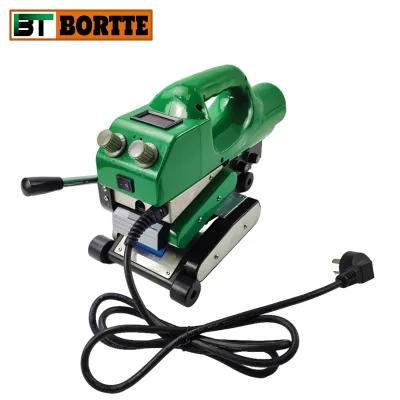


Continuous Operation High Frequency Plastic Welder for Mass Production
$3900.00 - $4400.00
MOQ: 1 Pieces


Comprehensive Sourcing Guide
Strategic Sourcing Guide for Semi-Automatic Hydraulic Plastic Welders
Understanding the Core Technology and Operational Scope
When sourcing a semi-automatic hydraulic plastic welder, buyers must first distinguish the specific operational mechanics that define this equipment class. The market presents a diverse array of machinery where the term "hydraulic" refers to the power source driving the welding pressure, while "semi-automatic" indicates a control mode that blends operator oversight with automated sequences. Based on available market data, these units often utilize a hydraulic drive system to ensure consistent force application, which is critical for maintaining weld integrity in thermosetting plastic pipes. The control interface for such machinery frequently features a PLC (Programmable Logic Controller) touch screen, allowing for the programming of Welding Procedure Specifications (WPS). This digital integration enables the machine to execute complex welding cycles with reduced human error, though the operator remains responsible for loading materials and initiating the process.
The power source for these systems is typically Alternating Current (AC), operating within a low-frequency range to manage the thermal dynamics of the welding process. It is important to note that while some listings mention specific power brands like "USA Miller" for auxiliary components, the primary hydraulic actuation is the defining characteristic of the semi-automatic hydraulic variant. The welding process itself can vary, with TIG (Tungsten Inert Gas), MIG (Metal Inert Gas), and Saw welding processes being observed in the broader category of pipe welding equipment. However, for plastic pipe applications, the focus is often on resistance butt welding or hydraulic fusion methods. The equipment is designed to handle a wide range of pipe diameters, with observed suitability extending from 2 inches up to 60 inches, making it a versatile tool for large-scale infrastructure projects.
Technical Specifications and Material Compatibility
Selecting the correct technical specifications is paramount when evaluating semi-automatic hydraulic plastic welders. The physical dimensions of the pipe being welded dictate the required tube size capabilities. Market observations indicate that standard models support tube sizes including 16, 20, 25, 50, 75, and 110 millimeters, though larger industrial units may accommodate the broader 2-60 inch range mentioned in high-confidence data. The hardness of the tube material is another critical factor; these machines are often optimized for "Hard Tube" applications, which typically involve rigid thermosetting plastics or specific composite materials.
Material compatibility extends beyond just the plastic type. The equipment must be capable of handling various metal substrates if the application involves hybrid joints or specific alloy fittings. Data suggests suitability for Carbon Steel (CS), Stainless Steel (SS), and Aluminum (as) materials, indicating a robust design capable of managing different thermal expansion rates and melting points. The cooling mechanism is another vital specification; air cooling is a common configuration for these units, which simplifies maintenance by eliminating the need for complex water circulation systems. However, buyers should verify the specific cooling requirements of the model they are considering, as high-duty cycles might necessitate more advanced thermal management.
The welding efficiency of these machines is a key performance metric. Observed data points to a welding efficiency range of 280 to 500 days per inch or similar metrics depending on the specific model configuration, though this figure should be treated as an observation of specific units rather than a universal guarantee. The control mode, described as "Semi-Automatic," implies that while the machine handles the pressure and timing, the operator must manage the alignment and material feeding. This balance between automation and manual control is essential for troubleshooting and adapting to on-site variables.
Compliance, Certification, and Safety Standards
In the B2B procurement of industrial welding equipment, compliance with international standards is non-negotiable. Buyers must verify that the supplier can provide documentation proving adherence to recognized quality management systems. High-confidence data indicates that many semi-automatic hydraulic plastic welders carry certifications such as CE (Conformité Européenne) and ISO9001:2008. The CE mark is particularly crucial for buyers in European markets, as it signifies that the product meets EU safety, health, and environmental protection requirements. Similarly, the ISO9001:2008 certification demonstrates that the manufacturer operates under a quality management system that ensures consistent product quality and continuous improvement.
It is essential to distinguish between product standards and certification bodies. While some listings reference "Hydraulic drive" as a standard, this is a mechanical description rather than a safety certification. Buyers should look for explicit certification documents for CE and ISO9001, rather than relying on marketing terms. Additionally, some suppliers may offer certificates from third-party inspection agencies like SGS, which provide an extra layer of verification regarding the machine's construction and safety features. The place of origin, often cited as China (specifically locations like Nanjing or Hangzhou), does not inherently disqualify a product, but it necessitates rigorous verification of the certification documents to ensure they are valid and issued by accredited bodies.
Safety standards also encompass the electrical specifications of the machine. Since these units operate on Alternating Current (AC), buyers must ensure the electrical systems are designed to meet local voltage and frequency requirements. The presence of a PLC touch screen and programmed WPS capabilities suggests a high level of electronic integration, which must be protected against electrical faults and interference. The warranty period, observed to range from 18 months to 36 months or 3 years, serves as an indicator of the manufacturer's confidence in their product's durability and compliance with safety standards. A longer warranty often correlates with higher adherence to quality and safety protocols.
Cost Drivers and Procurement Economics
The cost of semi-automatic hydraulic plastic welders is influenced by a complex matrix of factors, including the complexity of the control system, the hydraulic capacity, and the range of pipe diameters supported. The observed price range in the market is extremely broad, spanning from $7.49 to $100,000 USD. This vast disparity suggests that the market includes everything from small, portable units to massive, fully integrated industrial systems. Buyers must be cautious not to equate a lower price point with a lower quality machine, nor assume that a higher price guarantees superior performance without specific technical justification.
The Minimum Order Quantity (MOQ) is another economic factor to consider. Data indicates an MOQ range of 1 to 10 units, offering flexibility for both small contractors and large industrial buyers. For buyers requiring a single unit for a specific project, an MOQ of 1 is advantageous. However, for larger deployments, negotiating based on an MOQ of 10 could yield better pricing structures. The packaging method also impacts logistics costs; units may be shipped in cartons, plywood cases, or packed in containers depending on the size and fragility of the equipment. A "Plywood Case" is often used for heavy machinery to ensure protection during international transit, while "Carton" packaging might be suitable for smaller components or accessories.
Lead times and production capacity are implicit cost drivers. While specific lead times are not provided in the source data, the "New" condition of the products and the "Alternative" status for ODM/OEM services suggest that buyers may need to account for manufacturing lead times. The "36 Months" or "3 Years" warranty periods also factor into the total cost of ownership, as they reduce the financial risk associated with potential equipment failures. Buyers should calculate the total cost of ownership (TCO) by factoring in the initial purchase price, shipping costs, installation, maintenance, and the potential cost of downtime, rather than focusing solely on the sticker price.
Typical Applications and Industry Suitability
Semi-automatic hydraulic plastic welders are versatile tools designed for a wide array of industrial applications. The primary application areas identified in the market data include Aerospace, Oil & Gas, Refinery Facilities, and Offshore & Shipbuilding. These industries require high-integrity joints that can withstand extreme pressures, temperatures, and corrosive environments. The ability of these machines to handle pipe diameters up to 60 inches makes them particularly suitable for large-scale infrastructure projects in the oil and gas sector, where the transportation of fluids and gases requires robust and leak-proof connections.
In the aerospace sector, the precision offered by PLC-controlled welding processes is essential for manufacturing components that must meet stringent safety and weight requirements. The "Hard Tube" classification suggests these machines are ideal for rigid piping systems used in fuel lines, hydraulic systems, and structural components. Additionally, the data notes applications in the Toy, Stationery, and Auto Part industries, indicating that smaller or more specialized models may be available for manufacturing consumer goods and automotive components. This diversity in application underscores the importance of matching the specific machine specifications to the intended use case.
The "Suitable for Material" specification of CS/Ss/as further broadens the application scope, allowing these welders to be used in mixed-material environments. For instance, in shipbuilding, the ability to weld stainless steel and carbon steel components is crucial for constructing hulls and internal piping systems. The semi-automatic nature of the machine allows for efficient production rates while maintaining the flexibility needed for custom or one-off projects. Buyers should evaluate their specific industry requirements against the machine's capabilities to ensure a perfect fit for their operational needs.
Supplier Evaluation and Quality Assurance Protocols
Evaluating suppliers for semi-automatic hydraulic plastic welders requires a rigorous approach to quality assurance. Buyers should prioritize suppliers who can provide transparent documentation regarding their manufacturing processes and quality control measures. The presence of certifications like CE and ISO9001:2008 is a strong indicator of a supplier's commitment to quality, but buyers should verify the validity of these certificates with the issuing bodies. The "Brand Name" variations observed, such as "PLC" and "Naec," suggest that the market includes both branded and OEM products. Buyers should be cautious when dealing with generic branding and ensure that the underlying manufacturing quality meets their standards.
Quality control should extend beyond the initial purchase to include pre-shipment inspections and post-delivery support. The "Condition: New" attribute is a basic requirement, but buyers should also verify the "Package Quantity," which ranges from 2 to 3 pieces per unit, to ensure all necessary components and accessories are included. The "Welding Efficiency" and "Cooling Way" specifications should be tested during the acceptance phase to confirm that the machine performs as advertised. Suppliers offering a warranty of 18 to 36 months demonstrate confidence in their product, but buyers should review the terms of the warranty to understand what is covered and what constitutes a valid claim.
Supplier location, often cited as China (Nanjing, Hangzhou), should not be a barrier to entry, but it necessitates clear communication channels and potentially on-site audits. Buyers should assess the supplier's ability to provide technical support, spare parts, and training. The "ODM/OEM: Alternative" status indicates that suppliers may be open to customization, which can be beneficial for buyers with unique requirements. However, this also requires careful management of the design and specification process to ensure the final product meets all necessary standards.
Long-Term Procurement and Maintenance Considerations
Long-term procurement success with semi-automatic hydraulic plastic welders depends on establishing a sustainable relationship with the supplier and planning for the lifecycle of the equipment. The "Warranty" periods of 18 months to 3 years provide a safety net, but buyers should plan for maintenance beyond this period. The "Hydraulic" nature of the drive system means that regular maintenance of hydraulic fluids, seals, and pumps is essential to prevent leaks and maintain pressure consistency. The "Air Cooling" system requires periodic cleaning to ensure efficient heat dissipation, which can affect the welding efficiency over time.
Buyers should also consider the availability of spare parts and the technical expertise required for repairs. The "PLC Touch Screen" and "Wps Programmed" features indicate a high level of electronic complexity, which may require specialized technicians for troubleshooting and software updates. The "Model" variations, such as WP400B, WP1200A, and WP315B, suggest that different models may have different part requirements, making it crucial to maintain accurate records of the specific model purchased.
Finally, buyers should evaluate the scalability of their procurement strategy. As the business grows, the need for additional units or more advanced models may arise. The observed "MOQ" range of 1 to 10 allows for flexible scaling, but buyers should negotiate long-term agreements that secure favorable pricing and priority support. By focusing on these long-term considerations, buyers can ensure that their investment in semi-automatic hydraulic plastic welders delivers sustained value and operational efficiency.
FAQs
What certifications do semi automatic hydraulic plastic welders typically have?
These welders typically carry CE and ISO9001:2008 certifications to ensure safety and quality. Some models may also include SGS certificates for third-party verification. Buyers should verify these documents directly to confirm compliance with international standards before purchasing.
Which pipe diameters can a Semi-Automatic Hydraulic Plastic Welder handle?
The equipment is suitable for pipe diameters ranging from 2 inches up to 60 inches. Specific models may support tube sizes like 16, 20, 25, 50, 75, and 110 millimeters. This wide range allows the machine to serve both small and large infrastructure projects effectively.
How is the control mode managed on these semi automatic hydraulic welders?
The control mode is semi-automatic, often featuring a PLC touch screen for programming welding procedures. Operators initiate the process while the machine manages pressure and timing. This setup balances automation with manual oversight for complex welding tasks.
Can these welders be customized for specific material requirements?
Yes, customization is available for various material needs including carbon steel, stainless steel, and aluminum. The machines are designed to handle hard tubes and thermosetting plastic pipes. Buyers can request specific configurations to match their unique industrial applications.
What is the warranty period for semi automatic hydraulic plastic welders?
Warranty periods typically range from 18 months to 36 months or three years depending on the model. Longer warranties often indicate higher manufacturer confidence in product durability. Buyers should check specific model details to confirm the exact coverage duration.
Where are semi automatic hydraulic plastic welders manufactured?
These machines are primarily manufactured in China, with specific origins in cities like Nanjing and Hangzhou. The production location does not affect quality if proper certifications like CE and ISO9001 are present. Buyers should verify the place of origin on the product listing.