Find Semiautomatic Power Cord Riveting Machine for Cables, Connectors, and Wires
Source 30 semiautomatic power cord riveting machines from verified suppliers. Compare specifications including driven type, automation grade, and capacity to find the right equipment for cable assembly and wire processing applications.
Key considerations
Products List


Automatic 2 Pin 3 Pin European Plug Riveting Machine Power Cord Manufacture Line
$8800.00 - $510000.00
MOQ: 1 set


Chinese Manufacture Automatic Power Cord Plug Riveting Press Machine
$10000.00 - $12000.00
MOQ: 1 Pieces


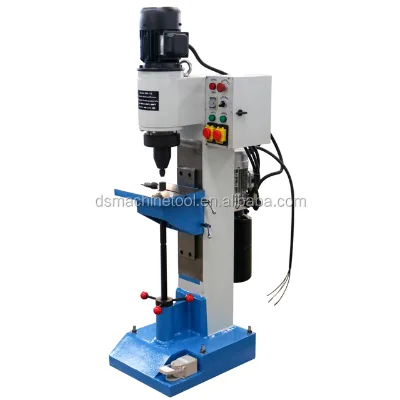

$460.00 - $1200.00
MOQ: 1 Boxes


High Efficiency Brake Riveting Machine, Semi-Tubular Riveting Machine
$909.00 - $1190.00
MOQ: 1 Pieces
Comprehensive Sourcing Guide
Strategic Sourcing Guide for Semiautomatic Power Cord Riveting Machines
Understanding the Technical Architecture and Operational Modes
When evaluating a Semiautomatic Power Cord Riveting Machine, buyers must first distinguish between the operational modes available in the current market. While the core keyword specifies "semiautomatic," the product landscape often presents a mix of semiautomatic and fully automatic configurations. A semiautomatic unit typically requires the operator to manually load the workpiece into the fixture, after which the machine executes the riveting cycle with minimal human intervention. This contrasts with fully automatic systems where material feeding and part ejection are handled by integrated conveyor or robotic systems.
In the observed market data, specific technical attributes define the mechanical integrity of these units. The driven type for many high-performance models is pneumatic, utilizing compressed air to generate the necessary force for riveting. The air pressure requirements for such systems generally fall within a range of 0.5 to 0.8 MPa, a critical parameter for ensuring consistent crimping force without damaging the wire insulation. For applications requiring higher precision or heavier loads, electric-driven variants are also available, often paired with servo drivers to control the motion profile accurately.
The automation grade is a primary differentiator. While the target keyword focuses on semiautomatic operation, many suppliers offer machines that can be configured for automatic grades depending on the production volume. The automatic grade machines often feature a yield rate of 99% or higher, with some advanced models claiming a yield of 99.8%. The crimping force is another vital specification; observed data indicates capacities ranging from 3 tons to 4 tons, with specific heavy-duty models supporting up to 4 tons of force. The machine weight can vary significantly based on the build quality and capacity, ranging from approximately 433 kg for compact units to over 16,000 kg for large-scale industrial installations.
Compliance, Certification, and Regulatory Standards
For B2B procurement, especially in international trade, verifying compliance with international standards is non-negotiable. The primary certification observed in the product data is the CE mark, which indicates conformity with health, safety, and environmental protection standards for products sold within the European Economic Area. Some advanced models carry dual certification, including both CE and ISO standards, which suggests a higher level of adherence to quality management systems. Buyers should explicitly request certification documentation to ensure the machine meets the regulatory requirements of their specific target market.
The product standard for these machines often references specific weight or dimensional benchmarks, such as 515 kg or 110 kg, which may relate to the machine's rated capacity or structural integrity rather than a universal safety standard. However, the presence of a "12 Months" warranty is a standard industry practice that provides a baseline for after-sales support. When evaluating compliance, buyers must also consider the electrical standards. The voltage specifications observed include AC220V/50Hz, which is common in many regions but requires verification against local grid standards. Additionally, the wire types supported, such as H03vvh2-F and H05vvh2-F, must align with the electrical codes applicable to the end-user's application.
It is crucial to note that while ISO 8601 is mentioned in background data, it is a standard for date and time representation and is not directly relevant to the mechanical or electrical certification of riveting machines. Buyers should focus on verifying that the machine's electrical components and safety interlocks comply with relevant IEC standards and local regulations. The "New" condition of the products listed implies that the machinery is manufactured to current standards, but buyers should verify the manufacturing date and the version of the standards applied during production.
Cost Drivers and Pricing Variables
The pricing structure for semiautomatic power cord riveting machines is highly variable, influenced by a complex matrix of specifications, automation levels, and included features. The observed price range in the market spans from approximately $460 to $510,000. This vast disparity is not indicative of a single product category but rather reflects the difference between basic manual-assist units and fully integrated, high-capacity industrial systems.
Several key factors drive these costs. First, the automation grade is a primary cost driver. A semiautomatic machine with pneumatic drive and a Kinco touch screen will be priced differently than a fully automatic electric servo-driven unit with a Rcon driver and Airtac cylinders. The inclusion of high-precision components, such as Hiwin guide rails, which are known for their durability and accuracy, adds to the manufacturing cost but ensures long-term performance. Second, the crimping force capacity significantly impacts the price. Machines capable of 4 tons of force require more robust frames and larger actuators than those rated for 3 tons.
The production capacity is another critical cost variable. Models with a capacity of 800-1,200 pieces per hour differ substantially in cost from those capable of 1,800-2,800 pieces per hour. Higher capacity machines often require more complex control systems, larger power supplies (ranging from 1.6 kW to 3.8 kW), and more extensive cooling or structural support. The physical dimensions of the machine also play a role; units with dimensions like 2,200mm x 2,500mm x 1,900mm command higher prices due to the material and engineering required.
Buyers should also consider the packaging and shipping costs. The observed data lists various packing methods, including "Export Crate," "Wooden Carton," and "Wooden Case." The dimensions of the packing, such as 300mm(L)*200mm(W)*770mm(H) for extension rods or larger crates for the main unit, affect logistics costs. Furthermore, the origin of the machine, primarily China or specific locations like Kunshan, influences the base manufacturing cost, but the final price to the buyer will include freight, insurance, and import duties. The Minimum Order Quantity (MOQ) observed is consistently 1, which allows for flexible procurement without the need for bulk buying, though this may affect the per-unit price in some negotiated scenarios.
Typical Applications and Production Capabilities
Semiautomatic power cord riveting machines are designed for a wide array of applications, primarily in the manufacturing of electrical appliances, automotive wiring harnesses, and consumer electronics. The ability to handle specific wire types, such as H03vvh2-F and H05vvh2-F, makes these machines suitable for applications requiring reliable electrical connections with durable mechanical fasteners. The yield rates, often exceeding 99%, ensure that the machines are suitable for high-volume production environments where scrap rates must be minimized.
The production capacity of these machines varies widely based on the model. For instance, the TWX-2T/3T/4T series and similar models offer capacities ranging from 800 to 2,800 pieces per hour. This range allows buyers to select a machine that matches their specific production targets. A facility producing small batches of custom wiring might opt for a lower capacity unit with a 1,800-2,200 PCS/H output, while a mass-production line for automotive components would require a high-speed unit capable of 2,500-2,800 PCS/H.
The mechanical design supports various molding and riveting processes. The "Mould Life" is a critical specification, with some models boasting a life of over 1,000,000 shots. This longevity is essential for maintaining consistent quality over long production runs without frequent tooling changes. The demoulding process is typically automatic, reducing the cycle time and labor requirements. The independent research and development of machined parts indicate that many manufacturers are innovating to improve the precision and efficiency of their riveting mechanisms, allowing for customization of the riveting profile to suit specific product requirements.
Supplier Evaluation and Component Quality
When selecting a supplier for a Semiautomatic Power Cord Riveting Machine, buyers should scrutinize the quality of the components used in the machine's construction. The supply chain for critical components is often a key indicator of the machine's reliability. In the observed data, specific brands are mentioned, such as Kinco for the touch screen, Rcon for the servo driver, Airtac for the cylinders, and Hiwin for the guide rails. These are recognized industry brands known for their reliability and performance. The presence of these components suggests a higher standard of build quality.
However, buyers must verify that these components are actually installed in the specific unit they are purchasing. The "Machined Part" attribute notes "Independent Research and Development," which implies that the manufacturer has control over the core mechanical design. This is a positive sign, as it suggests the machine is not merely an assembly of off-the-shelf parts but a cohesive system designed for optimal performance. The warranty period of 12 months is a standard offering, but buyers should inquire about the availability of spare parts and the technical support structure provided by the supplier.
The origin of the machine is another factor in supplier evaluation. The data indicates that the products originate from China, with specific mentions of Kunshan. While this provides a geographical context, buyers should not rely solely on the country of origin to assess quality. Instead, they should request detailed specifications, factory audit reports, and references from existing customers. The "Customization: Available" attribute is a significant advantage, allowing buyers to tailor the machine to their specific production needs, such as adjusting the crimping force or modifying the mold life.
Quality Control and Long-Term Procurement Considerations
Ensuring the quality of the riveted connections is paramount for the safety and reliability of the final product. The "Yield" rate, observed at 99% or higher, is a key metric for quality control. Buyers should implement their own quality checks upon receipt of the machine to verify that the actual yield matches the claimed specifications. This includes testing the crimping force consistency and the mechanical integrity of the rivets under various load conditions.
Long-term procurement considerations involve the maintenance and lifecycle management of the machine. The "Mould Life" of over 1,000,000 shots is a critical figure for planning maintenance schedules. Buyers should establish a preventive maintenance program that includes regular inspection of the pneumatic or electric drive systems, lubrication of the guide rails, and calibration of the touch screen and servo drivers. The "Condition: New" status of the listed products ensures that the machine starts with a full lifecycle, but the longevity of the machine depends heavily on the operating environment and the care taken during operation.
The "Product Packing" details, such as the Export Crate or Wooden Case, are also important for long-term storage and transport. Proper packaging ensures that the machine arrives without damage and can be stored safely if not immediately installed. The dimensions of the machine, such as 1170mm x 770mm x 1550mm or larger, must be considered when planning the factory layout to ensure adequate space for operation and maintenance access.
In conclusion, sourcing a Semiautomatic Power Cord Riveting Machine requires a careful balance of technical specifications, compliance verification, and cost analysis. By focusing on the specific attributes such as the driven type, automation grade, and component brands, buyers can make informed decisions that align with their production goals. The wide range of available models, from compact units to high-capacity industrial systems, offers flexibility for various applications, but the key to success lies in thorough due diligence and a clear understanding of the machine's capabilities and limitations.
FAQs
What certifications do semiautomatic power cord riveting machines have?
Most units carry CE certification, with some advanced models holding both CE and ISO certifications. Buyers should verify specific documentation to ensure compliance with their local regulatory requirements before procurement.
How is the automation grade configured for these machines?
The machines are available in both semiautomatic and automatic grades depending on production needs. Operators may manually load workpieces for semiautomatic units, while automatic models handle feeding and ejection independently.
What is the typical crimping force capacity for these riveting machines?
Observed capacities range from 3 tons to 4 tons of crimping force. Heavier duty models support up to 4 tons, requiring robust frames and larger actuators to ensure consistent riveting performance.
Which components are used for the drive and control systems?
Key components include Kinco touch screens, Rcon servo drivers, Airtac cylinders, and Hiwin guide rails. These recognized brands ensure reliability and precision in the mechanical and electrical operations of the machine.
Can the machines be customized for specific production requirements?
Yes, customization is available to tailor the machine to specific needs such as adjusting crimping force or modifying mold life. Buyers should request detailed specifications to ensure the configuration matches their production targets.
What is the warranty period for new semiautomatic riveting machines?
The standard warranty period for these new machines is 12 months. This provides a baseline for after-sales support, though buyers should also inquire about spare parts availability and technical support structures.