Source Ship Ladder for Marine, Wharf, and Aquatic Applications
Explore 30 verified listings for Ship Ladder options including aluminum, steel, and insulated variants. Buyers can compare specifications like length, load capacity, and certifications such as CCS and DNV to find the right marine equipment.
Key considerations
Products List
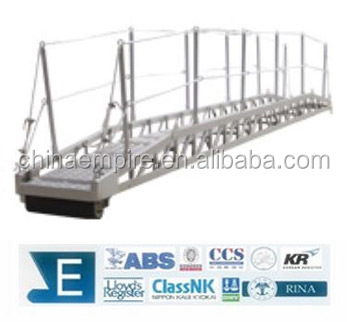
Marine Aluminium Alloy Wharf Ladder Ship Ladder
$500.00 - $1000.00
MOQ: 10 pieces
Jiangsu China Empire Marine Engineering Equipment Manufacture Co., Ltd.


$500.00 - $5000.00
MOQ: 1 Pieces

Solas Marine Requirement Pilot and Embarkation Ladder Wooden Ladder Ship Ladder
$26.00 - $35.00
MOQ: 1 Meters


Meet Solas Standard Various Length Wood Ladder Ship and Vessel Pilot Ladders
$28.00 - $37.00
MOQ: 1 Meters




Comprehensive Sourcing Guide
Strategic Sourcing Guide for Marine Ship Ladders
Understanding Technical Specifications and Material Variations
When sourcing ship ladders, buyers must first navigate a complex landscape of technical specifications that vary significantly based on the vessel's operational requirements and the specific maritime classification society involved. The core material selection is a primary differentiator, with the market offering both aluminum and steel constructions. Aluminum ladders are frequently cited for their corrosion resistance and lighter weight, which is critical for vessels where reducing top-side mass is a priority. These units often feature a length range extending from 4 meters to 15 meters, accommodating various deck heights. In contrast, steel ladders provide superior structural rigidity and are often specified for heavy-duty applications. The steel variants observed in the market typically feature lengths of 3, 4, or 5 meters, though some custom models extend up to 18 meters.
The physical dimensions of the ladder steps and the overall width are equally critical for safety and compliance. Standard widths for these marine access points are observed at 600mm, ensuring sufficient footing for crew members wearing standard maritime footwear. The step configuration varies, with common offerings including 6-step and 8-step configurations. The step size itself is a precise specification, with a standard dimension of 20mm observed in specific product models. Furthermore, the inclination angle is a vital safety parameter; marine steel straight ladders are often designed with an inclination of 45 or 55 degrees to facilitate safe climbing and descent while adhering to maritime safety standards. Buyers should verify that the specific model, such as the "Deyuan Marine" or "JFW5" series, matches the required step count and inclination for their specific vessel type.
| Feature Category | Aluminum Variant Observations | Steel Variant Observations |
|---|---|---|
| Primary Material | Aluminum | Steel (Round or Square Step) |
| Typical Length | 4m to 15m | 3m to 5m (Custom up to 18m) |
| Width | Standard 600mm | Standard 600mm |
| Step Configuration | 6-Step to 8-Step | 6-Step to 8-Step |
| Inclination | Variable | 45/55 Degrees |
| Loading Capacity | >150kg | 100kg |
| Insulation Type | Fully-Insulated or Non-Insulated | Semi-Insulating |
Compliance and Certification Verification Protocols
In the maritime industry, certification is not merely a formality but a legal and operational necessity. Buyers must rigorously verify that the ship ladders they procure carry the appropriate endorsements from recognized maritime classification societies. The supply chain data indicates a high prevalence of certifications from major bodies including CCS (China Classification Society), GL (Germanischer Lloyd), DNV (Det Norske Veritas), ABS (American Bureau of Shipping), and BV (Bureau Veritas). These certifications ensure that the ladder design and manufacturing processes meet the stringent safety and structural integrity standards required for marine environments.
Beyond classification society approvals, specific international standards govern the manufacturing and testing of these ladders. While general industry standards like ISO 799, EN 131, and EN131 are often referenced in broader contexts, the specific product data highlights compliance with Standard ISO3797-76 for certain marine applications. Additionally, some manufacturers list certifications such as CE, ISO, and GL/EC. It is imperative for buyers to request the actual certificate documents for the specific batch of ladders being ordered, rather than relying on general claims. The presence of a certificate does not automatically guarantee that every unit in a production run meets the standard; therefore, verification of the certificate's validity and its specific scope regarding the ladder model is essential. For vessels operating in specific regions, buyers must ensure the certifications align with local maritime authority requirements, as a ladder certified for one jurisdiction may not be accepted in another without additional validation.
Cost Drivers and Pricing Structure Analysis
The pricing structure for ship ladders is influenced by a multitude of factors, resulting in a wide observed range from 1 to 5000 USD. This significant variance is not arbitrary but is driven by the complexity of the design, the material grade, the length of the unit, and the level of customization required. Aluminum ladders, while often more expensive per unit due to material costs, may offer long-term savings through reduced maintenance and weight benefits. Conversely, steel ladders may have a lower initial purchase price but could incur higher costs over time due to the need for anti-corrosion treatments and heavier handling equipment.
Customization is a major cost driver in this sector. The market data confirms that customization is available for ship ladders, allowing buyers to specify unique lengths, step counts, and loading capacities. However, each custom modification introduces engineering time and specialized tooling costs, which will elevate the final price. The packaging details also play a role in the total landed cost. Options range from exporting packages to wooden cases, with the latter typically incurring higher shipping and handling fees due to increased weight and volume. Furthermore, the supply ability of the manufacturer, observed at 100 pieces per month for certain suppliers, can impact pricing during periods of high demand. Buyers should anticipate that urgent orders or those requiring expedited delivery within the 15-30 work day window may command a premium. It is crucial to request a detailed breakdown of costs, separating the base unit price from customization fees, packaging, and logistics to understand the true cost drivers.
Typical Applications and Operational Environments
Ship ladders are designed for a diverse array of maritime applications, ranging from commercial cargo vessels to specialized aquatic research platforms. The primary application field is clearly identified as "Ship," indicating their use for crew access between decks, gangway connections, and emergency evacuation routes. The specific design features, such as the "Wharf Ladder" or "Inclined Ladder" types, suggest versatility in both onboard and shore-side operations. For instance, wharf ladders are essential for safe boarding and disembarkation at ports, while inclined ladders are optimized for vertical access within the vessel's superstructure.
The functional capabilities of these ladders further dictate their application. Some models are designed as folding or telescopic ladders, offering space-saving solutions for vessels with limited deck area. Others are specialized as insulation ladders, which are critical for personnel working in environments where electrical hazards or extreme temperatures are present. The loading capacity is another key application factor; units rated for over 150kg are suitable for heavy equipment transport or multiple-person access, whereas 100kg rated units are intended for standard personnel use. The suitability for "Adult" users and the specific "Using Field" of "Aquatic" environments underscore the need for ladders that can withstand the corrosive effects of saltwater and the dynamic motion of the sea. Buyers must match the ladder's specific function and loading rating to the intended operational scenario to ensure safety and compliance.
Supplier Evaluation and Supply Chain Reliability
Evaluating a supplier for marine components requires a focus on their production capacity, logistical capabilities, and track record. The supply chain data indicates that many manufacturers are based in China, with a primary port of dispatch being Shanghai. This location is a strategic hub for maritime trade, but buyers must verify the supplier's ability to manage the complexities of international shipping and customs clearance. The "Selling Units" are typically listed as single items, suggesting that suppliers are accustomed to handling individual orders, which is common for specialized marine equipment.
The production capacity is a critical metric for supply chain reliability. An observed supply ability of 100 pieces per month suggests that while suppliers can handle standard orders, large-scale procurement projects may require advance planning to avoid delays. Buyers should assess the supplier's ability to scale production if their needs exceed this baseline. Additionally, the "Packaging Details" and "Product Packing" options, such as export cases or wooden cases, indicate the supplier's attention to protecting the product during transit. A reliable supplier will provide robust packaging to prevent damage from salt spray and rough handling. Buyers should also inquire about the supplier's quality control processes and whether they conduct pre-shipment inspections. The availability of customization services is a positive indicator of a supplier's flexibility and technical competence, but it also necessitates clear communication channels to ensure the final product meets the exact specifications.
Quality Control and Long-Term Procurement Considerations
Ensuring the long-term reliability of ship ladders requires a proactive approach to quality control and maintenance planning. The observed specifications, such as the "Fully-Insulated" or "Non-Insulated" options, highlight the importance of selecting the right product for the specific environmental conditions. For vessels operating in harsh marine environments, the choice of material and coating is paramount to preventing corrosion and structural degradation. Buyers should verify that the manufacturer employs rigorous testing protocols, particularly for loading capacity and structural integrity, to ensure the ladders can withstand the dynamic loads of a moving vessel.
Long-term procurement considerations also involve the availability of spare parts and the ease of maintenance. The "Export Case" and "Export Packing" standards suggest that the products are designed for international transport, but buyers should confirm that the packaging includes necessary documentation for maintenance and repair. The "Delivery Time" of 15-30 work days is a standard lead time, but buyers should factor in potential delays due to customs, weather, or supply chain disruptions. Establishing a long-term relationship with a supplier who offers consistent quality and reliable delivery is essential for maintaining fleet safety. Buyers should also consider the lifecycle costs, including the frequency of inspections and the potential need for replacement due to wear and tear. By prioritizing suppliers with strong certification records and a commitment to quality, buyers can ensure that their ship ladders remain safe and compliant throughout their operational lifespan.
FAQs
What certifications do ship ladders typically hold?
Ship ladders typically hold certifications from major maritime bodies like CCS, GL, DNV, ABS, and BV. These endorsements verify structural integrity and safety compliance for marine environments. Some models also carry ISO3797-76 or CE standards depending on the specific design and application requirements.
Which materials are used for marine ship ladders?
Marine ship ladders are primarily constructed from aluminum or steel. Aluminum variants offer corrosion resistance and lighter weight, while steel options provide superior rigidity for heavy-duty applications. The choice depends on the vessel's operational needs and specific loading requirements.
Can ship ladders be customized for specific vessel needs?
Yes, ship ladders are available with full customization options to meet unique vessel requirements. Buyers can specify lengths ranging from 3 to 18 meters, adjust step counts, and select different loading capacities. Customization allows for tailored solutions regarding inclination angles and packing methods.
How long is the delivery time for ship ladders?
The standard delivery time for ship ladders is between 15 to 30 work days. This lead time accounts for manufacturing, quality control, and preparation for export shipping from the port of dispatch. Expedited options may vary based on current production capacity and order volume.
What is the typical loading capacity of a Ship Ladder?
Typical loading capacities for ship ladders range from 100kg to over 150kg. Heavier duty models rated above 150kg are suitable for equipment transport or multiple-person access. Lighter models rated at 100kg are generally intended for standard personnel use in marine environments.
Where are these ship ladders manufactured and shipped from?
These ship ladders are manufactured in China and typically dispatched from the port of Shanghai. The origin is confirmed as Made in China, ensuring access to established maritime supply chains. Buyers should verify specific factory locations and shipping schedules for their orders.
What are the standard dimensions for Ship Ladder steps?
Standard dimensions for Ship Ladder steps include a width of 600mm and a step size of 20mm. Lengths vary significantly, with common models ranging from 3 to 15 meters, while custom orders can extend up to 18 meters. These dimensions ensure safe footing and compliance with maritime safety standards.