Source Silicon Coated Food Container for storage, packing, and shipping
Compare 30 listings for Silicon Coated Food Container options including plastic and silicone variants. Buyers can evaluate features like microwave safety, eco-friendly materials, and customization capabilities from suppliers in China.
Key considerations
Products List


High-Quality Paper Food Container for Reliable Food Packaging Options
$0.09 - $0.09
MOQ: 100000 Pieces


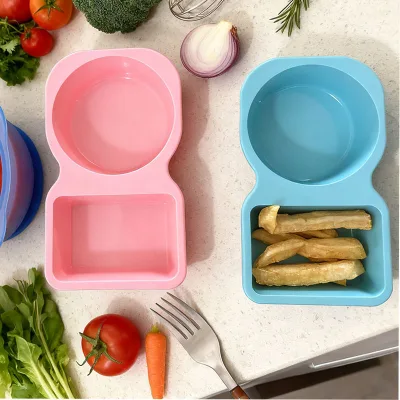


Disposable Food Container Packaging Box Storage Food Container Packing Box
$0.03 - $0.04
MOQ: 50000 Pieces
Comprehensive Sourcing Guide
Strategic Sourcing Guide for Silicon Coated Food Containers
The global demand for sustainable and high-performance food packaging has elevated the profile of silicon-coated food containers within the B2B procurement landscape. Buyers seeking these specialized items must navigate a complex market where material science, regulatory compliance, and supply chain logistics intersect. This guide provides a structured approach to sourcing silicon-coated food containers, leveraging verified product attributes and industry standards to ensure a robust procurement strategy. The focus remains on technical due diligence, supplier vetting, and cost analysis without relying on unverified market speculation.
Understanding Material Composition and Technical Specifications
The foundation of any successful procurement strategy lies in a precise understanding of the product's physical and chemical properties. In the context of silicon-coated food containers, the core material often involves a plastic substrate treated with a silicone coating to enhance performance. Based on observed product data, the primary material composition frequently cited is plastic, with specific variations such as PP (Polypropylene) food containers. The presence of a silicone coating typically aims to impart non-stick properties, heat resistance, and improved barrier characteristics against moisture.
Technical specifications for these containers vary significantly based on the intended application. Dimensions are a critical variable; observed data indicates specific model numbers like HBSP1510 with dimensions of 15010048 mm, while other listings suggest customizable dimensions to fit specific client needs. The thickness of the material is another vital metric, with observed ranges falling between 20-35 microns. This thickness directly influences the container's durability and its ability to withstand mechanical stress during transport and usage.
Furthermore, the physical state of the product upon delivery is a key consideration. Some products are listed as "unfolded," suggesting a rigid structure, while others may be designed to be "folded" for space efficiency, although this is less common for rigid food containers. The hardness is generally described as "soft" in certain flexible applications, contrasting with the rigid nature of standard plastic containers. Transparency levels also vary, with "translucent" being a common attribute, allowing for partial visibility of contents without compromising structural integrity. Buyers must verify if the silicone coating affects the transparency or if the coating is applied in a way that maintains the visual clarity of the base plastic.
Compliance, Certification, and Regulatory Standards
Navigating the regulatory landscape is paramount when sourcing food-contact materials. The safety of the end-user is non-negotiable, and suppliers must provide verifiable evidence of compliance with international food safety standards. Observed product data explicitly mentions FDA certification, a critical benchmark for products intended for the North American market. This certification ensures that the materials used, including the silicon coating and the plastic substrate, do not leach harmful substances into food under normal conditions of use.
Beyond FDA compliance, buyers should verify adherence to other regional standards. For instance, European markets often require compliance with EU Framework Regulation (EC) No 1935/2004, which governs materials and articles intended to come into contact with food. While specific test results are not provided in the general product data, the presence of "Eco-Friendly" and "Disposable" attributes suggests a focus on sustainability, which often aligns with stricter environmental regulations in the EU and other developed economies.
The processing type also plays a role in compliance. Data indicates "Blow Molding" as a processing type for certain containers. This manufacturing method must be validated to ensure it does not introduce contaminants or degrade the quality of the silicone coating. Buyers should request specific migration test reports to confirm that the silicon coating remains stable under various temperature conditions, particularly given the "Microwavable" and "Steamable" features observed in some product listings. These features imply that the container must withstand high temperatures without deforming or releasing toxins, a claim that requires rigorous third-party validation.
Cost Drivers and Pricing Dynamics
The pricing of silicon-coated food containers is influenced by a complex interplay of factors, including raw material costs, manufacturing complexity, and order volume. The observed price range in the market spans from $0.01 to $9.84 USD, a wide variance that reflects differences in quality, size, and customization levels. The lower end of the spectrum likely corresponds to basic, uncoated, or minimally treated plastic containers, while the higher end represents premium products with advanced silicone coatings, custom branding, and specialized features like microwave compatibility.
Order Volume is a primary cost driver. The Minimum Order Quantity (MOQ) observed ranges from 5 to 100,000 pieces, with a specific high-confidence fact noting an MOQ of 100,000 pieces for certain models. This high threshold suggests that silicon-coated containers are often produced for large-scale industrial or commercial clients rather than small retailers. Buyers must align their procurement volume with the supplier's capacity to avoid excessive unit costs or supply chain bottlenecks.
Additional cost factors include customization and packaging. The availability of customization allows for unique shapes, sizes, and branding, which inevitably increases the unit price. Packaging requirements, such as "Cartons" or "Plastic Bag + Carton," also add to the overall cost. Furthermore, the origin of the product influences pricing; products originating from Shandong or Guangdong, China, may benefit from lower labor and manufacturing costs compared to those produced in regions with higher overheads. However, buyers must weigh these savings against potential logistics costs and lead times.
Typical Applications and Functional Performance
Silicon-coated food containers serve a diverse range of applications, driven by their unique functional properties. The primary use case is food storage and transport, where the silicone coating provides a barrier against moisture and oil, keeping food fresh for longer periods. The "Moisture Proof" feature is particularly valuable for products that require protection from humidity, such as baked goods or dry snacks.
The ability to withstand high temperatures makes these containers suitable for microwave and steam applications. Observed attributes confirm that some models are "Microwavable" and "Steamable," indicating their suitability for reheating food directly in the container. This functionality is highly valued in the food service industry, where efficiency and convenience are paramount. The "Disposable" nature of some products suggests they are designed for single-use scenarios, such as catering services or food delivery, where hygiene and convenience outweigh the need for reusability.
Customization options further expand the application scope. The "Shape" can be "Round," "Rectangular," or "Customizable," allowing manufacturers to design containers that fit specific product lines. For example, round containers might be ideal for soups or sauces, while rectangular ones are better suited for sandwiches or meal prep. The "Capacity" range of 200-500ml observed in some listings indicates versatility for various portion sizes, from individual snacks to full meals.
Supplier Evaluation and Selection Criteria
Selecting the right supplier is critical to ensuring product quality and supply chain reliability. Buyers should prioritize suppliers who demonstrate transparency in their manufacturing processes and provide comprehensive documentation. The origin of the product, such as Shandong or Guangdong in China, offers insights into the supplier's regional expertise and logistical capabilities. Guangdong, in particular, is known for its advanced manufacturing infrastructure and experience in producing high-quality plastic and silicone products.
When evaluating suppliers, buyers should assess their capacity for customization. The availability of "OEM & ODM Custom" services indicates a supplier's ability to tailor products to specific client requirements. This flexibility is essential for brands looking to differentiate their offerings in a competitive market. Additionally, the supplier's response time for samples, typically 3-7 days, can be a useful metric for gauging their operational efficiency.
Payment terms and shipping methods are also important considerations. The "Tt" (Telegraphic Transfer) payment method is commonly observed, and buyers should negotiate terms that align with their cash flow needs. Shipping options, such as "by Sea," are standard for large-volume orders, but buyers must consider the lead time, which can range from 25 days to longer periods depending on the order size and production schedule. A supplier with a consistent track record of meeting delivery deadlines is preferable to one that offers lower prices but unreliable logistics.
Quality Control and Long-Term Procurement Strategy
Implementing a robust quality control (QC) protocol is essential for maintaining product standards. Buyers should establish clear acceptance criteria based on the observed specifications, such as dimensions, thickness, and material properties. Regular inspections, including visual checks for coating uniformity and functional tests for microwave and steam compatibility, can help identify defects early in the production process.
Long-term procurement strategies should focus on building strong relationships with suppliers. Consistent ordering volumes can lead to better pricing and priority production scheduling. Buyers should also consider the environmental impact of their procurement choices. The "Eco-Friendly" attribute observed in some products suggests a growing market trend towards sustainable packaging. Aligning with suppliers who prioritize eco-friendly materials and processes can enhance a brand's reputation and meet the increasing consumer demand for sustainability.
Finally, buyers must remain vigilant regarding changes in regulations and market conditions. The food packaging industry is subject to frequent updates in safety standards and environmental regulations. Staying informed about these changes and maintaining open communication with suppliers will ensure that procurement strategies remain compliant and competitive. By combining technical knowledge, regulatory awareness, and strategic supplier management, buyers can successfully navigate the complex landscape of silicon-coated food container sourcing.
Comparative Analysis of Product Attributes
To facilitate informed decision-making, the following table summarizes key attributes observed in the market for silicon-coated food containers. This comparison highlights the variability in specifications and helps buyers identify products that best match their requirements.
| Attribute | Observation A | Observation B | Observation C |
|---|---|---|---|
| Material | Plastic | PP Food Container | Silicone Coated |
| Model Number | HBSP1510 | PP Food Container | YSL-101 |
| Dimensions | 15010048 mm | Customized | 200-500ml Capacity |
| Thickness | 20-35 microns | Customized | N/A |
| Certification | FDA | N/A | N/A |
| Features | Eco-Friendly, Disposable | Microwavable, Steamable | Moisture Proof |
| MOQ | 100,000 PCS | 5 - 100,000 PCS | 100,000 PCS |
| Origin | Shandong | Guangdong, China | N/A |
| Packing | Cartons | Plastic Bag + Carton | Standard or Customized |
This table illustrates that while core attributes like material and certification are consistent, specific details such as dimensions and MOQ vary widely. Buyers must carefully match these attributes to their specific operational needs to ensure optimal performance and cost-efficiency.
FAQs
What certifications do silicon coated food containers have?
These containers often carry FDA certification to ensure food safety compliance. This verification confirms that materials do not leach harmful substances during normal use, meeting critical regulatory standards for North American markets.
Can these containers be used in microwaves?
Yes, many models are explicitly designed to be microwavable and steamable. This feature allows for direct reheating of food, provided the specific product model supports high-temperature resistance without deforming.
What is the typical minimum order quantity for these items?
The minimum order quantity can range from 5 to 100,000 pieces depending on the supplier. Some specific models require a high volume commitment of 100,000 pieces to qualify for production runs.
How long does it take to receive samples?
Sample delivery typically requires 3 to 7 days for processing and shipment. This timeframe allows buyers to verify product quality and specifications before committing to larger bulk orders.
Which locations manufacture these food containers?
Production origins are primarily located in Shandong and Guangdong, China. These regions offer established manufacturing infrastructure capable of producing plastic and silicone-coated packaging at competitive rates.
What customization options are available for these containers?
Customization is available for shape, size, and branding to meet specific client needs. Buyers can request OEM and ODM services to tailor dimensions like 150*100*48 mm or capacity ranges.