Source Induction and Gas Stove Ready Wok for Hotels, Shops, Kitchens
Compare 30 Induction and Gas Stove Ready Wok options from verified Chinese suppliers. Buyers can evaluate electric and gas models with varying burner counts, voltage ratings, and installation types for commercial cooking needs; compare the available evidence and request quotations based on your requirements.
Key considerations
Products List


Induction Chinese Cooking Wok Gas Range, Electric Range, 1 Wok 1 Rear Pot
$1344.00 - $1524.00
MOQ: 1 Pieces


$60.00 - $70.00
MOQ: 600 Pieces


$60.00 - $70.00
MOQ: 600 Pieces

$100.00 - $105.00
MOQ: 500 Pieces


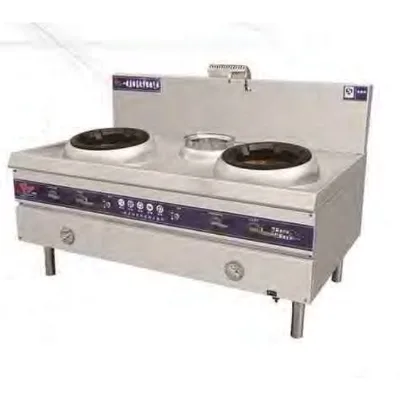


5-Burner Canteen Electric Induction Wok Stove for Large Wok with Dual-Head
$900.00 - $1500.00
MOQ: 1 Pieces


Comprehensive Sourcing Guide
Induction and Gas Stove Ready Wok Sourcing Guide
Procuring a wok that is compatible with both induction and gas stoves requires careful attention to material composition and base geometry. The primary challenge lies in ensuring the cookware conducts magnetic fields efficiently for induction while maintaining thermal stability on open flames. Buyers must prioritize woks with a layered base structure, typically involving a stainless steel or aluminum core sandwiched between magnetic steel layers. This construction ensures even heat distribution and prevents warping under high temperatures. Without this specific metallurgical design, the wok may fail to trigger induction sensors or develop hot spots on gas burners, leading to inconsistent cooking results.
Beyond material, the physical dimensions and weight of the wok significantly impact its usability and compatibility. A standard diameter ranging from 300mm to 350mm is common for household use, while commercial settings may require larger sizes. The base must be flat and smooth to ensure maximum contact with induction coils and gas grate stability. Buyers should verify that the wok’s curvature allows for proper airflow around the base on gas stoves, which is crucial for efficient flame circulation. Additionally, the handle attachment method, whether riveted or welded, must withstand the thermal expansion differences between the cooking surface and the handle material, ensuring long-term durability during rigorous daily use.
Product Scope and Observed Listing Signals
The current market landscape for dual-compatible woks reveals a diverse range of product attributes, including varying voltage requirements and power sources. While induction cookers typically operate on standard voltages like 220V or 380V, the wok itself is a passive vessel; however, listing signals often conflate the cooker’s specifications with the cookware’s features. Buyers should note that some listings mention electric or gas power sources, which likely refer to the compatible cooking appliances rather than the wok’s own energy consumption. This distinction is critical for avoiding confusion during the procurement process, as the wok does not generate heat but merely responds to the heat source provided by the stove.
Observed product models and standards indicate a wide variety of designs, from countertop units to built-in installations, though these often describe the stove rather than the wok. For instance, specifications such as 1100x1100x(810+440)mm or 800x900x850+70mm likely pertain to the dimensions of the cooking appliance or its packaging. Similarly, certifications like CE, RoHS, EMC, and CB are typically associated with the electrical components of induction cookers, not the metal wok. Buyers must carefully parse these listing signals to separate the cookware’s physical attributes, such as ceramic or glass coatings, from the technical specifications of the heating element. This separation ensures that the procurement team focuses on the correct product category and avoids purchasing incompatible or mislabeled items.
Technical Specifications to Verify
When evaluating technical specifications, the material composition of the wok’s base is the most critical factor to verify. Buyers should request detailed metallurgical reports or material certificates that confirm the presence of a magnetic stainless steel layer or an aluminum core bonded to ferrous metal. This layered structure is essential for inducing eddy currents in induction cooking while providing robust heat retention for gas stoves. Additionally, the thickness of the base should be consistent to prevent warping, which can lead to inefficient heat transfer and potential safety hazards. Thicker bases generally offer better thermal mass, allowing for more stable cooking temperatures, which is particularly important for techniques like stir-frying that require rapid heat adjustments.
The surface coating and finish of the wok also play a significant role in its performance and maintenance. Non-stick coatings, such as ceramic or PTFE-based layers, can enhance food release and simplify cleaning, but their compatibility with high-heat gas cooking must be confirmed. Buyers should verify the maximum temperature tolerance of any applied coatings to ensure they do not degrade or release harmful fumes when exposed to direct flame. Furthermore, the handle design and material, whether plastic, metal, or silicone, must be heat-resistant and ergonomically shaped for safe handling. The attachment mechanism, whether riveted or welded, should be inspected for structural integrity, as loose handles can pose a serious safety risk during the vigorous tossing motions typical of wok cooking.
Compliance and Safety Documentation
Compliance with international safety standards is non-negotiable when sourcing cookware for global markets. Buyers must ensure that the woks meet relevant food contact material regulations, such as FDA standards in the United States or EU Framework Regulation 1935/2004 in Europe. These regulations govern the migration of substances from the cookware into food, ensuring that materials like stainless steel, aluminum, or ceramic coatings do not leach harmful chemicals. Additionally, if the wok includes any non-metal components, such as handles or lids, these parts must also comply with food safety standards. Documentation should include test reports from accredited laboratories verifying the absence of heavy metals like lead and cadmium in the materials used.
For induction-compatible woks, electromagnetic compatibility (EMC) is not a direct concern for the wok itself, but buyers should be aware that the stove’s certification, such as CE or CB, often influences the overall product listing. However, the physical safety of the wok, including its stability on various stove types, must be verified. Buyers should request stability test results to ensure the wok does not tip easily on gas grates or induction plates. Furthermore, thermal shock resistance tests are crucial to confirm that the wok can withstand rapid temperature changes without cracking or deforming. These safety documents provide assurance that the product is safe for consumer use and reduces the risk of liability issues in the destination market.
Cost Drivers and Commercial Terms
The cost of a dual-compatible wok is influenced by several key factors, including the complexity of the base construction and the quality of the materials used. Multi-ply bases with bonded aluminum or copper cores are more expensive to manufacture than single-layer stainless steel woks, but they offer superior heat distribution. Buyers should also consider the cost of surface treatments, such as hard-anodizing or ceramic coatings, which add value but increase the unit price. Packaging requirements, such as gift boxes or protective cartons, can also impact the total cost, especially for retail-oriented products. Understanding these cost drivers helps buyers negotiate better prices and select the most cost-effective solution for their specific market segment.
Commercial terms, including minimum order quantities (MOQ) and payment terms, vary significantly among suppliers. Observed MOQs can range from small batches for testing to large volumes for mass production, with some suppliers requiring up to 800 units per order. Buyers should align their MOQ with their sales forecast to avoid excess inventory. Payment terms typically involve a deposit upon order confirmation and the balance before shipment, but negotiable terms may be available for long-term partnerships. Lead times are another critical consideration, as customizations or specific material requirements can extend production schedules. Clear communication regarding these commercial terms ensures a smooth procurement process and minimizes the risk of delays or unexpected costs.
Supplier Qualification and Quality Control
Supplier qualification is a critical step in ensuring the reliability and consistency of the sourced woks. Buyers should conduct thorough due diligence on potential suppliers, including verifying their business licenses, production capabilities, and quality management systems. Suppliers with ISO 9001 certification are generally more reliable in maintaining consistent product quality. Additionally, buyers should request samples to physically inspect the wok’s construction, material quality, and finish. This hands-on evaluation allows buyers to assess the craftsmanship and identify any potential defects before committing to a large order. Building a relationship with a reputable supplier can also facilitate better communication and problem-solving throughout the procurement process.
Quality control measures should be implemented at various stages of production to ensure that the final product meets the specified requirements. Buyers should establish clear quality standards and inspection criteria, including checks for material composition, base flatness, coating integrity, and handle attachment. Third-party inspection services can be engaged to conduct pre-shipment inspections, verifying that the products conform to the agreed-upon specifications. These inspections help identify any deviations or defects early, allowing for corrective actions before the goods are shipped. Implementing a robust quality control system reduces the risk of receiving substandard products and ensures that the woks perform reliably in the hands of end-users.
Long-Term Procurement Checks
Long-term procurement success depends on continuous monitoring of supplier performance and product quality. Buyers should establish key performance indicators (KPIs) to track metrics such as on-time delivery, defect rates, and customer feedback. Regular audits of the supplier’s production facilities and quality control processes can help identify areas for improvement and ensure ongoing compliance with standards. Additionally, staying informed about changes in material costs, regulatory requirements, and market trends allows buyers to adapt their procurement strategies proactively. Building a diversified supplier base can also mitigate risks associated with single-source dependencies, ensuring a steady supply of high-quality woks.
Feedback from end-users and market performance data should be regularly analyzed to identify any recurring issues or areas for product improvement. This feedback loop enables buyers to work with suppliers on product enhancements, such as improving coating durability or optimizing base design. Long-term partnerships with suppliers who are committed to innovation and quality can lead to the development of superior products that meet evolving consumer needs. By maintaining a strategic approach to procurement, buyers can ensure a sustainable supply chain that delivers value and competitiveness in the marketplace. Continuous engagement and collaboration with suppliers are essential for achieving long-term procurement goals and maintaining product excellence.
FAQs
Can I find Induction and Gas Stove Ready Wok with CE certification?
Yes, Induction and Gas Stove Ready Wok units are available with CE certification alongside RoHS, EMC, and CB standards. These appliances often feature electric or gas power sources and come in various voltage configurations like 220V or 380V for different regional requirements.
What customization options exist for Induction and Gas Stove Ready Wok models?
Customization is available for Induction and Gas Stove Ready Wok products, allowing buyers to specify unique requirements. Some models are non-customized while others offer tailored solutions, often packaged in cartons or gift boxes depending on the specific product configuration and order volume.
Which Induction and Gas Stove Ready Wok models support built-in installation?
Built-in installation is supported by specific Induction and Gas Stove Ready Wok models featuring metal housing and slide touch operation. These units typically include double or four burners and are designed with precise glass sizes to fit standard countertop or built-in kitchen cabinetry layouts.
How does the power source vary for Induction and Gas Stove Ready Wok units?
Induction and Gas Stove Ready Wok units utilize either electric or gas power sources depending on the specific model selected. Electric models may operate at 220V or 380V, while gas models often include electronic ignition systems for efficient and reliable cooking performance in commercial or residential settings.
Can I source Induction and Gas Stove Ready Wok with a 1-year warranty?
Yes, Induction and Gas Stove Ready Wok products are available with a 1-year after-sales service warranty. These units are designed for usage in hotels, food shops, and beverage establishments, ensuring durability and reliability for high-volume cooking environments with various burner configurations.
What materials are used for Induction and Gas Stove Ready Wok cooktops?
Induction and Gas Stove Ready Wok cooktops are constructed from materials like ceramic, glass, or stainless steel. The surfaces often feature A-grade black crystal plates that are polished for durability, providing a sleek appearance while withstanding high heat and frequent use in professional kitchens.