Source Sintered Concrete Floor Grinding Wheel for Stone, Surface, and Coarse Applications
Compare 30 listings of Sintered Concrete Floor Grinding Wheel with metal bonding and diamond abrasive segments. Buyers can evaluate grit options from 16# to 400#, various diameters, and dry or wet working styles for concrete and stone surface grinding tasks.
Key considerations
Products List




Comprehensive Sourcing Guide
Strategic Sourcing Guide for Sintered Concrete Floor Grinding Wheels
Understanding the Core Technology and Material Composition
The procurement of sintered concrete floor grinding wheels requires a precise understanding of the underlying manufacturing technology and material science. The defining characteristic of these tools is the "Sinter" production method, a process where abrasive particles and a bonding agent are fused together under high heat and pressure without melting the base material. This technique creates a robust structure capable of withstanding the extreme friction and impact encountered during surface grinding operations on concrete and coarse stones. The primary abrasive material identified in the market for this application is Diamond, specifically classified as a superabrasive. This distinguishes these wheels from those utilizing normal abrasive materials, offering superior longevity and cutting efficiency for hard surfaces.
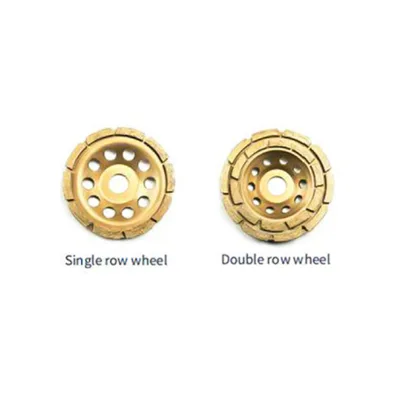
The bond agent plays a critical role in the wheel's performance. The supplied data indicates that metal bonding agents are standard for these sintered products. The bond hardness—ranging from soft to medium to hard—is a variable that buyers must select based on the specific density of the concrete being ground. A softer bond allows the diamond grains to be released more quickly as they wear, which is essential for maintaining a cutting edge on hard, dense concrete. Conversely, a harder bond retains the grains longer, suitable for softer materials. The segments of these wheels are also sintered, ensuring a strong connection between the abrasive rim and the steel core. The shape of the tool is typically cup-shaped or features an edge shape, designed to maximize the contact area with the floor surface while allowing for efficient debris removal.
Technical Specifications and Dimensional Standards
When evaluating sintered concrete floor grinding wheels, buyers must scrutinize specific technical parameters to ensure compatibility with their existing machinery and project requirements. The dimensional standards vary significantly across the market, with observed specifications including diameters of 90mm, 100mm (4 inches), 125mm, and 240mm. The most common connection thread sizes observed are 22.23mm and M14 or 5/8"-11, which are critical for fitting the wheel onto the spindle of the grinding machine. The circular degree of the product is often noted as having a cylindricity tolerance, ensuring that the wheel runs true and does not vibrate excessively during operation.
The grit size is another pivotal specification. The available customized grits range widely from 16# to 400#, allowing for a progression from coarse grinding to fine polishing. For initial surface preparation on concrete, grits such as 16#, 18#, and 20# are frequently utilized to remove coatings and level the surface. The segment height, often observed at 10mm, indicates the amount of abrasive material available for grinding before the wheel needs replacement. Buyers should also note the model designations, which often follow specific coding systems like DGW-B4, DGW-R4, DGW-C90, or SGW-B4, to identify the specific configuration of the wheel. These models may correspond to different segment arrangements or bond hardnesses tailored for specific machine types, such as the Klindex or Kelindex grinders.
Compliance, Certification, and Quality Assurance
In the B2B procurement of industrial grinding tools, verifying compliance and certification is essential for risk management and operational safety. The market data indicates that reputable suppliers often provide certifications such as BV, SGS, and ISO9001. These documents serve as third-party validation of the supplier's quality management systems and the consistency of their manufacturing processes. While general background information may reference standards like CE or EN 12413, buyers must verify the specific applicability of these standards to the product in question rather than assuming universal compliance.
Quality assurance should extend beyond the paper certification to the physical attributes of the product. The manufacturing process is explicitly stated as "Sintered," which implies a controlled thermal treatment. Buyers should request test results or batch records that confirm the bond strength and segment integrity. The origin of the product is a significant factor in quality consistency; the observed data points to manufacturing hubs in Hubei, Fujian, and Quanzhou, China. While these regions are known for industrial output, the specific factory's adherence to the stated standards must be confirmed. The packing method, whether in carton boxes, wooden pallets, or poly bags, also serves as an indicator of care in handling, protecting the fragile segments during transit.
Cost Drivers and Pricing Dynamics
The pricing of sintered concrete floor grinding wheels is influenced by a complex interplay of factors, including the amount of diamond content, the complexity of the sintering process, and the customization level. The observed price range in the market spans from 1 to 3000 USD, a wide variance that reflects differences in product size, grit, and intended application. A small 4-inch wheel will naturally cost significantly less than a large 240mm professional-grade disc. The "Superabrasive" nature of the diamond content is a primary cost driver; higher concentrations of diamond and specialized bond formulations increase the unit price but often result in a longer service life and lower cost per square meter ground.
Minimum Order Quantity (MOQ) is another critical cost consideration. The observed MOQ range is between 1 and 500 units. Buyers purchasing small quantities for trial runs or specific maintenance tasks may face higher per-unit costs or be limited to suppliers with low MOQs. Conversely, bulk procurement can leverage economies of scale, reducing the unit price. Customization options, such as specific grit sizes or segment configurations, may also incur additional costs or longer lead times. The packing requirements, such as custom wooden boxes versus standard cartons, can also impact the final landed cost. Buyers should analyze the total cost of ownership, factoring in the wheel's lifespan and the efficiency of the grinding process, rather than focusing solely on the initial purchase price.
Supplier Evaluation and Operational Compatibility
Selecting the right supplier requires a thorough evaluation of their technical capabilities and product compatibility with the buyer's equipment. The data highlights specific machine compatibility, with mentions of "Klindex" and "Kelindex" grinders. It is imperative for buyers to verify that the selected grinding wheel's thread size and flange dimensions match their machinery exactly to prevent operational hazards. The available customization options, including grit sizes and bond hardness, indicate a supplier's flexibility. A supplier that offers a wide range of models, such as the DGW series or the SYM-grinding wheel, demonstrates a broader technical capacity.
Geographic origin is also a factor in supplier evaluation. The presence of manufacturers in Hubei, Fujian, and Quanzhou suggests a competitive market with established logistics networks. However, buyers should assess the supplier's ability to provide consistent quality across different batches. The "Available Customised Grits" feature suggests that the supplier can tailor products to specific project needs, which is a valuable trait for specialized applications. When evaluating suppliers, buyers should request samples to test the actual performance of the sintered segments and verify the claimed bond hardness. The packaging method, such as "Carton Box for Each Piece," can also indicate the supplier's attention to detail and commitment to product protection.
Typical Applications and Usage Scenarios
Sintered concrete floor grinding wheels are designed for a specific set of demanding applications, primarily focused on the preparation and finishing of concrete surfaces. The primary usage type is "Dry & Wet," offering versatility in environments where water cooling is available or where dust control is a priority. The application is explicitly defined as "Grinding Concrete and Coarse Grinding Stones," making these wheels ideal for removing old adhesives, paint, epoxy, and leveling uneven concrete floors. The coarse grits (16#-20#) are particularly effective for heavy stock removal and surface profiling, while finer grits are used for polishing and smoothing.
The working style is "Surface Grinding," which implies the tool is used to abrade the top layer of the material. The cup-shaped or edge-shaped design allows for efficient material removal while minimizing the risk of gouging the substrate. These wheels are essential in construction, renovation, and industrial maintenance sectors where concrete floors require restoration. The ability to handle "Coarse Stone Surface" indicates that these tools are robust enough for natural stone applications as well, expanding their utility beyond standard concrete work. Buyers should ensure that the selected wheel's bond hardness matches the specific material hardness to achieve optimal cutting rates and surface finish.
Long-Term Procurement Considerations and Quality Control
For sustainable procurement, buyers must look beyond the initial purchase and consider the long-term performance and reliability of the sintered grinding wheels. Quality control measures should include regular inspections of the product's physical attributes, such as the integrity of the sintered segments and the consistency of the bond. The "Sintered" manufacturing process must be consistently applied to ensure that the bond strength remains within specifications. Buyers should establish a relationship with suppliers who offer consistent quality and are willing to provide technical support for troubleshooting performance issues.
The availability of customization is a key long-term advantage. As project requirements evolve, the ability to order specific grits or segment heights allows buyers to optimize their inventory and reduce waste. The standardization of models like DGW-B4 or SGW-R4 helps in maintaining consistency across different batches and projects. Furthermore, the packaging standards, such as the use of wooden pallets for bulk shipments, ensure that the products arrive in good condition, minimizing the risk of damage during logistics. By focusing on suppliers with verified certifications and a track record of delivering high-quality sintered products, buyers can ensure a reliable supply chain for their concrete grinding needs.
FAQs
What materials are used in sintered concrete floor grinding wheels?
These wheels primarily use diamond as a superabrasive material bonded with a metal agent. The segments are created through a sintering process that fuses the abrasive and bond under high heat, ensuring durability for grinding concrete and coarse stone surfaces effectively.
Which grit sizes are available for customization on these wheels?
Available customized grits range from 16# to 400#, allowing for both coarse grinding and fine polishing. Specific options like 16#, 18#, and 20# are common for initial surface preparation, while finer grits are used for smoothing and finishing concrete floors.
Can these grinding wheels be used for both dry and wet applications?
Yes, the wheels are designed for both dry and wet working styles to suit different site conditions. This versatility allows operators to choose water cooling for dust control or dry grinding where water is unavailable, maintaining efficiency on concrete and stone surfaces.
What specifications define the dimensions of these grinding wheels?
Standard diameters include 90mm, 100mm, 125mm, and 240mm, with connection threads of 22.23mm or M14. Models like DGW-B4 and SGW-R4 indicate specific configurations, ensuring compatibility with various grinding machines and project requirements for optimal performance.
Which certifications verify the quality of these sintered grinding wheels?
Reputable suppliers provide certifications such as BV, SGS, and ISO9001 to validate their quality management systems. These documents confirm that the manufacturing process adheres to strict standards, ensuring consistent bond strength and segment integrity for safe industrial operations.
How does the bond hardness affect the performance of the wheel?
Bond hardness ranges from soft to medium to hard, selected based on the concrete density being ground. A softer bond releases diamond grains faster for hard concrete, while a harder bond retains grains longer for softer materials, optimizing cutting efficiency and wheel life.