Source Solar LED Floodlight with Remote Control for Street, Garden, and Yard
Compare 26 Solar LED Floodlight with Remote Control options featuring LiFePO4 batteries, IP65 ratings, and customizable power levels from 20W to 500W. Buyers can evaluate specifications like charging time, color temperature, and warranty terms for street, garden, and yard applications.
Key considerations
Products List


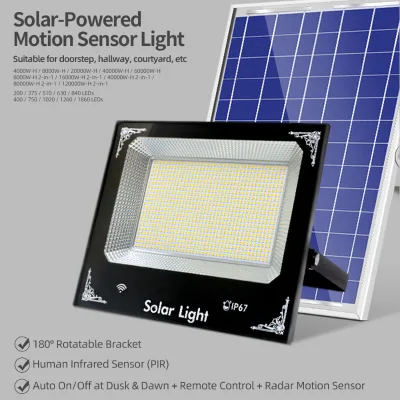
Comprehensive Sourcing Guide
Solar LED Floodlight with Remote Control Sourcing Guide
Sourcing solar LED floodlights with remote control capabilities requires a nuanced understanding of the intersection between photovoltaic efficiency, electronic control systems, and outdoor durability. These fixtures are designed to provide automated, high-intensity illumination for large areas without reliance on grid electricity, making them ideal for security, landscaping, and industrial perimeters. The inclusion of a remote control adds a layer of user convenience, allowing for immediate adjustments to brightness, motion sensitivity, and operational modes without the need for physical access to the unit. Buyers must recognize that while the core technology is mature, the integration of wireless controls introduces specific points of failure and compatibility considerations that must be rigorously evaluated during the procurement process.
The market for these products is characterized by a wide variance in component quality, particularly regarding the battery chemistry and the robustness of the solar panel. Procurement teams often encounter listings that promise high performance but deliver inconsistent results due to substandard charge controllers or inadequate thermal management. A successful sourcing strategy involves moving beyond superficial marketing claims to verify the actual electrical specifications and material construction. This guide provides a structured approach to evaluating suppliers, ensuring that the selected floodlights meet the rigorous demands of long-term outdoor deployment while adhering to safety and compliance standards.
Product Scope and Observed Listing Signals
The current market landscape for solar LED floodlights reveals a diverse range of product configurations, with observed price points ranging from $1 to $52 USD and minimum order quantities (MOQs) varying from 1 to 1000 units. This broad spectrum indicates that buyers can find solutions for both small-scale residential projects and large-scale commercial installations, provided they align their expectations with the corresponding price tier. Products are frequently described with specific model numbers such as TK02-H 150W, KCD TK-N, and TK03-100W, suggesting that manufacturers offer modular designs where power output and physical dimensions can be customized to meet specific site requirements.
Observations from product listings highlight key attributes that define the value proposition of these units. Many suppliers emphasize the use of LiFePO4 batteries, which are preferred for their stability and longer cycle life compared to traditional lithium-ion alternatives. The light source is consistently identified as LED, with some listings specifying SMD 2835 chips, which are known for their efficiency and compact form factor. Additionally, the customization options available, including lamp body materials like die-casting aluminum or plastic, and surface finishes such as painted matte, allow buyers to tailor the aesthetic and structural integrity of the floodlights to their specific environmental conditions.
Technical Specifications to Verify
When evaluating the technical performance of solar LED floodlights, the luminous efficacy and color temperature range are critical factors that determine the quality of illumination. Listings indicate a luminous flux of approximately 170lm/W, which is a strong indicator of energy efficiency, allowing for brighter output with less solar input. The color temperature typically spans from 2700K to 6500K, offering flexibility between warm white for ambient lighting and cool white for security applications. Buyers should verify the actual lumen output per watt, as this metric directly impacts the size of the solar panel and battery required to achieve the desired illumination levels.
The durability and operational reliability of the floodlights are heavily dependent on their ingress protection ratings and thermal management systems. Many products boast an IP65 waterproof rating, ensuring resistance to dust and low-pressure water jets, which is essential for outdoor longevity. The working temperature range is often cited as -20°C to +50°C, indicating suitability for diverse climates. Furthermore, the charging time of 4-6 hours and backup time of 12 hours per day suggest a balanced energy budget, but buyers must confirm that these figures are based on standard solar irradiance conditions. The viewing angle, typically 90° or 120°, also plays a crucial role in determining the coverage area, so selecting the correct angle is vital for uniform light distribution.
Compliance and Safety Documentation
Compliance with international safety and environmental standards is non-negotiable for B2B procurement of electronic lighting products. The most frequently cited certifications in the market are CE and RoHS, which indicate conformity with European health, safety, and environmental protection standards. The CE mark ensures that the product meets EU requirements for electromagnetic compatibility and low voltage directives, while RoHS compliance restricts the use of hazardous substances in electrical and electronic equipment. Buyers must request valid certificates from recognized testing bodies to verify that these claims are authentic and not merely marketing assertions.
In addition to general certifications, specific electrical safety standards may apply depending on the target market and installation environment. For instance, products intended for use in regions with strict electrical codes may require additional testing for surge protection and short-circuit prevention. The power factor (PF>0.9) mentioned in some listings is a positive indicator of electrical efficiency, reducing reactive power and improving the overall quality of the power system. However, buyers should ensure that the charge controller and battery management system (BMS) are designed to prevent overcharging, deep discharge, and thermal runaway, which are common failure modes in solar lighting systems.
Cost Drivers and Commercial Terms
The cost of solar LED floodlights is influenced by several key factors, including the battery capacity, solar panel efficiency, and the complexity of the control system. LiFePO4 batteries, while more expensive upfront, offer a longer lifespan and better performance in extreme temperatures, which can reduce total cost of ownership. The material of the lamp body, whether die-casting aluminum or ABS plastic, also impacts the price, with aluminum providing superior heat dissipation and durability. Buyers should analyze the cost breakdown to understand where value is being added, ensuring that they are not paying for unnecessary features or inferior components.
Commercial terms such as MOQ, lead times, and customization options play a significant role in the procurement strategy. The observed MOQ range of 1-1000 units allows for flexibility, enabling buyers to start with small pilot orders before scaling up. Customization options, including packaging and product standards, can add value but may also increase costs and lead times. It is essential to negotiate clear terms regarding warranty periods, which are often cited as 3 years, and to understand the process for handling defective units. Buyers should also consider the total landed cost, including shipping and tariffs, when comparing suppliers from different regions.
Supplier Qualification and Quality Control
Selecting a reliable supplier is paramount to ensuring the quality and consistency of solar LED floodlights. Buyers should prioritize suppliers who demonstrate a strong track record in manufacturing and exporting lighting products, with a focus on quality control processes. Verification of supplier credentials, including business licenses and factory audits, can provide insight into their production capabilities and management standards. It is also advisable to request samples for rigorous testing before placing bulk orders, allowing for a direct assessment of product performance and build quality.
Quality control measures should be integrated into the procurement process to mitigate risks associated with manufacturing defects. This includes implementing incoming quality control (IQC) for raw materials, in-process quality control (IPQC) during assembly, and final quality control (FQC) before shipment. Buyers should establish clear acceptance criteria for key performance indicators, such as luminous flux, battery capacity, and waterproof integrity. Regular communication with the supplier regarding quality issues and continuous improvement initiatives can help maintain high standards and foster a collaborative partnership.
Long-Term Procurement Checks
Long-term success in sourcing solar LED floodlights depends on the ability to monitor product performance and supplier reliability over time. Buyers should establish a system for tracking field performance data, including failure rates, maintenance requirements, and customer feedback. This data can be used to identify trends and make informed decisions about future procurement strategies. Regular reviews of supplier performance, including on-time delivery and responsiveness to issues, are essential for maintaining a robust supply chain.
As technology evolves, buyers must stay informed about advancements in solar panel efficiency, battery chemistry, and LED technology. This knowledge can help in anticipating future product improvements and making proactive adjustments to procurement specifications. Additionally, staying updated on changes in regulatory requirements and certification standards is crucial to ensure ongoing compliance. By maintaining a proactive approach to supplier management and product evaluation, buyers can secure a steady supply of high-quality solar LED floodlights that meet their operational needs and budget constraints.
FAQs
What certifications do these solar flood lights have?
These solar flood lights carry CE and RoHS certifications. This ensures compliance with safety and environmental standards for international markets, allowing for broader distribution and regulatory acceptance in various regions.
How long does the battery last after charging?
The battery provides backup time of up to 12 hours per day. This duration is achieved after a charging period of 4 to 6 hours, ensuring reliable illumination throughout the night for street and garden applications.
Which materials are used for the lamp body?
The lamp body is constructed from die-casting aluminum or plastic. These materials offer durability and weather resistance, with some models featuring a painted matte finish to withstand outdoor conditions effectively.
Can I customize the packaging for this product?
Yes, customization is available for the product packaging. Buyers can request specific packing requirements to meet their logistical needs or branding preferences, ensuring the product arrives safely and professionally.
What is the warranty period for these lights?
The warranty period is 3 years for these solar LED flood lights. This coverage provides assurance against manufacturing defects, supporting long-term reliability for buyers investing in outdoor lighting solutions.
Which color temperatures are available for these lights?
Available color temperatures range from 2700K to 6500K. This wide spectrum allows users to select warm white or pure white light settings to suit specific aesthetic or functional requirements for outdoor spaces.
What is the working temperature range for operation?
The working temperature range is from -20 to +50 degrees Celsius. This broad operational range ensures the lights function reliably in diverse climates, from cold winters to hot summers.