Source Sphere Carbon Molecular Sieve for Gas Separation, Drying, and Purification
Compare 30 Sphere Carbon Molecular Sieve options from verified Chinese manufacturers. Buyers can evaluate specifications like pore diameter, bulk density, and packing types for industrial gas separation, drying, and purification applications.
Key considerations
Products List




Comprehensive Sourcing Guide
Strategic Sourcing Guide for Sphere Carbon Molecular Sieve Procurement
Understanding Product Specifications and Technical Variants
When sourcing Sphere Carbon Molecular Sieve, buyers must first distinguish between the specific product models and physical characteristics available in the current market. The supply landscape includes distinct model series such as CMS-200, CMS-220, CMS-240, and CMS-260, which often denote variations in pore structure or adsorption capacity. In addition to these model numbers, the market features generic designations like "BY-Molecular Sieve" and "Molecular Sieve 3A," indicating different chemical compositions or pore diameters tailored for specific separation tasks. The nominal pore diameter is a critical specification, with observed values including 3 Angstroms, which is essential for separating nitrogen from oxygen or drying gases.
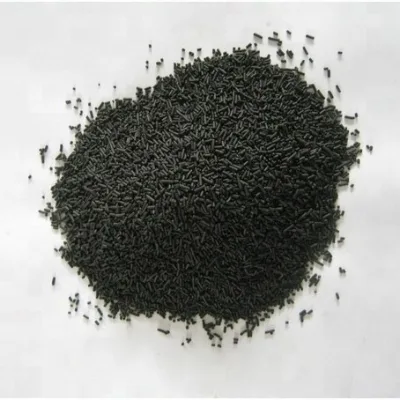
The physical form of the product is equally vital for system integration. While the core keyword focuses on "sphere" carbon molecular sieve, the observed product data indicates a diversity of shapes, including granules, pellets, and honeycomb ceramic structures. The granule form is frequently cited with specific size standards ranging from 1.1mm to 1.8mm, or more broadly from 0.5mm to 2.0mm. Buyers must verify if the supplier provides spherical pellets or the alternative granular and honeycomb forms, as the flow dynamics and pressure drop in an adsorption tower differ significantly between these shapes. The bulk density is another key technical parameter, with observed ranges between 0.45 g/cm³ and 0.7 g/ml (equivalent to 680-700 g/L). This density directly impacts the volume of the adsorption vessel required for a given capacity. Furthermore, the crush strength is a measure of mechanical durability, with specific observations noting values greater than 100 Newtons per granule, ensuring the material can withstand the pressure of gas flow without generating excessive fines.
Compliance, Certification, and Quality Verification
Navigating the compliance landscape for carbon molecular sieve requires a rigorous verification of certifications and quality documentation. The market data indicates that suppliers may offer products certified under ISO standards, which is a baseline for quality management systems. Additionally, specific test reports are available for certain product lines, providing empirical data on performance metrics. Buyers should explicitly request these test reports to validate claims regarding purity, which is observed to be ≥99% for certain grades. The grade standard is typically listed as "Industrial Grade," which implies suitability for large-scale manufacturing processes but may differ from pharmaceutical or food-grade specifications.
Certification status should not be assumed based on product descriptions alone. While some listings mention "Ift" certificates, the validity and scope of such certifications must be confirmed with the issuing body. It is crucial to avoid relying on low-confidence background information regarding "reach" compliance, as this is not explicitly supported by the provided product facts. Instead, procurement teams should focus on verifying the "Test Report" availability and the specific "Certificate" type offered by the supplier. The material composition is consistently identified as Carbon, and the structure material for honeycomb variants is noted as Honeycomb Ceramic. Ensuring that the material purity and structural integrity meet the specific operational requirements of the buyer's facility is the primary compliance goal. Buyers should also confirm if the supplier provides OEM services, as this can be a proxy for their flexibility in meeting custom technical or packaging requirements.
Cost Drivers and Pricing Dynamics
The pricing of Sphere Carbon Molecular Sieve is influenced by a complex matrix of factors, including model specificity, packaging requirements, and order volume. The observed price range in the market is exceptionally broad, spanning from $0.50 to $11,000 USD. This variance is not indicative of a single product line but rather reflects the difference between small samples, bulk industrial drums, and specialized high-performance models. A unit price of $0.50 likely corresponds to a small sample or a specific low-volume SKU, whereas the upper limit of $11,000 suggests a large bulk order or a specialized, high-capacity unit.
Minimum Order Quantity (MOQ) is a significant cost driver, with observed ranges from 1 unit to 1,000 units. Buyers purchasing at the lower end of the MOQ spectrum may face higher per-unit costs due to the fixed costs of packaging and logistics. Conversely, larger orders often benefit from economies of scale. The packaging method also impacts the final cost. Options include Plastic Drums, Steel Drums (in 25kg and 150kg sizes), and Carton Boxes (25kg). The choice between a plastic drum and a steel drum can affect the unit price due to material costs and the potential for reusability. Additionally, the drying method employed by the manufacturer, whether static or dynamic, may influence the production cost and, subsequently, the price. Buyers must balance the initial purchase price against the long-term operational efficiency of the molecular sieve, as a slightly higher initial cost for a product with superior crush strength or adsorption period may yield significant savings in maintenance and replacement frequency.
Typical Applications and Usage Scenarios
The versatility of Sphere Carbon Molecular Sieve is evident in its wide array of applications across multiple industries. The primary usage categories include Water Treatment Chemicals, Surfactants, Textile Auxiliary Agents, Rubber Auxiliary Agents, Plastic Auxiliary Agents, Paper Chemicals, Leather Auxiliary Agents, Electronics Chemicals, and Coating Auxiliary Agents. This broad applicability suggests that the product is often used as a functional additive or a processing aid rather than a standalone end-product. In the context of gas separation, the specific pore diameter of 3 Angstroms makes it suitable for nitrogen generation and oxygen removal, although the specific gas separation applications are not explicitly detailed in the provided facts, the technical parameters strongly imply this use case.
Beyond chemical processing, the product serves as a chemical desiccant and sorbent. The "Period of Adsorption" is observed to be 120 seconds, a metric that is critical for determining the cycle time in adsorption towers. The water adsorption capacity is noted at 16%, indicating its effectiveness in removing moisture from gases or liquids. The "Powder Falling" value of 0.01mg/G suggests a low rate of dust generation, which is beneficial for maintaining air quality and preventing clogging in downstream equipment. For buyers in the electronics or coating industries, the material's ability to act as a surfactant or auxiliary agent is particularly relevant. The specific shape, whether pellet, granule, or honeycomb, determines its suitability for fluidized bed reactors versus fixed-bed adsorption columns. Understanding these application nuances is essential for selecting the correct model, such as the CMS-200 series versus the BY-Molecular Sieve, to ensure optimal performance in the intended process.
Supplier Evaluation and Operational Capabilities
Evaluating potential suppliers requires a focus on their operational capabilities, geographic location, and logistical readiness. The product origin is consistently identified as China, with specific mentions of Ningxia as a production hub. This geographic concentration can influence shipping times and logistics costs. Buyers should verify the supplier's ability to meet the "Leading Time" of 5 days after order confirmation, which indicates a relatively agile supply chain. However, this lead time should be cross-referenced with the actual production capacity and current order backlog.
The supplier's packaging capabilities are a key indicator of their professionalism and attention to detail. The availability of various packaging options, such as 25kg Carton Boxes, 150kg Steel Drums, and Plastic Drums with inner PE bags, suggests a flexible logistics network. Buyers should assess whether the supplier can accommodate custom packaging requirements, especially if the product is intended for export to regions with specific import regulations regarding packaging materials. The "OEM: Yes" attribute indicates that the supplier is open to branding and custom specification requests, which is valuable for buyers looking to integrate the molecular sieve into their own product lines. Furthermore, the supplier's ability to provide a "Test Report" and maintain "ISO" certification standards is a strong indicator of their commitment to quality control. Buyers should also inquire about the "Drying Method" used, as dynamic drying may offer different quality consistency compared to static drying.
Quality Control and Long-Term Procurement Strategy
Implementing a robust quality control strategy is essential for ensuring the long-term reliability of Sphere Carbon Molecular Sieve. The observed technical parameters, such as "Crush Strength >100n/Granule" and "Bulk Density 680-700g/L," serve as benchmarks for incoming quality inspection. Buyers should establish a protocol to verify these metrics upon receipt of goods, potentially through third-party testing if the internal capabilities are limited. The "Aperture" classification, distinguishing between mesoporous and microporous structures, should be confirmed to ensure it matches the design specifications of the adsorption system.
Long-term procurement considerations extend beyond the initial purchase. The "Period of Adsorption" of 120 seconds and the "Water Adsorption" capacity of 16% are performance indicators that will degrade over time. Buyers should plan for periodic replacement or regeneration cycles based on these metrics. The "Hole Shape" and "Cell Density" for honeycomb variants are also critical for long-term performance, as physical degradation can lead to channeling or reduced efficiency. Establishing a relationship with a supplier that offers consistent quality, reliable lead times, and responsive technical support is crucial. The ability to source different models, such as the CMS-200 through CMS-260, allows for scalability and flexibility as the buyer's needs evolve. By focusing on verified specifications and maintaining a clear understanding of the cost drivers and application requirements, buyers can secure a sustainable supply of high-quality Sphere Carbon Molecular Sieve that meets their operational demands.
Comparative Analysis of Product Attributes
To facilitate a clearer understanding of the variations in the market, the following table summarizes the key attributes observed in the product data. This comparison highlights the diversity in specifications that buyers must navigate.
| Attribute | Observed Values / Options | Relevance to Procurement |
|---|---|---|
| Product Models | CMS-200, CMS-220, CMS-240, CMS-260, BY-Molecular Sieve, Molecular Sieve 3A | Determines pore size and separation efficiency. |
| Physical Shape | Granules, Pellets, Sphere, Honeycomb Ceramic | Affects flow dynamics and pressure drop in systems. |
| Particle Size | 0.5-0.9mm, 1.0-1.5mm, 1.5-2.0mm, 1.1-1.8mm, 1.6-2.5mm | Critical for bed depth and adsorption kinetics. |
| Bulk Density | 0.45~0.50 g/cm³, 680-700 g/L, 0.7 g/ml | Influences vessel volume and material weight. |
| Pore Diameter | 3 Angstroms | Defines the specific gas separation capability. |
| Crush Strength | >100 n/Granule | Indicates mechanical durability and resistance to attrition. |
| Adsorption Period | 120s | Determines the cycle time for regeneration. |
| Water Adsorption | 16% | Measures moisture removal capacity. |
| Packaging | Plastic Drum, Steel Drum (25kg/150kg), Carton Box | Impacts logistics, storage, and handling costs. |
| Origin | China (Mainland), Ningxia | Affects shipping lead times and tariffs. |
| Certifications | ISO, Ift, Test Report Available | Validates quality management and product consistency. |
This comparative overview underscores the necessity for buyers to carefully match their technical requirements with the specific attributes offered by suppliers. The diversity in particle size, shape, and model number means that a "one-size-fits-all" approach is rarely effective. Successful procurement relies on a detailed analysis of these attributes against the specific needs of the application, ensuring that the selected Sphere Carbon Molecular Sieve delivers the desired performance and longevity.
FAQs
What models are available for Sphere Carbon Molecular Sieve?
Available models include CMS-200, CMS-220, CMS-240, and CMS-260. These models vary in pore structure and adsorption capacity to suit specific separation tasks.
How is the product packed for shipment?
The product is packed in plastic drums, steel drums, or carton boxes. Specific options include 25kg cartons, 150kg steel drums, and plastic drums with inner PE bags.
What is the lead time for orders?
The lead time is 5 days after order confirmation. This indicates a relatively agile supply chain ready to fulfill requests quickly.
Which certifications are available for this product?
Suppliers may offer ISO certification and specific test reports. Buyers should verify the validity of certificates like Ift and request test reports for quality validation.
What are the physical dimensions of the granules?
Granule sizes range from 1.1mm to 1.8mm or 0.5mm to 2.0mm. The bulk density is observed between 0.45 g/cm³ and 0.7 g/ml.
Can the supplier provide OEM services?
Yes, the supplier offers OEM services. This allows for branding and custom specification requests to integrate the molecular sieve into your product lines.
What is the crush strength of the granules?
The crush strength is greater than 100 Newtons per granule. This ensures the material can withstand gas flow pressure without generating excessive fines.