Source Spherical Granule Molecular Sieve for Water Treatment
Find and compare 30 listings for Spherical Granule Molecular Sieve used in water treatment, oil drilling, and coating applications. Evaluate specifications like density, compressive strength, and packaging options to select the right desiccant or catalyst for your industrial needs.
Key considerations
Products List


Molecular Sieve Is Used for Purifying Raw Materials / Zeolite Molecular Sieve
$440.00 - $1400.00
MOQ: 1 Tons


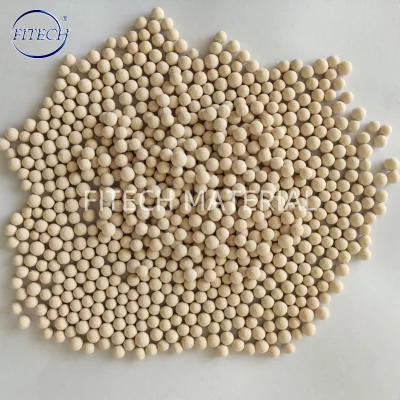
5A Molecular Sieve Used for Desorption of Water, Carbon Dioxide in Psa Industry.
$56.00 - $67.00
MOQ: 1 Minimum


13X Zeolite Spherical Molecular Sieve for Efficient Dehydration in Industrial Applications
$1800.00 - $3000.00
MOQ: 1 Tons


Comprehensive Sourcing Guide
Spherical Granule Molecular Sieve Sourcing Guide
Sourcing spherical granule molecular sieves requires a disciplined approach to distinguishing between physical desiccants and chemical separation media, as the term encompasses a broad spectrum of industrial materials. Buyers must first clarify whether the procurement goal is moisture removal, gas purification, or catalytic support, as these functions dictate entirely different material properties and supplier capabilities. The observed market data indicates a wide variance in product models, ranging from BY Series machinery components to specific chemical formulations like 4A spherical molecular sieve and TS-1 catalysts. This diversity necessitates a rigorous verification process to ensure that the selected material aligns with the specific chemical environment and operational parameters of the end-use application.
The procurement landscape for these materials is characterized by significant variability in packaging, origin, and minimum order quantities. Suppliers listed in the current market data originate primarily from China, with specific manufacturing hubs identified in regions such as Ningxia. The packaging methods observed include seaworthy wooden cases for larger equipment, standard bags for powder forms, and steel drums or carton boxes for granular and pelletized variants. Understanding these logistical distinctions is critical for accurate freight cost estimation and storage planning, as the physical form of the molecular sieve directly impacts handling requirements and shelf-life management during transit and warehousing.
Product Scope and Observed Listing Signals
The product scope for spherical granule molecular sieves extends beyond simple desiccation to include complex roles in water treatment, surfactant production, and oil drilling auxiliary applications. Market listings reveal that these materials are often classified under broader categories such as mineral desiccants, homogeneous catalysts, or physical desiccants, depending on their chemical composition and intended use. For instance, some variants are explicitly labeled as silica gel or chemical desiccants, while others are identified as molecular sieves with specific pore structures designed for the separation of molecules. Buyers must carefully review the "Usage" and "Classification" fields in supplier catalogs to ensure the material matches the chemical compatibility requirements of their specific process stream.
Observed listing signals highlight a strong emphasis on customization and condition, with most suppliers offering new, customizable products to meet specific industrial needs. The presence of attributes such as "Customization: Available" suggests that buyers can request tailored particle sizes, densities, or chemical formulations to suit unique operational constraints. Additionally, the availability of samples is a common offering, allowing procurement teams to conduct preliminary testing before committing to larger volumes. However, the wide range of observed models, from SJY-10403 to HX-LiX, indicates that buyers should not assume interchangeability between different product codes, as each may possess distinct physical and chemical properties that affect performance in specific industrial contexts.
Technical Specifications to Verify
Technical verification must begin with the physical form and dimensional accuracy of the molecular sieve, as these factors directly influence flow dynamics and pressure drop in processing equipment. Buyers should verify the shape classification, ensuring that the product is indeed spherical or pelletized as required for uniform packing and efficient fluid contact. The observed data indicates a range of standard sizes, such as 1250mm diameter pans for processing equipment, but for the sieve material itself, the focus should be on particle size distribution and bulk density. Specifications such as a density range of 640-660g/L and compressive strength of 100n/Granule Min provide critical benchmarks for evaluating mechanical durability, particularly in high-pressure or high-friction environments.
Chemical and functional specifications are equally critical, requiring verification of the drying method, sorbent type, and specific molecular separation capabilities. Buyers must confirm whether the material is a physical desiccant suitable for moisture adsorption or a chemical catalyst designed for specific reactions, such as those involving positive catalysts or promoter catalysts. The manufacturing method, whether mechanical mixing or other processes, can also impact the consistency and purity of the final product. Additionally, the storage requirements, such as cool dry places or room temperature sealed conditions, must be aligned with the buyer’s infrastructure to prevent premature degradation or loss of adsorption capacity before the material is deployed in the production line.
Compliance and Safety Documentation
Compliance verification is essential to ensure that the molecular sieve meets international safety and environmental standards, particularly when used in food-grade, pharmaceutical, or sensitive industrial applications. Buyers should request documentation confirming adherence to recognized certification frameworks, such as ISO and CE marks, which indicate that the manufacturing process and product quality meet established regulatory requirements. While specific standards like ISO 9001:2015 are mentioned in background data, buyers must verify the current validity of these certifications for the specific product batch and supplier entity, as certification status can change over time and may not apply to all product lines offered by a single manufacturer.
Safety documentation must also address the handling and storage hazards associated with the molecular sieve, including its classification as a mineral desiccant or chemical auxiliary agent. Buyers should obtain Material Safety Data Sheets (MSDS) that detail the product’s reactivity, toxicity, and first-aid measures, ensuring that their safety protocols are adequate for the specific chemical nature of the sieve. The observed usage in diverse industries, from leather auxiliary agents to coating auxiliaries, implies varying levels of chemical interaction, making it imperative to verify that the material does not introduce contaminants or hazardous byproducts into the final product stream. Proper labeling and transport documentation, such as those required for seaworthy wooden cases or steel drums, are also necessary to ensure safe logistics handling.
Cost Drivers and Commercial Terms
Cost drivers for spherical granule molecular sieves are influenced by the complexity of the manufacturing process, the purity of the raw materials, and the specific functional properties required. Buyers should analyze the price range, which can vary significantly from low-cost bulk desiccants to high-value specialized catalysts, to understand the value proposition of each supplier offering. The observed price range of 1-20000 USD reflects this diversity, with higher costs typically associated with customized formulations, stricter quality controls, or smaller batch sizes. Understanding these cost structures helps buyers negotiate effectively and avoid overpaying for standard materials that do not require specialized processing.
Commercial terms, including minimum order quantities (MOQ) and payment conditions, play a crucial role in the total cost of ownership. The observed MOQ range of 1-1000 units, with specific listings indicating 25kgs or 1 Ton minimums, suggests that buyers can often start with smaller trial orders to test performance before scaling up. However, larger volumes may offer better unit pricing and more favorable shipping terms. Buyers should also consider the packaging costs, as options like 150kg steel drums or 25kg carton boxes may have different price points and handling requirements. Clear agreement on delivery terms, such as the use of ordinary goods trucks for transport, is essential to avoid unexpected logistics expenses and ensure timely delivery to the production facility.
Supplier Qualification and Quality Control
Supplier qualification requires a thorough assessment of the manufacturer’s production capacity, quality control systems, and track record in the molecular sieve industry. Buyers should verify the supplier’s production capacity, which may range from 5-150kg per time for specialized batches to larger industrial scales, to ensure they can meet the buyer’s volume requirements without compromising quality. The origin of the product, particularly from established manufacturing regions like Ningxia, China, can be an indicator of supply chain maturity, but buyers should still conduct on-site audits or request third-party quality reports to validate the supplier’s claims.
Quality control measures must be explicitly defined in the procurement contract, including specifications for particle size uniformity, adsorption capacity, and chemical purity. Buyers should request sample testing results and define acceptance criteria based on key performance indicators such as compressive strength and density. The availability of customization services suggests that suppliers are capable of adapting their products to specific needs, but this requires close collaboration and clear communication of technical requirements. Establishing a robust quality assurance process, including regular inspections and batch-to-batch consistency checks, is vital to maintaining the reliability of the molecular sieve in long-term industrial applications.
Long-Term Procurement Checks
Long-term procurement success depends on establishing a sustainable supply chain that can adapt to changing market conditions and operational needs. Buyers should monitor the shelf-life and storage stability of the molecular sieve, as the observed self-life of 2 years and specific storage requirements indicate that inventory management is critical to preventing material degradation. Regular reviews of supplier performance, including delivery times, product consistency, and responsiveness to technical queries, help identify potential risks and opportunities for improvement in the supply relationship.
Continuous evaluation of alternative suppliers and product variants is also essential to maintain competitive pricing and ensure supply security. As the market for spherical granule molecular sieves evolves, new technologies and formulations may emerge that offer better performance or lower costs. Buyers should stay informed about industry trends and technological advancements, such as new catalytic applications or improved desiccant materials, to ensure that their procurement strategy remains aligned with their long-term business goals. By maintaining a flexible and informed approach to sourcing, buyers can mitigate risks and optimize the value derived from their molecular sieve investments.
FAQs
What certifications do the spherical molecular sieves have?
The products hold ISO and CE certifications as documented in the specifications. This ensures compliance with international safety and quality standards for industrial applications involving chemical desiccants and molecular separation.
How is the spherical molecular sieve packed for shipping?
Packaging options include 150kg steel drums, 25kg steel drums, and 25kg carton boxes. Seaworthy wooden cases are also available for larger machinery, ensuring safe transport of the granules and pellets.
Can I customize the spherical molecular sieve specifications?
Customization is available for the products to meet specific industrial requirements. Buyers can request adjustments to fit unique processing needs while maintaining the core material properties of stainless steel or molecular sieve components.
What is the minimum order quantity for the desiccant?
The minimum order quantity is 25 kilograms for certain items and 1 ton for others depending on the specific product model. Buyers should verify the exact MOQ based on the selected granule or pellet type.
Where are the spherical molecular sieves manufactured?
The products originate from China, with specific production located in Ningxia. This location supports the manufacturing of various chemical desiccants and molecular sieves used in water treatment and oil drilling applications.
How long is the self-life of the molecular sieve product?
The self-life is documented as 2 years under proper storage conditions. Buyers must store the items in a cool, dry place or at room temperature in sealed containers to maintain effectiveness.