Source Square Amber LED Driving Light for Off-Road, Construction, and Farming
Compare 10 Square Amber LED Driving Light options from verified Chinese manufacturers. Buyers can evaluate specifications like IP67 waterproofing, 16W to 40W power, and 50,000-hour lifespan for off-road vehicles and engineering machinery; compare the available evidence and request quotations based on your requirements.
Updated
Key considerations
Products List


Comprehensive Sourcing Guide
Square Amber LED Driving Light Sourcing Guide
Procuring square amber LED driving lights requires a disciplined approach to verifying optical performance and electrical compatibility. Buyers must distinguish between pure warning applications and dual-purpose units that combine amber signaling with white illumination. The observed market data indicates a wide variance in power ratings, ranging from 16W to 40W, which directly impacts heat dissipation requirements and mounting hardware specifications. Sourcing teams should prioritize suppliers who provide clear luminous flux data, such as the observed 1378 Lm, to ensure adequate visibility for off-road or engineering auxiliary tasks.
Electrical system integration is a critical decision point, as input voltages vary significantly across listings. Some units operate on a narrow 10-32V DC range, while others support a broader 9-80V input, accommodating diverse vehicle architectures from standard 12V trucks to heavy machinery with 24V or higher systems. Procurement specialists must verify that the selected light’s voltage range matches the target vehicle’s electrical profile to prevent premature failure. Additionally, confirming whether the unit includes dimming support or specific circuitry design services can streamline installation for complex fleet modifications.
Product Scope and Observed Listing Signals
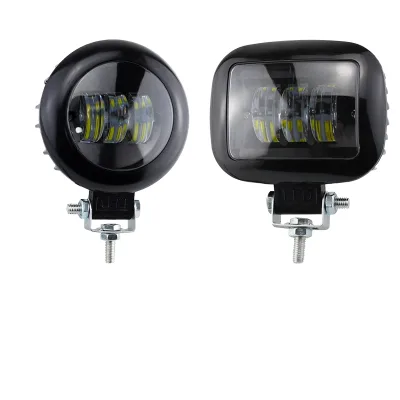
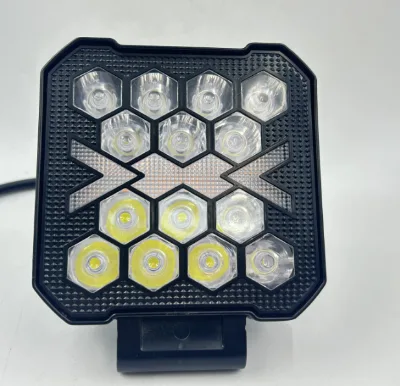
The current market landscape for square amber LED driving lights reveals distinct product categories based on form factor and emission color. Listings show variations such as round and square work lights, with specific models like the HM-29 and GZD-0087 offering different physical dimensions and packaging sizes. Buyers should note that some products are marketed specifically for replacement or repair purposes, indicating a strong aftermarket demand. The presence of models with blue lenses or flowing square bead configurations suggests that aesthetic customization is a key differentiator in this segment, allowing buyers to tailor lighting solutions to specific brand identities or regulatory requirements.
Material composition and build quality are observable through supplier-provided specifications, with aluminum and ABS combinations being common for lamp bodies to balance durability and weight. Lens materials vary, with glass options offering superior scratch resistance compared to standard polycarbonate. The observed warranty periods, typically ranging from one year to twelve months, serve as a proxy for manufacturer confidence in product longevity. Buyers should cross-reference these warranty terms with the stated lifespan of 50,000 hours to assess the true value proposition, ensuring that the warranty covers critical components like drivers and LEDs rather than just cosmetic elements.
Technical Specifications to Verify
Voltage tolerance and power consumption are primary technical parameters that must be validated before placing orders. Buyers should confirm whether the LED work light supports the specific voltage range of their fleet, such as 10-30V or 12V specific inputs, to avoid compatibility issues. Power ratings observed in the market, including 20W and 40W options, dictate the current draw and potential impact on the vehicle’s electrical system. It is essential to verify if the product includes a battery or relies solely on DC power sources, as this affects installation complexity and energy management strategies for mobile applications.
Optical characteristics, including color temperature and light color, define the functional utility of the driving light. Options range from warm white at 3500K to daylight alert at 6000K, with amber being a critical choice for warning applications. The Color Rendering Index (Ra) of 70 observed in some listings indicates moderate color fidelity, which may be sufficient for general illumination but less ideal for detailed inspection tasks. Buyers must also check for features like waterproofing, with IP67 ratings providing robust protection against dust and water ingress, ensuring reliability in harsh off-road or engineering environments where exposure to elements is inevitable.
Compliance and Safety Documentation
While specific certification statuses are not uniformly listed, buyers must request documentation to ensure regulatory compliance in their target markets. Standards such as customized specifications suggest that suppliers may accommodate specific regional requirements, but this requires active verification by the procurement team. It is crucial to confirm that the LED work light meets local road safety regulations, particularly regarding the use of amber lights for warning purposes versus white lights for driving. Buyers should ask for test reports that validate the IP67 waterproof rating and the structural integrity of the aluminum and ABS housing under vibration and impact conditions.
Safety features and electrical protections are often implicit in high-quality designs but must be explicitly confirmed. Buyers should inquire about over-voltage protection, reverse polarity protection, and surge suppression capabilities, especially for units supporting wide voltage ranges like 9-80V. Documentation regarding the LED source’s emitting color consistency and lifespan testing should be requested to ensure that the 50,000-hour lifespan claim is backed by accelerated life testing data. Additionally, verifying that the product does not include batteries simplifies shipping compliance, as battery-free units often face fewer restrictions in international logistics channels.
Cost Drivers and Commercial Terms
Pricing in the Square Amber LED Driving Light market exhibits a broad range, observed between $1.6 and $32.8 USD, reflecting differences in power, materials, and brand positioning. Buyers should analyze cost drivers such as lens material, with glass lenses typically commanding a premium over plastic alternatives due to durability and optical clarity. The inclusion of additional features like dimming support or specialized lighting design services can also influence the final unit price. Understanding these variables helps procurement teams negotiate effectively and align product selection with budget constraints without compromising on essential performance metrics.
Minimum Order Quantities (MOQ) and packaging details are significant commercial factors that impact total landed cost. Observed MOQs range from 1 to 500 pieces, offering flexibility for both small-scale repairs and large fleet deployments. Packaging dimensions, such as 12x20x6 cm or 25x20x15 cm, directly affect shipping volume and logistics expenses. Buyers should calculate the cost per unit including freight, considering that heavier items like those with a gross weight of 0.466 kg may incur higher shipping fees. Negotiating tiered pricing based on volume can significantly reduce per-unit costs, especially for high-volume orders of standard models like the LKT-SD-102.
Supplier Qualification and Quality Control
Supplier origin and manufacturing capability are key indicators of product reliability, with Guangdong and Zhejiang provinces in China being prominent sources. Buyers should verify the supplier’s production capacity and quality control processes to ensure consistency across batches. The presence of brand names like Leihao and Likate suggests established manufacturers, but due diligence is required to confirm their ability to meet customized standards and warranty obligations. Procurement teams should request samples to physically inspect the build quality, checking for secure lens attachment, robust housing seams, and accurate labeling of voltage and power specifications.
Quality control checks should extend to functional testing of the LED work lights upon receipt. Buyers must verify that the light color matches the ordered specification, whether cool white, amber, or yellow warning light, and that the luminous flux meets the stated 1378 Lm or other claimed values. Testing for waterproofing integrity and electrical stability under varying voltage conditions is essential to prevent field failures. Establishing a clear defect rate threshold and return policy with the supplier ensures that any non-conforming units are addressed promptly, maintaining the operational readiness of the equipped vehicles.
Long-Term Procurement Checks
Sustainability and lifecycle management are increasingly important considerations for long-term procurement strategies. Buyers should evaluate the availability of replacement parts, such as lenses or drivers, to extend the usable life of the LED work lights beyond the initial warranty period. The 50,000-hour lifespan claim should be monitored through field performance data to validate manufacturer assertions and inform future purchasing decisions. Suppliers offering lighting and circuitry design services can provide value by helping buyers optimize energy consumption and improve the overall efficiency of their vehicle lighting systems over time.
Market trends and technological advancements in LED driving lights require ongoing monitoring to ensure continued competitiveness. Buyers should stay informed about emerging features, such as improved color rendering indices or enhanced waterproofing standards, that may become industry norms. Regularly reviewing supplier performance against key metrics like warranty claims and delivery times helps maintain a high-quality supply base. By maintaining a flexible sourcing strategy that can adapt to changes in voltage requirements or aesthetic preferences, procurement teams can ensure a steady supply of square amber LED driving lights that meet evolving operational needs.
FAQs
What is the power consumption of square amber LED work lights?
Square amber LED work lights typically consume between 16W and 40W of power. This range allows for efficient illumination while managing heat dissipation. The specific wattage depends on the model and LED bead configuration, ensuring adequate brightness for off-road or engineering auxiliary applications without excessive energy drain.
Can these lights operate on 12V vehicle electrical systems?
Yes, many square amber LED work lights are designed to operate on 12V systems. Some models support a wider input voltage range of 10-32V DC or even 9-80V DC. This versatility ensures compatibility with various vehicle types, including trucks, SUVs, and heavy machinery, providing reliable performance across different electrical standards.
What is the expected lifespan of these LED work lights?
The expected lifespan of these LED work lights is approximately 50,000 hours. This long operational life reduces maintenance frequency and replacement costs. The durability is supported by robust materials like aluminum and ABS bodies, along with glass lenses, ensuring consistent performance in harsh off-road and engineering environments over extended periods.
Are these lights waterproof for outdoor use?
Yes, these lights are waterproof with an IP67 rating. This certification ensures protection against dust ingress and temporary water immersion. The sealed design prevents moisture damage, making them suitable for harsh weather conditions. This feature is critical for off-road vehicles and engineering equipment that frequently operate in wet or dusty environments.
What materials are used in the construction of these lights?
These lights are constructed using aluminum and ABS for the lamp body, providing strength and heat dissipation. The lens material is typically glass, offering clarity and impact resistance. This combination of materials ensures durability against vibrations and impacts, while the black finish adds to the aesthetic appeal and functional protection of the unit.
Is customization available for these square LED work lights?
Yes, customization is available for these square LED work lights. Manufacturers offer customized standards to meet specific client requirements. This may include adjustments to color temperature, such as 3000K amber or 6000K white, and tailored packaging solutions. Customization allows buyers to align the product with their brand identity and specific application needs.