Source One Button Start Diesel Generator for construction, mining, and events
Explore 30 available options for the One Button Start Diesel Generator suitable for construction sites, mining operations, and emergency events. Buyers can compare power ratings, cooling methods, and control systems to find the right unit.
Key considerations
Products List


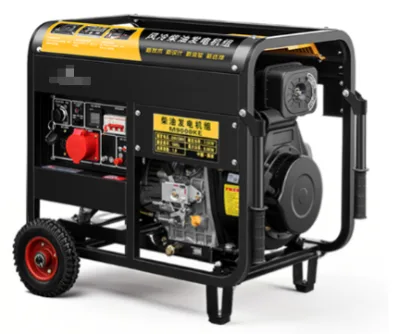


High Capacity Self-Starting Diesel Generator in Customer Choice Color
$3185.00 - $10285.00
MOQ: 1 Pieces


Comprehensive Sourcing Guide
Strategic Sourcing Guide for One-Button Start Diesel Generators
The demand for reliable backup power solutions has elevated the "One Button Start Diesel Generator" from a niche convenience to a critical requirement for modern infrastructure. In B2B procurement, this terminology typically refers to units equipped with micro-computer control systems that automate the synchronization, starting, and load-sharing processes. The core value proposition lies in the reduction of human error during emergency scenarios, ensuring immediate power restoration with minimal operator intervention. This guide provides a disciplined framework for evaluating these units, focusing on technical specifications, compliance verification, and long-term operational viability based on observed market data and standard industry practices.
Technical Architecture and Operational Modes
Understanding the internal architecture of a one-button start generator is the first step in defining procurement requirements. The "one button" functionality is not merely a switch but a result of integrated control systems, often described as micro-computer control automatic diesel generators. These systems rely on a specific excitation mode to generate electricity. In many high-reliability industrial units, the excitation mode is identified as AC Rotating Exciter, which provides robust voltage regulation under varying load conditions. The cooling method is equally critical; while air cooling is common for smaller units, larger industrial sets often utilize water cooling to maintain efficiency during extended prime power operations.
The speed of the generator set dictates its frequency output and application suitability. Market observations indicate a bifurcation in speed ratings. Units designed for 50Hz markets typically operate at 1500rpm, while those for 60Hz regions run at 1800rpm. Conversely, smaller or specific high-speed applications may utilize speeds of 3000rpm or 3600rpm. The rated power varies significantly across the product spectrum. Procurement teams must distinguish between prime power ratings, such as 40kw or 240kw/300kVA, and standby power ratings, which are often higher, for example, 44kw or 280kw/350kVA. The distinction is vital because prime power is intended for continuous operation, whereas standby power is for emergency use only.
The structural type of the generator also influences installation and noise management. Open type diesel generators are common for industrial settings where noise is less of a concern, while silent diesel generators are preferred for urban or residential-adjacent environments. The installation method further categorizes the unit; some are designed as portable units requiring minimal setup, while others are fixed installations requiring permanent foundation and integration. Fuel models are another technical variable, with specifications often noting diesel grades such as 0# for summer, -10# for winter, and -35# for cold regions.
Control Systems and Automation Features
The defining feature of a one-button start system is its control panel. Advanced units are equipped with smart LCD control panels, such as the Ry6120nc, which provide real-time monitoring of engine parameters, voltage, frequency, and oil pressure. These systems facilitate the "one button" experience by automating the starting sequence, which typically relies on a 24V electric start method. The control system must be capable of managing the transition from standby to load automatically.
Remote monitoring capabilities represent a significant advancement in this category. Modern procurement specifications often require units with remote monitoring features that include historical operation logs. This allows facility managers to track usage patterns, predict maintenance needs, and verify that the generator has started successfully during a power outage without being physically present. The ability to customize parameters is also a key consideration; while standard configurations exist, many suppliers offer the ability to customize engine brands and other parameters to meet specific site requirements.
Compliance, Certification, and Standards Verification
When sourcing industrial equipment, verifying compliance with international and local standards is non-negotiable. While specific certification marks like CE are frequently observed in the market, buyers must treat these as observations rather than guaranteed attributes for every listed product. The verification process should focus on the engine standard and the overall generator set standard. For instance, some units are built around SDEC Diesel Engine standards, while others may adhere to compact portable diesel genset specifications.
Buyers must also verify physical standards, such as dimensions. Observed data includes specific footprint measurements like 24509501350mm or 415014302050mm. These dimensions are critical for planning installation sites and ensuring the unit fits within designated enclosures or generator rooms. Furthermore, the net weight of the unit, ranging from 2000kg to 3000kg in observed models, impacts logistics planning, including the need for specialized lifting equipment and reinforced flooring.
Cost Drivers and Economic Considerations
The price range for one-button start diesel generators is vast, reflecting the diversity in power output, automation level, and build quality. Observed market data indicates a range from approximately 94 USD to 559,000 USD. This disparity is driven primarily by the rated power and the complexity of the control system. A 16kw micro-computer controlled unit will naturally be priced differently from a 240kw industrial set with remote monitoring and water cooling.
Minimum Order Quantity (MOQ) is another economic factor. The market shows an MOQ range of 1 to 50 units. For small businesses or single-site deployments, an MOQ of 1 is essential, whereas large infrastructure projects may benefit from bulk purchasing at an MOQ of 50. Packaging standards also influence cost; standard export wooden packages are common, but specialized packaging for high-value or delicate components may incur additional fees. Buyers should evaluate the total cost of ownership, including the cost of fuel, maintenance, and the potential for customization, rather than focusing solely on the initial purchase price.
Typical Applications and Usage Scenarios
The versatility of one-button start diesel generators allows them to serve a wide array of applications. They are classified under common units, standby units, and emergency crew applications. The land use type of the unit further refines these applications. Low noise automation types are ideal for hospitals, data centers, and residential complexes where noise pollution is a concern. Ordinary land use types are suitable for industrial sites, construction zones, and temporary power needs where noise is less critical.
The specific usage profile dictates the required power rating. For common units and standby applications, a 120kw generator set is a frequent specification, providing sufficient power for medium-sized facilities. For emergency crew operations or critical infrastructure, higher capacities like 240kw or 300kVA are necessary. The ability to operate in various environmental conditions, supported by different fuel models for different seasons, ensures reliability across diverse geographical locations. The unit's structure, whether open or silent, must align with the specific site constraints and regulatory requirements of the location.
Supplier Evaluation and Quality Assurance
Evaluating a supplier for diesel generator sets requires a rigorous approach to quality assurance. Buyers should verify the origin of the products, with China being a primary manufacturing hub for these units. However, origin alone does not guarantee quality. The engine brand and the control system manufacturer are critical indicators of reliability. While some suppliers state that all parameters can be customized, buyers must ensure that the customization process does not compromise the integrity of the core components.
Quality control should extend to the physical attributes of the unit. The net weight and dimensions must match the specifications provided in the datasheet to ensure compatibility with the installation site. The packing method, typically wood or standard export wooden packages, must be sufficient to protect the unit during transit. Buyers should also inquire about the lead time and the supplier's ability to meet delivery schedules, as delays in receiving backup power equipment can have severe operational consequences.
Long-Term Procurement and Maintenance Strategy
Procuring a one-button start diesel generator is a long-term investment that requires a strategic approach to maintenance and lifecycle management. The "one button" feature simplifies operation, but it does not eliminate the need for regular maintenance. The control system, including the smart LCD panel and remote monitoring capabilities, should be regularly updated and tested to ensure it functions correctly during an emergency.
Buyers should consider the availability of spare parts and the technical support offered by the supplier. The engine brand, whether it is an SDEC engine or another standard, should have a robust supply chain for parts. The fuel model compatibility is also a long-term consideration; ensuring the generator can run on locally available diesel grades, such as 0#, -10#, or -35#, reduces operational friction. Finally, the customization options should be leveraged to future-proof the investment, allowing the unit to adapt to changing power requirements or regulatory standards over its lifespan.
Summary of Key Specifications and Comparisons
To assist in the decision-making process, the following table summarizes key observed specifications for different generator classes. This comparison highlights the variance in power, speed, and structure that buyers must navigate.
| Feature Category | Small/Micro Unit | Medium Industrial Unit | Large Emergency Unit |
|---|---|---|---|
| Rated Power | 16kw | 120kw | 240kw / 300kVA |
| Speed (RPM) | 3000rpm / 3600rpm | 1500rpm / 1800rpm | 1500rpm |
| Structure Type | Silent / Portable | Open Type | Silent / Fixed |
| Control System | Micro-Computer Control | Smart LCD Panel | Remote Monitoring |
| Installation | Portable | Fixed | Fixed / Emergency Crew |
| Net Weight | Variable | ~2000kg | ~3000kg |
| Cooling Method | Air / Water | Water Cooling | Water Cooling |
| Excitation Mode | Standard | AC Rotating Exciter | AC Rotating Exciter |
This table illustrates that while the "one button start" feature is common, the underlying technical specifications vary significantly. Procurement teams must align these specifications with their specific operational needs, ensuring that the selected unit offers the right balance of power, reliability, and automation. By adhering to these disciplined sourcing principles, buyers can secure diesel generator sets that provide peace of mind and operational continuity in the face of power grid instability.
FAQs
How does the one button start feature work?
The system uses micro-computer control automatic diesel generators to automate starting and synchronization. Units often feature smart LCD control panels like the Ry6120nc for real-time monitoring and 24V electric start methods.
What power ratings are available for these units?
Available ratings include 16kw, 40kw prime power, 120kw, and 240kw sets. Standby power is typically higher, such as 44kw or 280kw, depending on whether the unit is designed for common or emergency crew usage.
Which installation methods are supported for these generators?
Generators support both portable and fixed installation methods. Portable units are often open type, while fixed silent diesel generators are suitable for low noise automation types or ordinary land use applications.
Can the engine parameters be customized for specific needs?
Yes, all parameters can be customized as per your needs. Buyers can select from standards like SDEC Diesel Engine or compact portable diesel genset specifications to match site requirements.
What cooling methods are used in these generator sets?
Water cooling is common for larger industrial units to maintain efficiency during extended operations. Smaller units may utilize air cooling, while high-reliability sets often employ AC rotating exciter modes.
How does remote monitoring function on these units?
Remote monitoring is available with historical operation logs to track usage patterns. This allows facility managers to verify successful starts and predict maintenance needs without being physically present at the site.