Source Stainless Steel Busbar Bending Machine for Electrical, Hardware, and Machinery
Compare 30 stainless steel busbar bending machines from verified Chinese manufacturers. These automatic and semi-automatic units support stainless steel, aluminum, and copper for electrical industry applications with customizable options.
Key considerations
Products List


CNC Hydraulic Busbar Bending Machine Copper Busbar Machine Busbar Bender
$33000.00 - $36000.00
MOQ: 1 Sets

High Stability Accurate Bus Bar Bending Machine for Busbar Trunking System
$9000.00 - $12000.00
MOQ: 1 Sets


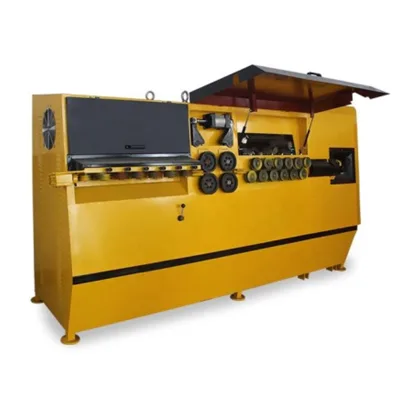
Cnc Steel Bar Bending Machine Busbar Bending Machine Profile Bending Machine
$9000.00 - $9500.00
MOQ: 1 sets


Comprehensive Sourcing Guide
Strategic Sourcing Guide for Stainless Steel Busbar Bending Machines
Understanding the Technical Landscape of Busbar Fabrication
When sourcing a Stainless Steel Busbar Bending Machine, buyers must first distinguish between general press brake technology and specialized busbar fabrication equipment. The core keyword implies a need for precision in handling conductive metals like stainless steel, copper, and aluminum alloys, which require specific tooling and force profiles to avoid work hardening or surface damage. Based on observed market data, the equipment landscape includes both CNC Fold-bend Machines and Hydraulic Bending Machines, each serving distinct operational needs.
The technical specifications for these machines vary significantly depending on the intended application. For instance, models such as the WC67Y-125/4000 are identified as press brakes with a rated pressure of 1250KN and a workpiece table length of 4000mm. This capacity suggests suitability for heavy-duty industrial applications where large stainless steel sheets or bars require precise bending. Conversely, specialized units like the KDEQ series, including models KDEQ-02-066 and KDEQ-E-MIC-1074, are explicitly categorized as CNC Busbar Bending Machines. These units often feature "Innovative Design" and "Smart" capabilities, including extensive tool libraries, which are critical for the complex geometries often required in electrical industry busbar fabrication.
A critical technical differentiator is the control system. High-end models utilize the E200 Digital Readout from Estun, providing the operator with precise numerical control over bend angles and dimensions. This level of automation is essential for maintaining consistency in mass production environments. However, buyers should also note the existence of Semi-Automatic variants in the market. While these may offer lower initial costs, they require more manual intervention, potentially affecting throughput and repeatability. The choice between Automatic and Semi-Automatic systems should be driven by the volume of production and the required tolerance levels for the stainless steel components being fabricated.
Compliance, Certification, and Safety Standards
In the B2B procurement of industrial machinery, compliance is not merely a formality but a prerequisite for operational safety and market access. The supplied product data indicates that many machines in this category carry CE certification and adhere to ISO 9001 standards. These certifications are vital for verifying that the manufacturer has implemented a quality management system and that the equipment meets European safety directives.
Buyers must verify the specific scope of these certifications. For example, while "CE Standard" is listed as a product standard for certain units, it is crucial to confirm that the certification covers the specific electrical and mechanical safety requirements of the machine's intended environment. The presence of "IEC 61439-1" in background knowledge suggests a relevance to low-voltage switchgear and controlgear assemblies, which are often the end-products of busbar fabrication. However, since this standard is listed as low-confidence background data, buyers should not assume every listed machine is fully compliant with IEC 61439-1 without explicit verification from the supplier.
Furthermore, the "Condition: New" status listed alongside certifications is a key indicator of the machine's state. Buyers should ensure that the certification documents provided are current and valid for the specific serial number of the machine being purchased. In some cases, the "Machinery Test Report" is provided, which serves as an independent verification of the machine's performance and safety features before shipment. This document is particularly important for hydraulic systems, where pressure ratings (such as the observed 1250KN) must be validated to prevent catastrophic failure during operation.
Cost Drivers and Pricing Variables
The pricing for stainless steel busbar bending machines is highly variable, with observed ranges spanning from $105 to $80,000 USD. This wide disparity is not indicative of quality differences alone but reflects the vast spectrum of machine capabilities, from basic manual or semi-automatic units to fully automated CNC systems with advanced digital readouts.
Several factors drive these costs. First, the automation level is a primary cost driver. Machines equipped with the E200 Digital Readout and fully automatic operation commands a premium over semi-automatic counterparts. Second, the rated pressure and physical dimensions of the machine significantly impact the price. A unit with a 1250KN rated pressure and a 4000mm workpiece table is inherently more expensive to manufacture than a smaller, lower-tonnage unit. Third, the complexity of the control system and the inclusion of specialized features, such as an "Extensive Tool Library" or "Smart" connectivity, add to the overall cost.
Buyers should also consider the packaging and shipping costs, which are often embedded in the final price or quoted separately. The data shows variations in packing methods, ranging from "Steel Pallet" to "Plywood Case" and "Wooden Box." While these are standard practices, the choice of packaging can influence the final landed cost, especially for international shipments. Additionally, the "Customization: Available" or "Accept" attributes indicate that bespoke configurations will incur additional costs. Buyers must clarify whether the quoted price includes the cost of custom tooling or specific voltage adaptations, as these can substantially alter the total investment.
Typical Applications and Material Compatibility
The primary application field for these machines is the Electrical Industry, where busbars are essential for power distribution in switchgear, transformers, and substations. The ability to bend stainless steel, carbon steel, alloy, aluminum, and copper is a fundamental requirement. The observed product attributes confirm that these machines are designed to handle a diverse range of materials, which is crucial for manufacturers who may need to switch between different conductive metals based on project requirements.
Stainless steel, in particular, presents unique challenges due to its work-hardening properties and higher tensile strength compared to copper or aluminum. A machine with a high-rated pressure, such as the 1250KN observed in the data, is better suited for stainless steel applications to ensure clean bends without cracking or excessive springback. The "CNC Fold-bend Machine" type is specifically noted for its versatility in handling these materials, making it a preferred choice for high-precision electrical component manufacturing.
Beyond the electrical industry, the "Machinery & Hardware" application field suggests that these machines may also be used in general fabrication shops that produce metal enclosures, brackets, and structural components. The "Innovative Design" and "Smart" features of modern busbar bending machines facilitate rapid prototyping and small-batch production, which is increasingly common in the hardware sector. Buyers should evaluate whether the machine's tooling library includes specific profiles for the types of busbars they intend to produce, as standard tooling may not be sufficient for specialized stainless steel geometries.
Supplier Evaluation and Origin Verification
When evaluating suppliers for stainless steel busbar bending machines, the origin of the machinery is a significant factor. The data indicates that the majority of these products originate from China, with specific mentions of Tianjin and Henan as places of origin. While China is a major global hub for industrial machinery, buyers must conduct due diligence to ensure that the supplier is a reputable manufacturer rather than a trading company with limited technical support capabilities.
Key evaluation criteria should include the supplier's ability to provide a "Machinery Test Report" and their adherence to "ISO 9001" standards. The presence of a "2 Years" warranty on some models, compared to a "1-year" warranty on others, can also serve as an indicator of the manufacturer's confidence in their product quality. Buyers should request detailed information regarding the core components, such as the motor and profile bending machine parts, to ensure that high-quality, reliable components are used.
The "Brand Name" is another factor to consider. While specific brands like "JAWO" are mentioned in the data, buyers should avoid relying solely on brand recognition. Instead, they should verify the brand's track record in the global market, particularly in the "Global" main market regions. It is also essential to check the supplier's responsiveness to customization requests, as the "Customization: Available" attribute suggests that many buyers require tailored solutions. A supplier that is flexible and transparent about their customization process is more likely to deliver a machine that meets specific operational needs.
Quality Control and Long-Term Procurement Considerations
Ensuring long-term reliability requires a robust quality control strategy that extends beyond the initial purchase. Buyers should verify that the machine undergoes rigorous testing, including hydraulic pressure tests and electrical safety checks, before shipment. The "Machinery Test Report" mentioned in the data is a critical document that should be reviewed to confirm that the machine meets the specified performance criteria.
Maintenance and support are also vital considerations. The "Warranty" period, whether 1 or 2 years, provides a baseline for support, but buyers should inquire about the availability of spare parts and technical service after the warranty expires. The "Motor Power" of 14kW, as observed in some models, indicates the energy consumption and potential maintenance needs of the machine. Buyers should ensure that the supplier offers a comprehensive maintenance plan and training for their operators to maximize the machine's lifespan.
Finally, the "Waterproof Rating: IPX-0" observed in some listings suggests that certain machines may not be suitable for harsh or wet environments without additional protection. Buyers operating in such conditions must verify the machine's environmental ratings and consider adding protective enclosures or upgrading the machine's specifications. By focusing on these quality control and long-term factors, buyers can mitigate risks and ensure a successful procurement of a Stainless Steel Busbar Bending Machine that delivers consistent performance over its operational life.
Summary of Key Procurement Parameters
To facilitate a streamlined decision-making process, the following table summarizes the critical parameters observed in the market for stainless steel busbar bending machines. This comparison highlights the variability in specifications and helps buyers identify the features most relevant to their specific needs.
| Parameter | Observed Range / Options | Key Considerations for Buyers |
|---|---|---|
| Product Type | Press Brake, Hydraulic Bending Machine, CNC Fold-bend Machine | Select based on material thickness and bend complexity. |
| Automation Level | Automatic, Semi-Automatic | Automatic offers higher precision and throughput; Semi-Automatic is cost-effective for low volume. |
| Control System | E200 Digital Readout (Estun), Smart/Innovative Design | Essential for precision; verify software compatibility and tool library size. |
| Rated Pressure | 1250KN (Observed) | Must exceed the force required for the thickest stainless steel bar. |
| Workpiece Table | 4000mm (Observed) | Determines the maximum length of the busbar that can be processed. |
| Certifications | CE, ISO 9001 | Verify validity and scope; ensure compliance with local safety regulations. |
| Warranty | 1 Year, 2 Years | Longer warranty often indicates higher confidence in build quality. |
| Origin | China (Tianjin, Henan) | Verify supplier reputation and after-sales support capabilities. |
| MOQ | 1 Set | Generally low entry barrier, but confirm pricing tiers for bulk orders. |
| Material Suitability | Stainless Steel, Copper, Aluminum, Alloy, Carbon Steel | Ensure tooling is compatible with the specific alloy being processed. |
By carefully analyzing these parameters and aligning them with specific operational requirements, buyers can make informed decisions that balance cost, performance, and long-term reliability in the procurement of stainless steel busbar bending machines.
FAQs
What automation levels are available for stainless steel busbar bending machines?
Both automatic and semi-automatic options are available in the market. Automatic models feature the E200 Digital Readout from Estun for precision, while semi-automatic variants offer a lower-cost alternative requiring more manual intervention.
Which certifications should I verify for a new Stainless Steel Busbar Bending Machine?
You should verify CE certification and ISO 9001 standards for quality management. These documents confirm the machine meets European safety directives and that the manufacturer follows established quality protocols before shipment.
Can these machines bend stainless steel and other conductive metals?
Yes, these machines are suitable for stainless steel, carbon steel, alloy, aluminum, and copper. High-rated pressure models, such as those with 1250KN capacity, are specifically designed to handle the work-hardening properties of stainless steel.
What is the typical warranty period for these industrial bending machines?
Warranty periods typically range from one year to two years depending on the model. Some specific units offer a two-year warranty, indicating the manufacturer's confidence in their hydraulic and mechanical components.
How do I find machines with specific customization options for my needs?
Customization is available and accepted for many models in this category. Buyers can request tailored configurations for voltage, tooling, or dimensions, though these bespoke requests may incur additional costs beyond the base price.
What packaging methods are used for shipping these heavy industrial machines?
Machines are shipped using steel pallets, plywood cases, or wooden boxes. The specific packaging method varies by model and supplier, ensuring the equipment is protected during international transport from origins like Tianjin or Henan.