Source Stainless Steel Bread Proofer for Bread, Pizza, Cake
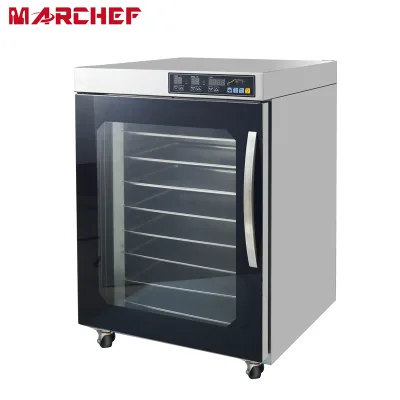
Find 30 Stainless Steel Bread Proofer units with varying capacities and power ratings. Buyers can compare specifications like tray sizes, dimensions, and temperature control options to select the right equipment for commercial baking needs.
Key considerations
Products List

Stainless Steel Commercial Electric Bread/Dough Bakery Proofer Bread Proofer for Bakery
$1528.49 - $2751.28
MOQ: 2 Pieces


Premium Artisan Bread Proofer with 10 Adjustable Trays for Perfect Dough Rising
$370.00 - $425.00
MOQ: 1 Pieces


High Quality for Bakery Equipment Stainless Steel with Chilling Proofer
$2000.00 - $2500.00
MOQ: 1 unit


Stainless Steel 16 Trays Bakery Dough Proofer Bread Baking Proofer Retarder Proofer
$2400.00 - $9800.00
MOQ: 1 Pieces


Bakery Equipment Stainless Steel 16 Trays Bread Dough Fermenting Proofer
$110.00 - $150.00
MOQ: 1 Pieces


Stainless Steel Intermediate Proofer for Optimal Dough Fermentation Process
$40000.00 - $60000.00
MOQ: 1 Pieces


Comprehensive Sourcing Guide
Strategic Sourcing Guide for Stainless Steel Bread Proofer Equipment
Procuring industrial baking equipment requires a meticulous approach to ensure operational efficiency and product consistency. The Stainless Steel Bread Proofer is a critical component in commercial bakeries, serving as the controlled environment where dough undergoes fermentation. Buyers must navigate a complex landscape of technical specifications, material grades, and supplier capabilities to secure equipment that meets rigorous production demands. This guide synthesizes available market data to provide a structured framework for evaluating potential procurement options, focusing on the specific attributes observed in current listings while adhering to strict evidence-based sourcing principles.
Technical Specifications and Dimensional Analysis
The physical and operational characteristics of a bread proofer define its suitability for a specific production line. When analyzing the current market offerings, distinct variations in dimensions and capacity emerge. Buyers should expect to encounter models with varying external dimensions, such as units measuring approximately 82012402060mm or 102x77x191CM. These dimensional differences directly correlate with the internal capacity and the number of trays the unit can accommodate. For instance, specific models are listed with a capacity of 14 trays, while others support 18 trays or are designed with a specific tray size of 400X600mm or 460X720mm.
Power consumption is another critical technical parameter that influences energy costs and electrical infrastructure requirements. Observed power ratings in the market range from 1.8 Kw to 2.8 Kw, with some units operating at 2.5kw. All observed units in the current dataset operate on a standard 220V electric power source, which is a crucial detail for facilities planning their electrical hookups. The weight of the equipment also varies significantly, with net weights ranging from 42kg to 82kg, and gross weights extending up to 145kg or 150kg depending on the packing method.
The following table summarizes the observed technical variances to assist in initial screening:
| Attribute | Observed Range/Values |
|---|---|
| External Dimensions | 5809802050mm to 82012402060mm |
| Tray Capacity | 10 to 18 Trays |
| Tray Size | 400600mm or 460720mm |
| Power Rating | 1.8 Kw to 2.8 Kw |
| Voltage | 220V |
| Net Weight | 42kg to 82kg |
| Gross Weight | 75kgs to 145kg |
| Packing Size | 6008952130mm to 18 Trays standard |
Material Integrity and Construction Standards
The durability and hygiene of the proofer are paramount, making the material composition a primary evaluation criterion. The core keyword "stainless steel" is consistently highlighted, with specific grades identified in the product data. Buyers should verify if the equipment utilizes #201 or #304 stainless steel. The distinction between these grades is significant; #304 stainless steel offers superior corrosion resistance and is generally preferred for food processing environments where exposure to moisture and cleaning agents is frequent.
The construction must also account for the functional components. Many units are equipped with a timing device to automate the fermentation cycle, ensuring consistency across batches. Temperature control systems are often integrated, with specific controllers like EGO noted in the specifications. The structural integrity is further supported by the choice of feet; units may come with casters for mobility or fixed feet for stability. The choice between these options depends on the layout of the bakery and the frequency of equipment relocation required for cleaning or reconfiguration.
Compliance, Certification, and Safety Standards
In the B2B procurement of food processing machinery, compliance with safety and quality standards is non-negotiable. The market data indicates that certain models carry CE certification, a mandatory requirement for products sold within the European Economic Area and a strong indicator of adherence to general safety, health, and environmental protection requirements. Buyers must verify the presence of such certifications for their specific target markets.
Beyond the CE mark, the physical standards of the equipment, often denoted by model numbers like 0300300217 or LHX-232T, serve as identifiers for specific design iterations. However, buyers should not assume that a model number guarantees compliance without independent verification. The standard dimensions provided, such as 595x980x1990mm or 5007952030mm, should be cross-referenced with the buyer's facility constraints. It is essential to confirm that the listed standards align with local building codes and fire safety regulations regarding electrical appliances in commercial kitchens.
Cost Drivers and Pricing Variables
The pricing landscape for stainless steel bread proofers exhibits a wide variance, with observed listed prices ranging from $110 to $600,000. This broad spectrum suggests that the final cost is heavily influenced by the scale of the unit, the complexity of the control systems, and the material grade. A unit priced at the lower end of the spectrum may be a compact, single-tray model intended for small-scale operations, whereas the higher price points likely correspond to industrial-grade units with advanced automation, larger capacities, and premium stainless steel construction.
Several factors drive these costs. The inclusion of a steam function, as noted in some specifications, adds complexity to the manufacturing and increases the price. Similarly, the choice of packing—ranging from neutral packing to wooden cases or cartons—affects the logistics cost and the final price. The customization level is another variable; while some units are listed as non-customized, others offer customized options, which invariably incur additional costs. Buyers must analyze the total cost of ownership, including energy consumption (derived from the 1.8-2.8 Kw ratings) and maintenance requirements, rather than focusing solely on the initial purchase price.
Supplier Evaluation and Origin Verification
Geographic origin plays a significant role in the procurement strategy. The majority of the observed products originate from Guangzhou, China, or generally from China and China Guangdong. This concentration indicates a robust manufacturing hub for bakery equipment. However, the presence of multiple suppliers in this region necessitates rigorous vetting. Buyers should evaluate suppliers based on their ability to provide after-sales support, particularly for overseas markets. Data indicates that some suppliers offer "Overseas Third-Party Support Available," a critical feature for international buyers who cannot rely on direct manufacturer intervention.
When evaluating a supplier, the consistency of their product data is a key indicator of reliability. Suppliers providing clear specifications for model numbers, dimensions, and material grades are generally more trustworthy. Buyers should also inquire about the customization process, as the availability of customization suggests a flexible manufacturing capability. However, the distinction between "Customized" and "Non-Customized" listings implies that not all suppliers offer the same level of flexibility. It is advisable to request detailed technical drawings and material certificates before finalizing a contract to ensure the supplier can meet the specific operational requirements of the buyer.
Quality Control and Operational Applications
The intended application of the bread proofer dictates the necessary quality control measures. The observed usage categories include bread, pizza, cake, and biscuit production. This versatility requires the proofer to maintain precise temperature and humidity levels across different dough types. For bread production, consistent proofing is essential for the final volume and texture. The presence of a timing device is a fundamental quality feature that ensures the fermentation process is not interrupted or extended beyond the optimal window.
Quality control during the procurement phase should focus on the integrity of the stainless steel construction. Buyers should verify that the #201 or #304 steel is free from defects and that the welding is seamless to prevent bacterial growth. The packing method, whether neutral or wooden case, should be sufficient to protect the equipment during transit, especially given the weight of these units which can exceed 150kg. Additionally, the inclusion of casters or fixed feet should be inspected to ensure they are robust enough to support the full load of trays and dough without compromising stability.
Long-Term Procurement and Maintenance Considerations
Sourcing a bread proofer is a long-term investment that requires consideration of maintenance and lifecycle management. The electrical components, such as the EGO temperature controller and the timing device, are prone to wear and should be easily accessible for servicing. Buyers should confirm the availability of spare parts and the technical expertise required for repairs. The "After-Self Service" option mentioned in the data suggests that some suppliers facilitate third-party maintenance, which can be a cost-effective solution for international buyers.
Furthermore, the energy efficiency of the unit, determined by its power rating, will impact operational costs over time. A unit with a 2.8 Kw rating will consume more electricity than a 1.8 Kw unit, but it may offer faster heating or larger capacity. Buyers must balance these factors against their production volume. The material grade also affects longevity; #304 stainless steel, while more expensive initially, typically offers a longer lifespan in humid bakery environments compared to #201. Finally, the lead time and MOQ (Minimum Order Quantity), which range from 1 to 5 units, should be factored into the production planning to ensure the equipment arrives in time for the intended launch or expansion of the bakery line.
FAQs
What voltage and power source do these units use?
All observed units operate on a 220V electric power source. The power ratings vary between 1.8 Kw and 2.8 Kw depending on the specific model and capacity requirements.
Which stainless steel grades are used in construction?
The equipment is constructed using either #201 or #304 stainless steel. Buyers should verify the specific grade as #304 offers superior corrosion resistance for food processing environments.
How many trays can the different models accommodate?
Tray capacity ranges from 10 to 18 trays across the available models. Specific configurations support tray sizes of 400x600mm or 460x720mm to suit various production needs.
Can I find units with CE certification for export?
Yes, certain models carry CE certification which is mandatory for the European Economic Area. Buyers must verify the presence of this certification for their specific target markets before purchasing.
What is the origin location for these manufacturers?
The majority of observed products originate from Guangzhou, China, or generally from China Guangdong. This region serves as a robust manufacturing hub for this type of bakery equipment.
Do these machines include timing devices for automation?
Yes, the units are equipped with timing devices to automate the fermentation cycle. This feature ensures consistency across batches by preventing the process from being interrupted or extended beyond the optimal window.
What options exist for after-sales service support?
Some suppliers offer Overseas Third-Party Support Available for international buyers. This arrangement facilitates maintenance and repairs without requiring direct intervention from the manufacturer in the buyer's location.