Source Stainless Steel Cylindrical Positioning Pin for Machinery
Compare 30 Stainless Steel Cylindrical Positioning Pin options from verified Chinese suppliers. Buyers can evaluate specifications like thread size, diameter, and finish to find the right components for industrial assembly and precision applications; compare the available evidence and request quotations based on your requirements.
Key considerations
Products List
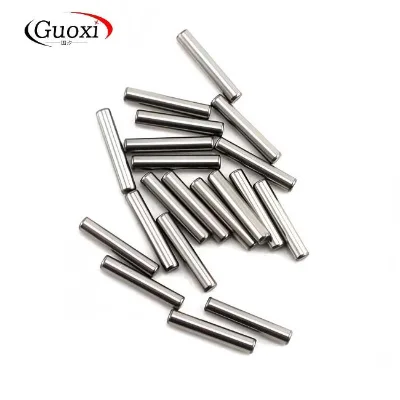


Precision Machined Cylindrical Pin Stainless Steel Positioning Dowel Pin
$0.33 - $0.53
MOQ: 100 Pieces




Comprehensive Sourcing Guide
Stainless Steel Cylindrical Positioning Pin Sourcing Guide
Buyers seeking stainless steel cylindrical positioning pins must first distinguish between standard dowel pins and specialized fasteners that may appear under similar search terms. The available market data indicates a primary focus on cylindrical drive systems made from stainless steel, with specific listings also highlighting brass variants and flat gasket types. This distinction is critical because a pin designed for high-precision alignment requires different mechanical properties than a spacer or a general-purpose fastener. Procurement teams should verify that the material specification explicitly matches the required corrosion resistance and hardness for the intended application, rather than assuming all listed "pins" are interchangeable.
The observed product listings reveal a wide variance in customization capabilities, ranging from standard single-item sales to fully bespoke solutions with custom dimensions. While some entries specify fixed thread sizes like M2 through M8, others offer fully customized lengths and diameters, including specific rivet and bolt measurements. Buyers must carefully review the "Selling Units" and "Customization" attributes to ensure the supplier can meet volume requirements without forcing unnecessary standardization. Understanding whether the product is a standard dowel pin or a custom-engineered component will dictate the subsequent verification steps regarding tooling costs and lead times.
Product Scope and Observed Listing Signals
The current market signals suggest a diverse inventory where cylindrical pins coexist with washers, gaskets, and rivets, often sharing similar packaging and origin data. Listings frequently mention "Dowel pins" under washer types or "Spacer Fabric" as key words, indicating that suppliers may bundle related components or use broad categorization to capture search traffic. Buyers must scrutinize the specific product model numbers, such as HY-884 or JC_PIN series, to confirm the exact item type. Relying solely on generic keywords like "Wahser" or "Window Spacer" can lead to the procurement of incorrect components that fail to provide the necessary mechanical positioning.
Origin data points to manufacturing hubs in China, specifically Ningbo and Foshan, which are known for producing a wide array of metal fasteners and hardware. The observed price range of 0.01 to 10.63 USD reflects the disparity between low-cost standard items and high-value custom-engineered parts. This wide spread necessitates a clear definition of the required tolerance and finish before engaging with suppliers. Buyers should expect that lower-priced items may be standard stock with limited customization, while higher-priced units likely include the cost of specialized tooling or premium surface treatments like silver plating or blackening.
Technical Specifications to Verify
Verification of the drive system geometry is paramount, as the core requirement for a positioning pin is a precise cylindrical form that ensures accurate alignment. The supplied facts confirm that cylindrical drive systems are available, but buyers must explicitly request dimensional drawings to validate the straightness and diameter consistency. While some listings specify thread sizes from M2 to M64, a true positioning pin often requires a smooth, unthreaded shank with tight tolerances. Procurement teams should demand proof that the "As requested" length option for rivets and the specific 14 mm or 16 mm bolt lengths are not being conflated with the pin specifications.
Surface finish and material composition are equally critical for ensuring longevity and performance in specific environments. The market offers finishes including silver plating, polishing, blackening, and zinc plating, which must be matched to the operational conditions of the end product. Although stainless steel is a primary material listed, some entries also feature brass, which offers different conductivity and corrosion properties. Buyers must confirm that the selected material grade meets the necessary hardness and wear resistance, ensuring that the "Standard" spring washer type or "A Type" combination washer structure does not compromise the integrity of the assembly.
Compliance and Safety Documentation
Compliance verification begins with checking for recognized quality management certifications, as the observed listings frequently cite ISO standards. While some entries mention ISO alone, others include CE certification, which is essential for products intended for the European market or specific industrial applications. Buyers should not assume that a listed certification applies to the specific batch of cylindrical pins being ordered; instead, they must request valid, current certificates that cover the manufacturing facility and the specific product line. This due diligence ensures that the supplier adheres to consistent quality control protocols rather than relying on generic marketing claims.
Safety and regulatory adherence also extend to the packaging and handling of the components, particularly when dealing with custom orders. The observed packaging methods, ranging from standard export packing to plastic boxes within cartons, must be evaluated for their ability to prevent damage during transit. For precision components like positioning pins, even minor deformation can render them useless, so the "All Inclusive" or "Carton+Tray" packaging options should be assessed for their protective capabilities. Buyers should verify that the supplier's packaging standards align with the fragility of the product and the requirements of the destination market's logistics regulations.
Cost Drivers and Commercial Terms
Cost structures for cylindrical positioning pins are heavily influenced by the degree of customization and the volume of the order. The observed Minimum Order Quantity (MOQ) ranges from 1 to 50,000 units, indicating that suppliers cater to both prototyping needs and large-scale production runs. Buyers should anticipate that custom dimensions, such as specific rivet diameters of 2.5 mm, 4 mm, or 7 mm, will incur higher unit costs due to the need for dedicated tooling. Understanding the relationship between the MOQ and the unit price is essential for budgeting, as smaller orders often carry a premium to cover setup and administrative overhead.
Payment terms and sample availability are key commercial factors that affect the overall procurement timeline and risk profile. The market data indicates that suppliers typically accept TT or PayPal, offering flexibility for different buyer preferences. Additionally, sample lead times of 7 to 15 days suggest that buyers should plan for a preliminary evaluation phase before committing to a full production run. Buyers must clarify whether the sample cost is refundable upon placing a bulk order and ensure that the sample matches the exact specifications of the final production run, including the "Customizable" color and finish options.
Supplier Qualification and Quality Control
Supplier qualification requires a rigorous assessment of their manufacturing capabilities, particularly regarding their ability to maintain tight tolerances on cylindrical geometries. Buyers should verify that the supplier has the necessary machinery to produce the specific thread sizes and diameters listed, such as M2 through M8 or custom models like B3 and A4. The presence of multiple product models and standards in the listings suggests a versatile production line, but buyers must confirm that the specific facility handling their order has the expertise to deliver consistent quality. Requesting a facility audit or a detailed quality control plan is a prudent step to ensure reliability.
Quality control processes must be explicitly defined to prevent defects in the final assembly. Buyers should inquire about the specific inspection protocols used for the "Standard" and "Customized" products, ensuring that dimensional checks are performed on a statistical basis. The variation in product standards, such as E1 or C1B, indicates that different product lines may have different quality benchmarks. Procurement teams must establish clear acceptance criteria for surface finishes like silver plating or blackening, ensuring that the supplier's internal quality checks align with the buyer's performance expectations before shipment.
Long-Term Procurement Checks
Establishing a long-term partnership requires regular performance reviews to ensure that the supplier continues to meet quality and delivery standards over time. Buyers should implement a system for tracking defect rates and on-time delivery performance, using this data to negotiate better terms or address recurring issues. The ability of the supplier to maintain consistent material quality, such as the stainless steel or brass variants, is crucial for the longevity of the end product. Regular audits and feedback loops help maintain the integrity of the supply chain and prevent the degradation of product quality that can occur with long-term contracts.
Future-proofing the procurement strategy involves monitoring the supplier's ability to adapt to changing market demands and regulatory requirements. As product standards evolve, buyers must ensure that their suppliers can update their manufacturing processes to comply with new regulations or customer specifications. The observed availability of customization suggests that the supplier has the flexibility to adapt, but buyers should verify their capacity to scale production up or down as needed. Maintaining a relationship with a supplier who can provide "Customized" solutions and adapt to new standards ensures a resilient supply chain capable of supporting future growth.
FAQs
What materials are used for stainless steel cylindrical positioning pins?
Stainless steel cylindrical positioning pins are primarily manufactured from stainless steel and brass. These materials ensure durability and resistance to corrosion. The choice between stainless steel and brass depends on the specific application requirements, such as load-bearing capacity and environmental exposure. Both materials offer high precision and reliability for industrial positioning tasks.
What thread sizes are available for these positioning pins?
Available thread sizes range from M2 to M64, covering a wide spectrum of industrial needs. Common sizes include M2, M2.5, M3, M4, M6, and M8. This extensive range allows for precise selection based on the specific mechanical requirements of the assembly. Buyers can request custom thread specifications to match their unique engineering designs and component compatibility.
Can these pins be customized for specific applications?
Yes, customization is available for these positioning pins. Buyers can request specific lengths, diameters, and thread sizes to meet exact engineering specifications. The manufacturing process supports tailored solutions, including custom packaging and specific surface finishes. This flexibility ensures that the pins integrate seamlessly into diverse industrial applications, from climbing volume equipment to general mechanical assemblies.
What surface finishes are offered for these pins?
Surface finishes include silver plating, polishing, blackening, and zinc plating. These options enhance corrosion resistance and aesthetic appeal. Silver plating and polishing provide a smooth, reflective surface, while blackening and zinc plating offer additional protection against environmental factors. The choice of finish depends on the operational environment and the specific durability requirements of the end-use application.
What is the typical MOQ for ordering these pins?
The minimum order quantity varies, with some suppliers requiring an MOQ of 1000 units. However, other options may allow for lower quantities, starting from just one unit. This flexibility accommodates both large-scale industrial procurement and smaller prototype orders. Buyers should verify the specific MOQ with their chosen supplier to ensure it aligns with their production volume and budget constraints.
Where are these positioning pins typically manufactured?
These pins are typically manufactured in China, with specific origins including Ningbo and Foshan. These regions are known for their robust manufacturing capabilities and supply chain efficiency. Buyers can expect consistent quality and competitive pricing from suppliers in these locations. The proximity to major shipping hubs also facilitates efficient logistics and timely delivery for international orders.
What certifications do these products hold?
Products often hold ISO and CE certifications, ensuring compliance with international quality and safety standards. These certifications indicate that the manufacturing processes meet rigorous quality control requirements. Buyers can rely on these credentials for assurance of product consistency and reliability. It is advisable to verify specific certification documents with the supplier to confirm compliance with relevant industry regulations.