Source Stainless Steel Gas Deep Fryer for Chips, Donut, Chicken
Find 30 Stainless Steel Gas Deep Fryer options for commercial kitchens. Compare specifications like capacity, power, and certifications to select units suitable for frying chips, donuts, and chicken with features such as flameout protection and double handles.
Key considerations
Products List


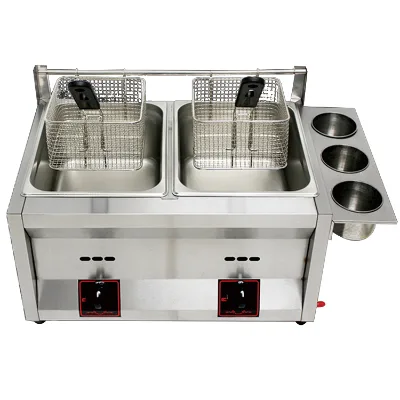


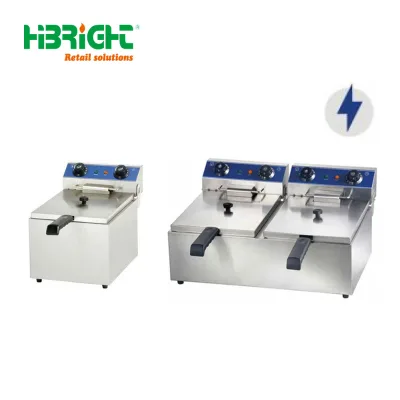
Gas Deep Fryer with Temperature Control Stainless Steel Deep Fryer for Kitchen
$155.23 - $569.19
MOQ: 1 Minimum


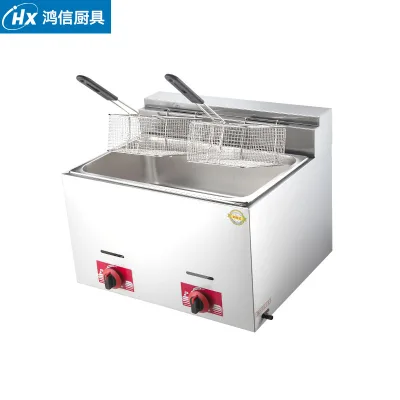


Comprehensive Sourcing Guide
Strategic Sourcing Guide for Stainless Steel Gas Deep Fryers
Procuring industrial-grade stainless steel gas deep fryers requires a disciplined approach that balances technical performance, regulatory compliance, and supply chain reliability. For buyers in the food service, catering, and institutional sectors, the transition from electric to gas-powered equipment often hinges on energy efficiency, heat recovery rates, and operational uptime. The following guide synthesizes available market data and technical observations to provide a robust framework for evaluating potential suppliers and products. This analysis focuses on the specific attributes observed in the current market, including capacity ranges, power specifications, and material standards, to ensure procurement decisions are grounded in verified facts rather than speculative claims.
Technical Specifications and Performance Parameters
When evaluating stainless steel gas deep fryers, the primary technical differentiators are power output, capacity, and fuel compatibility. The observed market data indicates a significant variance in unit specifications, ranging from compact countertop models to large-scale industrial units. For instance, specific models identified in the current supply pool, such as the GF-4G and GF-4G-2, demonstrate distinct power ratings. The GF-4G model is observed with a power specification of 18kw, while another variant, potentially the GF-4G-2, lists a power input of 10.8tu/Hr. These figures are critical for kitchen infrastructure planning, as they dictate the required gas line diameter and pressure regulation needs.
Capacity is another pivotal specification that dictates throughput. The data reveals a spectrum of storage volumes, with some units offering a capacity of 3L, suitable for small-batch or countertop applications, while others are designed for high-volume production with capacities reaching 26-36L or dual-basket configurations of (13-14L)X2. The physical dimensions of these units also vary significantly. Standardized dimensions for larger units include a width of 400mm to 440mm, a depth of 710mm, and a height of 1050mm. Buyers must verify that the physical footprint aligns with their kitchen layout, as package sizes can be substantial, with some units requiring a package size of 4907951150mm or 5307951150mm.
The material composition is a non-negotiable factor for durability and hygiene. The core keyword "stainless steel" is consistently supported by observations indicating that the pot bottom and general construction utilize stainless steel. This material choice ensures resistance to corrosion from oil and cleaning agents, a critical requirement for commercial environments. Furthermore, the "Automatic Grade" varies between manual and semi-automatic operations. While some units are classified as manual, others feature semi-automatic controls, which may influence the labor intensity and consistency of the frying process.
Compliance and Certification Verification
Navigating the regulatory landscape is essential for ensuring that purchased equipment meets safety and quality standards. The observed market data highlights specific certifications that serve as indicators of compliance. Products in the current pool are frequently associated with LFGB and CE/EU certifications. The LFGB (German Food and Feed Code) is particularly relevant for equipment that may come into contact with food, ensuring that materials do not leach harmful substances. The CE marking indicates conformity with health, safety, and environmental protection standards for products sold within the European Economic Area.
However, buyers must exercise caution regarding the interpretation of these certifications. The data notes a specific instance where "ISOCustomized:Non-Customized" appears alongside certification fields, suggesting that certification status may be tied to specific customization requests or model variations. It is imperative for procurement teams to request valid, up-to-date certification documents directly from the supplier rather than relying on general product listings. The presence of a "Feature: with Flameout Protection" attribute is also a significant safety observation. This feature implies an integrated safety mechanism designed to cut off the gas supply in the event of a flame failure, a critical requirement for gas-powered equipment to prevent hazardous gas accumulation.
Buyers should verify that the gas source compatibility matches their local infrastructure. The observed data lists "LPG or Natural Gas" as the gas source, indicating that some models are dual-fuel capable or adjustable. However, the specific configuration must be confirmed before installation, as the burner assembly and regulator requirements differ between LPG and natural gas.
Cost Drivers and Pricing Dynamics
The pricing structure for stainless steel gas deep fryers is influenced by a complex interplay of factors, including capacity, power rating, material quality, and customization levels. The observed listed price range in the current market spans from 5.58 USD to 5450 USD. This wide disparity reflects the difference between small, possibly residential or light-commercial units and heavy-duty industrial machines. The lower end of the spectrum likely corresponds to smaller capacity units or those with simpler configurations, while the upper end represents high-power, large-capacity industrial fryers with advanced safety features and robust construction.
Minimum Order Quantity (MOQ) is another significant cost driver. The observed MOQ range varies from 1 unit to 1200 units. This flexibility allows buyers to scale their procurement based on their immediate needs and budget constraints. For smaller operations, an MOQ of 1 or 5 sets (as seen in specific model data) may be sufficient. Conversely, large chains or distributors may leverage higher MOQs to negotiate better unit economics.
Additional cost factors include packaging and logistics. The data indicates that packaging varies from "Packing Each Set with a OPP Bag and Color Box" for smaller units to "Carton with Plywood Case" for larger, heavier industrial units. The latter adds significant weight and volume to the shipment, impacting freight costs. The net weight (N.W) and gross weight (G.W) of the units, ranging from 14kg to 65kg, must be factored into the total landed cost calculation. Buyers should also consider the "prod_packing" details, as improper packaging can lead to damage during transit, resulting in additional replacement costs.
Typical Applications and Operational Versatility
The versatility of stainless steel gas deep fryers makes them suitable for a wide array of culinary applications. The observed data points to specific use cases, including "Chips, Donut," "Chicken Fried," and "Chip Fried." This suggests that the equipment is designed to handle high-volume frying of both solid and battered foods. The "All Purpose" stove attribute further supports the notion that these units are not limited to a single food type but can adapt to various menu requirements.
The capacity of the unit directly influences its application. Smaller units with 3L capacity or countertop dimensions are ideal for quick-service restaurants, cafes, or food trucks where space is at a premium. Larger units with capacities of 26-36L or dual-basket configurations are better suited for high-volume establishments such as fast-food chains, cafeterias, or catering services. The "Basket: 2 Baskets" attribute in some models indicates a design that allows for simultaneous frying of different products or batch processing, enhancing operational efficiency.
The "Style: Non-Stick" attribute observed in some listings suggests that certain models may feature non-stick coatings or designs that facilitate easier cleaning and oil retention. However, buyers should verify if this applies to the entire unit or specific components, as industrial deep fryers often rely on the stainless steel construction for durability rather than non-stick coatings, which can degrade under high-heat commercial use.
Supplier Evaluation and Sourcing Strategy
Selecting the right supplier is as critical as selecting the right product. The data indicates that the "prod_origin" is primarily "Guangdong" or "China, Guangdong," a region known for its manufacturing capabilities in kitchen equipment. While this provides a baseline for sourcing, buyers must conduct thorough due diligence to ensure the supplier's reliability. The "Customization: Available" and "Logo: Customizable" attributes indicate that many suppliers offer OEM and ODM services, allowing buyers to brand the equipment or modify specifications to meet unique operational needs.
However, the data also notes a "Customized: Non-Customized" attribute in some contexts, suggesting that not all models or suppliers offer full customization. Buyers must clearly define their requirements regarding branding, capacity, and power source before engaging with a supplier. The "prod_model" codes, such as BS030, GF-4G, and GF-4G-2, serve as identifiers for specific product lines. Buyers should request detailed datasheets for these models to verify that the technical specifications match their operational requirements.
Supplier evaluation should also include an assessment of their quality control processes and after-sales support. The presence of safety features like "Flameout Protection" and certifications like CE/EU and LFGB are positive indicators, but buyers should request proof of these claims. Additionally, the "prod_standard" values, such as "24cm" or specific dimensional standards, should be cross-referenced with the supplier's quality assurance protocols to ensure consistency across production batches.
Quality Control and Long-Term Procurement Considerations
Ensuring the long-term reliability of stainless steel gas deep fryers requires a proactive approach to quality control. Buyers should prioritize units that demonstrate robust construction, such as the use of stainless steel for the pot bottom and body, which resists corrosion and wear. The "Handle: With Handle" and "Handle Style: Double Handle" attributes suggest a focus on user safety and ease of operation, which are essential for preventing accidents in a busy kitchen environment.
Packaging quality is another critical aspect of quality control. The observation of "Carton with Plywood Case" for larger units highlights the need for protective packaging to prevent damage during shipping. Buyers should inspect the packaging upon delivery to ensure that the unit has not sustained any transit-related damage. Furthermore, the "prod_packing" details, such as the inclusion of color boxes or OPP bags, should be verified to ensure that the product arrives in sellable condition if intended for resale.
Long-term procurement considerations include the availability of spare parts and the ease of maintenance. Stainless steel units are generally durable, but components such as burners, thermocouples, and baskets may require replacement over time. Buyers should inquire about the supplier's parts inventory and lead times for replacements. The "Automatic Grade" of the unit, whether manual or semi-automatic, also impacts maintenance requirements; semi-automatic units may have more complex control systems that require specialized servicing.
In conclusion, sourcing stainless steel gas deep fryers requires a meticulous evaluation of technical specifications, compliance certifications, cost structures, and supplier capabilities. By leveraging the observed data and adhering to a disciplined procurement strategy, buyers can secure high-quality equipment that meets their operational needs while ensuring safety and regulatory compliance. The wide range of available models, from compact countertop units to large industrial fryers, offers flexibility for various business sizes, but success depends on thorough due diligence and clear communication with suppliers.
FAQs
What certifications do stainless steel gas deep fryers have?
Products often carry LFGB and CE/EU certifications to ensure safety and material compliance. Some listings also reference ISOCustomized status, but buyers should verify valid documents directly from the supplier before purchase.
Which power sources are compatible with these fryers?
The units operate on Gas, specifically supporting LPG or Natural Gas sources. Buyers must confirm the specific gas configuration required for their local infrastructure before installation to ensure proper burner assembly and regulator compatibility.
Can I customize the logo on the deep fryer?
Logo customization is available for many models, though some specific listings indicate non-customized options. Buyers should clearly define their branding requirements with the supplier, as customization availability varies by model and production batch.
What is the typical capacity range for these units?
Capacities vary significantly, ranging from 3L for small countertop models to 26-36L for industrial units. Some configurations feature dual baskets with a total capacity of 28L, suitable for high-volume commercial kitchens.
How is the product packaged for shipping?
Packaging depends on the unit size, ranging from OPP bags and color boxes for smaller sets to cartons with plywood cases for heavy industrial units. This variation impacts the gross weight and freight costs for international delivery.
Which materials are used for the pot bottom?
The pot bottom is constructed from Stainless Steel to ensure durability and corrosion resistance. This material choice is critical for commercial environments where frequent cleaning and exposure to oil require robust, hygienic surfaces.