Source Stainless Steel Self Drilling Screws for construction, HVAC, and metal framing
Compare 30 listings of Stainless Steel Self Drilling Screws from verified manufacturers in China. Buyers can evaluate grades like 304 and 316, head styles, and delivery times ranging from 5 to 30 days.
Key considerations
Products List

Various Specifications of Galvanized or Stainless Steel Self Drilling Screws
$0.04 - $0.05
MOQ: 10000 Pieces
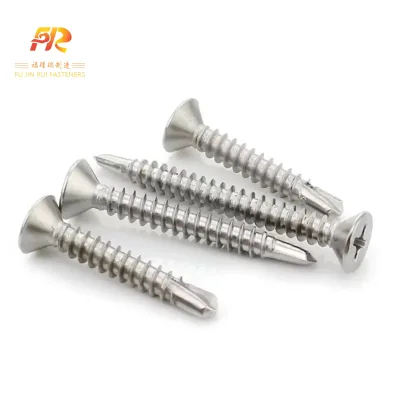
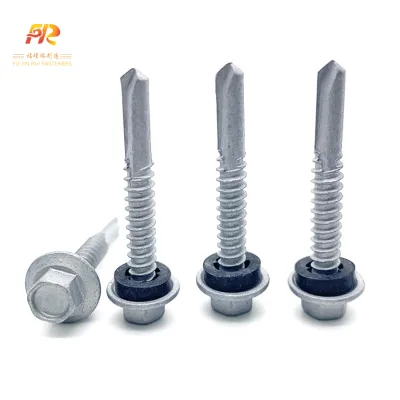


Stainless Steel Flat Head Self Tapping Screw Cross Flat Tail Self Tapping Screws
$0.00 - $0.00
MOQ: 50000 Pieces

ISO7049 DIN 7981 Stainless Steel Phillips Pan Head Self Tapping Screws
$0.00 - $0.15
MOQ: 50000 Pieces


Source Factory Countersunk Flat Head Phillips Drive Self-Drilling Screws
$0.10 - $0.50
MOQ: 100 Pieces


Stainless Steel Wholesale Self Drywall Wood Screw Tapping Drilling Screw
$0.05 - $0.20
MOQ: 100000 Pieces
Comprehensive Sourcing Guide
Strategic Sourcing Guide for Stainless Steel Self-Drilling Screws
Understanding Technical Specifications and Material Variability
When sourcing stainless steel self-drilling screws, buyers must first navigate the complex landscape of material specifications and technical attributes. The market presents a diverse array of options, ranging from specific stainless steel grades to carbon steel alternatives, each serving distinct environmental and structural needs. The supplied data indicates that materials commonly listed include 316 Stainless Steel, 304 Stainless Steel, 410 Stainless Steel, and general Stainless Steel, alongside Carbon Steel options. This variation is critical because the choice of material directly dictates corrosion resistance, tensile strength, and suitability for specific industries.
For applications requiring high resistance to marine environments or chemical exposure, 316 Stainless Steel is often the preferred choice due to its molybdenum content, which enhances pitting resistance. Conversely, 304 Stainless Steel offers a robust balance of corrosion resistance and cost-effectiveness for general indoor or mild outdoor applications. The data also highlights the existence of 410 Stainless Steel, a martensitic grade that provides higher strength but lower corrosion resistance compared to the austenitic 304 and 316 grades. Buyers must verify the specific grade required for their project, as the term "Stainless Steel" alone is insufficient for rigorous procurement contracts.
Beyond the base material, the mechanical properties are defined by grade classifications such as Class 4.8 and 6.8. These numbers refer to the tensile strength and yield strength ratios of the fastener. A Class 4.8 screw indicates a tensile strength of 400 MPa, while Class 6.8 offers 600 MPa. Selecting the correct class is essential to ensure the screw can withstand the shear and tensile loads of the assembly without failure. Furthermore, the thread type is a fundamental specification. The observed data points to Coarse Thread as a standard configuration, which is typical for self-drilling screws designed to cut their own threads into metal or wood substrates. The measurement system is also a key variable, with listings indicating availability in Metric, Imperial, and Inch systems. Procurement teams must explicitly define the required thread pitch and diameter to avoid compatibility issues with existing infrastructure or mating components.
Compliance, Certification, and Standard Verification
Navigating the compliance landscape for industrial fasteners requires a meticulous review of certifications and adherence to international standards. The sourcing data reveals a mix of certifications including ISO, GS, RoHS, and CE. While the presence of ISO certification suggests a manufacturer's adherence to quality management systems, buyers should verify the specific ISO standard (e.g., ISO 9001) and the scope of the certification to ensure it covers the specific manufacturing processes involved. Similarly, RoHS compliance is vital for products intended for electronic equipment or markets with strict environmental regulations regarding hazardous substances.
Standards compliance is equally critical. The data lists a wide range of applicable standards, including DIN, GOST, GB, ANSI, BSW, and JIS. These standards define the geometric dimensions, mechanical properties, and testing methods for the screws. For instance, DIN standards are prevalent in European markets, while ANSI is standard in North America. A specific model number mentioned, DIN7504, refers to a particular standard for self-drilling screws, highlighting the importance of matching the product to the correct standard for the target market. Additionally, the standard "M4.2-M6.3" is noted, which likely refers to the diameter range for specific self-drilling screw types. Buyers must confirm that the supplier's products are manufactured to the specific standard required by their local building codes or industry regulations.
It is important to note that while some listings mention CE, this should be treated as an observation rather than a guaranteed status for every unit. The CE mark indicates conformity with health, safety, and environmental protection standards for products sold within the European Economic Area. However, the validity of this mark depends on the specific product type and the manufacturer's declaration of conformity. Procurement teams should request the Declaration of Conformity (DoC) and test reports to validate these claims rather than relying solely on marketing materials. The presence of certifications like GS (Geprüfte Sicherheit) further indicates a focus on safety, particularly in the German market. Verifying these credentials ensures that the fasteners meet the necessary legal and safety requirements for the intended application.
Cost Drivers and Pricing Dynamics
The cost of stainless steel self-drilling screws is influenced by several dynamic factors, including raw material volatility, production complexity, and order volume. The observed price range in the market spans from 0 to 1.2 USD, a wide variance that reflects differences in material grade, manufacturing precision, and order quantity. The primary cost driver is the raw material. Stainless steel, particularly grades 316 and 304, is subject to significant price fluctuations based on global nickel and chromium markets. Carbon steel options, while generally less expensive, may incur additional costs for surface treatments like zinc plating to achieve comparable corrosion resistance.
Order volume plays a pivotal role in unit pricing. The Minimum Order Quantity (MOQ) data shows a broad spectrum, ranging from as low as 1 piece to as high as 100,000 pieces or even 1 Ton. Suppliers often offer tiered pricing structures where the unit cost decreases significantly as the order volume increases. For buyers with high-volume requirements, negotiating based on a commitment to larger quantities, such as the 10,000-piece or 1-ton thresholds observed, can yield substantial savings. Conversely, buyers requiring small batches for prototyping or low-volume projects may face higher per-unit costs due to the setup and handling overheads associated with smaller runs.
Packaging and logistics also contribute to the final cost. The data indicates various packaging methods, from "25 Kgs Bulk in Carton" to "Box" and "Carton+Pallet or Others." The choice of packaging affects shipping efficiency and protection during transit. Bulk packaging is typically more cost-effective for large shipments but requires additional handling equipment at the destination. Palletized packaging simplifies logistics but adds to the overall weight and volume. Additionally, the customization options available, such as specific head styles or thread types, can introduce additional manufacturing steps and costs. Buyers should carefully evaluate the total landed cost, including material, packaging, and shipping, rather than focusing solely on the base unit price.
Typical Applications and Head Style Considerations
The application of stainless steel self-drilling screws is dictated by their unique ability to drill, tap, and fasten in a single operation. These fasteners are extensively used in metal framing, roofing, siding, and HVAC installations where pre-drilling is impractical or time-consuming. The specific head style of the screw is a critical selection criterion that influences the aesthetic finish and the torque application method. The observed data highlights several head styles, including Flat, Hexagonal, and Round.
Flat head screws are often preferred for applications where a flush finish is required, such as in metal roofing or siding where the screw head sits level with the surface. Hexagonal head screws, including those with flanges, are designed for high-torque applications and are commonly used in structural steel connections. The flange provides a larger bearing surface, distributing the load and reducing the risk of the screw pulling through the material. Round head screws, while less common in structural applications, may be used where a decorative finish or specific clearance is needed. The choice of head style must align with the installation tools available; for example, hexagonal heads require a wrench or socket, while flat heads often require a Phillips or Pozidriv driver.
The material grade further determines the application environment. 316 stainless steel is ideal for coastal or industrial environments where salt spray or chemical exposure is a concern. 304 stainless steel is suitable for general construction and indoor applications. The data also mentions "Self-Drilling Screws" as a specific type, confirming their primary function. These screws are typically used in metal-to-metal or metal-to-wood connections. The length of the screw, with 25mm noted in the data, is a common size for light-gauge metal framing, but longer lengths are available for thicker substrates. Buyers must ensure the screw length is sufficient to penetrate the first material and engage adequately with the second material without protruding excessively.
Supplier Evaluation and Manufacturing Capabilities
Evaluating potential suppliers for stainless steel self-drilling screws requires a deep dive into their manufacturing capabilities, geographic location, and service offerings. The data indicates that suppliers are located in provinces such as Zhejiang and Hebei in China, with specific origins noted in Zhuji. These regions are known for their robust manufacturing infrastructure and specialization in fastener production. However, the presence of a manufacturer in a specific location does not guarantee quality; buyers must verify the supplier's actual production capacity and quality control processes.
Key indicators of a reliable supplier include the availability of customization services and the ability to provide samples. The data confirms that customization is available, allowing buyers to tailor screw specifications to their exact needs. The provision of samples is a crucial step in the evaluation process, enabling buyers to physically inspect the product for quality, finish, and dimensional accuracy before committing to a large order. Additionally, the "Manufacturer: Yes" attribute suggests that some suppliers are direct producers rather than trading companies, which can offer advantages in pricing and communication.
Service levels are another important factor. The data mentions "24 Hours Online" service, indicating a commitment to responsive customer support. This is particularly valuable for resolving technical queries or addressing urgent order changes. Buyers should also assess the supplier's ability to meet delivery timelines. The observed delivery times range from 5 to 25 days, with some listings specifying 15 to 30 days. These lead times can vary based on order volume, customization requirements, and current production schedules. A supplier with a track record of consistent on-time delivery is preferable to one with fluctuating lead times. Finally, the "Quality: High-Quality" attribute should be validated through third-party audits or customer references, as self-reported quality claims can be subjective.
Quality Control and Long-Term Procurement Strategies
Ensuring the long-term reliability of stainless steel self-drilling screws requires a robust quality control strategy. The observed data lists various standards and certifications, but these are baseline requirements rather than guarantees of consistent quality. Buyers should implement a multi-layered quality assurance process that includes pre-production sample approval, in-process inspections, and final random sampling. The "Quality: High-Quality" claim must be backed by concrete evidence, such as mill test reports (MTRs) that verify the chemical composition and mechanical properties of the stainless steel used.
Surface finishing is another critical aspect of quality control. The data mentions "Zinc Plated" and "Silver Plated" finishes, along with "Other" finish options. For stainless steel screws, the surface finish is often a result of the manufacturing process rather than a plating, but any additional coating must be verified for adhesion and corrosion resistance. Buyers should request evidence of salt spray testing or other corrosion resistance tests to ensure the screws will perform as expected in their intended environment. The "Standard" attribute, including DIN, GB, and ANSI, provides a framework for dimensional accuracy, but buyers should verify that the actual products meet these tolerances.
Long-term procurement strategies should focus on building a sustainable supply chain. This involves diversifying suppliers to mitigate risks associated with geopolitical issues or production disruptions. The data shows a range of MOQs, from 1 piece to 100,000 pieces, allowing buyers to start with small orders and scale up as relationships are established. Maintaining open communication with suppliers regarding market trends, raw material availability, and production capacity can help buyers anticipate and manage potential disruptions. Additionally, establishing clear quality agreements and performance metrics can ensure that suppliers remain accountable for the quality of their products. By prioritizing transparency, verification, and relationship building, buyers can secure a reliable supply of high-quality stainless steel self-drilling screws that meet their technical and operational requirements.
Summary of Key Procurement Parameters
To facilitate informed decision-making, the following table summarizes the key parameters observed in the market for stainless steel self-drilling screws. This comparison highlights the variability in specifications, certifications, and logistical factors that buyers must consider.
| Parameter | Observed Range/Options | Procurement Consideration |
|---|---|---|
| Material Grade | 316, 304, 410 Stainless Steel, Carbon Steel | Select based on corrosion resistance and strength needs. |
| Thread Type | Coarse Thread | Verify compatibility with substrate material. |
| Head Style | Flat, Hexagonal, Round, Hexagon Head | Choose based on installation tool and finish requirements. |
| Certifications | ISO, GS, RoHS, CE | Validate specific standards and scope of certification. |
| Standards | DIN, GOST, GB, ANSI, BSW, JIS | Ensure compliance with local building codes and industry norms. |
| MOQ | 1 to 100,000 Pcs, or 1 Ton | Negotiate based on volume to optimize unit cost. |
| Lead Time | 5-25 Days, 15-30 Days | Plan inventory and production schedules accordingly. |
| Packaging | Bulk Carton, Box, Pallet | Assess logistics needs and handling requirements. |
| Origin | Zhejiang, Hebei, Zhuji, China | Verify manufacturer location and supply chain stability. |
By carefully analyzing these parameters and adhering to the verification steps outlined in this guide, buyers can effectively navigate the complex market for stainless steel self-drilling screws, ensuring they source products that meet their technical, compliance, and budgetary requirements.
FAQs
What materials are used for Stainless Steel Self Drilling Screws?
These screws are commonly made from 316, 304, 410 Stainless Steel, and Carbon Steel. The choice depends on required corrosion resistance and strength, with 316 offering superior performance in harsh environments compared to general stainless options.
Which certifications do these fasteners typically hold?
Products often carry ISO, GS, RoHS, and CE certifications. These indicate adherence to quality management systems and safety standards, though buyers should verify specific declarations for their target markets to ensure compliance.
How long does delivery take for these screws?
Delivery times generally range from 5 to 30 days depending on order specifics. Some suppliers offer expedited shipping within 5 to 25 days, while larger custom orders may require up to 30 days for production and logistics.
Can I request custom specifications for these screws?
Yes, customization is available for head styles, thread types, and packaging. Buyers can specify flat, hexagonal, or round heads and choose between bulk cartons or palletized shipping to meet unique project requirements.
What is the minimum order quantity for these screws?
Minimum order quantities vary significantly, ranging from 1 piece up to 100,000 pieces or 1 ton. Lower MOQs suit prototyping, while bulk pricing often requires commitments of 10,000 pieces or more to reduce unit costs.
Which standards apply to these fasteners?
Common standards include DIN, GOST, GB, ANSI, BSW, and JIS. Specific models like DIN7504 are available, ensuring compatibility with international building codes and industry regulations for structural and general applications.