Source Steel Mesh Players Bench for Stadiums, Parks, and Schools
Explore 30 listings for the Steel Mesh Players Bench designed for outdoor leisure and sports venues. Buyers can compare specifications like material finish, dimensions, and delivery times from verified Chinese manufacturers offering customized options.
Key considerations
Products List
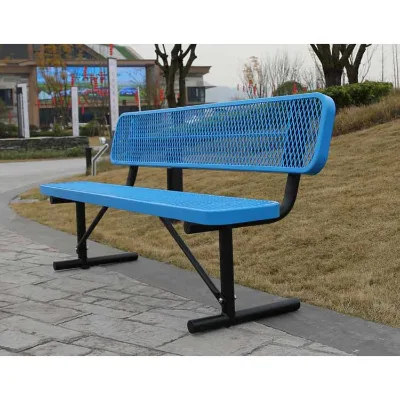


$35.00 - $45.00
MOQ: 500 Square Meters




Popular Outdoor Aluminum Team Shelter Player Seating Substitute Bench for Football Court
$85.00 - $216.00
MOQ: 100 Pieces

Comprehensive Sourcing Guide
Strategic Sourcing Guide for Steel Mesh Players Bench Procurement
Understanding Product Specifications and Material Integrity
When sourcing a Steel Mesh Players Bench, the primary objective is to identify units that balance structural durability with the specific environmental demands of athletic venues. The core material for these benches is explicitly identified as metal, which in the context of outdoor sports furniture typically refers to galvanized steel or aluminum alloys designed to resist corrosion. The finish applied to this metal is a critical specification; available options include Matt or Satin finishes, which not only provide an aesthetic appeal but also serve a functional role in reducing glare and minimizing surface wear. Buyers must verify that the metal construction supports the "Modern" and "Simple" styles observed in the market, ensuring the design aligns with contemporary stadium architecture.
The physical dimensions of the bench are variable, with observed size specifications ranging from 1500 mm to 2440 mm (8ft). This variability suggests that procurement strategies must account for custom sizing capabilities, as the standard "prod_standard" allows for customized dimensions to fit specific venue requirements. The single package size for these units is substantial, recorded at 175x40x30 cm, indicating that logistics planning must accommodate bulky freight. Furthermore, the single gross weight of 35.000 kg per unit highlights the need for robust handling equipment during installation. The bench is designed to be either unfolded or disassembled, offering flexibility for storage and transport. For buyers requiring modular solutions, the "Combination" type and "Disassembly" features are essential attributes to confirm during the technical review phase.
Compliance, Certification, and Safety Standards
In the B2B procurement of outdoor sports furniture, verifying compliance with international safety and quality standards is non-negotiable. The market data indicates that reputable suppliers for these metal benches often hold certifications such as ISO, BV, and TUV. These certifications serve as third-party validations of the manufacturing process, material quality, and safety protocols. When evaluating potential suppliers, buyers should explicitly request current certificates of conformity for these standards. It is important to note that while these certifications are listed as available attributes, they are not automatically guaranteed for every listed product; therefore, verification of the specific batch or model number is required.
The "Warranty" and "Guarantee" periods are critical indicators of the manufacturer's confidence in their product's longevity. Observed data suggests a warranty range of 1 year to 2-3 years under normal usage conditions. This discrepancy in warranty terms between different product listings necessitates a clear definition of "normal usage" in the procurement contract. For high-traffic venues like sports venues or schools, a longer warranty period is preferable. Additionally, the "Condition" of the product is listed as "New," which should be strictly enforced in the delivery terms to prevent the acceptance of refurbished or stock-damaged goods. Buyers must ensure that the "Certificate" documentation matches the specific model numbers, such as PRZ0382, PRZ0391, or FS111, to ensure traceability and accountability.
Cost Drivers and Pricing Structures
The pricing structure for steel mesh players benches is influenced by several variable factors, including material thickness, finish type, and customization levels. The observed listed price range in the market spans from $0.1 to $5,000 USD. This wide range reflects the diversity of product configurations, from basic single-item units to large, custom-engineered sets. The lower end of the spectrum likely represents standard, off-the-shelf models with minimal customization, while the higher end corresponds to bespoke solutions involving complex geometries, specialized coatings, or bulk orders with integrated logistics.
The Minimum Order Quantity (MOQ) is another significant cost driver. Data indicates an MOQ range of 1 to 500 units. For buyers with small-scale requirements, such as a single school or community park, an MOQ of 1 Set is highly advantageous. However, for large-scale projects like international exhibitions or stadium renovations, suppliers may offer tiered pricing that becomes more favorable as the order volume approaches the higher end of the MOQ spectrum. The "Supply Ability" of 4000 pieces per month suggests that suppliers have the capacity to handle large orders, but buyers must confirm if this capacity is available for their specific timeline. The "Delivery Time" of 30-45 days is a standard lead time that must be factored into the project schedule, potentially affecting the overall cost if expedited shipping is required.
Typical Applications and Environmental Suitability
Steel mesh players benches are designed for a broad spectrum of applications, extending beyond traditional sports fields. The "Application" attributes list Outdoor, Office Building, Hospital, School, Sports Venues, Leisure Facilities, Park, Farmhouse, Courtyard, and Exterior as primary use cases. This versatility indicates that the product is engineered to withstand various environmental conditions. Specifically, the "Usage" categories include shopping malls, streets, outdoor areas, parks, playgrounds, outdoor parties, international exhibitions, and roadshow promotions.
The "Use time" attribute claims a lifespan of more than 20 years, which is a significant value proposition for long-term infrastructure investments. This longevity is contingent upon the "low maintenance" benefit provided by the metal construction and protective finishes. The benches are suitable for "Outdoor/Pool Side" environments, suggesting resistance to moisture and humidity. However, buyers should verify the specific corrosion resistance ratings for coastal or high-humidity locations. The "Kind" of product is also identified as "Beach Chairs" in some listings, implying a design that may be adaptable for recreational beach settings, though the primary classification remains "Outdoor Furniture." The "Function" is defined as "Outdoor Leisure," emphasizing comfort and durability for extended periods of use by spectators and athletes alike.
Supplier Evaluation and Logistics Management
Selecting the right supplier involves a rigorous evaluation of their operational capabilities and logistical reliability. The "Place of Origin" is consistently listed as Chongqing, China, with the "Port of Dispatch" being Chongqing or Shanghai. This geographical concentration allows buyers to assess the local manufacturing ecosystem and potential for factory audits. The "Packaging Details" specify the use of Carton packaging, often reinforced with a "Standard Export Carton and Wood Frame" to ensure the 35 kg units arrive undamaged. The "mail packing" attribute is listed as "N," which may indicate that standard mail services are not suitable for these heavy items, necessitating freight shipping.
Buyers must evaluate the supplier's ability to handle "Customized" orders, as the "prod_standard" allows for custom sizes. The "Sample" availability is a crucial step in the evaluation process; requesting a physical sample allows for a tactile inspection of the metal finish, weld quality, and overall build. The "Selling Units" are listed as "Single item," which facilitates the procurement of small quantities for testing or specific zone replacements. When negotiating, buyers should clarify the "Delivery Time" of 30-45 days and understand if this period includes manufacturing, quality control, and shipping. The "Supply Ability" of 4000 pieces per month provides a benchmark for capacity, but buyers should confirm if this rate is sustainable during peak seasons.
Quality Control and Long-Term Procurement Considerations
Ensuring long-term value requires a proactive approach to quality control (QC) and contract management. The "Condition" of the product must be verified upon receipt to ensure it matches the "New" status promised. The "Finish for metal" being Matt or Satin should be inspected for uniformity and absence of defects like scratches or uneven coating. Given the "Warranty" of 1 to 3 years, the procurement contract should clearly define the scope of coverage, including what constitutes "normal usage" versus damage due to misuse or extreme weather.
For long-term procurement, buyers should consider the "Customized" nature of the product. If the initial order involves custom sizes or colors (such as Blue, Yellow, Red, White, Brown, Coffee, Black, or other custom options), the supplier must maintain the ability to replicate these specifications for future replacement orders. The "Disassembly" feature is particularly important for maintenance; benches that can be taken apart are easier to repair or replace individual components without removing the entire unit. The "Single gross weight" of 35.000 kg also impacts long-term logistics, as it influences the cost of future shipping and the structural requirements of the installation site.
Buyers should also monitor the "Certificate" status periodically. While ISO, BV, and TUV are listed, these certifications may require renewal. A supplier who maintains active, up-to-date certifications demonstrates a commitment to continuous quality improvement. Finally, the "General Use" as Outdoor Furniture implies that the product is subject to UV exposure and temperature fluctuations. Buyers should request test data or material specifications regarding UV resistance and thermal stability to ensure the bench retains its structural integrity and color over the projected 20-year lifespan. By adhering to these rigorous evaluation criteria, buyers can secure a reliable supply of steel mesh players benches that meet the demanding standards of modern sports and leisure facilities.
FAQs
How long does delivery take for these benches?
Delivery typically requires 30 to 45 days from order placement. This lead time covers manufacturing and preparation for shipment from Chongqing or Shanghai ports, ensuring the units are ready for international transport.
What certifications do the metal benches hold?
The products carry ISO, BV, and TUV certifications as standard documentation. Buyers must verify that these certificates apply to the specific model batch, such as PRZ0382 or FS111, to ensure compliance with safety standards.
Can I order a single unit for testing purposes?
Yes, samples and single item orders are available with a minimum order quantity of one set. This allows buyers to inspect the metal finish and build quality before committing to larger volume purchases for their facilities.
Which colors are available for customization?
Standard options include blue, yellow, red, white, brown, coffee, and black. Custom colors are also available to match specific venue branding, provided the order meets the supplier's customization requirements and production capacity.
What is the expected lifespan of the outdoor bench?
The product is designed for a use time of more than 20 years under normal conditions. This longevity is supported by low maintenance requirements and durable metal construction suitable for outdoor environments like parks and sports venues.
How much does a single bench weigh for shipping?
Each unit has a single gross weight of 35 kilograms. This substantial weight requires robust handling equipment during installation and influences freight costs, necessitating careful logistics planning for the 175x40x30 cm package size.
What warranty covers these outdoor furniture items?
Warranty periods range from one year to three years under normal usage conditions. Buyers should clarify the specific terms in the contract to ensure coverage aligns with the high-traffic nature of sports venues or public parks.