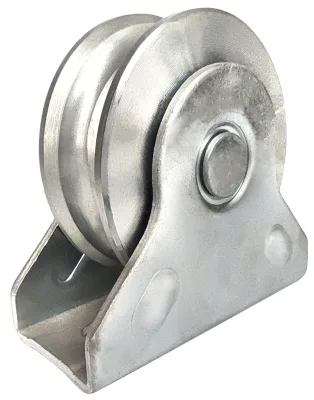
Source Steel Sliding Gate Wheel with Bracket for Gate Door Sliding Gate
Find 22 Steel Sliding Gate Wheel with Bracket options for gates, doors, and automatic gates. Buyers can compare models like HD1Y100 and HT1V80, sizes from 60mm to 120mm, and zinc-plated finishes to select durable sliding gate wheels.
Key considerations
Products List




Comprehensive Sourcing Guide
Strategic Sourcing Guide for Steel Sliding Gate Wheels with Brackets
The procurement of steel sliding gate wheels with brackets represents a critical decision point for facility managers, construction contractors, and industrial equipment buyers. These components serve as the mechanical interface between heavy gate structures and their guiding tracks, directly influencing operational smoothness, safety, and long-term maintenance costs. When sourcing these items, buyers must navigate a landscape of varying material grades, surface treatments, and dimensional specifications. The following guide synthesizes observed market data and technical requirements to provide a disciplined approach to evaluating suppliers and selecting the appropriate hardware for specific applications.
Technical Specifications and Material Composition
The foundation of a reliable sliding gate wheel system lies in its material composition and dimensional accuracy. Based on available product data, the primary material for these components is consistently identified as Steel, with specific references to Steel Q235. This grade of carbon steel offers a balance of strength and ductility suitable for heavy-duty sliding applications. However, buyers must verify that the steel grade matches the load requirements of their specific gate, as lighter grades may deform under high stress.
Surface treatment is equally critical for longevity, particularly in outdoor environments where exposure to moisture and corrosive elements is inevitable. The observed market data highlights Zinc Plating and Zinc Surface-Plating as standard finishing processes. Some listings also mention Galvanized White or Yellow finishes, which provide an additional layer of corrosion resistance. The choice between standard zinc plating and hot-dip galvanization should be dictated by the environmental severity of the installation site.
Dimensional specifications vary significantly across the supply base, requiring precise matching to existing track systems. Observed diameter ranges span from 60mm to 120mm, with specific models citing diameters between 68mm and 98mm. Smaller units, such as those with a 3-inch diameter, are typically reserved for lighter residential or warehouse doors, while larger diameters are necessary for industrial sliding gates. The groove type is another vital specification, with U, Y, and V grooves being the most common configurations. The selected groove must match the track profile exactly; a mismatch can lead to derailment or excessive wear. Additionally, the bearing assembly is a key performance driver, with steel bearings being the standard observation. Buyers should confirm the bearing type, as sealed or shielded bearings offer superior protection against dust and debris compared to open bearings.
Compliance, Certification, and Standard Verification
In the B2B procurement of industrial hardware, verifying compliance with international standards is non-negotiable. The supply chain data indicates that many suppliers hold ISO certifications, with some listing both ISO and CE marks. These certifications suggest that the manufacturer adheres to specific quality management systems and safety standards, though the exact scope of these certifications should be validated through documentation.
Product standards also play a role in defining the physical attributes of the wheel. While specific numerical standards vary, observed data references standard dimensions such as 302017 cm and 302014 cm, likely referring to packaging or specific model profiles. The Harmonized System (HS) codes provide a crucial layer of regulatory clarity for importers. Two distinct codes are observed: 8302410000 and 8487900000. The former typically relates to metal fittings for furniture or doors, while the latter often covers parts for machinery. Accurate classification is essential for determining duty rates and ensuring compliance with local import regulations.
Buyers must also scrutinize the "prod_standard" field, which in some listings refers to a "Middle" standard. This vague terminology requires clarification. Procurement teams should request specific technical datasheets that define the mechanical properties, such as tensile strength and hardness, rather than relying on generic standard labels. Furthermore, the "Splittable" attribute is noted as "Unsplittable" in some contexts, indicating that the wheel assembly is a single, non-modifiable unit. This impacts maintenance strategies, as a damaged wheel may require full replacement rather than component repair.
Cost Drivers and Pricing Dynamics
Understanding the cost structure of steel sliding gate wheels is essential for budgeting and negotiation. The observed price range in the market spans from $0.50 to $8.00 USD per unit. This wide variance is driven by several factors, including the diameter of the wheel, the quality of the steel, the complexity of the surface treatment, and the inclusion of the bracket assembly.
The Minimum Order Quantity (MOQ) is another significant cost driver. Data indicates an MOQ range of 10 to 1000 units, with specific listings citing an MOQ of 100. For small-scale projects, buyers may face higher per-unit costs if they cannot meet the minimum threshold of larger suppliers. Conversely, bulk purchasers can leverage economies of scale to reduce unit costs. However, buyers must balance volume discounts against inventory holding costs and storage requirements.
Customization is a primary factor influencing price. The market data confirms that customization is available, with many suppliers offering "Customized" or "Customerized" options. Customizing the bracket design, wheel diameter, or surface finish to match specific gate requirements will inevitably increase the unit price and potentially extend the lead time. Buyers should clearly define their customization needs early in the sourcing process to avoid unexpected cost escalations.
Typical Applications and Installation Requirements
The versatility of steel sliding gate wheels allows them to serve a broad range of applications. The observed usage data includes Sliding Gates, Sliding Doors, Automatic Gates, and Warehouse applications. In industrial settings, such as warehouses, these wheels must support heavy loads and withstand frequent operation. The "Durable" and "Strong Bearing Capacity" attributes observed in product descriptions are particularly relevant for these high-traffic environments.
Installation requirements vary based on the gate material and design. For steel gates, the standard installation method involves bolt welding. This process requires skilled labor to ensure the bracket is securely fused to the gate frame without compromising the structural integrity of the steel. The "Install" attribute explicitly notes the use of bolt welding on steel gates, highlighting the importance of proper welding techniques to prevent joint failure.
For automatic gate systems, the smoothness of the wheel's rotation is paramount. The "Smooth Wheel Sli" (sliding) attribute suggests that the design prioritizes low friction, which is critical for the efficient operation of motorized gate operators. Buyers should ensure that the selected wheel model is compatible with the torque and speed requirements of their automation system. Additionally, the "Project Solution Capability" of suppliers, including graphic design services, may be relevant for custom gate designs where the wheel assembly must integrate aesthetically with the overall gate structure.
Supplier Evaluation and Lead Time Management
Selecting the right supplier requires a rigorous evaluation process that goes beyond price comparison. The geographic origin of the products is predominantly China, with specific mentions of Zhejiang, China, as a manufacturing hub. This concentration suggests a mature supply chain with established logistics networks, but it also necessitates careful vetting of individual manufacturers.
Lead times are a critical consideration for project scheduling. Observed delivery times range from 2-4 weeks to 8-20 days. These variations depend on the order volume, the level of customization required, and the supplier's current production capacity. Buyers should factor in these lead times when planning installation schedules, especially for projects with tight deadlines. The "Delivery Date" and "Delivery Time" fields in product listings should be treated as estimates, and written confirmation from the supplier is recommended before finalizing orders.
Supplier capabilities should also be assessed regarding after-sales support. The availability of "Online Technical Support" is a positive indicator of a supplier's commitment to customer service. This support can be invaluable for troubleshooting installation issues or addressing performance concerns post-delivery. Additionally, the "Project Solution Capability" suggests that some suppliers offer more than just hardware, providing design assistance that can streamline the procurement process.
Quality Control and Long-Term Procurement Strategy
Ensuring consistent quality is paramount when sourcing mechanical components like sliding gate wheels. The "Adevantage" (Advantage) of the product, described as durable and having strong bearing capacity, should be verified through independent testing or sample inspection. Buyers should request material certificates to confirm the steel grade and surface treatment specifications. Visual inspection of samples for defects in the zinc plating or bearing assembly is also recommended before placing large orders.
Packaging standards are another aspect of quality control. The observed packaging methods include "Plastic Bag First, Then Put in Cartons & Pallets" or "Polybag First, Then Put It in Carton and Pallet." Proper packaging protects the wheels from damage during transit, which is crucial for maintaining the integrity of the surface treatment and the bearing assembly. Buyers should ensure that the packaging meets the requirements for international shipping and storage conditions.
For long-term procurement, establishing a relationship with a reliable supplier is more beneficial than seeking the lowest one-time price. Consistency in product quality, reliable lead times, and responsive after-sales support contribute to the overall success of gate installation projects. Buyers should consider the "Customization" and "Customerized" capabilities of suppliers to ensure they can meet evolving project needs. By focusing on suppliers who demonstrate a commitment to quality and service, buyers can mitigate risks and ensure the reliable operation of their sliding gate systems over the long term.
Comparative Analysis of Product Attributes
To assist in decision-making, the following table summarizes key attributes observed in the market, highlighting the variations buyers may encounter.
| Attribute | Observed Values | Procurement Consideration |
|---|---|---|
| Material | Steel, Steel Q235 | Verify grade for load capacity and corrosion resistance. |
| Surface Treatment | Zinc Plated, Zinc Surface-Plating, Galvanized | Select based on environmental exposure (indoor vs. outdoor). |
| Diameter | 60mm-120mm, 68mm-98mm, 3inch | Match exactly to existing track profiles. |
| Groove Type | U, Y, V | Critical for track compatibility and derailment prevention. |
| Bearing | Steel Bearings | Check for sealed vs. open designs for dust protection. |
| Certification | ISO, ISO & CE | Request valid certificates to ensure quality management. |
| MOQ | 10-1000, specifically 100 | Negotiate based on project volume and budget. |
| Lead Time | 8-20 Days, 2-4 Weeks | Plan project schedules with buffer for delays. |
| Origin | China, Zhejiang, China | Consider logistics costs and import regulations. |
| Packaging | Plastic Bag + Carton + Pallet | Ensure robust packaging for international shipping. |
By adhering to these guidelines and maintaining a disciplined approach to verification, buyers can effectively source steel sliding gate wheels with brackets that meet their technical, financial, and operational requirements. The complexity of the market demands attention to detail, but a structured evaluation process ensures the selection of high-quality components that deliver reliable performance.
FAQs
What material is used for steel sliding gate wheels with bracket?
The primary material is Steel, specifically Steel Q235 grade. This carbon steel offers a balance of strength and ductility suitable for heavy-duty sliding applications, ensuring the wheel can support significant gate loads without deforming under stress.
Which surface treatments protect these wheels from corrosion?
Standard surface treatments include Zinc Plated and Zinc Surface-Plating finishes. Some listings also offer Galvanized White or Yellow options, which provide an additional layer of corrosion resistance essential for outdoor environments exposed to moisture and harsh weather.
How do I select the correct diameter for my gate?
Diameter ranges span from 60mm to 120mm, with specific models available between 68mm and 98mm. Smaller units like 3-inch diameters suit lighter residential or warehouse doors, while larger diameters are necessary for industrial sliding gates requiring higher load capacity.
Can these wheels be customized for specific gate requirements?
Yes, customization is available for bracket designs, wheel diameters, and surface finishes. Buyers should clearly define these needs early to avoid unexpected cost escalations, as customizing the assembly to match specific gate requirements will inevitably increase the unit price.
What is the typical delivery time for these products?
Delivery times range from 2-4 weeks to 8-20 days depending on order volume. These variations depend on the level of customization required and the supplier's current production capacity, so written confirmation is recommended before finalizing orders.
Which certifications should I verify for industrial hardware?
Many suppliers hold ISO certifications, with some listing both ISO and CE marks. These certifications suggest adherence to quality management systems and safety standards, though the exact scope should be validated through documentation to ensure compliance with import regulations.
How are these wheels typically installed on steel gates?
The standard installation method involves bolt welding on the steel gate frame. This process requires skilled labor to ensure the bracket is securely fused without compromising structural integrity, preventing joint failure and ensuring smooth operation of the sliding mechanism.