Source Steel Structure Gothic Greenhouse for Flower, Seedling, and Vegetable Production
Explore 30 listings for the Steel Structure Gothic Greenhouse designed for flower, seedling, and vegetable production. Buyers can compare specifications like span width, gutter height, and optional cooling or irrigation systems from suppliers in China.
Key considerations
Products List


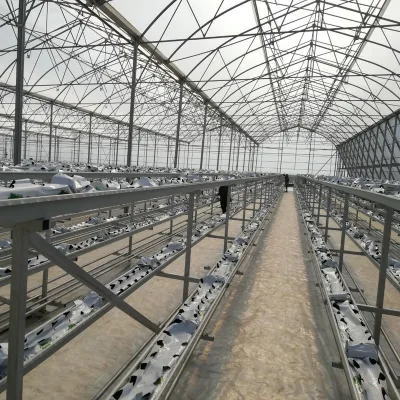

Greenhouse with Custom Tarpaulin Color and Waterproof Cheap High Tunnel Gothic Structure Greenhouses
$0.35 - $0.80
MOQ: 500 Square Meters

Greenhouse with Custom Logo and Options Indoor Agricultural Greenhouse Galvanized Steel
$0.35 - $0.80
MOQ: 500 Square Meters


Modern Style Glass Greenhouse for Yard
$15.00
MOQ: 200 Square Meters
Cangzhou Zhuotai Greenhouse Equipment Manufacturing Co., Ltd.


Low Cost High Tunnel Gothic Blackout Greenhouse Light Deprivation Green House
$9.89 - $26.98
MOQ: 270 Square Meters

Galvanized Steel Frame Structure Multi Span Gothic Greenhouse Strawberry Growing
$6.90 - $19.89
MOQ: 200 Square Meters

Customized Size Gothic Greenhouse with Hoops and Wires for Hanging
$40.00 - $80.00
MOQ: 1000 Square Meters


Gothic Multi Span Hot DIP Galvanized Steel Frame Film Greenhouse
$26.00 - $39.00
MOQ: 200 Square Meters


Gothic Roof Greenhouse with Surrounding Sliding Slope for Strong Wind Area Greenhouse Farming
$5.00 - $20.00
MOQ: 500 Square Meters


Comprehensive Sourcing Guide
Strategic Sourcing Guide for Steel Structure Gothic Greenhouses
Understanding the Gothic Greenhouse Architecture and Core Specifications
The Steel Structure Gothic Greenhouse represents a specialized category within agricultural infrastructure, distinguished by its arched roof design that mimics the pointed arches of Gothic architecture. This structural form is not merely aesthetic; it offers significant functional advantages for modern commercial farming. The primary architectural feature is the "Gothic" model designation, which typically implies a specific curvature to the roof trusses. This curvature facilitates superior snow shedding and rain runoff, reducing the risk of structural collapse in regions with heavy precipitation or snowfall. The standard configuration often utilizes a multi-span layout, allowing for the efficient use of land and the creation of large, contiguous growing environments.
Based on observed market data, these structures frequently feature a span width of 8 meters, though buyers must verify specific dimensions as customization is a standard offering. The height parameters are critical for internal climate management and machinery access. Typical configurations include a gutter height of 3 meters and a top peak height reaching 4.8 meters. This vertical clearance is essential for installing overhead irrigation systems, ventilation fans, and for the cultivation of tall crops such as berries or tomatoes. The building materials are predominantly steel, specifically hot galvanized steel frames, which provide the necessary tensile strength and corrosion resistance required for long-term exposure to humid agricultural environments. The cover material is typically a high-performance film, with options ranging from 100 to 200 microns in thickness, or specific PO (Polyolefin) films designed to enhance light transmission and durability.
Technical Performance and Environmental Control Systems
The operational efficiency of a Steel Structure Gothic Greenhouse relies heavily on its integrated environmental control systems. Unlike simple polytunnels, these structures are designed as production greenhouses capable of supporting advanced cultivation methods. The standard specification often includes provisions for a cooling system, irrigation system, and ventilation mechanisms. These systems are not merely add-ons but are integral to the greenhouse's ability to maintain optimal growing conditions year-round. The structure is suitable for a wide array of applications, including flower, seedling, vegetable, and fruit cultivation. Furthermore, the design supports mixed farming scenarios, including aquaculture and the overwintering of poultry and livestock, indicating a high degree of versatility in its thermal and spatial management.
The roofing shape, identified as a sawtooth or gothic profile, plays a vital role in light distribution. The arched design helps diffuse sunlight, reducing hot spots and ensuring more uniform growth across the crop canopy. For buyers focusing on high-value crops like berries, the structural integrity provided by the hot galvanized steel frame is paramount. The cover material, often transparent film, allows for maximum light penetration while protecting the interior from external elements. Some configurations may utilize glass as a cover material, particularly for experiment greenhouses, though film remains the dominant choice for large-scale production due to cost and weight considerations. The waterproof capability of these structures is a standard requirement, ensuring that the internal environment remains dry and controlled regardless of external weather conditions.
Compliance, Standards, and Material Verification
When sourcing steel structure gothic greenhouses, verifying compliance with industry standards and material specifications is a critical step in the procurement process. While specific certification names may vary by region, buyers must demand evidence that the steel structure meets local building codes and agricultural safety standards. The observed standard dimensions, such as the 30x100ft configuration, serve as a reference point, but the "customized" nature of these products means that exact compliance must be verified against the specific project requirements. The origin of the materials is a key factor; products listed with origins in regions like Jiangsu or Shandong, China, should be scrutinized for the quality of the galvanization process and the thickness of the steel profiles.
Buyers should request detailed material certificates for the steel frame, specifically confirming the grade of the steel and the thickness of the hot-dip galvanization. The cover material must also be verified for its UV resistance and longevity. The product specifications often list film thicknesses ranging from 100 to 200 microns, but the actual performance depends on the polymer composition, such as PO film, which offers superior light transmission compared to standard PE films. It is essential to confirm that the "Eco Friendly" attributes claimed by suppliers are substantiated by the recyclability of the materials and the energy efficiency of the greenhouse design. Additionally, the structural design should be validated for wind and snow load capacities, which are not always explicitly stated in general product listings but are critical for safety in diverse climates.
Cost Drivers and Financial Considerations
The cost of a Steel Structure Gothic Greenhouse is influenced by a complex interplay of factors, including material prices, customization levels, and logistical requirements. The primary cost driver is the steel structure itself, specifically the quantity and grade of the hot galvanized steel used. The span width, height, and total length of the greenhouse directly impact the amount of steel required. For instance, a multi-span configuration with an 8-meter span will have different material requirements compared to a single-span unit. The cover material also significantly affects the price; PO film and thicker films (e.g., 200 microns) command higher prices than standard polyethylene films.
Customization is a major factor in the final cost. While the base model may be available at a standard price point, options such as custom logos, specific tarpaulin colors, and tailored packaging can increase the unit price. The inclusion of optional systems like cooling, irrigation, and ventilation adds substantial cost to the overall project. Buyers should note that the observed price range in the market is broad, spanning from 0.35 to 800 USD, which likely reflects the difference between individual components and fully assembled units or different scales of operation. The Minimum Order Quantity (MOQ) also plays a role in pricing, with ranges observed from 1 to 1000 units. Larger orders typically benefit from economies of scale, reducing the per-unit cost. However, the single package size and weight, often listed as 1x1x1 cm and 1.000 kg respectively, suggest that shipping and logistics costs must be carefully calculated, as the volume and weight of the components can vary significantly depending on the final configuration.
Supplier Evaluation and Quality Assurance Protocols
Selecting the right supplier for a Steel Structure Gothic Greenhouse requires a rigorous evaluation process that goes beyond simple price comparison. Buyers should prioritize suppliers who demonstrate transparency in their manufacturing processes and provide detailed technical documentation. The brand name "Greentime" appears in the market data, but buyers should not rely on a single brand and should instead evaluate multiple suppliers based on their track record, production capacity, and quality control measures. It is crucial to verify the supplier's location and production facilities, as the origin of the product (e.g., Jiangsu, Shandong, or other regions in China) can influence the quality of the galvanization and the consistency of the steel profiles.
Quality assurance protocols should be a central part of the supplier evaluation. Buyers must inquire about the testing procedures for the steel frame, including tensile strength tests and corrosion resistance tests. The cover material should be tested for UV stability and tear resistance. Suppliers should be able to provide third-party test results or certifications that validate the performance claims of their products. Additionally, the customization scope, which includes support for custom logos and packaging, should be evaluated to ensure that the supplier has the flexibility to meet specific project requirements. The "Instruction for use" provided by the supplier should be comprehensive, covering assembly, maintenance, and operational guidelines. Buyers should also assess the supplier's ability to provide after-sales support, including technical assistance and spare parts availability, to ensure the long-term success of the greenhouse project.
Long-Term Procurement and Operational Sustainability
The long-term viability of a Steel Structure Gothic Greenhouse investment depends on its durability, maintainability, and adaptability to changing agricultural needs. The hot galvanized steel frame is designed to withstand harsh environmental conditions, but regular maintenance is essential to extend its lifespan. Buyers should consider the ease of access for maintenance tasks, such as replacing the cover film or repairing the ventilation system. The modular nature of these structures allows for future expansion or modification, making them a sustainable choice for growing operations. The "Eco Friendly" attributes of the greenhouse, such as energy efficiency and water conservation through integrated irrigation systems, contribute to the long-term operational sustainability of the farm.
Furthermore, the versatility of the Steel Structure Gothic Greenhouse supports a wide range of cultivation methods, from traditional soil-based farming to vertical farming and aquaculture. This adaptability ensures that the greenhouse can evolve with the farmer's needs, protecting the initial investment over time. The ability to customize the structure, including the tarpaulin color and internal layout, allows for optimization of the growing environment for specific crops. Buyers should also consider the environmental impact of the materials used, ensuring that the greenhouse design aligns with their sustainability goals. By selecting a high-quality Steel Structure Gothic Greenhouse with robust environmental control systems, buyers can ensure a productive and sustainable agricultural operation for years to come. The initial investment in a well-engineered structure pays dividends through reduced maintenance costs, higher crop yields, and the ability to operate year-round regardless of external weather conditions.
FAQs
What is the typical span width for this greenhouse?
The typical span width is 8 meters, though customization is available for specific project needs. This dimension supports multi-span configurations suitable for large-scale production environments.
Can the greenhouse support vertical farming methods?
Yes, the structure supports vertical farming methods alongside traditional soil cultivation. It is designed for diverse applications including flower, seedling, vegetable, and fruit growing.
What material is used for the structural frame?
The frame is constructed from hot galvanized steel to ensure corrosion resistance and longevity. This material provides the necessary strength for snow shedding and wind load capacity.
What cover materials are available for the roof?
Cover materials include transparent film ranging from 100 to 200 microns or PO film. Some configurations may also utilize glass, particularly for experiment greenhouses requiring high light transmission.
Is the gutter height customizable for machinery access?
The standard gutter height is 3 meters with a top peak height of 4.8 meters. Customization is available to adjust these dimensions for specific machinery or crop requirements.
Which optional systems can be integrated into the structure?
Optional systems include cooling, irrigation, and ventilation mechanisms to maintain optimal growing conditions. These systems are integral to the greenhouse's ability to support year-round production.
What is the origin location for these steel structures?
The products originate from regions in China, specifically Jiangsu and Shandong. Buyers should verify the specific factory location to ensure quality standards and logistics planning.