Source Steel Wire Rope for Lifting, Fencing, and Construction
Compare 30 Steel Wire Rope options from Jiangsu Nantong suppliers. Explore cold-drawn steel strands in diameters from 0.15mm to 60mm, available in various standards like AISI and ISO, with customization and surface treatment options for industrial applications; compare the available evidence and request quotations based on your requirements.
Key considerations
Products List




Comprehensive Sourcing Guide
Steel Wire Rope Sourcing Guide
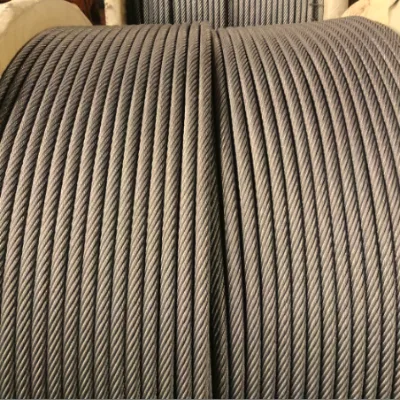
Buyers must first distinguish between the specific construction types available in the market, as the supply data indicates a range of configurations including 6 x 19S, 8 x 19S, and 6 x 25(Fi) variants. These structural differences directly influence the rope's flexibility and resistance to abrasion, which are critical factors when selecting a product for heavy-duty lifting or static fencing applications. Understanding these model variations ensures the procurement team matches the physical geometry of the wire strand to the specific mechanical demands of the intended project.
The observed product listings reveal a diverse range of diameters spanning from 1.5mm up to 60mm, with some specialized entries noting ranges as small as 0.15mm or as large as 65mm. This variance requires buyers to verify the exact core composition, noting that options include both Fiber Core and Steel Core constructions like Iws and Iwrc. Selecting the correct diameter and core type is essential to prevent premature failure, as the load-bearing capacity and elongation characteristics differ significantly between these core materials and wire counts.
Product Scope and Observed Listing Signals
Procurement teams should evaluate the surface treatment and material finish, as the available data highlights options ranging from black surface treatments to smooth finishes on cold-drawn steel wire. The presence of cold drawing and cold rolling techniques suggests a manufacturing process that enhances tensile strength and dimensional consistency, which are vital for applications requiring precise tolerances. Buyers must confirm whether the specific listing includes these processing services, as the mechanical properties of the final product depend heavily on the intensity and control of these drawing operations.
Packaging and shipping formats vary significantly across the supply base, with options including ply wooden reels, soft coils, cartons, wood cases, and standard spools or rolls. This variation impacts logistics planning and on-site handling, particularly for projects requiring immediate deployment or those with limited storage space. Sourcing managers need to align the packaging method with their internal handling capabilities, ensuring that the chosen format prevents tangling or damage during transit and storage while facilitating efficient unloading at the destination site.
Technical Specifications to Verify
Verification of the cross-sectional shape and alloy composition is a primary step, as the supply data confirms a standard round cross-section and the availability of both non-alloy and specific stainless steel grades like 304, 316, and their low-carbon variants. Buyers must explicitly request chemical composition reports to confirm carbon and silicon content levels, as these elements dictate the material's ductility and resistance to corrosion in harsh environments. Ensuring the correct alloy is selected prevents costly replacements due to rust or brittility in service conditions that exceed the capabilities of standard non-alloy steel.
Dimensional tolerances and length specifications require rigorous validation, with observed listings citing tolerances as tight as 1% and lengths ranging from 50 to 6500 meters depending on the coil configuration. The standard diameter ranges provided, such as 0.2mm to 10.0mm or 4mm to 65mm, must be cross-referenced against the specific project requirements to avoid ordering undersized or oversized components. Buyers should demand mill test certificates that verify these physical dimensions against the ordered specifications, ensuring the wire rope meets the precise engineering constraints of the application.
Compliance and Safety Documentation
Safety and quality assurance rely heavily on the presence of recognized certifications, with the market data indicating a prevalence of ISO, SGS, and CE marks alongside various national standards like AISI, ASTM, and DIN. Procurement professionals must verify that the supplier holds valid, current certificates for the specific product line being ordered, as these documents provide independent validation of the manufacturing quality control processes. Relying on unverified claims without physical certification documentation exposes the buyer to significant liability risks in the event of a structural failure or safety incident.
Compliance with international standards such as ISO9001 and ISO14001 is essential for ensuring consistent manufacturing practices and environmental responsibility throughout the supply chain. Buyers should request evidence of these management system certifications to confirm that the supplier adheres to rigorous quality management protocols and environmental regulations. This due diligence helps mitigate supply chain risks by ensuring that the production facility maintains the necessary controls to deliver products that consistently meet the required safety and performance benchmarks.
Cost Drivers and Commercial Terms
Pricing structures in this market are highly variable, with observed listing ranges extending from nominal values up to ten thousand dollars, influenced heavily by diameter, alloy type, and order volume. The minimum order quantities observed range from single units to thousands, meaning that unit economics will shift dramatically based on the scale of the purchase. Buyers must analyze the total cost of ownership rather than just the unit price, considering how the MOQ and volume discounts interact with their specific inventory requirements and project timelines.
Commercial terms regarding lead times and delivery methods are critical, as the supply data indicates origins in Jiangsu Nantong and China, which may involve complex logistics for international shipments. The choice between soft coils, wooden reels, or cartons affects freight costs and insurance premiums, requiring a detailed comparison of shipping options to optimize the landed cost. Procurement teams should negotiate clear terms for packaging and delivery to ensure that the product arrives in the specified condition without incurring unexpected surcharges or delays that could disrupt project schedules.
Supplier Qualification and Quality Control
Supplier qualification should focus on the manufacturing location and the specific processing capabilities, with the data pointing to a concentration of production in Jiangsu Nantong and China. Buyers must assess the supplier's ability to perform additional processing services such as bending, welding, decoiling, punching, and cutting, as these value-added services can streamline the installation process and reduce on-site labor costs. Verifying that the supplier has the infrastructure to handle these specific processing requirements ensures a seamless integration of the wire rope into the final assembly or construction project.
Quality control procedures must be validated through the supplier's internal testing protocols and their adherence to the stated standards like AISI, BS, and GB. Buyers should inquire about the specific inspection methods used to verify the cold drawing process and the final surface treatment, ensuring that the product meets the required soft state or specific hardness levels. Establishing a clear quality assurance framework with the supplier, including pre-shipment inspections and sample testing, is essential to maintain the integrity of the supply chain and prevent the acceptance of substandard materials.
Long-Term Procurement Checks
Sustainable procurement requires ongoing monitoring of the supplier's ability to maintain consistent quality over time, particularly given the wide range of diameters and construction types available in the market. Buyers should establish a schedule for periodic audits or re-verification of certifications to ensure that the supplier continues to meet the ISO, SGS, and CE standards required for long-term projects. This proactive approach helps identify any drift in manufacturing quality before it impacts the performance of the installed wire rope systems.
Future-proofing the supply chain involves maintaining a relationship with suppliers who can adapt to changing project needs, such as shifts in diameter requirements or the introduction of new alloy grades. Buyers should regularly review the supplier's inventory of standard models like 6 x 19S or 8 x 25(Fi) to ensure they can meet sudden demand spikes without compromising on delivery times. Building a flexible partnership with a qualified supplier ensures that the procurement team can respond effectively to evolving engineering challenges and market conditions.
FAQs
What diameters are available for Steel Wire Rope?
Steel Wire Rope is offered in diameters ranging from 1.5mm to 60mm, with some listings covering 4-65mm or 0.15-50.0mm depending on the product line. Common constructions include 6 x 19S, 8 x 19S, 8 x 25(Fi), and 6 x 25(Fi). Confirm the exact diameter and construction with the supplier before ordering.
Which core types are used in Steel Wire Rope construction?
Steel Wire Rope is commonly supplied with fiber core or steel core, listed as FC, IWS, and IWRC. Fiber core ropes are more flexible, while steel core ropes provide better crush resistance and strength in demanding lifting applications. Choose the core type based on sheave conditions, load requirements, and the working environment.
Can Steel Wire Rope be customized for specific applications?
Yes, customization is available for many Steel Wire Rope listings. Buyers can typically specify diameter, construction, core type, surface treatment, and packaging such as ply wooden reels, soft coils, cartons, wood cases, rolls, or spools. Discuss your lifting, hanging, fixing, or cableway requirements with the supplier to confirm feasibility and terms.
What materials and grades are used in these wire ropes?
Listings cover steel wire and stainless steel grades including 304, 304L, 316, and 316L. Standard carbon ropes are non-alloy steel, often supplied black with a soft state finish from cold drawing or cold rolling. Select stainless grades when corrosion resistance matters, such as marine, decorative, or outdoor fencing applications.
What standards do Steel Wire Rope products comply with?
Products are commonly produced to standards including AISI, ASTM, BS, DIN, GB, and JIS, with quality systems such as ISO9001, ISO14001, CE, and SGS certification referenced in listings. Always request the specific compliance documentation and test certificates for the exact rope construction and diameter you intend to purchase.
How is Steel Wire Rope packed for shipping?
Typical packing options include ply wooden reels, soft coils, cartons, wood cases, rolls, and spools. Reels and wooden cases suit longer lengths and heavier diameters, while coils and spools work well for thinner wire. Packaging can often be customized, so confirm your preferred format and export requirements with the supplier.
What applications is Steel Wire Rope suitable for?
Steel Wire Rope is used for lifting, hanging, fixing, and cableway applications, plus construction, netting, fencing, screening, gabion mesh, window curtains, and protective mesh. Ropes with fiber or steel cores suit crane and hoist work, while finer stainless wire serves filter, decorative, and screening uses. Match construction and grade to the load and environment.