Source EDR Ethernet Server Adapter Card for Routers Firewalls Storage
Compare 30 EDR Ethernet Server Adapter Card options from verified suppliers. Browse specifications for routers, firewalls, and storage devices with varying speeds and certifications to find the right fit for your infrastructure needs; compare the available evidence and request quotations based on your requirements.
Key considerations
Products List
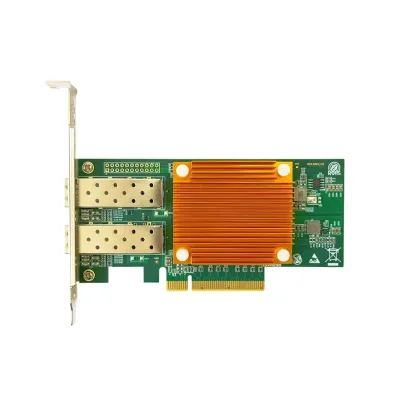


LAN Realtek PCI Express Gigabit Ethernet Adapter Pcie 4 Ports Network Card
$300.00 - $600.00
MOQ: 150 Pieces


Bcm5719 Ethernet Adapter for Windows Server Chipset Pcie 1000m Network LAN Card
$600.00 - $800.00
MOQ: 1 Pieces


$0.01 - $0.80
MOQ: 5000 Pieces


Original 1734-Aentr I/O Dual Ethernet Communication Adapter New and Orginal
$378.00 - $496.00
MOQ: 1 Pieces
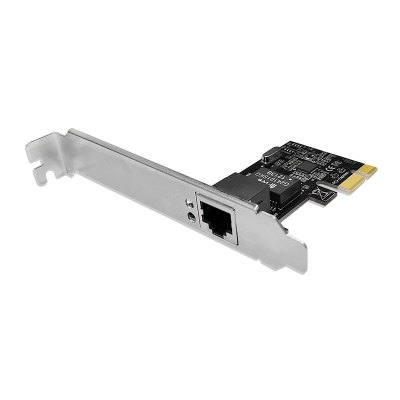


MCX512A-Acut Mellanox 10/25 Gigabit Ethernet Card Adapter MCX512A-Acat
$199.00 - $210.00
MOQ: 1 Pieces

Comprehensive Sourcing Guide
EDR Ethernet Server Adapter Card Sourcing Guide
Procuring an EDR Ethernet Server Adapter Card requires distinguishing between high-performance fiber solutions and general-purpose wired interfaces. The market presents a mix of products, including dual SFP+ server adapter cards designed for routers and firewalls, alongside integrated network cards for workstations. Buyers must carefully align their specific infrastructure needs with the observed product attributes, such as the Intel 82599ES controller found in specific high-speed models, to ensure compatibility with existing server architectures.
The sourcing landscape reveals significant variation in product types, ranging from fiber optic adapters supporting up to 300 meters to wireless and wired options for desktop applications. While some listings highlight low-profile and full-height bracket options for diverse chassis requirements, others focus on industrial or laptop integration. A rigorous review of the single package size and gross weight is essential for logistics planning, as these physical dimensions directly impact shipping costs and rack installation feasibility for large-scale deployments.
Product Scope and Observed Listing Signals
Buyers should first verify the intended application environment, as listings explicitly target servers, GAP systems, and storage devices alongside general firewall and VPN usage. The observed data indicates a strong presence of dual SFP+ server adapter cards, which are critical for high-bandwidth data center environments. However, the catalog also includes products labeled for industrial use or as simple adaptors, necessitating a clear definition of the operational context to avoid selecting a component with insufficient throughput for enterprise-grade traffic.
Observation of the speed and slot width specifications reveals a split between 5.0 GT/s x8 lane interfaces and lower bandwidth options like 10/100Mbps or 1000Mbps. This variance suggests that not all listed items are suitable for modern 10GbE requirements, despite some claiming 10/1GbE data rates per port. Procurement teams must cross-reference the stated transmission rate against their network backbone capabilities, ensuring that the selected card supports the necessary lane width and speed to prevent bottlenecks in critical server-to-server communication paths.
Technical Specifications to Verify
The interface type and controller chipset are primary verification points, with some products specifying PCI interfaces while others list USB 2.0 standards. High-performance sourcing demands confirmation of the Ethernet controller model, such as the Intel 82599ES, which is explicitly noted in certain listings for 10GbE performance. Buyers must ensure the selected adapter matches the motherboard slot type and driver support requirements, as the presence of a USB interface or integrated network card on a motherboard may not satisfy the dedicated server adapter needs for high-throughput applications.
Bandwidth and cabling type represent another critical technical dimension that varies significantly across the observed listings. While some products support MMF cabling up to 300 meters, others are limited to thin cable cards or specific bandwidths like 10Mbps/100Mbps. It is imperative to validate the cabling type against the physical plant infrastructure, as a mismatch between the adapter's optical support and the available fiber or copper cabling will render the hardware unusable regardless of its theoretical data rate capabilities.
Compliance and Safety Documentation
Regulatory compliance is a non-negotiable aspect of sourcing, with observed listings frequently citing FCC, CE, and RoHS certifications. These standards are essential for ensuring the product meets electromagnetic interference limits and hazardous substance restrictions required for deployment in many global markets. Procurement teams must request current certification documents for every batch, as the presence of these marks on a product page does not guarantee that every unit in a specific shipment adheres to the same rigorous safety and environmental standards.
Additional certifications such as ISO and specific product standards like Ethernet & Communication protocols further validate the quality and interoperability of the hardware. While some items list ISO and RoHS, others may only provide CE, creating a potential compliance gap for international projects. Buyers should verify that the specific model number, such as GH1002E-V3.2-76 or bcm5719, carries the necessary documentation for the target region, ensuring that the hardware can be legally installed and operated without regulatory penalties or safety risks.
Cost Drivers and Commercial Terms
Pricing in this category exhibits a wide range, observed from $0.01 to $3800, driven by the complexity of the controller and the performance tier of the adapter. High-end fiber optic solutions with dual SFP+ ports and Intel controllers command premium prices compared to basic wired adaptors or integrated cards. Buyers must analyze the cost per port and the total cost of ownership, considering that lower-priced items may lack the necessary features for enterprise environments, such as hot-pluggable capabilities or specific bracket heights required for server racks.
Minimum Order Quantities (MOQ) and selling units also vary, with observed ranges from 1 to 5000 units, influencing the total procurement budget. Some listings offer single item sales, which is beneficial for testing or small-scale upgrades, while others may require bulk purchasing to access competitive pricing. Understanding the selling unit structure is vital for financial planning, as the MOQ can significantly impact the initial capital outlay and the flexibility to scale the deployment as network demands evolve over time.
Supplier Qualification and Quality Control
Supplier origin and manufacturing location are key indicators of supply chain stability, with observed products originating from Beijing, Shenzhen, and other regions in China. While these locations are hubs for electronics manufacturing, buyers should verify the specific factory capabilities and quality control processes associated with the brand name, such as GRT or Eland. The consistency of the product condition, listed as "New" in most cases, should be confirmed through supplier audits to ensure that the hardware has not been refurbished or repackaged without disclosure.
Quality assurance extends to the warranty period and the availability of technical support, with observed terms ranging from one year to three years. A longer warranty period, such as the three years noted for specific models, often reflects higher confidence in the product's durability and the supplier's commitment to after-sales service. Procurement teams should prioritize suppliers who offer clear warranty terms and fast initialization support, as these factors reduce the risk of downtime and ensure rapid deployment of the network infrastructure.
Long-Term Procurement Checks
Sustainability and future-proofing are critical considerations when selecting an EDR Ethernet Server Adapter Card for long-term deployment. Buyers should assess the customization availability and the adaptability of the product to future network upgrades, as the technology landscape shifts rapidly. The ability to customize the interface or bracket height can extend the useful life of the hardware, allowing it to remain compatible with evolving server chassis and network standards without requiring a complete system overhaul.
Regular performance monitoring and maintenance planning are essential to maintain network integrity over the product's lifecycle. The observed warranty periods provide a baseline for expected reliability, but proactive checks on the data rate per port and transmission rate are necessary to detect degradation before it impacts operations. Establishing a schedule for verifying the physical condition of the cabling and the integrity of the SFP+ ports ensures that the adapter continues to perform at the required 10/1GbE or higher speeds throughout its operational life.
FAQs
What certifications do these server adapter cards hold?
These cards hold FCC, CE, and RoHS certifications. Some models also carry ISO certification. These standards ensure compliance with international safety and environmental regulations for use in routers, firewalls, and servers.
Which Ethernet controller is used in the GH1002E-V3.2-76 model?
The GH1002E-V3.2-76 model utilizes the Intel 82599ES 10gb network card controller. This high-performance controller supports 10/1GbE data rates per port and is designed for demanding server and storage device applications.
Can I customize the bracket height for this adapter card?
Yes, customization is available for this product. The card supports both Low Profile and Full Height bracket options. This flexibility allows installation in various server chassis configurations without requiring additional modifications.
What is the warranty period for the GRT brand adapter card?
The GRT brand adapter card comes with a three-year warranty period. This coverage ensures reliability for industrial and server applications. Some other listed items may offer a one-year warranty instead.
How fast is the transmission rate for this network card?
The transmission rate supports 10/100Mbps and 10/1GbE speeds depending on the specific port configuration. The bandwidth is rated at 1000Mbps for compatible Ethernet connections. This ensures efficient data transfer for routers and firewalls.
Where is the place of origin for these network cards?
The place of origin is Beijing, China for the primary model. Some other variants originate from Shenzhen, China. These locations indicate the manufacturing base for the supplied industrial and server networking equipment.
What is the single gross weight of the packaged item?
The single gross weight of the packaged item is 0.300 kg. The single package size measures 23x15x5 cm. This lightweight design facilitates easy shipping and handling for global procurement orders.