Source Storage Perforated Corner Iron for Furniture, Shelving, and Racking
Compare 30 listings for Storage Perforated Corner Iron with varying dimensions, thicknesses, and surface treatments. Buyers can evaluate options from suppliers in China for furniture, shelving, and racking applications.
Key considerations
Products List


Corrugated Perforated Metal Plate/Oblong Slotted Perforated Metal
$11.00 - $12.00
MOQ: 1000 Square Meters

Perforated Metal / Perforated Metal for Building Decoration / Perforated Metal Screen
$11.00 - $12.00
MOQ: 1000 Square Meters


Comprehensive Sourcing Guide
Strategic Sourcing Guide for Storage Perforated Corner Iron
Navigating the global market for Storage Perforated Corner Iron requires a disciplined approach to verifying technical attributes, ensuring regulatory compliance, and understanding the complex cost drivers inherent in metal fabrication. For procurement professionals, the distinction between standard structural angle iron and specialized perforated variants used in shelving and storage systems is critical. The following guide synthesizes available product data and industry standards to provide a robust framework for sourcing these components effectively.
Technical Specifications and Dimensional Variability
The foundation of any successful procurement strategy for corner iron lies in the precise definition of technical specifications. The market offers a diverse range of dimensions, particularly for storage applications where load-bearing capacity and shelf spacing are paramount. Based on observed product data, the "Wing" dimensions for these products typically range from 25x25mm up to 200x200mm, with alternative configurations extending from 25x16mm to 200x125mm. These variations allow buyers to select components that match specific shelving unit requirements, from light-duty retail displays to heavy-duty industrial racking.
Thickness is another critical parameter that dictates structural integrity. Observed data indicates a thickness range of 3mm to 20mm, with a specific tolerance of +/- 0.05mm. This tight tolerance is essential for ensuring that perforated holes align correctly during assembly and that the final structure maintains its geometric stability under load. The length of the product is equally variable; while normal lengths are often cited as 6 meters, the market also supports lengths ranging from 1 to 12 meters, or custom cuts between 2 to 3 meters for specific modular applications.
The material composition further influences performance. The primary material identified is Iron Steel, with grades spanning the Q195 to Q420 series. This range allows for selection based on the required yield strength and ductility. For instance, Q195 offers high ductility suitable for bending, while Q420 provides higher strength for heavy-load scenarios. The surface treatment is frequently Zinc Galvanized, which is a standard requirement for storage environments to prevent corrosion. However, buyers must verify if the perforation process compromises the galvanization layer, as the exposure of raw steel at the cut edges can lead to localized rusting if not properly treated.
Compliance, Certification, and Standard Verification
In the B2B metal supply chain, compliance is not merely a formality but a risk mitigation strategy. The sourcing of Storage Perforated Corner Iron must align with recognized international standards. The observed product data lists compliance with ASTM, BS, DIN, GB, and JIS standards. These acronyms represent major regulatory bodies and standardization organizations across North America, Europe, China, and Japan. When evaluating suppliers, buyers should explicitly request documentation proving that the specific batch of corner iron meets the relevant standard for their target market. For example, an ASTM A36 specification might be required for US-based construction, while a JIS G3101 standard may be necessary for projects in Japan.
Certification plays a pivotal role in validating quality claims. The data highlights SGS certification as a verified attribute for certain products. SGS is a globally recognized inspection, verification, testing, and certification company. When a supplier lists SGS certification, it implies that an independent third party has audited the manufacturing process or tested the final product against specific criteria. Buyers should not accept a generic claim of "certified" without seeing the specific certificate number and the scope of the audit. It is important to note that while some listings mention ISO 1161 in background contexts, this should be treated as background information rather than a concrete claim unless explicitly verified by the supplier's documentation.
Furthermore, the "Customization" attribute is frequently available, suggesting that suppliers can adapt products to non-standard requirements. However, customization introduces complexity into compliance. If a buyer requests a non-standard dimension or a custom hole pattern, the resulting product may no longer strictly adhere to the original ASTM or DIN standard unless the supplier has a specific engineering validation process. Therefore, the procurement strategy must include a clause requiring that any customized product undergoes a specific compliance review to ensure it meets the safety and performance expectations of the end-user.
Cost Drivers and Economic Factors
Understanding the cost structure of Storage Perforated Corner Iron is essential for budgeting and negotiation. The observed price range in the market is extensive, spanning from $0.01 to $6,500 USD. This vast disparity is not indicative of a single product type but rather reflects the difference between a single unit, a small batch, or a full container load of heavy-gauge steel. The Minimum Order Quantity (MOQ) also varies significantly, ranging from 1 unit to 100,000 units. This flexibility allows small businesses to sample products while enabling large retailers to secure bulk pricing.
Several factors drive the final cost. First, the raw material grade is a primary determinant. Moving from a Q195 grade to a Q420 grade increases the cost due to the higher alloy content and processing requirements. Second, the surface treatment method significantly impacts price. Zinc galvanization adds a layer of cost for the zinc coating and the electrochemical process, but it is often necessary for longevity. Third, the customization level is a major cost driver. Standard 25x25mm angles are mass-produced and cheaper, whereas custom perforation patterns or non-standard wing sizes require dedicated tooling and setup time, increasing the unit price.
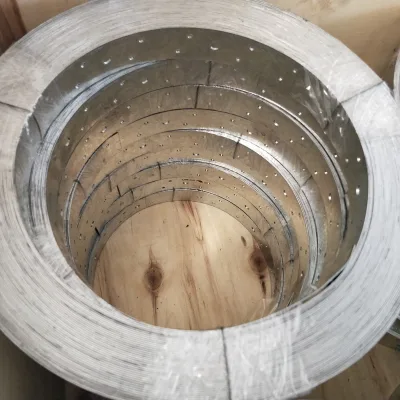
Packing methods also influence logistics costs. The data indicates that products are often packed in bundles wrapped with steel strips, or in polybags and boxes for smaller items. The weight of the product, described as "middle-weight" in some contexts, affects shipping freight charges. Buyers should calculate the total landed cost, including packaging, freight, and potential duties, rather than focusing solely on the unit price. The HS code 83024200 is relevant for customs classification, and understanding this code helps in estimating import duties accurately.
Typical Applications and Functional Requirements
Storage Perforated Corner Iron is a versatile component with applications extending beyond simple shelving. The primary use case identified is for furniture, specifically in the realm of storage units, shelving systems, and display racks. The perforated nature of the iron allows for adjustable shelf heights, a critical feature in retail and warehouse environments where inventory sizes vary. The "Function" is often described as providing structural support, while the "Position" is noted as a bending corner bead in some contexts, suggesting its use in reinforcing corners of larger structures.
In addition to furniture, the data points to applications in construction and industrial settings. The "Function" of heat preservation corner bead suggests a dual use in building facades or insulation systems, where the corner iron protects the edge of the insulation material. The "Style" varies from modern to Chinese style, indicating that these components are also used in aesthetic applications where the corner iron is visible and contributes to the design language of the space. The "Condition" is consistently listed as "New," ensuring that buyers receive fresh, unused materials free from prior structural fatigue.
The "Open Type" and "Folded" attributes further define the application scope. For instance, a swing-open type might be relevant for access panels, while folded configurations could be used in collapsible storage solutions. The "Performance" attribute, described as having a "Strong Ability To Crash," implies a high impact resistance, making these products suitable for environments with heavy traffic or potential for accidental impacts. Buyers must match these functional attributes to their specific use case to ensure the selected corner iron performs adequately in its intended environment.
Supplier Evaluation and Origin Analysis
Evaluating suppliers requires a focus on their geographic origin and manufacturing capabilities. The data identifies several key production hubs, including Tianjin, Hebei, Qingdao, and Anping in China. These regions are known for their robust steel industries and established supply chains. Tianjin and Hebei are particularly noted for steel production, while Anping is famous for its wire mesh and metal fabrication industries. Selecting a supplier from one of these regions can reduce lead times and logistics costs, as the supply chain is localized.
When evaluating a supplier, buyers should verify their "Customization" capabilities. The ability to produce non-standard dimensions, such as the 20x20mm or 30x30mm sizes mentioned, indicates a flexible manufacturing line. However, flexibility must be balanced with quality control. A supplier that can produce anything may lack the discipline to maintain consistent tolerances. Buyers should request samples to verify the +/- 0.05mm thickness tolerance and the quality of the perforation edges.
The "Packing" method is another indicator of supplier professionalism. Suppliers who use steel strips to bundle products demonstrate a commitment to protecting the material during transit. Conversely, those using only polybags for heavy steel items may indicate a lack of experience with bulk shipping. The "Condition" of the product, listed as "New," should be confirmed upon receipt to ensure no damage occurred during handling. Additionally, the "Material" consistency, specifically the Iron Steel grade, must be verified through mill test certificates to ensure the supplier is not substituting lower-grade materials.
Quality Control and Long-Term Procurement Strategy
Implementing a rigorous quality control (QC) protocol is essential for mitigating the risks associated with metal procurement. Given the wide range of observed thicknesses and the critical nature of structural integrity, buyers should establish clear acceptance criteria. This includes visual inspection for surface defects, measurement of wing dimensions and thickness, and verification of the galvanization layer thickness. The "Transparent" attribute, listed as "Opaque," serves as a basic check for material consistency, ensuring that the steel is not translucent or compromised.
For long-term procurement, building a relationship with a reliable supplier is more valuable than chasing the lowest price. The "Customized" nature of many orders suggests that a partnership model works best, where the supplier understands the buyer's specific volume needs and quality expectations. Buyers should consider the "Lead Time" implications of customization; while standard items may be available quickly, custom perforated angles may require longer production cycles.
Finally, buyers must plan for the lifecycle of the product. The "Zinc Galvanized" surface treatment is a key factor in longevity. Over time, the zinc layer may degrade, especially in harsh environments. Procurement strategies should include a plan for maintenance or replacement, factoring in the expected lifespan of the corner iron. By focusing on quality, compliance, and supplier reliability, buyers can secure a steady supply of high-performance Storage Perforated Corner Iron that meets their operational needs.
Summary of Key Sourcing Parameters
To facilitate quick reference during the sourcing process, the following table summarizes the critical parameters observed in the market data. This comparison highlights the variability in specifications and the importance of verification.
| Parameter | Observed Range / Standard | Verification Requirement |
|---|---|---|
| Material Grade | Q195 - Q420 Series | Request Mill Test Certificate (MTC) |
| Wing Dimensions | 25x25mm to 200x200mm | Measure physical sample for tolerance |
| Thickness | 3mm - 20mm | Verify +/- 0.05mm tolerance |
| Surface Finish | Zinc Galvanized | Check for coating uniformity and edge protection |
| Certification | SGS (Verified), ASTM/BS/DIN | Request valid certificate numbers |
| Origin | Tianjin, Hebei, Qingdao, Anping | Confirm factory location and logistics capability |
| Packing | Steel Strips, Polybags, Boxes | Inspect packaging integrity upon delivery |
| MOQ | 1 - 100,000 Units | Negotiate based on volume and lead time |
By adhering to these guidelines and maintaining a focus on evidence-based verification, procurement professionals can navigate the complexities of the Storage Perforated Corner Iron market with confidence and efficiency.
FAQs
What dimensions are available for Storage Perforated Corner Iron?
Available wing dimensions range from 25x25mm to 200x200mm and 25x16mm to 200x125mm. Buyers can also find products with standard sizes like 20x20mm or 30x30mm depending on the specific manufacturer and customization options.
Can I order custom lengths for this corner iron?
Yes, customization is available for lengths ranging from 1 to 12 meters. While normal lengths are typically 6 meters, suppliers can produce specific cuts between 2 to 3 meters or other dimensions according to customer requirements.
Which material grades are used for this steel product?
The product is made from Iron Steel with grades spanning the Q195 to Q420 series. This range allows selection based on required yield strength, with Q195 offering high ductility and Q420 providing higher strength for heavy loads.
What surface treatment is applied to the corner iron?
The surface treatment is typically Zinc Galvanized to prevent corrosion in storage environments. This coating is essential for longevity, though buyers should verify if the perforation process affects the galvanization layer at cut edges.
How thick is the Storage Perforated Corner Iron?
The thickness ranges from 3mm to 20mm with a tolerance of plus or minus 0.05mm. This tight tolerance ensures that perforated holes align correctly during assembly and maintains geometric stability under load.
Which certifications verify the quality of this product?
SGS certification is a verified attribute for certain products in this category. Buyers should request specific certificate numbers to confirm that an independent third party has audited the manufacturing process or tested the final product.