Source Stranded Shielded Signal Cable for Underground, Heating, and Overhead
Compare 30 listings for Stranded Shielded Signal Cable from verified Chinese manufacturers. Buyers can evaluate specifications like voltage ratings, conductor materials, and certifications for underground, heating, and overhead applications.
Key considerations
Products List


Comprehensive Sourcing Guide
Strategic Sourcing Guide for Stranded Shielded Signal Cables
Understanding Technical Specifications and Conductor Architecture
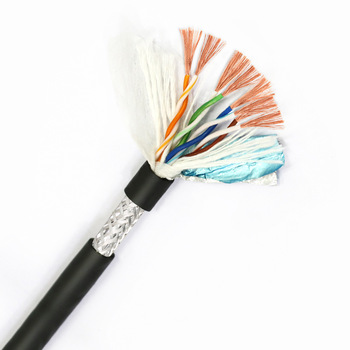
When sourcing stranded shielded signal cables, the primary objective is to ensure signal integrity while maintaining mechanical flexibility for complex installation environments. The core of this product category relies heavily on the conductor material and its physical configuration. Based on available market data, the predominant conductor material for these applications is copper, specifically in a stranded configuration. This stranded architecture is distinct from solid wire and is preferred for signal cables because it offers superior flexibility, allowing the cable to bend around corners and through conduits without breaking. The stranded nature of the conductor is critical for applications involving vibration or frequent movement, such as in industrial automation or mobile equipment.
The physical dimensions of the conductor are a primary variable in procurement. Buyers should expect to encounter a wide range of wire sizes, often specified in both American Wire Gauge (AWG) and cross-sectional area (mm²). Common specifications observed in the market include sizes ranging from AWG24 down to larger gauges like AWG8, with corresponding cross-sectional areas typically spanning from 0.75 mm² up to 10 mm² or higher. For specific signal applications, smaller gauges such as 0.3 mm, 0.1 mm, or 2.5 mm may be utilized depending on the current carrying requirements and signal attenuation needs. The shape of the wire is consistently round, which facilitates efficient packing within the cable jacket and ensures uniform insulation thickness.
The insulation material is another critical technical specification. Polyvinyl Chloride (PVC) is a widely cited material for the insulation layer in these cables. PVC provides a cost-effective solution that offers adequate electrical insulation properties for low-voltage signal transmission. The rated voltage for these products is frequently observed at 300V, which is standard for control and signal applications where high-voltage power transmission is not the primary function. The cable structure often includes a shield, which is essential for protecting the signal from electromagnetic interference (EMI) and radio frequency interference (RFI), ensuring data integrity in electrically noisy environments.
Compliance Verification and Certification Standards
Navigating the regulatory landscape is a non-negotiable aspect of sourcing industrial cables. Buyers must verify that suppliers can provide documentation for relevant certifications, as these serve as proof of compliance with safety and environmental standards. The market data indicates a prevalence of several key certifications, including RoHS (Restriction of Hazardous Substances), CCC (China Compulsory Certification), ISO (International Organization for Standardization), CE (Conformité Européenne), and VDE (Verband der Elektrotechnik).
RoHS compliance is particularly important for products destined for the European Union and other regions with strict environmental regulations, as it ensures the cable does not contain hazardous materials like lead, mercury, or cadmium. The CCC mark is mandatory for products sold within China, while the CE mark indicates conformity with health, safety, and environmental protection standards for products sold within the European Economic Area. VDE certification is a German standard that is highly respected globally for electrical safety and performance. ISO certification, often referring to ISO 9001 for quality management, suggests that the manufacturer has established processes for consistent quality control.
It is crucial for buyers to understand that the presence of these certifications is not automatic for every product listing. While the data shows these certifications are common among suppliers offering copper stranded cables, each specific product model must be verified. Buyers should request current certification documents and verify their validity with the issuing bodies. The "Conductor Material: Copper" attribute is often listed alongside these certifications, reinforcing the material composition. However, buyers must ensure that the specific batch or model number they are purchasing carries the specific certification required for their target market. For instance, a cable intended for the US market might require UL listing in addition to or instead of CE, while a product for the Middle East might have different local requirements.
Cost Drivers and Pricing Variables
The pricing of stranded shielded signal cables is influenced by a complex interplay of material costs, manufacturing complexity, and order volume. The primary cost driver is the price of copper, which fluctuates based on global commodity markets. Since copper is the standard conductor material, any increase in copper prices will directly impact the unit cost of the cable. The amount of copper used is determined by the cross-sectional area and the length of the cable; therefore, cables with larger cross-sections (e.g., 10 mm² vs. 0.75 mm²) will inherently cost more due to the higher material content.
Manufacturing complexity also plays a significant role. Stranded conductors require more processing steps than solid conductors, including drawing, stranding, and twisting, which adds to the labor and equipment costs. The inclusion of shielding, whether foil or braided, adds another layer of material and processing expense. Additionally, the insulation material, typically PVC in this context, contributes to the cost, though it is generally less expensive than high-performance alternatives like cross-linked polyethylene (XLPE).
Order volume is a critical factor in the final price per unit. The market data indicates a wide range of Minimum Order Quantities (MOQ), spanning from as low as 1 unit to as high as 10,000 units. Buyers purchasing in bulk can often negotiate significantly lower unit prices, leveraging economies of scale. Conversely, small orders or custom requests may incur higher per-unit costs due to the setup time and reduced efficiency of production runs. Customization is a major cost variable; while many suppliers offer "Customized According to Demand" or "Available" customization options, requests for specific colors (such as Red, Black, Yellow, Grey, or Brown), unique core counts (e.g., 3 cores), or non-standard lengths will increase the price. The packaging method, whether plastic packaging, cardboard boxes, or export wooden drums, also affects the final cost, with more robust packaging for international shipping adding to the expense.
Typical Applications and Environmental Durability
Stranded shielded signal cables are versatile and find application across a diverse range of industries. The observed application data highlights their use in underground installations, overhead lines, and heating systems. This versatility stems from the cable's ability to withstand various environmental conditions. The product characteristics often include oil resistance, acid and alkali resistance, and aging resistance, making them suitable for harsh industrial environments where chemical exposure is a risk.
Temperature tolerance is a key performance metric for these cables. The data indicates a high-low temperature range of -30°C to +105°C. This wide operating range allows the cables to function reliably in extreme cold climates as well as in high-temperature industrial settings. The folding endurance is another critical specification, with some products boasting a folding endurance of 10 million times. This attribute is particularly valuable for applications involving dynamic movement, such as in robotics, drag chains, or automated machinery, where the cable is subjected to constant bending and flexing.
Specific application areas include local communication cables, long-distance symmetric cables, coaxial cables, submarine cables, fiber optic cables, and LAN cables. The shielding component is essential in these applications to prevent signal degradation caused by external interference. For example, in LAN and communication cable applications, the shield protects data integrity against electromagnetic noise from nearby power lines or electronic equipment. In heating applications, the cable must maintain its insulation properties at elevated temperatures, which is supported by the -30°C to +105°C rating. The "Refractory" range of application suggests that some variants may be designed to withstand fire or high heat for a specific duration, although specific fire ratings should be verified with the supplier.
Supplier Evaluation and Origin Considerations
Evaluating suppliers requires a focus on their geographic origin, production experience, and export capabilities. The data indicates that a significant number of suppliers are located in China, with specific mentions of Shanghai and Anhui as production hubs. These regions have established manufacturing ecosystems for electrical components, offering a concentration of expertise and supply chain efficiency. However, buyers should be aware that "China" is a broad designation, and the specific location can impact logistics, lead times, and communication.
Experience is a strong indicator of supplier reliability. The data mentions "15 Years Producing Experience" for some manufacturers, suggesting a level of maturity in their production processes and quality control systems. Buyers should prioritize suppliers with a proven track record in the specific type of cable they need. Export experience is another vital metric; suppliers that have successfully exported to regions such as Malaysia, the Philippines, Indonesia, Australia, Russia, France, the USA, Holland, and Vietnam have demonstrated their ability to meet international shipping and regulatory requirements.
When evaluating a supplier, buyers should verify their ability to handle customization. The market data confirms that customization is "Available" and "Customized According to Demand." This flexibility allows buyers to tailor the cable to their specific project needs, such as specific colors, core counts, or jacket materials. However, customization can introduce complexity into the supply chain, so it is essential to confirm the supplier's capacity to handle these requests without compromising quality or delivery schedules. The "Export Wooden Drums" and "Steel & Wooden Drum" packaging options indicate that these suppliers are equipped for international shipping, but buyers should confirm that the packaging meets the specific requirements of their destination port.
Quality Control and Long-Term Procurement Strategy
Implementing a robust quality control (QC) strategy is essential for mitigating risks in the procurement of stranded shielded signal cables. Given the wide range of specifications and the critical nature of signal integrity, buyers should establish clear QC protocols before placing orders. This includes requesting pre-production samples for testing, particularly for electrical resistance, insulation resistance, and shielding effectiveness. The "Folding Endurance" of 10 million times is a specific claim that should be verified through third-party testing if the application involves high-frequency flexing.
Long-term procurement considerations involve building a sustainable relationship with suppliers who can provide consistent quality and support. Buyers should look for suppliers who offer comprehensive technical support and are responsive to issues that may arise during installation or operation. The "Customized" nature of many products means that the supplier must be able to maintain the specific configuration over the life of the project. This requires clear documentation of the product specifications, including the exact model number (e.g., TRVVP, Control Cable, Power Cable), conductor material, and insulation type.
Standardization is another key aspect of long-term strategy. While the data shows various model numbers and standards, buyers should aim to standardize their cable specifications across their facilities to simplify inventory management and reduce costs. The "prod_standard" field often lists "length" or "Copper Conductor," but buyers should ensure that the specific standards (such as VDE, IEC, or UL) are clearly defined in the purchase order. Regular audits of the supplier's quality management system, particularly if they hold ISO certification, can help ensure ongoing compliance. Finally, buyers should consider the total cost of ownership, including installation ease, maintenance requirements, and the expected lifespan of the cable, rather than focusing solely on the initial purchase price. By balancing technical specifications, compliance, cost, and supplier reliability, buyers can secure a supply chain that supports their operational needs effectively.
FAQs
What conductor material is used for these cables?
Copper is the standard conductor material for these stranded shielded signal cables. This material ensures excellent conductivity and flexibility, which is essential for signal integrity in various industrial and communication applications.
Which certifications are commonly available for these products?
Common certifications include RoHS, CCC, ISO, CE, and VDE. These marks indicate compliance with environmental, safety, and quality standards, ensuring the cables meet regulatory requirements for international markets and specific industries.
Can the cables be customized according to specific demands?
Yes, customization is available according to demand for these cables. Buyers can request specific colors, core counts, or wire sizes, allowing the product to be tailored to unique project requirements and installation environments.
What is the rated voltage for these signal cables?
The rated voltage for these cables is typically 300V. This voltage level is standard for control and signal applications, providing adequate insulation for low-voltage transmission without the need for high-voltage power handling.
How do these cables perform in extreme temperatures?
These cables operate effectively within a temperature range of -30°C to +105°C. This wide operating range ensures reliability in both freezing cold climates and high-temperature industrial settings without degrading the insulation or conductor.
Where are these cables typically manufactured?
These cables are manufactured in China, with specific production hubs in Shanghai and Anhui. These locations offer established manufacturing ecosystems for electrical components, ensuring efficient production and supply chain management for global orders.