Source Tapered Cup Head Liner Bolts for Machinery, Building, Oil
Compare 30 listings for Tapered Cup Head Liner Bolts suitable for machinery assembly, chemical industry, and environmental projects. Buyers can evaluate specifications, grades, and finishes from verified Chinese manufacturers; compare the available evidence and request quotations based on your requirements.
Key considerations
Products List


Flat Head Hex Socket Furniture Connector Bolts and Sleeve Barrel Cap Nut
$0.04 - $0.10
MOQ: 1000 Pieces



Comprehensive Sourcing Guide
Tapered Cup Head Liner Bolts Sourcing Guide
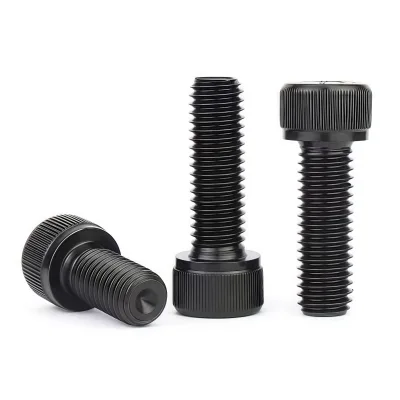
Procuring Tapered Cup Head Liner Bolts requires a nuanced understanding of fastener geometry and application-specific demands. These components are critical in machinery assembly, chemical industry processing, and environmental engineering projects where secure, vibration-resistant connections are paramount. Buyers must recognize that while the core keyword specifies a tapered design, the observed market data reveals a diverse inventory including round head, hexagonal head, and square head variants. This variation suggests that suppliers often bundle related fastener types under broader product categories. Consequently, sourcing teams must carefully distinguish between true tapered cup head designs and standard hex or square head bolts to ensure compatibility with existing liner systems.
The procurement landscape for these bolts is characterized by significant customization options and a wide range of available standards. Suppliers frequently offer products compliant with DIN, GB, ANSI, BSW, JIS, and GOST standards, indicating a global supply chain reach primarily originating from China, with specific hubs in Ningbo and Anhui. Buyers should note that the observed product models include specific designations such as DIN6912 and CG797, which may correspond to specialized industrial applications. Understanding these model numbers is essential for verifying that the fasteners meet the precise mechanical and dimensional requirements of the intended machinery or structural assembly.
Product Scope and Observed Listing Signals
The observed product listings indicate a broad scope of fastener types, ranging from cup head bolts to hex head curved bolts and square head variants. This diversity highlights the importance of precise specification matching during the sourcing process. Buyers should verify whether the listed "tapered cup head" designation aligns with the actual product model, as some listings may use generic terms for similar but distinct fastener geometries. The presence of models like CG651 and CG797 suggests that suppliers may offer specialized or proprietary designs that require specific verification against technical drawings. It is crucial to confirm the exact head style, whether round, hexagonal, or square, to avoid mismatches in assembly applications.
Pricing and minimum order quantities (MOQ) observed in the market range from $0 to $20 per unit, with MOQs varying from 1 to 10,000 pieces. This wide range reflects the flexibility of suppliers to accommodate both small-scale prototyping and large-volume industrial procurement. Buyers should consider the economic implications of these MOQs when planning production schedules. Additionally, the availability of customization services allows for tailored solutions, such as specific color requirements or specialized coatings. Understanding these commercial signals helps buyers negotiate better terms and align their procurement strategies with supplier capabilities, ensuring cost-effective acquisition of high-quality fasteners.
Technical Specifications to Verify
Verifying technical specifications is critical to ensuring the performance and longevity of Tapered Cup Head Liner Bolts. Buyers must confirm the material composition, with carbon steel being a common choice, and verify the grade, such as 10.9, to ensure adequate tensile strength for high-stress applications. The size range observed, from M6 to M48 or 1/4" to 2", indicates versatility, but buyers must select the exact diameter and length required for their specific assembly. Additionally, the thread pitch and tolerance must be checked against relevant standards to ensure proper engagement with mating threads. Misalignment in these specifications can lead to premature failure or assembly difficulties.
Surface finish and coating options are equally important for corrosion resistance and durability. Observed finishes include hot galvanizing, polishing, and various coatings such as black, zinc-plated (Z/P), hot-dip galvanized (HDG), and PTFE. Buyers should select the appropriate finish based on the operating environment, particularly for chemical industry or environmental applications where exposure to corrosive substances is likely. The groove type, such as cross-recessed, should also be verified to ensure compatibility with standard driving tools. Confirming these details with the supplier before placing an order prevents costly rework and ensures the fasteners perform as intended in service.
Compliance and Safety Documentation
Compliance with international standards is essential for ensuring the quality and safety of Tapered Cup Head Liner Bolts. Buyers should request documentation confirming adherence to relevant standards such as DIN, GB, ANSI, BSW, JIS, and GOST. These standards provide guidelines for dimensions, mechanical properties, and testing procedures, ensuring consistency and reliability across different suppliers. Additionally, buyers must verify that the fasteners meet any industry-specific safety regulations, particularly for applications in the chemical industry or structural building projects. Non-compliant products can pose significant safety risks and lead to project delays or legal liabilities.
Certification status and test reports are critical components of the compliance documentation. Buyers should ask for material test certificates (MTC) and hardness test results to verify the grade and mechanical properties of the bolts. While specific certification statuses are not always explicitly stated in listings, buyers must ensure that suppliers can provide these documents upon request. This due diligence helps mitigate risks associated with substandard materials or manufacturing defects. Furthermore, understanding the supplier's quality management systems, such as ISO certifications, can provide additional assurance of consistent product quality and reliable supply chain practices.
Cost Drivers and Commercial Terms
Several factors influence the cost of Tapered Cup Head Liner Bolts, including material prices, manufacturing complexity, and surface treatment requirements. Carbon steel is a cost-effective material, but higher grades or specialized alloys may increase the price. The choice of coating, such as hot-dip galvanizing or PTFE, also impacts the final cost due to additional processing steps. Buyers should consider the total cost of ownership, including maintenance and replacement costs, rather than focusing solely on the initial purchase price. Understanding these cost drivers helps in making informed decisions that balance quality and budget constraints.
Commercial terms, including payment methods and packaging, are also significant considerations. Observed payment terms include T/T, L/C, and D/P, offering flexibility for different financial arrangements. Packaging options, such as 25kg/carton or 2000pcs/bag, affect logistics and storage costs. Buyers should negotiate terms that align with their cash flow and inventory management strategies. Additionally, the availability of samples allows buyers to evaluate product quality before committing to large orders. Clear communication of commercial terms ensures a smooth procurement process and minimizes the risk of disputes or misunderstandings.
Supplier Qualification and Quality Control
Supplier qualification is a critical step in ensuring the reliability of Tapered Cup Head Liner Bolts. Buyers should assess the supplier's manufacturing capabilities, quality control processes, and track record in the industry. Suppliers originating from regions like Ningbo and Anhui in China often have established expertise in fastener manufacturing. Buyers should request information about the supplier's production facilities, equipment, and workforce training programs. Additionally, verifying the supplier's ability to meet customization requirements, such as specific head styles or coatings, is essential for ensuring product suitability.
Quality control measures, including in-process inspections and final product testing, are vital for maintaining product consistency. Buyers should inquire about the supplier's quality management systems and inspection protocols. Requesting sample evaluations allows buyers to verify dimensions, material properties, and surface finishes before placing bulk orders. Furthermore, establishing clear communication channels with the supplier facilitates timely resolution of any quality issues. Building a strong relationship with qualified suppliers ensures a steady supply of high-quality fasteners and supports long-term procurement success.
Long-Term Procurement Checks
Long-term procurement success requires ongoing monitoring of supplier performance and product quality. Buyers should establish key performance indicators (KPIs) to track delivery times, product consistency, and responsiveness to issues. Regular audits of the supplier's quality control processes can help identify potential problems early and ensure continuous improvement. Additionally, staying informed about changes in industry standards and regulations is crucial for maintaining compliance. Buyers should periodically review their supplier base to ensure they remain competitive and reliable in the evolving market landscape.
Building a resilient supply chain involves diversifying suppliers and maintaining open communication channels. Buyers should consider engaging with multiple suppliers to mitigate risks associated with single-source dependencies. Regular feedback loops with suppliers can foster collaboration and drive innovation in product design and manufacturing processes. Furthermore, staying updated on market trends and technological advancements in fastener technology can provide competitive advantages. By implementing these long-term checks, buyers can ensure a stable and efficient procurement process for Tapered Cup Head Liner Bolts, supporting their operational needs and strategic goals.
FAQs
What head styles are available for Tapered Cup Head Liner Bolts?
Round head is the primary style listed, with square head and hexagonal head options also shown for related bolt models. Buyers can choose the head profile that matches the mating surface and clearance needs. Head color can be produced according to customer requirements, and customization is available, so non-standard head dimensions should be confirmed with the supplier before ordering.
Which size ranges do these Tapered Cup Head Liner Bolts cover?
Listed product standards cover metric sizes from M6 to M20, M6 to M30, M6 to M36, and M6 to M48, plus inch sizes from 1/4 inch to 7/8 inch and 1/4 inch to 2 inches for certain models. Small sizes from M2 to M10 also appear for one product. Confirm the exact diameter and length range with the supplier for your selected model.
Can Tapered Cup Head Liner Bolts be customized for specific applications?
Yes, customization is listed as available on the product pages. Buyers can specify head color according to customer requirements, coatings such as black, zinc plated, hot dip galvanized, PTFE, or plain, and finishes including hot galvanizing, polishing, and hot-working. Applications span machinery, chemical industry, environmental projects, and building, so share your working conditions when requesting a customized configuration.
What material grades and standards are used for these bolts?
Listed grades include carbon steel, grade 10.9, grade 12, and B7 class designations such as B7, B7m, L7, L7m, B16, B8, B8a, B8m, B8ma, B6, and 660. Supported standards include DIN, GB, ANSI, BSW, JIS, and GOST. Request the material certificate matching the grade and standard you need, since grade availability can differ between individual product models.
How are Tapered Cup Head Liner Bolts typically packaged for export?
The listed packing options include 25kg per carton with 36 cartons per pallet, 25kgs per carton with 36 cartons per pallet, and 2000 pieces per bag with 20000 pieces per carton. Packaging varies by product model and order size. If you need special carton weights, pallet configuration, or bag counts for your warehouse handling, discuss packaging customization with the supplier before confirming the order.
Which coatings and finishes can be selected for these bolts?
Coating options listed are black, zinc plated, hot dip galvanized, PTFE, and plain. Finish options include hot galvanizing, polishing, and hot-working. Corrosion resistance and appearance depend on the chosen coating, so select based on the installation environment, whether machinery assembly, oil and gas projects, structural work, or chemical industry exposure. Confirm coating thickness and test requirements with the supplier.
Can I get samples of Tapered Cup Head Liner Bolts before ordering?
Yes, samples are offered with the instruction to contact the supplier through the listing. Sample availability, quantity, and any sample cost are arranged directly with the seller before bulk production. Providing your required size, such as a metric diameter within M6 to M48 or an inch size from 1/4 inch to 2 inches, grade, coating, and connection type helps the supplier prepare an accurate sample.
What payment terms are accepted for orders of these bolts?
The listed payment options are T/T, L/C, and D/P. Terms can affect order confirmation timing and production scheduling, so agree on the payment method, deposit proportion, and balance conditions with the supplier when you finalize the quotation. Products originate from China, including Ningbo and Anhui locations, and connection type is a common bolt used mainly in machinery applications.