Source Tempered Glass Tabletop for Furniture, Building, and Home Appliance
Find 30 verified Tempered Glass Tabletop options for furniture, building, and home appliance applications. Compare customization, thickness, and packing details from Jiangsu and Qingdao suppliers to find the right fit for your project; compare the available evidence and request quotations based on your requirements.
Key considerations
Products List


Custom Painted Tempered Glass Tabletop for Cafe Bar Excellent Glass
$0.99 - $99.00
MOQ: 10 Square Meters


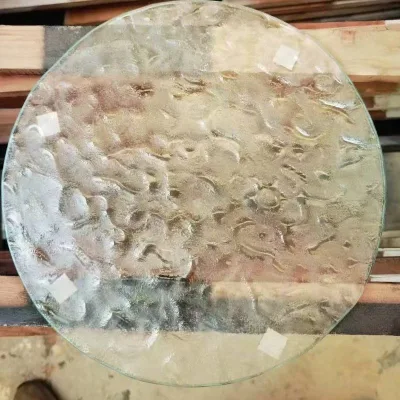

Elegant Round Toughened Tempered Glass Tabletop for Dining and Coffee
$0.99 - $69.98
MOQ: 1000 Square Meters


$3.90 - $19.90
MOQ: 100 Square Meters

CE Certified Custom Size Tempered 3-19mm Frosted Glass Shatterproof Stylish for Tabletops
$7.50 - $17.50
MOQ: 100 Square Meters


6mm 8mm 10mm 12mm Clear Float Tempered Glass Table Top Tabletops Glass Circle Tabletop Glass
$7.80 - $28.50
MOQ: 100 Square Meters


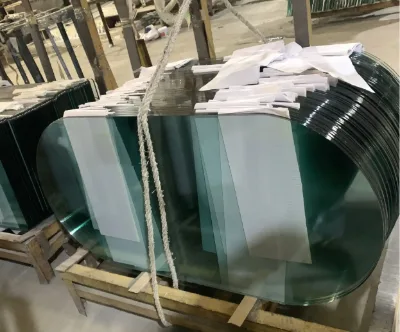


Temperable Decorative Glass Outdoor Table /Art Glass Outdoor Plastic Table Glass
$17.00 - $30.00
MOQ: 200 Square Meters

Customized Round Square Tempered Glass Table Table Tabletop Glass
$6.60 - $8.10
MOQ: 100 Square Meters


Comprehensive Sourcing Guide
Tempered Glass Tabletop Sourcing Guide
Procuring tempered glass tabletops requires a clear understanding of the specific product attributes observed in the current market, particularly the distinction between flat and curved variants. Buyers must verify that the selected glass meets the "Super-Tempered Glass" or standard "Tempered Glass" steel degree classifications, as these directly impact the structural integrity required for furniture and building applications. The observed product range includes models from 2024 to 2025, indicating a dynamic supply chain where manufacturers frequently update their production lines to meet evolving design standards.
The sourcing landscape reveals a diverse array of customization options, with suppliers offering flat tempered glass in thicknesses ranging from 3mm to 19mm depending on the specific model and application. While some listings highlight a "High Class" flatness rating, others specify "Conforming Article" standards, necessitating a precise definition of quality expectations before placing an order. Buyers should note that the primary usage sectors include building, furniture, home appliances, and electronics, which dictates the necessary durability and safety features for the final product.
Product Scope and Observed Listing Signals
The market for tempered glass tabletops is characterized by a wide spectrum of thicknesses and structural designs, with observed listings specifying flat tempered glass up to 19mm and curved variants at 6mm or 10mm. This variation suggests that procurement strategies must align with the specific load-bearing requirements of the intended furniture piece, whether it is a heavy-duty dining table or a delicate electronic instrument stand. The "Flat Tempered" appearance is a dominant feature, yet the "Flashed Glass" technique is also present, offering distinct aesthetic properties that buyers must evaluate against their design specifications.
Commercial signals indicate that suppliers operate with varying production capabilities, with some listing a daily output of 1000 pieces while others emphasize custom packing solutions like wooden cases or crates. The observed minimum order quantities range significantly from 5 to 2600 units, allowing flexibility for both small-scale custom projects and large commercial deployments. Buyers should carefully review the "Fragment State" classification, which is listed as "I" in several high-confidence facts, to ensure the glass meets the necessary safety breakage criteria for public or residential use.
Technical Specifications to Verify
When evaluating technical specifications, the thickness of the glass is a critical parameter that varies by model, with specific listings noting 3mm through 12mm ranges and specialized flat tempered glass reaching 19mm. Procurement teams must confirm that the selected thickness aligns with the "Standard" requirements, such as the GB15763.2 or GB/T 9963 standards, which define the steel degree and physical tempering processes. The "Technics" employed, whether physically tempered or flashed glass, must be explicitly verified to ensure the material possesses the correct thermal and mechanical properties for the intended environment.
Flatness and structural integrity are equally vital, with some products boasting a "High Class" flatness rating while others are described as "Conforming Article." Buyers should demand detailed documentation on the "Structure," which is noted as "Solid" in the supply data, to confirm the glass will not warp under thermal stress or mechanical load. Additionally, the "Condition" is consistently listed as "New," but verification of the "Steel Degree" as either "Super-Tempered" or standard "Tempered" is essential to validate the safety performance of the tabletop against impact and thermal shock.
Compliance and Safety Documentation
Safety compliance for tempered glass tabletops relies heavily on adherence to recognized national standards, with observed listings referencing GB15763.2 and GB/T 9963 as the primary benchmarks for steel degree and tempering quality. These standards ensure that the glass fragments into small, relatively harmless pieces upon breakage, a critical safety feature for furniture and building applications. Buyers must request specific test reports that confirm the product meets these Chinese national standards, as the absence of such documentation could indicate non-compliant manufacturing processes that pose significant liability risks.
While international standards like ASTM C1048 or EN 12150 are mentioned in background contexts, the primary evidence points to domestic Chinese standards as the baseline for the observed supply. Procurement teams should verify that the "Fragment State" is explicitly classified as "I" in the provided test data, which correlates with the safety requirements for tempered glass in furniture and daily products. Ensuring that the supplier can provide traceable documentation for the "Technics" used, specifically the physical tempering process, is necessary to validate that the safety claims are backed by verified performance data.
Cost Drivers and Commercial Terms
The cost of tempered glass tabletops is influenced by several factors, including the thickness of the glass, the complexity of the customization, and the specific packing requirements such as wooden cases or crates. Thicker glass, such as the 19mm flat tempered variant, naturally commands a higher price point due to increased material usage and the energy-intensive tempering process required. Buyers should anticipate that custom sizes, which are frequently listed as "Customized Glass," will incur additional costs compared to standard dimensions, as these require specialized cutting and handling procedures.
Commercial terms also vary significantly, with observed minimum order quantities ranging from as low as 5 units to as high as 2600 units, affecting the per-unit pricing structure. Lead times are generally short, with some suppliers offering a 2-3 day turnaround, though this may fluctuate based on the complexity of the order and the current production capacity of 1000 pieces per day. Buyers must negotiate clear terms regarding the "prod_packing" method, as the choice between cartons, wooden cases, or crates can impact shipping costs and the risk of damage during transit.
Supplier Qualification and Quality Control
Supplier qualification for tempered glass tabletops should prioritize manufacturers with a proven track record in the Jiangsu, Suzhou, and Qingdao regions, where the majority of the observed supply originates. These locations are known for their glass processing infrastructure, but buyers must verify the specific "prod_model" and production capabilities of each supplier to ensure they can meet the required volume and quality standards. The "Capability" of 1000 pieces per day is a common benchmark, but larger orders may require confirmation of extended production lines or shift schedules to avoid delays.
Quality control processes must be rigorously defined, focusing on the verification of "Flatness" and the "Steel Degree" of the glass before shipment. Buyers should implement a pre-shipment inspection protocol that checks for the "Fragment State" classification and ensures the "Technics" used match the agreed-upon specifications. Given the "Customization" availability, it is crucial to validate that the supplier has the technical expertise to handle non-standard sizes and shapes without compromising the structural integrity or safety of the final product.
Long-Term Procurement Checks
Establishing a long-term procurement relationship requires regular audits of the supplier's ability to maintain consistent quality across different production batches. Buyers should monitor the "prod_model" updates, such as the transition from 2024 to 2025 models, to ensure that the glass specifications remain stable and compliant with evolving safety standards. Continuous verification of the "Standard" compliance, particularly the GB15763.2 and GB/T 9963 benchmarks, is essential to mitigate the risk of receiving substandard products that could fail in real-world applications.
Performance tracking should also include an assessment of the supplier's responsiveness to customization requests and their ability to maintain the "High Class" flatness or "Conforming Article" standards over time. Buyers must establish a feedback loop to address any issues related to the "prod_packing" or lead times, ensuring that the 2-3 day delivery windows are consistently met. By maintaining a rigorous review of the supplier's "Capability" and "Condition" of goods, procurement teams can secure a reliable supply chain for their Tempered Glass Tabletop needs.
FAQs
What thickness options are available for a Tempered Glass Tabletop?
Common thicknesses range from 3mm to 12mm, with flat tempered glass available up to 19mm and curved tempered glass in 6mm and 10mm. Thicker panels suit heavy-duty furniture and building applications, while thinner panels work well for cabinets, small tables, and electronics covers. Exact thickness should be confirmed with the supplier before ordering.
Can a Tempered Glass Tabletop be customized in size and shape?
Yes, customization is available, including customized sizes and flat or curved shapes. Buyers typically provide dimensions, thickness, and edge or hole requirements so production can be arranged to specification. Because sizes are made to order, confirm tolerances, drawings, and the minimum order quantity with the manufacturer before placing a purchase order.
How is a Tempered Glass Tabletop packed for shipping?
Packing typically uses wooden cases, cartons, or crates and frames depending on panel size and weight. Larger building and furniture panels are usually crated or framed to prevent edge damage, while smaller pieces can ship in cartons. Confirm the packing method and inner protection with the supplier, as freight handling strongly affects breakage risk.
Which applications is a Tempered Glass Tabletop suitable for?
Tempered glass tabletops are used for building, furniture, home appliances, electronics and instruments, daily products, doors, and windows. The safety-tempered structure makes panels suitable for surfaces exposed to daily use. Match the thickness and tempering degree to the load and usage scenario, and confirm application suitability with the supplier for demanding environments.
What is the typical lead time for a customized Tempered Glass Tabletop order?
Some listed products show a lead time of 2 to 3 days, though actual timing depends on order quantity, customization complexity, and the supplier's production schedule. Capacity figures such as 1,000 pieces per day are listed by some manufacturers. Always confirm the confirmed delivery date in writing before finalizing the order.
Which standards apply to the steel degree of a Tempered Glass Tabletop?
Listed products reference standards including GB15763.2 for tempered glass and GB/T 9963 for tempered glass steel degree, with fragment state noted as Class I. These Chinese standards define tempering performance and fragment behavior. If your destination market requires different certifications, discuss equivalent testing with the manufacturer before ordering.
Where are Tempered Glass Tabletop manufacturers mainly located in China?
Listed origins include Jiangsu China, Suzhou China, Qingdao, and China generally, so coastal provinces are the primary sourcing base. These regions host glass processing factories with physical tempering capability and export packing in wooden cases or crates. Compare several suppliers on location, capacity, and customization options to balance freight cost and lead time.